


Bhulbhule
Table of Contents
Bhulbhule might not be on everyone’s travel bucket list before they reach Nepal, but for anyone trekking the Annapurna Circuit, it becomes one of those places you remember more than you expect. This small riverside village tucked into the Marshyangdi River valley signals the true beginning of your Himalaya adventure. It’s not polished. It’s not crowded. It’s just real — cut stone houses, rushing river, fields clinging to steep hillsides, and a slow pace of life rooted in generations of farmers and families.
Most trekkers first touch the mountains here after leaving the big city bus rides behind. It feels like a switch flipped from “normal life” to “mountain rhythm.” Many people stay one night to rest, eat a big plate of dal bhat, and sleep early, because the next morning the real trail to higher villages begins.
Geography & Location
Bhulbhule sits at about 845 meters above sea level, right in the Marshyangdi River valley. It’s one of the low‑altitude stops on the Annapurna Circuit. Being low like this makes it a gentle spot to start your trek and adjust to walking after coming from cities or airports.
The village lies along the Marshyangdi River, surrounded by steep hills and green terraces. It acts as an entry point to the classic Annapurna Circuit trekking trail. From here, the path heads upwards toward places like Jagat, Dharapani, and beyond.
Quick Info Table
| Altitude | 845m above sea level |
| Distance from Kathmandu | 200 km by road (about 7–8 hours drive) |
| Distance to Jagat (on Trek) | 16 km trekking distance, about 5 hours |
| Nearby Landmark | Marshyangdi River |
| District | Lamjung District, Gandaki Province |
How to Reach Bhulbhule?
The most common entry point to Bhulbhule is by road from Kathmandu. You typically take a bus or shared jeep, and from there you continue up the Marshyangdi valley to Bhulbhule. The whole ride from Kathmandu runs around 7–8 hours because of mountain roads and traffic, with beautiful views of terraced hills, forests, and distant peaks.
If you’re trekking already from the south, say from Jagat, you don’t need a vehicle — you simply walk the trail north toward Bhulbhule, usually in a full day of trekking that’s about 16 kilometers and can take 5 hours with stops and scenery breaks.
Highlights & Attractions in Bhulbhule
- Riverside Village with Marshyangdi Views
One of the first things you notice is how peaceful it feels. The Marshyangdi River runs loud and clear through the valley, and the trails wind alongside it, framed by green slopes and distant snowy peaks on clear days. Waking up to that views makes even a rough teahouse mattress feel comfortable.
- A Typical Gurung Village
Bhulbhule is home to many Gurung families and a mix of other hill ethnic groups. You’ll see farm life in action: buffalo grazing, terraces planted with crops, children walking to school in simple clothes, and elders meeting over tea. It’s not a tourist show — it’s everyday life in rural Nepal.
- Gateway to Trekking
For most on the Annapurna Circuit, Bhulbhule serves as one of the official starting point of walking. The next major stop is Jagat, and from there the trail goes higher to Dharapani, Chame, Pisang, and on toward Thorong La Pass and Muktinath. Many itineraries list Bhulbhule to Jagat as about 13–16 km of initial walking — rolling up beside fields and bridges over tributaries of the Marshyangdi.
- Peaceful Stopover
There are a handful of teahouses and guesthouses here. They’re basic, but most offer hot dal bhat, noodles, tea and sometimes wifi if they’re lucky. After a long road journey or the first day of trek, it’s a welcome place to rest.
Trekking Significance
- A Gateway Into the Trail
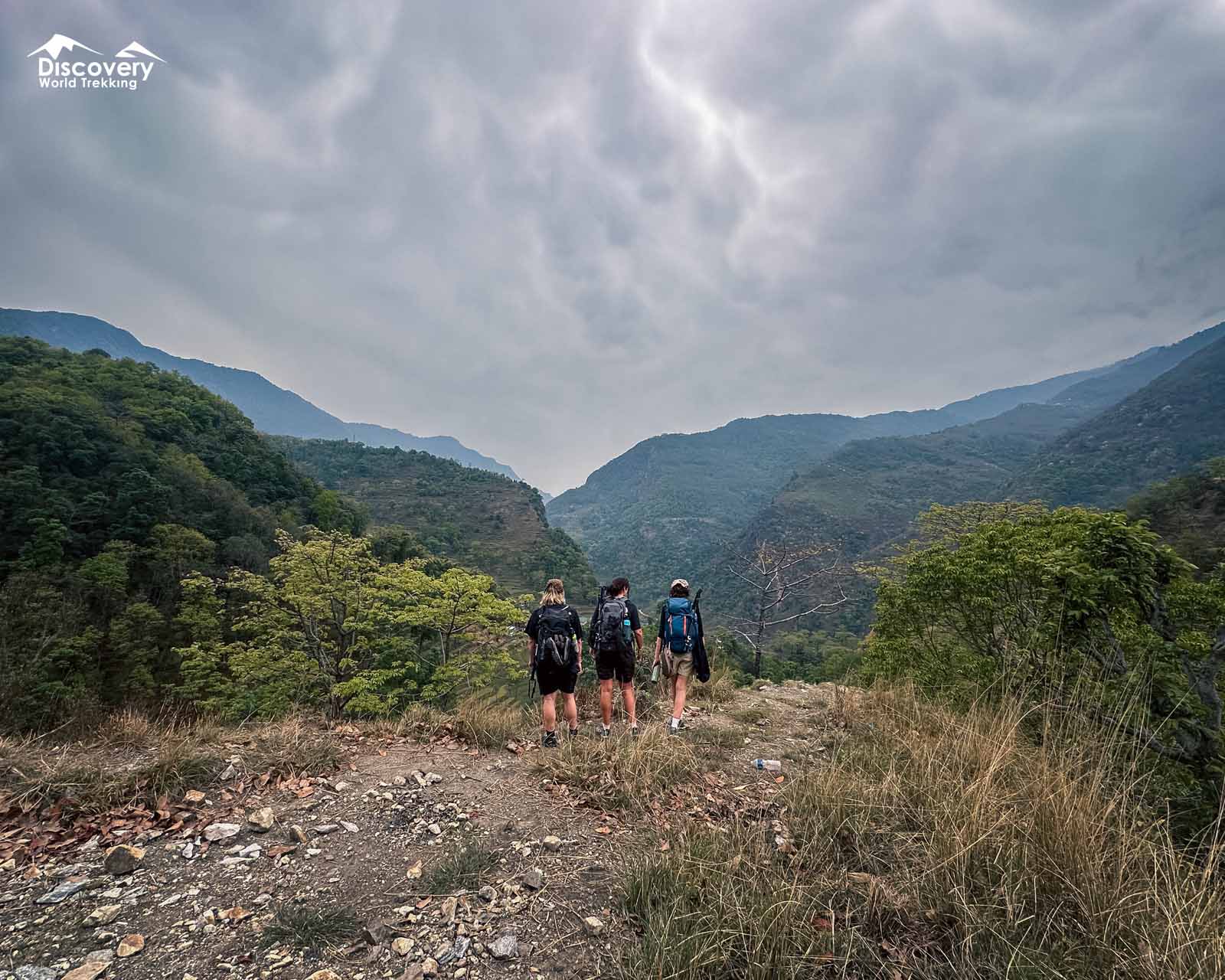
Once you leave Bhulbhule on foot, you follow the Marshyangdi River valley and gradually gain altitude as you walk toward places like Jagat, Dharapani, Chame, Manang and beyond. This steady progression from lower altitudes to higher terrain is exactly what most classic Annapurna Circuit itineraries build around. Bhulbhule’s position makes it the gateway village from which real trekking begins, and not just a roadside stop.
- Cultural Immersion Begins Here
You don’t just gain elevation heading out of Bhulbhule, you also start seeing cultural diversity in action. The villages and hamlets between Bhulbhule and Jagat are typically inhabited by Gurung and other hill communities who have lived in these valleys for generations. That means you begin your trek already experiencing the rich local life — stone houses, farming terraces, local foods served in teahouses — not just landscapes.
- Preparation for Climbing Higher
Because Bhulbhule sits relatively low at around 845 meters, it’s mild compared to the villages and passes you’ll encounter later in the trek. This lower start gives your body a gentler introduction to walking long days without the shock of higher altitudes right away. Many trekkers appreciate this gradual climb because it helps with acclimatization and overall pacing of their Annapurna Circuit adventure.
Best Time to Visit Bhulbhule
- Spring (March–May)
Spring is one of the most popular times to trek the Annapurna Circuit, and that includes Bhulbhule. The weather during these months is generally mild and pleasant, with longer daylight hours and clearer skies. Temperatures are warm enough for comfortable walking, and the hills around Bhulbhule start turning lush and green with blooming flowers. This season combines good weather with great views, making it a favorite for many trekkers.
- Autumn (September–November)
Autumn is widely considered the best overall season for trekking in the Annapurna region. After the monsoon rains, the skies are usually clear, visibility is excellent, and the trails are less muddy. For Bhulbhule, autumn means crisp air, colorful landscapes and stable weather that makes walking to Jagat and beyond much more enjoyable. Many trekkers prefer this time because the views of the Himalayas are especially sharp and the conditions are reliably good.
- Winter (December–February)
Winter brings colder temperatures, especially as you climb higher beyond Bhulbhule. In the lower valley, daytime walks can still be pleasant, but mornings and nights get cold and higher villages may see snow. Fewer trekkers are on the trail during this season, which means quieter village stops and potentially lower prices at teahouses. However, snow can make some higher sections tricky, and not all lodges stay open.
- Monsoon (June–August)
Monsoon season brings heavy rain to most of Nepal, including the Marshyangdi valley where Bhulbhule sits. Trails can become muddy and slippery, and visibility of mountain peaks may be poor because of cloud cover. Although the landscapes turn lush and dramatic, trekking during these months is more challenging and carries an increased risk of rain‑related trail issues.

Accommodation & Facilities in Bhulbhule
Bhulbhule offers basic teahouses and lodges tailored for trekkers starting the Annapurna Circuit, with simple rooms and communal spaces. These accommodations emphasize affordability and functionality in a remote village setting.
- Teahouses
Teahouses provide cozy, no-frills rooms typically featuring twin wooden beds with mattresses, pillows, and blankets. Shared bathrooms are common, with some offering attached options or hot showers via solar or electric heaters. Rooms suit basic needs, often without luxuries like air conditioning or reliable electricity.
- Dining Facilities
Communal dining rooms serve as the heart of stays, offering Nepali staples like dal bhat, momos, thukpa, plus continental options such as pasta and omelets. Hot beverages like tea and coffee fuel trekkers, with meals cooked over wood fires or basic kitchens. Dietary requests can often be met if communicated ahead.
- Other Amenities
Basic shops nearby stock essentials, snacks, and purified water, while sanitation includes squat toilets and cold-water taps in shared facilities. Solar power or backups support charging, though WiFi and hot water may incur extra fees or be limited. No advanced features like pools or TVs are available.
Safety & Travel Tips in Bhulbhule
- Trails alongside the river can be slippery during rain or monsoon season.
- Keep trekking poles handy for uneven ground.
- Arrive early during spring and autumn if you want the best choice of teahouse rooms.
- Even though you’re at a lower altitude, drink water and be ready for the gradual altitude gain as you head up toward Jagat and beyond.
Conclusion
Bhulbhule might feel small, but it’s important. It’s not just a place to sleep. It’s where your Annapurna Circuit adventure really starts — walking beside a river, meeting locals, tasting Nepali home‑style food, and getting ready for steeper trails and higher views. It’s honest, it’s peaceful, and in its own way it’s unforgettable for every trekker who passes through.
