Annapurna Circuit Trek with Tilicho Lake - 16 Days

1362 Reviews in TripAdvisor
Recommended by 99% of travelers
Destination
Nepal
Grade
Challenging
Start / End Point
Kathmandu / Kathmandu
Accommodation
Hotel in Pokhara and Hotel/Lodge/Tea House during the trek
Best Season
Feb, Mar, Apri, May, June, Sep, Oct, Nov & Dec.
Meals Included
Breakfast in Pokhara Hotel and all Meals (Breakfast, Lunch, Dinner) during the trek
Activity
Annapurna Treks
Max. Altitude
5,416m at Thorong La Pass

Experience the Annapurna Circuit Tilicho Lake Trek in Nepal’s Annapurna region, passing through forests, deep gorges, and alpine deserts. Cross the legendary Thorong La Pass and marvel at turquoise Tilicho Lake. Explore remote villages, ancient monasteries, sacred temples, and vibrant Himalayan culture.

Annapurna Circuit with Tilicho Lake Trek Highlights

  • Explore Tilicho Lake (4,919 m), the world’s highest glacial lake.
  • Cross the highest trekking pass, Thorong La Pass (5,416 m).
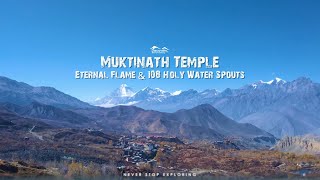
  • Visit the sacred Muktinath Temple, home to 108 water spouts and an eternal flame.
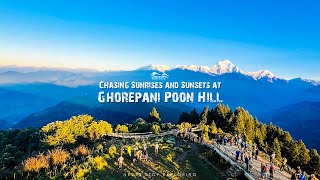
  • Golden sunrise at Poon Hill, revealing Annapurna, Dhaulagiri, and Machhapuchhre.
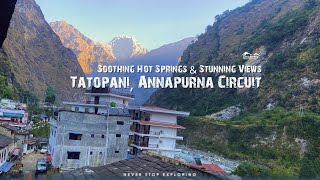
  • Relax in Tatopani hot springs, a natural retreat after long days of trekking.
  • Discover the Buddhist culture at Barge Monastery, the largest monastery in Manang.
  • Trek through the Marsyangdi Valley and deep gorges like the Kali Gandaki Gorge.
  • Immerse yourself in different cultures: Magar, Gurung and Tibetan-influenced.
  • Panoramic view of towering peaks: Annapurna II & IV, Dhaulagiri, Nilgiri, Lamjung Himal, Chulu East & West, and Thorung Peak.
  • Encounter blue sheep at Yak Kharka, grazing on high-altitude slopes.
  • Spot high-altitude wildlife like Himalayan tahrs, marmots, and pikas, and occasionally snow leopard.
  • Enjoy fresh apple pie in Marpha, the famous apple-growing village.

Annapurna Circuit Trek with Tilicho Lake Overview

The Annapurna Circuit Trek with Tilicho Lake encircles the great Annapurna mountain range, passing through the Marsyangdi and Kali Gandaki river valleys. This legendary adventure blends the classic Annapurna Circuit with a challenging detour to Tilicho Lake, one of the world’s highest lakes at 4,919 meters

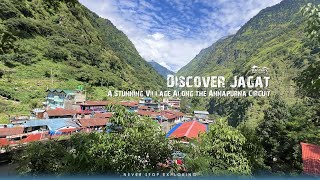
Your trek begins with a long drive from Kathmandu to Besisahar to Jagat (1,300 m). The road passes through terraced farmlands and rivers into the heart of the Annapurna region.

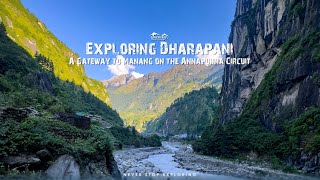
With lots of excitement and stunning natural beauty, the trail moves upward from Jagat to Dharapani (1,860 m). The road curves and twists through the subtropical forests and small villages.  

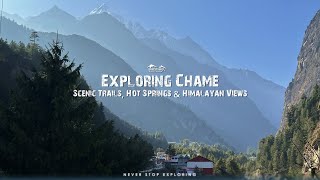
The trek continues towards Chame (2,610 m), a hub of mountain views and local culture. Here, the Annapurna II and Annapurna IV peaks come into sight, providing a preview of the high Himalayas. The trail leads to Upper Pisang (3,300 m), admiring the dramatic cliffs and deep river gorges. 

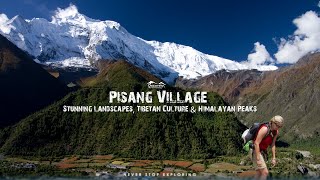
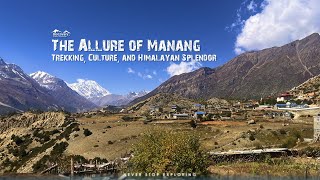
You need to descend to Pisang (3,115 m) before reaching the beautiful village of Manang (3,540 m) for acclimatization. It is a critical stop to rest, explore local monasteries, and enjoy valley views while adjusting to higher altitudes.

After Manang, the trek heads to Siri Kharkha (4,060 m), crossing steep ridges and high alpine terrain.

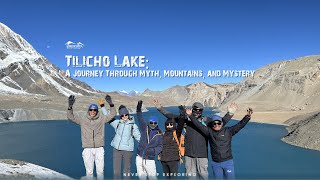
The roundabout route to Tilicho Base Camp (4,150 m) is a challenging yet rewarding adventure. You descend with an early morning walk to Tilicho Lake (4,920 m), a serene turquoise gem surrounded by the Tilicho, Nilgiri, and Annapurna peaks. 

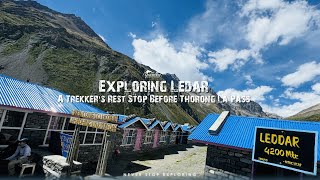
Returning to Siri Kharka, the journey unravels the sweeping mountain views before reaching Yak Kharka and Ledar (4,250m). Here, you can visit ancient monasteries and watch for high-altitude wildlife.  

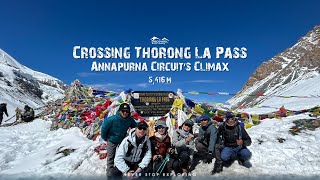
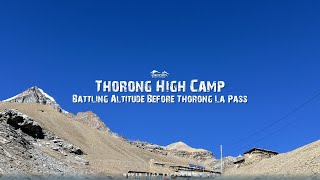
As the route ascends, you will reach Thorong High Camp (4,925 m) to set you up for the most challenging part of the trip: Thorong La Pass (5,416 m). A pre-dawn hike takes you to the breathtaking Himalayan vistas.

Crossing the pass, the path marks a shift into warmer terrain and cultural immersion. You descend to the sacred Muktinath Temple (3,760 m), also known as Chuming Ghasa. It is a holy place with 108 ice-cold water spouts revered by both Hindus and Buddhists

From Muktinath, the trail shifts to lower altitudes with a drive to Tatopani (1,200 m), where you can take a soothing break in the natural hot springs

The path ascends to Ghorepani (2,860 m), where you experience Magar culture. You need to wake up early the next morning and hike to Poon Hill (3,210 m) to witness the iconic sunrise over the surrounding peaks. 

Your final day of trekking leads to Birethanti, followed by a drive to Pokhara and back to Kathmandu. This trip is ideal for trekkers seeking adventure, culture, and diverse high-altitude landscapes. 

The Tilicho Lake extension adds a rare, less-travelled path, making this trek a once-in-a-lifetime Himalayan experience. 

Note

The Annapurna Circuit with Tilicho Lake Trek package covers travel from Kathmandu to Besisahar or Bhulbhule by a Local bus. If you prefer a private jeep, we can reserve one for an additional cost

On your return from Pokhara to Kathmandu, you may choose either a private jeep or a flight, with costs borne by you.

We kindly request you to reach Kathmandu a day early, by 3 PM, to handle all pre-trek arrangements.

Online Trip Briefing

The online trek briefing is a pre-trek WhatsApp session that explains what to expect on the trek and answers your queries. After booking and submitting your documents, we will email you a schedule for a briefing. You will be informed about the itinerary, trail/weather conditions, and gear checklist while answering any doubts you have. The briefing ensures that you are physically prepared, mentally ready, and fully motivated for the journey ahead.

Day-to-Day Short Itinerary

Day 1

Drive from Kathmandu to Besisahar to Jagat (1,300m). Drive time: Approx. 9-10 hours.

Day 2

Trek from Jagat to Dharapani (1,860m). Trek time: Approx. 5 hours.

Day 3

Trek from Dharapani to Chame (2,610m). Trek time: Approx. 6 hours.

Day 4

Trek from Chame to Upper Pisang (3,300m). Trek time: Approx. 5-6 hours.

Day 5

Trek from Pisang to Manang (3,540m). Trek time: Approx. 5-6 hours.

Day 6

Rest and Acclimatization day at Manang.

Day 7

Trek from Manang to Siri Kharka (4,060m). Trek time: Approx. 4-5 hours.

Day 8

Trek from Siri Kharka to Tilicho Base Camp (4,150m). Trek time: Approx. 5 hours.

Day 9

Visit Tilicho Lake then back to Siri Kharka (4,060m). Trek time: Approx. 5-6 hours.

Day 10

Trek from Siri Kharka via Yak Kharka to Ledar (4,250m). Trek time: Approx. 4-5 hours.

Day 11

Trek from Ledar to Thorong High Camp (4,925m). Trek time: Approx. 4-5 hours.

Day 12

Trek from Thorong High Camp to Muktinath Temple via Thorong La High Pass (5,416m). Trek time: Approx. 9 hours.

Day 13

Drive from Muktinath via Jomsom to Tatopani (1,200m). Drive time: Approx. 3-4 hours.

Day 14

Trek from Tatopani to Ghorepani (2,860m). Trek time: Approx. 6-7 hours.

Day 15

Early morning hike to Poon Hill, trek to Birethanti (1,039m). Trek time: Approx. 4-5 hours. Then drive to Pokhara via Nayapul. Drive time. Approx. 2 hours.

Day 16

Drive from Pokhara to Kathmandu (1,350m). Drive time: 6-7 hours.

Planning Your Trek Schedule
Select Departure Date

Plan your trek by selecting the exact start and end dates from the calendar below. Ensure your arrival and departure dates align with your itinerary and schedule. 

Trip Duration16 days
Trip Start and End PointKathmandu / Kathmandu
Su
Mo
Tu
We
Th
Fr
Sa
1
2
3
4
5
6
7
8
9
10
11
12
13
14
15
16
17
18
19
20
21
22
23
24
25
26
27
28
29
30
Su
Mo
Tu
We
Th
Fr
Sa
1
2
3
4
5
6
7
8
9
10
11
12
13
14
15
16
17
18
19
20
21
22
23
24
25
26
27
28
29
30
Sold out dates

Group-Size Discounts will be applied in next step.

Continue Booking

Annapurna Circuit Trek with Tilicho Lake Video

Annapurna Circuit Trek with Tilicho Lake Video

Annapurna Circuit with Tilicho Lake Trek Itinerary

Day 1

Drive from Kathmandu to Besisahar (760m / 2492ft) to Jagat (1,300m / 4,265ft)

Driving hours
(175km / 108miles) 9-10 hrs
Highest Altitude
1,300m / 4,265ft

Early morning we drive from Kathmandu for about 6-7 hours (190 km) to Besishar. On the way, you can see beautiful villages, farms, fast-flowing rivers, and glimpses of mountain ranges. As we will be taking a local bus, we might face some unplanned traffic, and there is a chance that we might not reach Besishar on time to catch a local bus to Jagat - our destination for the day. However, to avoid such delays, you can take a private car/jeep to Jagat for an extra cost.

Overnight stay at Tilicho Hotel
Included standard meals (Breakfast + Lunch + Dinner)
Day 2

Trek from Jagat (1,300 m / 4,265ft) to Dharapani (1,860m / 6,200ft)

Trek Distance
15km / 9.3miles
Highest Altitude
1,860m / 6,200ft
Trek Duration
5 hrs

After breakfast, we begin the 2nd day of our trip. First, we leave Jagat, cross a suspension bridge, and reach Tal Village. At Tal, you can witness several waterfalls forming a river by the sandy beaches. However, we will continue the journey that takes us through barley, rice, and potato fields leading us to Kodo - one of the biggest villages in Manang Valley. But, we will continue our trek, and after crossing a suspension bridge, we climb to stone Kani to finally reach Dharapani, where we will be spending the night.

Overnight stay at Hotel Gorkha's inn (room with attached bathroom)
Included standard meals (Breakfast + Lunch + Dinner)
Day 3

Trek from Dharapani (1,860m / 6,200ft) to Chame (2,610m / 8,890ft)

Trek Distance
15.5km / 9.6miles
Highest Altitude
2,610m / 8,890ft
Trek Duration
6 hrs

Today's trek takes us through a forest with pine, fir, oak, and maple trees, eventually leading us to Chame, the district headquarters of Manang district. You will be surrounded by green forests, and above, you'll see remarkable views of Lamjung Himal, Annapurna II, and Annapurna IV (7,525m). We will also stop by small hot springs to relax for a while, and if you wish, you can take a dip in these hot springs.

Overnight stay at Four Season Guest House (room with attached bathroom)
Included standard meals (Breakfast + Lunch + Dinner)
Day 4

Trek from Chame (2,610m / 8,890ft) to Upper Pisang (3,300m / 10,826ft)

Trek Distance
13.2km / 8.2miles
Highest Altitude
3,115m / 10,200ft
Trek Duration
5 - 6 hrs

We walk through a steep and narrow valley to catch the views of Paungda Danda Rock Face - a curved rock face rising 1500m from the Marshyandi River. From here, you will also see clear views of Annapurna II in the south and Pisang Peak in the northeast.

After viewing the Paungda Danda Rock Face, we descend to the Manang Valley floor, eventually reaching Pisang - our destination for the day.

Overnight stay at Hotel Mandala (room with attached bathroom)
Included standard meals (Breakfast + Lunch + Dinner)
Day 5

Trek from Pisang (3,115m / 10,200ft) to Manang (3,540m / 11,300ft)

Trek Distance
17km / 10.6miles
Highest Altitude
3,540m / 11,300ft
Trek Duration
5 - 6 hrs

We leave Pisang behind and trek on the upper trails of Pisang via Geru. This path offers outstanding north face views of Annapurna II, III, IV, Gangapurna, Tilicho, and Pisang Peak. Since we are ascending, you will feel the air turn cold, dry, and harsh. Even in this harsh environment, you will find Tibetan-style settlements, and we will not miss visiting the Barge Monastery - the largest monastery in Manang.

Overnight stay at Himalaya Cottage (room with attached bathroom)
Included standard meals (Breakfast + Lunch + Dinner)
Day 6

Rest and Acclimatization day at Manang

By reaching Manang, we will have gained a lot of elevation, and our body needs time to adjust to high altitudes, so we will stop at Manang for a day.

We will use this day to explore Manang. In the early morning, we hike up to Gangapurna Lake / Ice Lake, and during the day, we will enjoy the outstanding views of Annapurna III, Tilicho, Pisang, and Chulu Peaks. Of course, you can also explore the Manang village. Most trekkers visit the Himalayan Rescue Association in Vraga village to learn about Acute Mountain Sickness, its symptoms, and ways to prevent it.

Overnight stay at Himalaya Cottage (room with attached bathroom)
Included standard meals (Breakfast + Lunch + Dinner)
Day 7

Trek from Manang (3,540m / 11,300ft) to Siri Kharka (4,060m / 13,320ft)

Trek Distance
12km / 7. 4miles
Highest Altitude
4,060m / 13,320ft
Trek Duration
4-5 hrs

The trek from Manang to Siri Kharka is an easier one. We take the upper route that leads down to a river, which we will cross, and then continue on a path that takes us through the coniferous forests. After walking for about three hours, we reach Tibetan settlement Khangsar, but we will continue our journey forward to reach Shiri Kharka. On the trails, we will get to see gorgeous views of Gungang Himal and Mt.Chulu. 

Overnight stay at Siri Kharka
Included standard meals (Breakfast + Lunch + Dinner)
Day 8

Trek from Siri Kharka (4,060m / 13,320ft) to Tilicho Base Camp (4,150m / 13,583ft)

Trek Distance
8km / 4.9 miles
Highest Altitude
4,150m / 13,583ft
Trek Duration
5 hrs

On our eighth day, we will leave Siri Kharka in the morning and trek towards Tilicho Base Camp. The path should be easy, but it passes through landslide-prone areas. From the trails, we get to enjoy the impressive rock formations along with magnificent snow peaks - including Tilicho Peak. 

Overnight stay at a Lodge
Included standard meals (Breakfast + Lunch + Dinner)
Day 9

Visit Tilicho Lake (4,920m / 16,138ft) then back to Siri Kharka (4,060m / 13,320ft)

Trek Distance
11 km / 6.8miles
Highest Altitude
4,920m / 16,138ft
Trek Duration
5-6 hrs

This is one of the special days of the trek as we will be viewing Tilicho Lake itself. But we start our day early in the morning at Tilicho Base Camp to avoid afternoon wind. The path is quite steep, and after laboring for two to three hours, we will reach Tilicho Lake - one of the highest lakes in the world. A well-known French expedition team referred to Tilicho Lake as The Great Ice Lake. Tilicho lake sits surrounded by the majestic peaks - Tilicho Himal, Annapurna Range, and Nilgiri Himal. After enjoying the views of Tilicho Lake, we retrace our path back to Siri Kharka, where we will be spending our night.

Overnight stay in Siri Kharka
Included standard meals (Breakfast + Lunch + Dinner)
Day 10

Trek from Siri Kharka (4,060m / 13,320ft) via Yak Kharka (4,060m / 13,020ft) to Ledar (4,250m/13,943 ft)

Trek Distance
8.4km / 5.2miles
Highest Altitude
4,250m/13,943ft
Trek Duration
4-5 hrs

From Siri Kharka, we descend to the uninhabited Khangsar Village. On the way, we pass Tare Gumba, a thousand-year-old monastery, but our journey continues following a rock wall that takes us out of Khangsar and leads us to Thorong Khola Valley and finally to Yak Kharka. From Yak Kharka, you can get glorious views of the Annapurna mountain ranges. If lucky, you may see blue sheep or even a snow leopard. Moving forward, you will cross a historic Mani wall just before arriving at Ledar.

Overnight stay at Dhading Laxmi Lodge
Included standard meals (Breakfast + Lunch + Dinner)
Day 11

Trek from Ledar (4,250m/13,943ft) to Thorong High Camp (4,925m/16,158ft)

Trek Distance
8.5km / 5.2miles
Highest Altitude
4,925 m/16,158 ft
Trek Duration
4 - 5 hours

You will walk uphill from Ledar to reach Thorong High Camp. Thorong High Camp is the last hamlet before the Thorong La Pass. While walking uphill, you will see mesmerizing views of several mountains - including Gudang, Syagang, Khatungkan, and Thorong Peak.

Overnight stay at Thorong La High Camp Lodge
Included standard meals (Breakfast + Lunch + Dinner)
Day 12

Trek from Thorong High Camp (4,925m/16,158 ft) to Muktinath Temple (3,760m / 12,623ft) via Thorong La High Pass (5,416m / 17,756ft)

Trek Distance
15.6km / 9.6miles
Highest Altitude
5,416m / 17,756ft
Trek Duration
9 hrs

Today's trek will be the most challenging part of this trip, as we will be crossing Thorong La Pass – one of the highest passes in the world. It is also the highest point of the trek. To avoid the afternoon wind, we wake up at Thorong Phedi at 3 am and push ourselves against high altitude and icy air.

When you reach the Thorong La Pass, just by seeing the incredible scenery, you will feel that nature has paid back your efforts handsomely. From here, you can see the Himalayan peaks extending to Tibet in the north, and if you look back, you will see Annapurna standing proud and tall.

We descend from Thorong La Pass to reach Muktinath – a sacred site for Hindus and Buddhists. The Buddhist name for Muktinath is Chumig Ghasa, which means Hundred Waters in Tibetan. And, of course, Muktinath hosts 108 stone sprouts through which flows the icy cold water of Kali Gandaki. In addition to the water sprouts, you will also see the eternal flame at Muktinath, which has been burning there for more than 2000 years.

Overnight stay at Hotel Town House Muktinath (room with attached bathroom)
Included standard meals (Breakfast + Lunch + Dinner)
Day 13

Drive from Muktinath (3,760m / 12,623ft) via Jomsom to Tatopani (1,200m / 3,940ft)

Driving hours
(113km / 70miles) 3-4
Highest Altitude
3,760m / 12,623ft

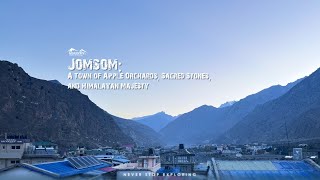
After a holy visit to Muktinath Temple, we continue our journey, this time in a local bus that takes us to Tatopani. The drive is pretty rough, full of twists and turns, in a region that is home to the world's deepest gorges. Our path will take us through the bustling Jomsom Bazaar and finally to Tatopani - known for natural hot springs. Before the night sets in, it would make great sense to enjoy a bath in these hot springs.
Overnight stay at Hotel Himalaya (room with attached bathroom)
Included standard meals (Breakfast + Lunch + Dinner)
Day 14

Trek from Tatopani (1200m / 3,940ft) to Ghorepani (2,860m / 9,385ft)

Trek Distance
17km / 10.5miles
Highest Altitude
2,860m / 9,385ft
Trek Duration
6-7 hrs

On our fourteenth day, we ascend to Ghorepani through the ethnic Sikha and Chitre villages. We will be passing through the lush rhododendron, birch, and magnolia forests to reach Ghorepani, which sits on top of a ridge. During the blooming season, the rhododendrons add pink and bright red colors to the entire forest.

Overnight stay at Hotel Snow Land (room with attached bathroom)
Included standard meals (Breakfast + Lunch + Dinner)
Day 15

Early morning hike to Poon Hill (3,210m / 10,525ft), trek to Birethanti (1,039m / 3,250ft)- then drive to Pokhara via Nayapul

Trek Distance
12.5km / 7.7miles
Highest Altitude
3,210m / 10,525ft
Trek Duration
4-5 hrs
Driving hours
2 hrs

Poon Hill is one of the most famous viewpoints in the world. So, early in the morning, we wake up at Ghorepani and climb up a steep trail for about an hour to see the magnificent views of dawn breaking on Annapurna and Dhaulagiri ranges. From here, you will also see Mustang and Pokhara in addition to over 20 high mountains. Poon Hill, with its glorious beauty, provides a favorite venue for photographers, and we will not miss the chance of clicking some pictures here. After spending some time at Poon Hill, we will descend to Birethanti, from where we will take a bus to Pokhara via Nayapul. 

Overnight stay at Silver Oaks Inn (room with attached bathroom)
Included standard meals (Breakfast, Lunch)
Day 16

Drive from Pokhara (820m / 2,690ft ) to Kathmandu (1,350m / 4,450ft)

Driving hours
(200km/ 124miles) - 6-7hrs

On our sixteenth day, after breakfast, we will take a tourist bus from Pokhara to Kathmandu. You may also choose to return by a 25-minute flight (not included in the package) for an extra cost. Our trek package completes at Kathmandu. Discovery World Trekking will also host a farewell dinner at Kathmandu later in the day.

We hope, by completing this trek, you will have formed lifelong memories.

Included standard meal (Breakfast)

What is included in this trek package?

Transportation

  • Public transportation from Kathmandu to Jagat (trek start) and Muktinath to Tatopani
  • Private transport from Birethanti (trek end) to Pokhara
  • Pokhara to Kathmandu on a tourist bus
  • Private transportation to and from Kathmandu Airport and your hotel

Accommodations

  • Breakfast and a night accommodation (room with attached bathroom) at Silver Oaks Inn in Pokhara
  • Total 14 nights of accommodations. Eight nights room with attached bathroom at Dharapani, Chame, Pisang, Manang(2N) Muktinath, Tatopani, and Ghorepani. Six nights standard room at Jagat, Siri Kharka(2N), Tilicho Base Camp, Yak Kharka, and Thorang Phedi during the trek

Food

  • Standard full-board meals meals (15 Lunches, 14 Dinners, and 16 Breakfasts) with one main course per meal during the trek
  • Water purification tablets for safe drinking water
  • Seasonal fresh fruits every day

Guide and Porter

  • Government licensed, experienced trek leader (guide), assistant trekking guide for 12 or more trekkers. Porters to carry luggage (One porter for 2 trekkers, 9 kg luggage weight limit for each trekker. One porter will carry no more than 18 kg.)
  • Guides and porters expenses - meals, insurance, salary, lodging, transportation, and equipment costs.

Trek Permits and Expenses

  • Annapurna Conservation Area Permit (ACAP) fee
  • Trekkers Information Management System (TIMS) card fee
  • All government taxes, local taxes, and official expenses

Medical Assistance

  • Rescue operation arrangement in case of complicated health conditions (funded by travel insurance)
  • Medical kits, including an oximeter to monitor blood oxygen saturation levels in high altitudes

Souvenir

  • a company's T-shirt & cap

Farewell

  • Discovery World Trekking Appreciation Certificate after the successful trek
  • Farewell dinner at the end of the trek in Kathmandu

Benefits

  • Sleeping bags and down jackets, duffle bag (one for every two trekkers) if you do not have your own
  • Free excess luggage storage at the Discovery World Trekking store for the duration of the trek

What is excluded in this trek package?

International Flight

  • International flight airfare

Accommodations

  • All accommodation in Kathmandu, before and after the journe
  • Extra night accommodations in Kathmandu and Pokhara due to early arrival or late departure or early return from the trek.

Food

  • All meals in Kathmandu, before and after the journe
  • Lunch and dinner in Pokhara
  • Extra night meals in Kathmandu and Pokhara due to early arrival or late departure or early return from the trek.

Guide and Porter

  • Tips for guides and porters (recommended)

Visa

  • Nepal entry visa fees for multiple entries on arrival at Tribhuwan International Airport (15 days - US$25-30, 30 days- $40-50 and 90 days- $100-110)

Travel Insurance

  • Travel insurance which must cover emergency high-altitude rescue and evacuation (compulsory)

Personal Expenses

  • Personal expenses such as shopping, snacks, hot drinks (tea, coffee), cold drinks, alcoholic drinks, bottle or boiled water, shower, Wi-Fi, laundry, telephone call, battery re-charge fee, extra porters, etc
  • Personal clothing and gear

Other Expenses

  • Excess baggage charges (Limit is 9 kg per person.)
  • Additional costs due to delays caused by circumstances out of control like landscape, unfavorable weather conditions, itinerary modification for safety, illness, government policy changes, political instability, strikes, etc.
  • All the costs and expenses not listed in "What is included in my Annapurna with Tilicho Lake Trek Package?" will be counted as excluded

Annapurna Circuit Tilicho Lake Trek Map

Tilicho Lake Trek Equipment Checklist

Depending on the trekking season, you must adjust your clothing and equipment. However, is a list of items you need during the trek. We urge you to bring only the essentials. Please note that the luggage weight limit per trekker is 9 kg, and you will be sharing a porter with another fellow trekker. Hence, we advise you to find a fellow trekker and pack your things in a duffle bag with a capacity of over sixty liters.

Head

  • Sun hat (wide-brimmed)
  • Beanie (for warmth)
  • Buff or neck gaiter (for sun protection and warmth)
  • Lightweight headlamp (with adjustable brightness)
  • High SPF sunscreen
  • Lip balm with SPF
  • Sunglasses with UV protection
  • Face wipes

Upper Body

  • Moisture-wicking t-shirts (short and long sleeves)
  • Thermal base layer (for colder conditions)
  • Fleece jacket and down jacket **
  • Lightweight puffy jacket (for extra warmth)
  • Waterproof and windproof jacket (Gore-Tex or similar)
  • Raincoat
  • Lightweight, breathable long-sleeve shirt
  • Polypropylene underwear (four)

Hands

  • Insulated gloves or mittens (for cold weather)
  • Waterproof gloves (for wet conditions)

Lower body

  • Quick-drying pants/trousers (convertible or full-length)
  • Insulated pants (for colder conditions)
  • Lightweight cotton pants
  • Thermal leggings or long underwear (for colder weather)
  • Two pairs of thermal/trekking trousers (pants)

Footwear

  • Thick Wool or synthetic moisture-wicking socks (4 pairs)
  • Waterproof, ankle-supportive broken-in full hiking boots (with good traction)
  • Sandals (for camp use or river crossings)
  • Gaiters (for protection against mud, water, and debris)
  • Crampons/spike

Toiletries

  • Biodegradable bar soap
  • Toothbrush and toothpaste
  • Medium-size drying towel
  • Wet wipes or hand sanitizers
  • Toilet paper (In a Ziplock bag)
  • Feminine hygiene products
  • Travel-sized shampoo
  • Nail clippers
  • Small mirror

Backpacks

  • Duffle bag (capacity of over 60 liters) for porters** (One duffle bag for two trekkers).
  • Backpack or daypack (capacity 20-30 liters) for yourself

Personal accessories

  • Adjustable and lightweight poles (preferably collapsible)
  • Water bottle or bladder with a capacity of at least 2 liters (insulated for cold weather)
  • Water purification system (tablets, filter, or UV purifier)
  • Sleeping bag (-10 to -15 degrees is the best) **

Extra items

  • Camera/smartphone (extra memory cards and batteries)
  • Extra batteries or rechargeable power bank (for charging devices)
  • Two-pin charging plug
  • Basic first aid supplies (band-aids, antiseptic wipes, pain relievers, Diamox)
  • Personal medications (inhalers, allergy meds, etc.)
  • Few passport-size photos
  • Passport photocopies
  • Notebook and pen
  • Binoculars
  • Swiss army knife or multi-tool (with scissors, can opener, etc.

**We can provide you with a (used, nonwaterproof) duffle bag, (used) down jacket, and (used) sleeping bag if you do not have your own.

Tilicho Lake Trek Package Info

Meet & Greet at Tribhuvan International Airport

Your journey to the Himalayas starts at Tribhuvan International Airport, the moment you enter Nepal. To make your arrival smooth and stress-free, we offer complimentary airport pickup and drop-off services.

Our representative will be waiting for you outside the arrival terminal, holding a pamphlet with your name for easy identification. 

As a warm introduction to Nepali hospitality, you will be welcomed with a traditional marigold garland or Khada scarf, a gesture that symbolizes respect and good fortune.

Hotel Booking Assistance

From the airport, you will be escorted to your hotel in a private vehicle, ensuring you feel comfortable and welcomed in a new country.

In addition to airport transfers, we can help you find trusted accommodations that suit your budget and preferences, from cozy budget stays to luxury hotels.

Staying in central areas like Thamel gives you easy access to trekking shops and travel essentials, making it easy to prepare for your adventure.

Note: You need at least two extra days of accommodation in Kathmandu: a day before the trek and another day after the trek. 

How Early Should You Arrive Before the Trek?

For the initial preparation of the journey, we recommend you arrive in Kathmandu at 3 PM, one day before the trek. You can use this time to adjust to a new environment and explore the city before heading into the Himalayas.

Pre-Trek Briefing

We conduct an online briefing after you book our Tilicho Lake Trek package, covering essential details about the trek. 

Additionally, Paul, our team head, gives an in-person briefing in Kathmandu. He will greet you in our office and :

  • Introduce you to your guide, porter, and the team
  • Review your gear and equipments
  • Check your luggage to ensure you have the necessary clothing
  • Provide last-minute instructions on safety processes and altitude
  • Address any query related to the path

Accommodation During Annapurna Circuit Tilicho Lake Trek

Accommodation throughout the Annapurna Circuit is in the teahouses or lodges, typically family-run establishments. While they are simple compared to city hotels, they provide everything you need after a long day of trekking: a bed, a comforting meal, and a warm atmosphere to rest.

Teahouse and Lodge Types by Altitude

Teahouses and lodges vary in quality with altitude. In lower regions, you can find comfortable lodges with standard twin-sharing rooms and better facilities. 

While in Mid-altitude regions such as Manang, there are improved lodges, often with attached bathrooms and better insulation

As you move towards high-altitude regions such as Tilicho Base Camp or Thorong Phedi, you will find basic guesthouses with shared bathrooms and limited amenities. 

This 16-day journey includes:

  • 1 night in a comfortable hotel in Pokhara, equipped with modern amenities like hot showers, electricity, and Wi-Fi.
  • 6 nights in a room with an attached bathroom at Dharapani, Chame, Pisang, Tatopani, Muktinath, and Ghorepani.
  • 2 nights in Manang in a room with an attached bathroom.
  • 4 nights in a basic twin-sharing room at Jagat, Tilicho Base Camp, Yak Kharkha, and Thorong Phedi/High Camp.
  • 2 nights in a basic twin-sharing room at Siri Kharkha.

Facilities and Amenities

The facilities you get in guesthouses along the Annapurna Circuit are basic but functional. You can get most services at an additional cost. As you go higher, prices increase, and availability becomes limited due to remoteness and transportation challenges. 

Hot Showers:

  • It costs around NPR 200–500 per shower (approx. $2–$5 USD)
  • Available in lower and mid-altitude lodges.
  • At higher elevations, you can find only bucket showers.

Electricity & Charging:

  • It costs around NPR 100–500 per device (approx. $1–$5 USD)
  • Charging is usually available in rooms at lower altitudes.
  • You can have charging access only in dining areas at higher elevations.
  • You may carry a universal adaptor, as only a 2-pin plug is available.

Wi-Fi / Internet:

  • It costs around NPR 200–500 per use (approx. $2–$5 USD)
  • It is available in some lodges, but becomes unreliable or unavailable as you ascend
  • A local SIM card (NTC/Ncell) with data is reliable and cost-effective.
  • It costs around $5–$10 for the card and data.

Drinking Water:

  • Boiled/filtered water: NPR 100–300 per liter (approx. $1–$3 USD)
  • Bottled water: NPR 200–500 (approx. $2–$5 USD)
  • Prices increase significantly above 3,000 meters
  • Use purification tablets before drinking

Room Heating:

  • Available in most lodges in the dining area
  • Use a kerosene or metal heater in the common area only
  • No personal room heaters are available
  • Carry thermal clothing, insulated socks, and a good-quality sleeping bag

It is recommended that you carry essentials like a power bank, toiletries, and personal comfort items.

Note: We can provide you with a used sleeping bag if you don’t have one.

Meals, drinks, and Dietary Options during the Trek

The Tilicho Lake Trek takes you to the high altitudes near some of the world’s tallest peaks. You need proper nutrition and hydration to maintain energy and stamina and support acclimatization. 

Since you’ll be walking for several hours each day at increasing altitudes, you will be fueled with fresh, hygienic, and nutritious meals throughout the journey.

Full-Board Meals

The trek is high-altitude and physically demanding. Your meals are your primary fuel to stay energized throughout the day. You will receive 16 breakfasts, 15 lunches, and 14 dinners, all served on a full-board basis (breakfast, lunch, and dinner), to keep you strong.

Each meal includes one main item; you can order any additional dishes or drinks for an extra charge. 

MealTypical OptionsTimeTips
BreakfastPorridge; Tibetan bread (Balep / Tingmo); Eggs (boiled/scrambled/omelet); Bread with jam/honey; Tea & hot drinks (green, lemon, ginger, garlic)6 – 7 AMHigh-energy start for a day; carb-rich Tibetan bread fuels you for the morning trek.
LunchDal Bhat (rice, lentils, vegetables); Vegetable curry; Momo (dumplings); Noodles; Pasta (occasionally available); Soups (Thukpa-veg)11 – 12 PMDal Bhat provides sustained energy; soups help with hydration and warmth at high altitudes. Pasta is less common.
DinnerDal Bhat with side dishes; Thukpa; Noodles / Chow Mein; Light desserts (cookies, cake – occasionally available); Hot drinks (ginger tea, garlic soup, lemon tea)5 – 6 PMGo for easy-to-digest, warming, and nourishing foods for recovery after trekking. Desserts are rare treats.

Meals are freshly prepared at local teahouses using local ingredients. While the variety is wider in lower regions, the menu becomes simpler as you go higher.        

One item per meal is included in our package, whereas if you want to add more foods, you will have to pay extra for them.   

Recommended Food

For the Annapurna Circuit Trek with Tilicho Lake, you should prioritize high-energy, warm, and easily digestible meals to stay fueled and help in acclimatization.

Dal Bhat (rice, lentils, and vegetables) is the ideal staple, providing lasting energy and protein, often with free refills. We recommend complementing it with Tarkari (a vegetable curry) for a balanced meal. You can also go for Momo (steamed dumplings).

You need to focus on warm, high-carb food, such as soups, noodles, fried rice, and Tibetan-style breads. Occasionally, you can go for pasta or light desserts to add variety, but they are not essential.

Recommended Drinks

After meals, hydration is the key during trekking. You should aim to drink 3–4 liters of water or warm fluids daily to prevent dehydration and support acclimatization.

You can stay hydrated with:

  • Green tea, ginger tea, and lemon tea
  • Hot lemon water and garlic soup for altitude adaptation
  • Boiled, purified, or treated water
  • To prevent dehydration, you have to avoid unpasteurized dairy, alcohol, and excessive caffeine at high altitudes.

Dietary Options

Vegetarian meals are the most consistent and safe option along the route. However, tea houses can accommodate special diets with early information and guidance.

Do you have any diet preferences?

If you are a vegan traveller, you will find plenty of options along the Annapurna Circuit route. Meals like lentil soups, vegetable curries, and rice dishes are widely available. If you inform your guide in advance, larger villages such as Besishar, Chame, and Manang, as well as tea houses along the Tilicho Lake trail, can prepare fully dairy- and egg-free meals.

As we prefer carb-based meals, following a gluten-free diet is tricky but manageable. You can enjoy rice-based dishes, lentils, and local grains such as millet and buckwheat in tea houses at Ngawal and Khangsar. But near Tilicho Base Camp, food choices are limited, so carrying personal snacks is highly recommended.

If you have nut allergies or other sensitivities, simple meals like rice, dal, and steamed vegetables are the safest option. Tea houses in Lower Manang and villages in the Tilicho Lake trail can adjust dishes if your guide informs them in advance. 

We suggest sticking to a vegetarian diet throughout the journey because the freshness of non-vegetarian items cannot be guaranteed in remote regions. 

What Foods and Drinks to Avoid?

What you eat and drink affects your adaptation to the altitude. So avoid foods that trigger dehydration, bloating, or stomach discomfort at higher altitudes. 

Food/Drinks to AvoidReasonNotes
Unboiled/Untreated WaterRisk of stomach illness, diarrheaAlways use boiled or bottled water at all altitudes. You can use purification tablets like Aquatabs at least 30 minutes before drinking.
Unpasteurized/Uncooked dairy productsDifficult to digest, may cause stomach upsetAvoid milk, cheese, and yogurt from unverified sources.
Raw fruits & vegetablesPotential bacterial contaminationWash thoroughly, peel or cook properly before eating.
Alcoholic beveragesCauses dehydration and worsens altitude sicknessDo not have alcohol, especially above 3,000 m
Caffeinated drinksExcessive caffeine can cause dehydration and affect sleep or recoveryRefrain from instant coffee. Limit to 1 cup/day at high altitude.
Cold & sugary drinksUpset digestion and contains low nutritional valueOpt for warm, hydrating drinks like herbal teas or hot water.
Non-veg/MeatRisk of foodborne illnessDo not consume meat in higher altitudes, as it is hard to digest.

Tip: Stick to cooked meals served hot and warm drinks or soups to stay hydrated, maintain energy, and adapt to altitude efficiently.

Packing and Luggage Guidelines

Smart packing means comfortable trekking. Minimizing weight and organizing gear make a big difference when you’re walking for several hours a day over multiple days.

You can carry up to 9 kg of personal luggage, which your porter will carry and handle throughout your journey. One porter is assigned for two trekkers, carrying a single bag (about 60 or 70 liter capacity) with a combined weight of up to 18 kg

We can provide you with a used duffel bag if you do not have one. On this rucksack, you can put your belongings, like clothes and gear that you don’t need during the day.

With you, carry a small daypack containing your daily essentials, such as:

  • Water & Hydration: 1–2 liters of a reusable water bottle, plus a purification tablet.
  • High-Energy Snacks: Nuts, energy bars, and dried fruits for quick energy.
  • Weather Essentials: Lightweight jacket, hat, gloves, scarf, sunglasses, and sunscreen.
  • Health & Safety: Small first-aid kit, lip balm, toilet paper, medications, and hand sanitizer.
  • Tech & Navigation: Mobile phone, camera, portable charger, and trekking map or GPS.
  • Trekking Aids: Trekking poles (optional) for stability on steep or rocky trails.

If you have any extra belongings, they can be safely stored in Kathmandu. Your hotel may provide free storage, but if not, we offer secure and free storage at our office. This lets you trek with only what you truly need, keeping your journey lighter and more comfortable.

Tip: Keep your daypack light, ideally under 7 kg.

Travel Documents during Annapurna Circuit Tilicho Lake Trek

While trekking the Annapurna Circuit with Tilicho Lake, always carry your identification and trekking permits. Bring both physical and digital copies, as different checkpoints may require verification along the route.

Visa

Most travellers can get a visa on arrival at Tribhuvan International Airport, except Indian citizens, who don’t require a visa to enter Nepal. To save time, you can fill out the application form online in advance and complete the process after arrival.

Alternatively, you may apply for a visa at a Nepalese embassy in your home country before travelling.

We generally recommend having a 30-day visa that will cost around USD 50. It covers extra days for rest, additional activities, or flight delays due to weather.

Make sure you carry the following documents when applying for a visa-on-arrival:

  • A passport valid for at least 6 months
  • A completed visa application form (online or at the airport)
  • Recent passport-sized photos
  • Visa fee (cash is recommended, preferably in USD)

Extending Your Visa

If your trek takes longer than expected, you can extend your visa at the immigration offices in Kathmandu or Pokhara. Extensions are processed for an additional fee based on the number of extra days.

Tilicho Lake Trekking Permits

You need two permits: the Annapurna Conservation Area (ACAP) and TIMS (Trekkers’ Information Management System) to enter the Annapurna region. It helps to preserve wildlife, forests, and local culture, while funding infrastructure and trekking facilities.

The ACAP is a mandatory permit, while TIMS is not required for trekkers with a licensed guide. 

  • Foreign Nationals: ~ NPR 3,000 (approx. $22–$25 USD) per person for 1–10 days, and USD 2 per additional day.
  • SAARC Nationals: ~ NPR 1,000 (approx. $7–$8 USD) per person
  • Cost for Nepali citizens: Usually free if you present a valid national ID or Citizenship Card
  • Children under ~10 years: Do not need to pay (exempt)
  • Validity: Covers all trekking regions within the Annapurna Conservation Area.
  • Required Documents: Passport photocopy and passport-size photo.

We handle your permits before starting the trek. 

You must carry a printed copy. Rangers at checkpoints such as Besisahar, Manang, and Jomsom will request verification.

Note: Solo trek is restricted in the Annapurna Conservation Area.

Emergency Provisions

Trekking at high elevations: Tilicho Lake (4,919 m) and Thorong La Pass (5,416 m) carries inherent risks, including altitude sickness, cold exposure, and unexpected injuries. So you have to be prepared for emergencies. 

Key Emergency Provisions Include:

  • First aid kits – Guides carry essential medical kits for cuts, blisters, altitude-related discomfort, and other minor injuries.
  • Portable oxygen – Available for severe altitude sickness emergencies.
  • Oximeters – Guides monitor your oxygen levels to detect early signs of hypoxia or Acute Mountain Sickness (AMS).
  • Communication devices – Satellite phones or radios are used to contact support teams in extremely remote areas. Your guide stays in regular contact, at least once a day, with the support team. Whereas, you may receive a daily check-in call via phone or Wi-Fi to review your journey and address any concerns.
  • Evacuation plans – Helicopter evacuation is the only option for severe illness, injury, or advanced altitude sickness.

You must have travel insurance before going on the journey with the following coverages:

  • Medical emergencies, including hospital visits, doctor consultations, and medications.
  • Emergency evacuation by helicopter or road transport in case of injury or altitude sickness.
  • Trip interruption or cancellation due to sudden illness or extreme weather conditions.
  • Lost or damaged luggage and personal belongings during the trek (not mandatory).

Extra Cash For Annapurna Circuit Tilicho Lake Trek

Our package includes most services, but you should carry extra cash for personal expenses. 

Daily Budget

We recommend allocating a daily budget of around NPR 3,000 – NPR 5,000 (approx. $20–40 USD). However, actual expenses may vary depending on your spending habits.

You should include the following additional expenses in your budget:

  • Drinks like tea, coffee, hot lemon, and bottled or boiled water
  • Snacks, chocolates, and energy bars for long trekking days
  • Extra meals, as most packages include only one main dish per meal
  • Bakery items like pancakes or apple pie (commonly available in Manang)
  • Charging fees (per device) and Wi-Fi fees in higher villages
  • Hot showers, which become more expensive at higher elevations
  • Personal gear rental or replacement (gloves, socks, down jackets if needed)
  • Emergency costs due to weather delays, especially around Tilicho Lake and Thorong La Pass
  • Transportation upgrades (private jeep instead of local bus) (reserving a private jeep from Kathmandu to the trek start place, Bhulbhule, may cost around $170)
  • Donations at monasteries
  • Souvenirs or local handicrafts in villages like Manang
  • Tips for guides and porters

Note: Prices increase with altitude, so plan for slightly higher spending in the upper regions. You can buy snacks in Kathmandu before the trek, as they may be scarce or expensive in higher villages like Manang and near Tilicho Lake.

Currency & ATMs

The local currency is Nepali Rupee (NPR). The money exchange offices are available all around the major tourist areas, like Thamel, so that you can exchange major currencies in Kathmandu. For up-to-date exchange rates, refer to the Foreign Exchange Rate.

You could find ATMs everywhere in major cities, starting from the airport. They are available in Pokhara and some lower trail points, but not reliable in higher regions. They also may have withdrawal limits of around NPR 20,000 per transaction and NPR 50,000 per day. 

In remote areas, only cash in NPR is accepted. So you need to carry sufficient cash in Nepali Rupees (NPR) before starting the trek.

Best Time for Annapurna Circuit Tilicho Lake Trek

Trekking to Tilicho Lake can be done year-round, but choosing the right season greatly enhances your experience. The weather, trail conditions, and views vary across the year, influencing the views and overall experience. 

We organize treks in all seasons, catering to every kind of trekker: whether you enjoy clear skies, floral landscapes, or snowy adventures. 

Tip:

  • Spring and autumn are generally considered the best trekking seasons for the Annapurna Circuit with Tilicho Lake due to stable weather, clear views, and moderate temperatures.
  • Summer is suitable for trekkers seeking lush greenery and fewer crowds, while winter is perfect for those looking for snowy landscapes and serene trails.
  • Always check weather forecasts and prepare for sudden temperature changes in high altitudes.

Spring (Mar–May)

Spring offers mild weather, blooming rhododendrons, and clear mountain views, making it the most popular trekking season for the Annapurna Circuit with Tilicho Lake. You will walk through valleys with vibrant colours and fresh alpine scenery, making each step feel magical. It is perfect for those who love scenic beauty and lively trekking routes.

Weather: Mild temperatures in lower regions, ranging from 15°C to 25°C; cooler at higher altitudes from 0°C to 10°C. Skies are usually clear with minimal rainfall.

Landscape: Rhododendron forests in vibrant red, pink, and white with green valleys along the trail. Sparkling streams following the snow-capped high peaks create breathtaking scenery.

Trekking Tips:

  • Ideal for photography and mountain views.
  • Moderate crowds, so lodges are available, but early booking is necessary in March–April.
  • We recommend you carry layered clothing.
  • Warm layers in the mornings or evenings and light layers during the daytime.

Autumn (Sep–Nov)

Autumn is the peak trekking season that welcomes you with post-monsoon clear skies, golden fields, crisp air, and stable weather. You’ll trek along calm rivers, pass villages alive with festival preparations, and enjoy amber-hued landscapes glowing under soft sunlight.

Autumn feels balanced, vibrant, and culturally rich; perfect for those who want clear views and an immersive experience.

Weather: Moderate, stable weather with clear skies. Temperatures range 15°C – 25°C in lower regions and 5°C – 15°C in higher areas.

Landscape: Golden fields, crystal clear mountain views, and culturally vibrant villages. Rivers flow calmly after the monsoon.

Trekking Tips:

  • Peak trekking season: book lodges well in advance.
  • Perfect visibility for photography and capturing Himalayan vistas.
  • Ideal for long, clear days of trekking with minimal risk of rain.
  • Festivals like Dashain and Tihar add a cultural charm to your journey.

Winter (Dec–Feb)

Winter is the least chosen season as it offers the coldest environment with snowy and quiet trails. The path at higher passes and elevations may be covered with snow, a challenge to the journey. However, the atmosphere is calm and welcoming. 

Winter is ideal for experienced adventurers seeking solitude and clear mountain views, giving you a sense of connection with the pristine Himalayas. You will walk through the serene valleys with frozen waterfalls, adding magic to the scenery.  

Weather: Cold at high altitudes, ranging from -10°C to 5°C, with lower regions being milder (5°C – 15°C). Minimal precipitation, snow may cover high passes like Thorong La.

Landscape: Snow-covered peaks, frozen waterfalls, icy streams, and tranquil valleys. Trails are quieter with fewer trekkers. 

Trekking Tips:

  • Trekking in winter is more challenging due to the cold and possible snow.
  • You should have proper thermal clothing.
  • Clear skies offer unobstructed views of Annapurna, Dhaulagiri, and Nilgiri peaks.
  • Lodges are less crowded, but some may have limited facilities.
  • Ensure warm sleeping bags, insulated boots and thermal layers for high-altitude nights.
  • Expect cold mornings and evenings.
  • Be ready for high-altitude conditions.

Summer/Monsoon (Jun–Aug)

Summer transforms the Annapurna region into a lush green paradise. You’ll see forests brimming with life, waterfalls flowing vigorously, and valleys coated in fresh greenery. 

It brings monsoon rains, making trails slippery but rewarding with a vibrant and alive environment. You can see clear skies in the early mornings, but clouds drift over the mountains in the afternoon. This season is perfect for trekkers who enjoy a lively, immersive nature experience.

Weather: Warm temperatures in the lower regions (20°C – 30°C) with heavy monsoon rains. High altitudes are cooler (10°C – 20°C), but trails may become slippery.

Landscape: Dense green forests, blooming summer plants, cascading waterfalls, and misty valleys. The landscape is at its most vibrant.

Trekking Tips:

  • Trails can be slippery; trekking poles are highly recommended.
  • Carry waterproof gear (jacket, backpack cover, shoes).
  • Lower crowd levels make for a quieter experience.
  • Avoid leech-prone areas in lower regions after rain.
  • Flight or jeep transfers can be affected by rain; flexibility in schedule is advised.

Typical Day on Annapurna Circuit Tilicho Lake Trek

A typical day on the Annapurna Circuit with Tilicho Lake Trek revolves around walking, enjoying meals, and resting in a comfortable routine.

  • Wake up early around 6 AM.
  • Breakfast at 6 AM – 7 AM.
  • Begin trekking around 8 AM.
  • In the morning, 3 – 4 hours of walking.
  • Lunch break at 11 AM – 12 PM.
  • Afternoon trek: 2–3 hours to reach the next lodge.
  • 4 PM – 5 PM, reached the teahouse to stay for the night.
  • Evening: explore surroundings, relax, or socialize.
  • Dinner will be ready around 5 PM – 6 PM.
  • Pre-dinner briefing by the guide for the next day’s plan.

Daily Schedule

Morning

A day starts with an early morning, usually around 6 – 7 am, with a cup of hot tea, coffee, or herbal beverage. A healthy breakfast follows, giving you the energy needed for the day ahead.

Start Trekking

You start your journey towards the destination around 7 – 8 am, trekking through villages, rivers, terraced fields, and forests. The first part of the day usually covers 3 – 4 hours of walking, allowing your body to warm up gradually.

Lunch Time

You need to stop at a teahouse or lodge for a nutritious lunch. This is also a chance to rest, hydrate, and chat with fellow trekkers. Meals often include local dishes such as Dal Bhat, noodles, and soup, perfect for high-altitude nutrition.

Afternoon Trek

After a fulfilling lunch, you continue trekking for 2 – 3 hours to reach your next overnight stop. During this afternoon trek, you’ll often navigate steeper ascents, narrow trails, and river crossings, all while enjoying majestic views of mountains and valleys.

Evening

We usually opt for an early pause in your trek, around 6 PM, after the arrival at your lodge. Here, you can explore the surroundings, take photos, or simply relax and enjoy the scenery. Many trekkers enjoy socializing in the common area, playing cards, or learning Nepali phrases from guides.

Pre-Dinner Briefing

Your guide will brief you for the next day, covering weather conditions, trekking tips, and safety precautions. The next is dinner, a warm and filling meal intended to aid recovery and prepare for the next day’s trek.

Tip: Evenings are ideal for journaling, meditating, or stargazing; the Himalayas offer some of the clearest night skies in the world.

Trek Difficulty & Terrain

The Annapurna Circuit with Tilicho Lake Trek is a challenging yet rewarding adventure suitable for physically fit individuals who have a positive attitude and determination. You need to walk for long hours, across easy village paths to steep high-altitude slopes. 

Overall Difficulty

  • It is rated as moderate to strenuous, slightly harder than the classic Annapurna Circuit due to the Tilicho Lake side trek.
  • Trek includes consecutive high-altitude days above 4,000 m, so you need to follow slow and steady pacing.
  • Your trekking days mostly involve 4 –7 hours of trekking, with some high-pass days that require longer hours.
  • You should take regular breaks to rest and acclimatize. It helps you reduce fatigue and maintain your energy.

Terrain & Trail Conditions

  • In lower sections, your paths lead through forests, farmland, and traditional villages. The trails are mostly well-marked.
  • In mid-altitude zones, you will come across the uneven and rocky paths, narrow ridges, and occasional river crossings. So, careful footing is needed.
  • In high-altitude sections, you will cross alpine deserts, loose rocks, and steep slopes near Tilicho Lake and Thorong La Pass.
  • Trails can be slippery, rugged, or exposed to wind, especially after rain or snow.

Ascents, Descents & Altitude Impact

  • The Tilicho Lake route involves long uphill climbs, and the Thorong La Pass includes steep ascents and sharp descents. Here, you are testing your stamina and balance.
  • You will experience decreasing oxygen levels above 3,500 m that can cause fatigue, headaches, or dizziness.
  • Rest days in Manang for acclimatization will help your body adjust safely to high altitudes.

Preparation & Fitness

  • The trek does not require specific training, but it requires physical endurance. Good cardiovascular endurance, leg strength, and overall fitness can improve comfort and reduce the risk of injury.
  • You should be mentally prepared before the trek. Patience, determination, and a positive mindset help handle long days, difficult terrain, and sudden weather changes.
  • Essential gear includes: Trekking poles, sturdy boots, layered clothing, sun protection, and a small first-aid kit.
  • Prior hiking or trekking experience is an advantage, but not mandatory.

Tip: Practicing jogging, hill walking, or stair climbing a few weeks before the trek can significantly improve your stamina.

Annapurna Circuit Tilicho Lake Trek Safety Guidelines

Discovery World Trekking conducts the Annapurna trek with Tilicho Lake following Nepal Tourism Board safety guidelines.

  • All guides are well-trained in Intensive Wilderness First Aid and have years of trekking experience in the Annapurna region.
  • We include a planned rest day or an acclimatization day, especially in Manang, to help your body adjust safely to higher altitudes.
  • Guides carry oximeters to track oxygen saturation and detect early signs of altitude sickness.
  • We ensure that the crew uses high-quality sanitizers, masks, and gloves. We regularly inspect the food and accommodation to maintain hygiene and safety.
  • First-aid kits and oxygen cylinders are carried throughout the trek. We enforce immediate descent if you face any altitude-related issues.
  • For severe altitude sickness or medical emergencies, we offer an immediate helicopter evacuation (covered by your insurance).
  • The itinerary and schedule can be adapted during the trek to suit your pace, health, and fitness.

Tip: Listen to your body, take breaks when needed, and drink plenty of water. Altitude sickness is preventable if precautions are followed carefully.

What to Expect After the Trek?

Completing the Annapurna Circuit with Tilicho Lake is a rewarding experience. We offer post-trek arrangements to ensure your smooth transition from high mountains to comfort.

The final leg of the journey takes you back to Pokhara, followed by onward travel to Kathmandu on a tourist bus. You can opt for a private jeep or book a flight for comfort, safety and fast travel. 

Note: Reserving a private jeep from Pokhara to Kathmandu will cost around $160

Celebration and Memories

We organized a celebratory meal on the night of returning to Kathmandu, including a trek achievement certificate and a company t-shirt

You can get an opportunity to purchase local handicrafts, share stories with fellow trekkers, or explore Pokhara and Kathmandu briefly. It is the best time to share feedback about your trek experience and preserve memories with photos, journals, or videos.

Airport Transfer

On your departure day, we will arrange a private vehicle to take you from your hotel to Tribhuvan International Airport as a complimentary service. Please share your details in advance so we can plan a comfortable, stress-free pickup.

Tip: Take some time to stretch and recover after the trek. High-altitude trekking can be demanding on your muscles and joints.

Licensed Guides and Reliable Porters

Guides and porters are often from Himalayan regions. They are fluent in English, helping you connect with local traditions and bringing deep cultural insight. 

All guides are officially certified by the Nepal Tourism Board and have spent years trekking in the Annapurna region. They understand altitude patterns, weather behaviour, and trail conditions, allowing them to make informed decisions for your safety.

Our porters are skilled in carrying trekking loads safely and efficiently. They are paid fairly and trained to prioritize your safety or comfort at first. 

The overall team encourages a friendly, supportive, and safe trekking environment, keeping morale high even on challenging days.

Tipping Guidelines

Guides, porters, and support staff work in demanding conditions: long hours, high altitude, and physical strain. A tip reflects your gratitude for their support, care, and dedication.

While optional, tipping is a significant part of Nepali culture. It shows your appreciation for their hard work in making your trek comfortable and enjoyable.

  • Tipping is customary but optional.
  • We suggest tipping or paying as a group based on their service.
  • Generally, tipping is done at the end of the trek in Pokhara.
  • There is no set amount for tipping; you can adjust it based on your experience. 

Eco-Friendly Practices & Community Support

At Discovery World Trekking, we prioritize responsible and sustainable trekking. We are affiliated with the Kathmandu Environmental Education Project (KEEP) to support eco-friendly practices and local communities.

We practice eco-tourism as:

  • We recommend our clients carry out all plastic and non-biodegradable waste to keep trails clean and preserve the natural environment.
  • Our team encourage the use of boiled or purified water with careful consumption to protect scarce high-altitude water resources.
  • We stay in family-run lodges, purchase from local shops, and prioritize services that directly support Himalayan communities.
  • Our guide educates trekkers on local customs and festivals. We recommend you ask before photographing people or religious sites.
  • We suggest observing wildlife from a distance and avoiding feeding them so that our trekking does not disturb natural habitats.

How to Book the Annapurna Circuit Tilicho Lake Trek?

Booking a trek to Annapurna Circuit Tilicho Lake with us is a simple, flexible and easy process. You can choose your dates and customise your itinerary/schedule to suit your needs through email or phone. 

You need to pay 10% of the total cost while booking the trek schedule. You can use any of the international payment gateways, like credit cards, Western Union, Wise, etc., at your convenience. Once the payment is received, we will confirm your booking immediately.

After confirmation, please send your passport copy straightaway, even if other documents are still being arranged.

You can send the remaining documents afterwards:

  • One passport-size photo with a clear face. (Can be clicked from your phone or camera)
  • Flight schedule, airline name, arrival and departure time.
  • A certificate of travel insurance policy with the company and contact details.
  • Accommodation information in Kathmandu, including hotel name and location.

Once we receive your documents, receive a full pre-trek briefing covering permits, logistics, and what to expect on the trail through a WhatsApp call.

You can pay the remaining amount during your briefing in Kathmandu, and we would prefer cash for the payment.  

Note: Kindly add our number +977-9840055491 or share your contact details for smooth coordination.

Private Package

We offer a fully private trek with dedicated guides and porters, tailored to your preferences. You can enjoy the exclusive service like customizing trek duration, pace, and rest stops, ensuring personalized support and guidance.

It is ideal for couples, families or friends who want comfort, safety, and exclusive service. If you have a group of five or more, an assistant guide will join your team. He will help you to manage logistics, meals, and accommodation, ensuring your comfort and safety.

No other travellers will be added, so you can experience a truly private trip from start to finish. You can also get group discounts depending on your group size.

Last-Minute Bookings

Not every trek goes for long-term preparation; some can be planned at the last moment. We accommodate last-minute trekkers whenever possible, making quick confirmation easy and secure. You will be helped to organize your trek, depending on the guide, permit, and accommodation.

Key Points:

  • Pay 10% of the cost before booking
  • Pay the remaining cost 90% at least 24 hours before departure
  • Payments can be made through credit card, bank transfer, Wise, Western Union, etc.
  • We try to arrange accommodations, meals, and guides even on short notice
  • Limited availability during peak season; early communication is required
  • The trek depends on the weather conditions and lodge capacity
  • Contact Paul at +977-9840055491 or email info@discoveryworldtrekking.com for details
  • Have your passport, insurance, and photo ready before the trek

Flexible Scheduling

Your trek can be adapted to your timing and needs without disrupting the main itinerary. You can shift departure dates, add extra rest or acclimatization days or include optional detours such as Annapurna Sanctuary or village cultural visits.

You can start or end your trek from other cities, such as Pokhara, instead of Kathmandu. We will adjust your itinerary to accommodate flight delays or schedule changes, ensuring a smooth start or finish to your journey.

Why Choose Annapurna Circuit Trek with Tilicho Lake?

The Annapurna Circuit with Tilicho Lake trek is not just a trail walk but an unforgettable journey through wild, stunning scenery. Trekking with our team shows how a challenging journey can become a smooth, well-managed experience.

You can book your Annapurna Circuit with Tilicho Lake trek with full confidence. We are a government-registered and bonded trek operator of Nepal, and members of TAAN and NMA. Our guides are certified, professional, and trustworthy team members who backed you throughout the trek.

Our itineraries are carefully structured to match the pace of the trail, helping you adapt naturally to changing altitude and terrain. With experienced guides who understand both the route and its challenges, you are supported with the right decisions at the right time. 

From planning to execution, every part of the trek is handled with attention to detail, so your focus stays on the journey.

Key highlights of the Annapurna Circuit with Tilicho Trek are:

  • Breathtaking Landscapes: Cross Thorong La Pass (5,416 m) and experience panoramic views of Annapurna, Dhaulagiri, and Nilgiri ranges.
  • Tilicho Lake Detour: Visit one of the world’s highest lakes (4,919 m), a spectacular side adventure away from the main circuit.
  • Cultural Diversity: Trek through Gurung, Magar, and Tibetan-influenced villages, monasteries, and sacred sites.
  • Well-Supported Trekking Team: Professional guides, reliable porters, and high-quality logistics make the trek safe and enjoyable.
  • Health & Safety Focus: Proper acclimatization, oxygen monitoring, and emergency rescue facilities minimize risk.
  • Eco-Conscious Adventure: Engage in responsible travel practices, support local communities, and preserve the Himalayan ecosystem.
  • Suitable for Many Trekkers: Challenging but feasible for trekkers with good fitness, positive attitude, and enthusiasm for high-altitude trekking.
  • At last, you can choose flexible extensions to Chitwan, Nagarkot, paragliding, or rafting. We would love to manage your extension.

Annapurna Circuit with Tilicho Lake Trek Cost

Are you planning your trek to the Annapurna Circuit with Tilicho Lake? 

Knowing the cost in advance helps you budget effectively and enjoy the adventure without surprises. 

The Tilicho Lake Trek costs vary depending on private group size, season, and services included. But we have guided packages that usually cover most essentials, considering your needs and availability.

Cost by Group Size

Group SizeCost Per Person (USD)Notes
Small Group (2 - 3 Trekkers)$990Ideal for Couples
Medium Group (4 - 7 Trekkers)$950Cost-efficient; ideal for small friend/family groups. Small group with better per-person rates.
Large Group (8 - 13 Trekkers)$900More savings per person with a larger group.
Very – Large Group (14 - 21 Trekkers)$870Best value for bigger groups.

Tip: Costs can slightly change based on peak (spring/autumn) vs off-peak seasons.

Travelers' Review
David

Annapurna Circuit Trek with Tilich Lake 

Anne

Annapurna Circuit Trek Tilicho Lake 

Tilicho Lake Trek Reviews

30,000+ Happy Trekkers

Explorations that last a lifetime.

5
Based on the opinion of at least 2022 people.
5 out of 5 reviews in
TripAdvisor
C
CarterWritten Mar 12, 2026

Just got back from the Annapurna Circuit with Tilicho Lake, and wow… what a journey. Some days were brutal, some days were pure magic, but I wouldn’t change a thing. Our guide was incredible — He knew exactly...

T
ThompsonWritten Feb 18, 2026

We did the 16-day Annapurna Circuit including Tilicho Lake and honestly, it was incredible! Our guide, Ramesh, was amazing — always checking in to make sure we were doing okay and handled everything so we didn’t hav...

Y
Yin BWritten Oct 19, 2022

Our trekking exceeded all expectations! The scenery, the accommodation, the food, and most important: the team DWT were so amazing! They made everything so much easier and did everything they could to help us!

 Read more

C
Claire QWritten Feb 13, 2023

Had a great time trekking with Discovery World Trekking. Our guide was awesome and made sure we were safe and having fun along the way. Paul the manager also made sure we had all the information we needed and was always easy to...

Discovery World Trekking
5
Based on at least 758 Google reviews as a travel agency in Kathmandu.
Z
Zoe Mar 30, 2026

I didn’t think I could ever survive the Tilicho Lake trek with my friends, but somehow we all made it — and it was epic. All thanks to Paul, he was so patient and listened to our needs and managed everything so well...

H
Harris Jan 13, 2026

This was my first trek in Nepal, and I couldn’t have asked for a better experience. Our guide, Ramesh, was amazing — so patient, knowledgeable. I celebrated my birthday with my wife. It was the best birthday I've ev...

A
Adrian Feb 6, 2024

Annapurna Base Camp with Tilicho Lake was like stepping into a dream. The adventure began in the quaint village of Pokhara, where our small group gathered, buzzing with excitement and anticipation. Our guide greeted us with a w...

A
Abraham Feb 27, 2024

My journey to Annapurna Base Camp with a side trip to Tilicho Lake was nothing short of extraordinary. This trek offers an unparalleled experience of natural beauty and cultural richness. The highlight, undoubtedly, is reaching...

100%
100% users recommend (427 Reviews) us.
100% out of 100% reviews from
facebook
J
Johnson Family
5
Mar 19, 2026

We went on the Annapurna Circuit with Tilicho Lake as a family of five, and it was truly unforgettable. Traveling with kids and brothers seemed daunting at first, but Sanjay was so patient, organized, and always made sure every...

G
Grant
5
Dec 27, 2025

Our team of seven went on the Annapurna Circuit with Tilicho Lake as a gift from our boss for hitting a big milestone at work — and wow, what an experience! Honestly, some of us weren’t sure we could handle the alti...

S
Stephen Yip
5
Jun 2, 2018

I signed up for the 16-day Annapurna Circuit Trek with Lake Tilicho. It was an unforgettable experience where I saw the full range of rainforest to snow at Thorong La pass. Shawn Deep and Maansing were great and kept me safe in...

O
Oonagh Mac Oscar
5
Dec 14, 2018

Since my very first contact with Paul via email, Discovery World Trekking has been nothing but professional and accommodating. From prompt responses to emails to airport pickup and drop-off, the company did everything possible ...

FAQs For Annapurna Circuit Trek with Tilicho Lake

General Information

Preparation & Fitness

Permits

Insurance and Visa

Guides & Support Staff

Accommodation and Facilities

Food and Drinks

Weather & Seasons

Health & Safety

Packing & Gear

Booking & Payments

Transportation & Flights

Now Offering 100% Private Treks

Discover Nepal’s breathtaking trails at your own pace with our exclusive private treks. No strangers, no rushed schedules—just you, your adventure, and complete flexibility.

Personalized Itineraries
Tailor your trek to fit your schedule and preferences.
Dedicated Guide & Porter
Experience expert guidance with personalized attention.
Safety & Health Benefits
Custom acclimatization and emergency support.
Flexible Schedule
Pick your own dates and trek at your own pace.
Privacy & Comfort
Perfect for couples, families, and friends.