Annapurna Base Camp Trek - 11 Days

2246 Reviews in TripAdvisor
Recommended by 99% of travelers
Destination
Nepal
Grade
Moderate
Start / End Point
Kathmandu / Kathmandu
Accommodation
Hotel in Pokhara and Hotel/Lodge/ Tea House during the trek
Best Season
Feb, Mar, Apri, May, June, Sep, Oct, Nov & Dec.
Meals Included
Breakfast in a hotel in Pokhara and all meals (breakfast, lunch, dinner) during the trek
Activity
Annapurna Treks
Max. Altitude
4,130m at Annapurna Base Camp

The 11- day Annapurna Base Camp trek takes you deep into Nepal’s Annapurna region to stand inside a glacial basin beneath Annapurna I (8,091m), surrounded by Machapuchare, Dhaulagiri, and Hiunchuli. From glacier valleys and terraced fields, you pass through stone-built villages rich in Gurung and Magar culture and hike to Poon Hill for sunrise over the Annapurna range. The trail then enters alpine terrain and ends at the hot springs of Jhinu Danda.

Annapurna Base Camp Trek Highlights

  • Annapurna Base Camp (4,130m) – stunning natural amphitheatre surrounded by towering Himalayan peaks
  • Poon Hill sunrise viewpoint – Witness golden sunrise over Dhaulagiri I (8,167m), Annapurna I (8,091m), and Nilgiri (7,061m)
  • Machhapuchhare Base Camp (3,700m) – Close-up views of the sacred Fishtail Mountain and surrounding glaciers
  • Himalayan panorama at ABC – 360° views of Annapurna South, Hiunchuli, Gangapurna, and Machhapuchhare
  • Ghandruk village – Traditional Gurung settlement with rich culture and stone houses
  • Chhomrong Village – Gateway to the Annapurna Sanctuary
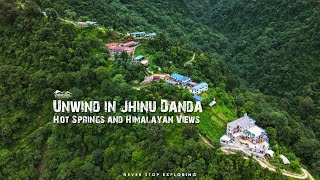
  • Jhinu Danda hot springs – Natural riverside hot springs ideal for relaxation after trekking
  • Diverse landscapes – Trek through subtropical forests, terraced fields, and alpine glacier terrain
  • Rhododendron forests – Colorful floral trails, especially vibrant during the spring season
  • Pokhara – Scenic city, main trekking hub, and starting point of Annapurna region
  • Cultural experience – Insights into Gurung and Magar mountain lifestyle and traditions

Annapurna Base Camp Trek Overview

The Annapurna Base Camp trek takes you from low river valleys to the heart of the Annapurna region, revealing ever-changing landscapes with every step.  The route stretches through Nepal’s Gandaki Province within the Annapurna Conservation Area, covering the Kaski and Myagdi districts.

Your ABC trek begins with a peaceful morning in Pokhara (820 m / 2,690 ft), enjoying calm lakes and mountain views (Annapurna, Dhaulagiri, and Machhapuchhre). 

From Pokhara, the journey continues with a bus ride to Nayapul and Birethanti, followed by an off-road drive to Tikhedhunga (1,570 m). Along the Bhurungdi Khola, riverside trails guide you forward as the path slowly rises through forested hills to Ulleri (1,960 m / 6,430 ft).

As you continue higher, you reach Ghorepani (2,860 m / 9,385 ft), walking through dense rhododendron forests. Here, you experience the local Pun Magar culture and warm hospitality, along with panoramic views of the surrounding peaks.

An early morning hike to Poon Hill (3,210 m / 10,525 ft) offers one of the most memorable moments of the trek. You will be mesmerized by a sunrise that lights up the entire Annapurna Range.

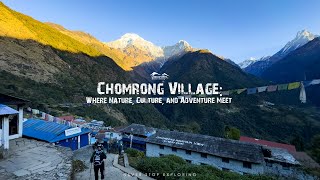
The journey then shifts through forested ridgelines towards Tadapani (2,630 m)/Chuile (2,309 m). You continue through dense oak forests into the traditional villages before reaching Chhomrong (2,165 m), a welcoming Gurung village and an important gateway to the Annapurna Sanctuary.

Beyond this village, the trail becomes more remote, quieter, and more immersive as you pass through villages such as Sinuwa (2,340 m), Bamboo, and Khuldigar. It winds through bamboo groves and thick rhododendron forests as you move deeper into the mountains. 

The trek then continues upward to Himalaya (2,890 m) and Deurali (3,174 m), where the environment begins to feel more alpine and isolated. It’s a longer walk day; you enter the Modi Khola valley, passing through a narrow gorge and overhanging rock like Hinku Cave.

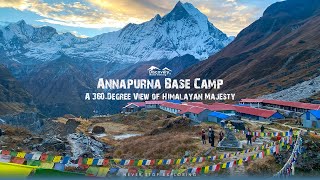
Trekking through the Machhapuchhre Base Camp, the final stretch leads you to the Annapurna Base Camp (4,130 m/ 13,550 ft). Here, you are surrounded by a natural amphitheater of peaks, including  Annapurna I (the world’s 10th-highest peak), Gangapurna, Annapurna South, and Hiunchuli.

The return trail follows the same valley downward in a smooth flow, passing Bamboo and Jhinu Danda. Natural hot springs here provide a relaxing pause before heading back to Pokhara.

The trek to Annapurna Base Camp is a once-in-a-lifetime journey that challenges your physical strength while immersing you in the natural beauty and cultural richness of the region. It offers a true lifetime adventure, leaving you with lasting memories and meaningful experiences of the Himalayas.

Note

The Annapurna Base Camp trek begins with a 6–7 hour drive (approx. 200 km) from Kathmandu to Pokhara. Transportation by a tourist bus is included in our package. For a quicker and more comfortable option, you can choose to fly or take a private jeep at an additional cost

We recommend arriving in Kathmandu at least one day before the trek, ideally by 3 p.m., to allow time for final pre-trek preparations. 

Online Trip Briefing

After confirming your booking with a 10% deposit, the required documents will be requested, which you can share via email or WhatsApp. Once received, we will quickly schedule your personalized online briefing at a time that suits you, and the details will be shared via email.

In this session, you will be guided through the full itinerary, essential packing list, and what to expect on the trail. Through this briefing, we aim to clear your doubts, answer your queries, and ensure you are physically and mentally prepared to begin your journey with confidence.

Day-to-Day Short Itinerary

Day 1

Drive from Kathmandu to Pokhara (820 m). Drive time: Approx. 7 hrs.

Day 2

Drive from Pokhara to Nayapul-Birethanti-Tikhedhunga (1,570 m). Drive time: Approx. 2 hrs. and trek to Ulleri (1,960 m). Trek time: Approx. 4 hrs.

Day 3

Trek from Ulleri to Ghorepani (2,860 m). Trek time: Approx. 4 hrs.

Day 4

Hike to Poon Hill (3,210 m), then trek to Tadapani (2,630 m)/Chuile (2,309 m). Trek time: Approx. 4 hrs.

Day 5

Trek from Tadapani/Chuile to Chomrong (2,165 m)/Sinuwa (2,340 m). Trek time: Approx. 5 hrs.

Day 6

Trek from Chomrong/Sinuwa to Himalaya (2,890 m)/Deurali (3,174 m). Trek time: Approx. 7 hrs.

Day 7

Trek from Himalaya/Deurali to ABC (4,130 m) via Machhapuchhare Base Camp. Trek time: Approx. 5 hrs.

Day 8

Trek from ABC to Bamboo (2,350 m). Trek time: Approx. 6 hrs.

Day 9

Trek from Bamboo to Jhinu Danda (1,780 m) and nearby natural hot springs. Trek time: Approx. 4 hrs.

Day 10

Trek from Jhinu Danda to Siwa/Ghandruk Phedi (1,150 m). Trek time: Approx. 3 hrs. Drive to Pokhara (820 m). Drive time: Approx. 3 hrs.

Day 11

Drive from Pokhara to Kathmandu (1,350 m). Drive time: Approx. 7 hrs.

Planning Your Trek Schedule
Select Departure Date

Plan your trek by selecting the exact start and end dates from the calendar below. Ensure your arrival and departure dates align with your itinerary and schedule. 

Trip Duration11 days
Trip Start and End PointKathmandu / Kathmandu
Su
Mo
Tu
We
Th
Fr
Sa
1
2
3
4
5
6
7
8
9
10
11
12
13
14
15
16
17
18
19
20
21
22
23
24
25
26
27
28
29
30
31
Su
Mo
Tu
We
Th
Fr
Sa
1
2
3
4
5
6
7
8
9
10
11
12
13
14
15
16
17
18
19
20
21
22
23
24
25
26
27
28
29
30
31
Sold out dates

Group-Size Discounts will be applied in next step.

Continue Booking

Annapurna Base Camp Trek Video

Journey to Annapurna Base Camp, the heart of the Annapurna Sanctuary
The ABC trek through forests, villages, and stunning mountain landscapes
Trek to the Himalayas with DWT

Annapurna Base Camp Trek Itinerary

Day 1

Drive to Pokhara (820m / 2,690ft) west of the Kathmandu Valley

Driving Hours
(205km / 127miles) 6-7hrs

After an early breakfast, we take a tourist bus (probably a 6-7 hours journey) to Pokhara. On our way, we can see the picturesque Trishuli and Marsyangdi rivers along the green, rocky mountains, rivers connecting each other, and small springs. 

Pokhara is a beautiful valley known for several lakes - including Phewa and Begnas, and it sits on the laps of Annapurna (8,091m), Machapuchare (6,993m), Dhaulagiri (8,169m), Manaslu (8,156m), and Lamjung Himal (6,983m).

Pokhara is a tourist paradise with all modern amenities providing all comforts. We encourage you to explore Pokhara to experience different cultures and visit various centers of attractions. 

Overnight stay at Silver Oaks Inn (room with attached bathroom)
Included standard meal (Breakfast)
Day 2

Drive From Pokhara to Nayapul /Birethanti /Tikhedhunga (1,570m). Trek to Ulleri (1,960m / 6,430ft)

Driving Hours
2hrs
Trek Distance
7km / 4.34miles
Highest Altitude
1,540m / 5,050ft
Trek Duration
3-4 hrs

After a nourishing breakfast on the banks of Phewa Lake, we take a short drive through the beautiful landscapes and head to Tikhedhunga. The road is quite gentle and passes through Nayapul and then Birethanti. While on the road, you will see stunning terraced farms along the Bhurungdi Khola.

After Birethanti, it is an offroad drive that takes us to Tikhedhunga. The hike starts at Tikhedhunga, passes through Sudame and Hile villages, and ends at Ulleri. You will be hiking for about three hours.

Overnight stay at Hotel Purnima (room with attached bathroom)
Included standard meals (Breakfast + Lunch + Dinner)
Day 3

Trek from Ulleri (1,960m / 6,430ft) to Ghorepani (2,860m / 9,385ft)

Trek Distance
11km / 6miles
Highest Altitude
2,860m / 9,385ft
Trek Duration
3-4 hrs

Today's trek will be exciting as the trail slowly ascends. From the path, you can savor the views of Annapurna, Machhapuchre, and Hiunchuli snow peaks. As we walk through the rhododendron forest, we can see several wild animals, refreshing springs, and rivers. The path then leads us to Ghorepani, which is a spectacular settlement that lies on a ridgeline.

The views of the Himalayas from this village are breathtaking, allowing heavenly sights of Dhaulagiri I, II, III, IV, V, Tukuche, Dhampus, Nilgiri, Annapurna South, Barah Sikhar, and Machhapuchhre (commonly known as Fishtail).

Overnight stay at Hotel Snow Land (room with attached bathroom)
Included standard meals (Breakfast + Lunch + Dinner)
Day 4

Early morning hike to Poon Hill viewpoint (3,210m / 10,525ft) , then trek to Tadapani (2,630m) / Chuile (2,309m)

Trek Distance
11.50km / 7.1miles
Highest Altitude
3,210m / 10,525ft
Trek Duration
4hrs

If you love sunrises, today is your day. Early in the morning, before sunrise, we ascend Poon Hill just in time to view the sunrise on the Himalayas. From Poon Hill, you can see dawn breaking at more than 32 Annapurna ranges along with Dhaulagiri, Nilgiri, and Machhapuchre mountains. Poon Hill is a famous spot for photography, so we will make the most of our visit to Poon Hill by clicking pictures to our hearts' content. 

After spending time on Poon Hill, we descend to our lodge, have our breakfast, and start the trek to Tadapni (2,630m / 8,630ft). But to reach Tadapani, we will be passing through Deurali (2960m) and Bandthanti. If we arrive early at Tadapani, we will trek a little further to Chuile Village.   

Overnight stay at Hotel Grand View Lodge / Mountain Discovery Lodge
Included standard meals (Breakfast + Lunch + Dinner)
Day 5

Trek from Tadapani (2,630m) / Chuile (2,309m) to Chomrong (2,165m)/ Sinuwa (2,340m)

Trek Distance
10km / 6.2miles
Highest Altitude
2,165m / 7,105ft)
Trek Duration
5 hrs

Today's trek will slightly differ based on where we stayed last night. If at Tadapani, we will have our breakfast and continue our journey to Chomrong (2,165m / 7,105ft), passing Chuile on the way. At first, we pass the beautiful Ghandruk Village and then take a steep descent to the Kimron River before reaching Chomrong. From the way, you will see mind-blowing views of Annapurna South and Fishtail.

Chomrong village lies on the lap of the mighty Annapurna massif and is a popular overnight spot for those ascending to Annapurna Base Camp. However, if we stayed at Chuile last night, we stop at Sinuwa to spend the night.

Overnight stay at Panorama View Hotel (room with attached bathroom) / Sinuwa Guest House
Included standard meals (Breakfast + Lunch + Dinner)
Day 6

Trek from Chomrong (2,165m)/ Sinuwa (2,340m) to Himalaya (2,890m)/Deurali (3,174m)

Trek Distance
12km / 7.4miles
Highest Altitude
2,890m / 9,425ft
Trek Duration
6/7 hrs

Today's trek is going to be a bit longer. It also differs a bit based on your previous night's stay. If you stayed at Chomrong, you will follow the trail down to Chomrong Khola on steep stones, but then the path ascends through the bamboo, oak, and rhododendron forests to reach Sinuwa. However, if you spent the night at Sinuwa, the trek starts from Sinuwa. You will get to enjoy the views of Machhapuchre and Annapurna snowcaps from the route. The way passes Khuldigar village, descends to Bamboo Lodge settlements, and ascends to Himalaya (2,890 m / 9,425ft). If you start the trek from Sinuwa, you will stay at Deurali for the night.

Overnight stay at Himalayan Guest House / Sangrila Hotel
Included standard meals (Breakfast + Lunch + Dinner)
Day 7

Trek from Himalaya (2,890m) / Deurali (3,174m) to ABC (4,130m / 13,550ft) via Machhapuchhare Base Camp

Trek Distance
12.5km / 7.7miles
Highest Altitude
4,130m / 13,550ft
Trek Duration
5 hrs

If we spent the last night in Himalaya, we will follow a route through the narrow gorge along the Modi Khola Glacier Valley, past more forests. We will also be passing a large overhanging rock known as Hinku Cave and the lodges of Deurali before making it to the entryway of the Annapurna Sanctuary, which ultimately takes us to ABC. However, if we slept at Deurali, the trek starts from Deurali itself.

Throughout the day, we will be walking close to the Annapurna glaciers. On our way, Machhapuchhre Base Camp offers us a stunning panoramic view of the surrounding mountains. However, we continue our journey northwest to eventually reach ABC.

From ABC, we get a 360-degree view of Hiunchuli, Annapurna South to Annapurna I (8,097m/26,566ft), and Khangsar Kang, Gangapurna, Annapurna III, and Machhapuchhare.

Today's trek takes you close to several huge mountains - including Annapurna Massif (Annapurna I-IV), Dhaulagiri, Machhapuchhre, Manaslu, Gangapurna, Tilicho Peak, Pisang Peak, Paungda Danda, and numerous other peaks ranging from 6000 to 8000m in elevation. This might be the day which you will never forget in your entire life due to the sheer beauty of the snow-capped mountains that surround you. We will spend the night at the Base Camp.

Overnight stay Hotel Paradise Garden Guest House
Included standard meals (Breakfast + Lunch + Dinner)
Day 8

Trek from ABC (4,130m / 13,550ft) to Bamboo (2,350m / 7,700ft)

Trek Distance
14km / 8.6miles
Highest Altitude
4,130m / 13,550ft
Trek Duration
6 hrs

After leaving our footprints on ABC, it is time to climb down. We will take a path that takes us out of the Annapurna Sanctuary and out of the Modi River Valley. Eventually, we will make it to our serene stopover point called Bamboo (2,350m / 7,700 ft) - our destination for the day.

Overnight stay at Buddha Guest House
Included standard meals (Breakfast + Lunch + Dinner)
Day 9

Trek from Bamboo (2,350m / 7,700ft) to Jhinu Danda (1,780m / 6,393ft) and nearby natural hot springs

Trek Distance
8.5km / 5.2miles
Highest Altitude
2,350m / 7,700ft
Trek Duration
3-4hrs

After a long journey from ABC to Bamboo last day, we continue our way towards Jhinu Danda. First, we take a path that takes us down to Kimrong Khola and then ascends through the serene rhododendron, bamboo, and oak forests, eventually reaching Jhinu Danda.

Jhinu Danda consistently attracts thousands of visitors each year as an exotic place famous for its soothing natural hot springs, where we will also let our tired muscles relax. From the hot springs, you can enjoy the views of rhododendron forest and lush vegetation.

Overnight stay at Hotel Park Himalaya (room with attached bathroom)
Included standard meals (Breakfast + Lunch + Dinner)
Day 10

Trek from Jhinu Danda (1,780m / 6,393ft) to Siwa/Ghandruk Phedi (1,150m / 3,770ft) and drive to Pokhara (820m) via Nayapul

Trek Distance
4km / 2.4miles
Highest Altitude
1,780m / 6,393ft
Trek Duration
2-3hrs
Driving hours
2-3hrs

We have reached our final day on the trekking trails. After leaving Jhinu Danda, we follow the plain dust road along the right of Modi Khola. This part of the trek forms the most relaxing walk of the entire trip. After trekking for about three hours, we will reach Siwa/Ghandruk Phedi, where we will bid goodbye to the trails and drive through the picturesque countryside to Pokhara. We will be spending the night at Pokhara.

Overnight stay at Silver Oaks Inn with an attached bathroom
Included standard meals (Breakfast + Lunch)
Day 11

Drive from Pokhara (820m / 2,690ft) to Kathmandu (1,350m / 4,450ft)

Driving hours
205 km /127 miles) - 6-7hrs

Early in the morning, we leave Pokhara and head to Kathmandu on a tourist bus. The 200 km route first follows the Marsyangdi River and then the Trishuli river providing great views of the natural scenery and terraced farmlands. The bus makes one last climb, and we finally arrive at Kathmandu - the exact place where the journey began. Your trip concludes, and we hope that your journey was pleasurable and rewarded you with lifelong memories.

Note - You can take a 20-minute flight from Pokhara to Kathmandu at an extra cost.

Included standard meal (Breakfast)

What is included in this trek package?

Transportation

  • Transportation for Kathmandu-Pokhara-Kathmandu on tourist bus
  • Private transportation to and from Kathmandu Airport and your hotel

Accommodations

  • Two nights accommodation with breakfast (room with attached bathroom) at Silver Oaks Inn in Pokhara
  • Total 8 nights. Four nights room with attached bathroom at Ulleri, Ghorepani, Chomrong & Jhinu Danda. Four-night standard room at Tadapani, Himalayan, Annapurna Base Camp, and Bamboo (Generally twin Sharing room)

Food

  • Standard full-board meals (9 lunches, 8 dinners, and 9 breakfasts), with one main course per meal during the trek
  • Seasonal fresh fruits every day
  • Water purification tablets

Guide and Porter

  • Government licensed Discovery World Trekking experienced trek leader (guide), an assistant trekking guide for 12 or more trekkers.
  • Porters to help trekkers luggage (1 porter for two trekkers, max luggage limit per trekker is 9 kg)
  • Guides and porters costs - including meals, insurance, salary, lodging, transportation, and other necessary equipment

Trek permits and expenses

  • Annapurna Conservation Area Permit (ACAP) fee
  • Trekkers Information Management System (TIMS) card fee
  • All government, local taxes, and official expenses

Medical Assistance

  • Arranging rescue operations in case of complicated health conditions (funded by travel insurance)
  • Medical kits, including an oximeter to monitor blood oxygen saturation levels in high altitudes

Souvenir

  • Souvenir - company's T-shirt & cap

Farewell

  • Discovery World Trekking certificate of appreciation after successful trek
  • Farewell dinner at the end of the trek in Kathmandu

Benefits

  • Sleeping bags and down jackets, duffle bag (one for every two trekkers) if you do not have your own
  • Free excess luggage storage at the Discovery World Trekking store for the duration of the trek

What is excluded in this trek package?

International Flight

  • International flight airfare

Accommodations

  • All accommodation in Kathmandu, before and after the journey
  • Extra night accommodation in Kathmandu and Pokhara due to early arrival or late departure, early return from the trek.

Food

  • All meals in Kathmandu, before and after the journey
  • Extra night meals in Kathmandu and Pokhara due to early arrival or late departure, early return from the trek.
  • Lunch and dinner in Pokhara

Guide and Porter

  • Tips for guide and porters

Visa

  • Nepal Entry Visa Fees for multiple entries on arrival at Tribhuvan International Airport- (15 days - $25-30, 30 days- $40-50 and 90 days- $100-110)

Travel Insurance

  • Travel insurance has to cover emergency high-altitude rescue and evacuation along with medical coverage

Personal Expenses

  • Personal expenses (shopping, snacks, bottled water or boiled water, hot (tea, coffee) and cold drinks, hot shower, alcohol, Wi-Fi, telephone call, battery re-charge fee, extra porters, etc
  • Personal clothing and gear

Other Expenses

  • Excess baggage charges (Limit is 9 kg per person)
  • Additional costs due to delays caused by circumstances outside company control like landslides, weather conditions, itinerary modifications due to safety concerns, illness, change of government policies, strikes, etc
  • All the costs and expenses, which are not listed in "What is included in the 11 days Annapurna Tour Package?" above will be counted as excludes

Annapurna Base Camp Trek Map

Equipment list for ABC Tour Package

Depending on the season, you need different gear (clothing) for the ABC Trek, but here is a list we have compiled for you. We advise you to bring only the essentials. Your luggage weight limit is 9 kg.

We assign a porter for two people. Hence, we recommend you find a fellow trekker and pack your things together in a duffle bag with a capacity of over sixty liters. You can store your excess luggage at Discovery World Trekking for free.

Head

  • Sun hat (wide-brimmed)
  • Beanie (for warmth)
  • Buff or neck gaiter (for sun protection and warmth)
  • Lightweight headlamp (with adjustable brightness)
  • High SPF sunscreen
  • Lip balm with SPF
  • Sunglasses with UV protection
  • Face wipes

Upper Body

  • Moisture-wicking t-shirts (short and long sleeves)
  • Thermal base layer (for colder conditions)
  • Fleece jacket and down jacket
  • Lightweight puffy jacket (for extra warmth)
  • Waterproof and windproof jacket (Gore-Tex or similar)
  • Raincoat
  • Lightweight, breathable long-sleeve shirt
  • Polypropylene underwear (four)

Hands

  • Insulated gloves or mittens (for cold weather)
  • Waterproof gloves (for wet conditions)

Lower Body

  • Quick-drying pants/trousers (convertible or full-length)
  • Insulated pants (for colder conditions)
  • Lightweight cotton pants
  • Thermal leggings or long underwear (for colder weather)
  • Two pairs of thermal/trekking trousers (pants)

Footwear

  • Thick Wool or synthetic moisture-wicking socks (4 pairs)
  • Waterproof, ankle-supportive broken-in full hiking boots (with good traction)
  • Sandals (for camp use or river crossings)
  • Gaiters (for protection against mud, water, and debris)

Toiletries

  • Biodegradable bar soap
  • Toothbrush and toothpaste
  • Medium-size drying towel
  • Wet wipes or hand sanitizers
  • Toilet paper (In a Ziplock bag) 
  • Feminine hygiene products
  • Travel-sized shampoo
  • Nail clippers
  • Small mirror

Backpacks

  • Duffle bag (capacity of over 60 liters) for porters** (One duffle bag for two trekkers).
  • Backpack or daypack (capacity 20-30 liters) for yourself

Personal accessories

  • Adjustable and lightweight poles (preferably collapsible)
  • Water bottle or bladder with a capacity of at least 2 liters (insulated for cold weather)
  • Water purification system (tablets, filter, or UV purifier)
  • Sleeping bag (-10 to -15 degrees is the best) **

Extra items

  • Camera/smartphone (extra memory cards and batteries)
  • Extra batteries or rechargeable power bank (for charging devices)
  • Two-pin charging plug
  • Basic first aid supplies (band-aids, antiseptic wipes, pain relievers, Diamox)
  • Personal medications (inhalers, allergy meds, etc.)
  • Few passport-size photos
  • Passport photocopies
  • Notebook and pen
  • Binoculars
  • Swiss army knife or multi-tool (with scissors, can opener, etc.)

**We can provide you with a (used, nonwaterproof) duffle bag, (used) down jacket, and (used) sleeping bag if you do not have your own.

Annapurna Base Camp Trip Details

Planning your Annapurna Base Camp trek is about understanding how the journey unfolds on the trail, from village paths and forest sections to high-altitude mountain terrain at the heart of the Annapurna Sanctuary.

This section gives you a clear idea of what to expect during the trek so you can prepare with confidence.

What Can You Expect Upon Arrival for ABC Trek?

Upon arrival at Tribhuvan International Airport, a representative from us (Discovery World Trekking) will greet you with a Namaste. You will easily recognize them as they will be holding a placard with your name.

As part of the welcome tradition, you may receive a marigold garland or a Khada, offering a warm introduction to Nepali hospitality.

Airport Pickup and Hotel Transfer

You will then be transferred to your hotel in Kathmandu via a private vehicle, ensuring you feel comfortable in a new country and environment.

What’s included:

  • Private airport pickup
  • Assistance with hotel check-in
  • Optional help with currency exchange or SIM card purchase

If needed, we can help you choose a hotel based on your budget and preferences. Most travellers stay in Thamel, Kathmandu’s main tourist hub, with easy access to trekking shops, restaurants, and travel services.

Transportation to Pokhara From Kathmandu

Your trek to Annapurna Base Camp officially begins with a scenic journey from Kathmandu to Pokhara. Our package includes a tourist bus ride departing from Sorakhutte around 7:00 AM.

Following the Marsyangdi and Trishuli rivers, the drive takes approximately 6–7 hours, offering beautiful views of rivers, hills, and villages along the Prithvi Highway.

Transport options:

  • Tourist Bus (Included)
    • Comfortable seats
    • Budget-friendly
    • Scenic experience
  • Domestic Flight (Optional)
    • Duration: ~25 minutes
    • Cost: additional
    • Best for saving time
  • Private Vehicle (Recommended)
    • Flexible and comfortable
    • Ideal for families or groups
    • For a safe journey

While the bus journey is longer, it adds to the overall experience of travelling through Nepal.

However, many trekkers choose flights for convenience, especially during tight schedules.

When Should You Arrive in Kathmandu Before the Trek?

It is highly recommended to arrive in Kathmandu at least one day before your Annapurna Base Camp trek departure, ideally before 3 PM.

This buffer time is mandatory as it:

  • Allows time for rest after international travel
  • Gives you time to exchange your currency to NPR
  • Provides an opportunity for gear checks and shopping
  • Ensures you can attend the trek briefing before starting the trek
  • Helps manage any unexpected flight delays

Before your trek begins, we conduct a short pre-briefing at our office. In this session, our team lead, Paul, will:

  • Explain the trekking route clearly
  • Share key insights on acclimatisation
  • Confirm your travel insurance documents
  • Perform last-minute checks of your trekking gear
  • Introduce you to your guide, porter, and the team
  • Ensure you are fully prepared and confident for the trek ahead

Accommodation for Annapurna Base Camp Trek

Accommodation on the ABC Trek is primarily based on traditional teahouse lodging, supplemented by a comfortable hotel stay in Pokhara. The journey moves from developed villages at lower elevations to very basic mountain lodges near the base camp. 

Stay at Different Lodges

On this trek, you will spend eight nights in different lodges/teahouses and two nights in Pokhara. We aim to organize a comfortable stay that aligns with the realities of high-altitude trekking availability.

You will stay at:

  • Ulleri, Ghorepani, Chomrong, Jhinu Danda
    • Rooms with attached bathrooms (where available)
    • More comfortable compared to higher-altitude stops
    • Improved facilities due to relatively developed villages
  • Tadapani, Bamboo, Himalayan area, ABC (Annapurna Base Camp)
    • Standard twin-sharing teahouse rooms
    • Basic bedding and simple furnishings
    • Shared bathroom facilities in most lodges
    • Facilities become more basic with increasing altitude

Note: During peak trekking seasons, teahouses and lodges can become busy and crowded. Due to high demand and limited accommodation in a conservation area, you may be placed in shared dormitory-style rooms with 3–4 beds. However, you still have your private bed.

Stay at Pokhara

You need to stay in Pokhara for two nights: One night before your trek starts and one night after completing your trek

We manage your stay in the Silver Oaks Inn, a hotel with modern facilities such as:

  • Attached bathroom
  • 24-hour hot water
  • Television
  • Laundry service
  • Comfortable bedding and a relaxed environment for recovery

Kathmandu Stay

Additionally, most trekkers choose to include two extra nights in Kathmandu. One before heading to Pokhara, to recover from the exhaustion due to long hours of flight and preparation. One after the trek to rest and readjust your body after this physically demanding trek.

Please note that your stay in Kathmandu is not included in the package. However, we can assist you in selecting a hotel based on your budget and preferences. 

Typical Teahouses on ABC Trek

Teahouses are small, family-run mountain lodges found along the entire ABC trail. They are the main resting spots in the Himalayas, which provide basic lodging and meals for trekkers.

Key Features of Teahouses:

  • Twin-sharing rooms are the most common setup
  • Basic bedding (mattress, pillow, blanket)
  • Communal dining hall (social hub of the lodge)
  • Shared or attached bathrooms, depending on altitude
  • Simple but warm hospitality from local families
  • Cozy and evening gatherings with locals and fellow trekkers
  • The dining room is the only heated space
  • Charging points are usually available in common areas
  • No luxury, but comfortable enough for trekking needs

Note: Comfort decreases with altitude, but hospitality remains consistent throughout the route.

What Facilities Are Available in the Rooms?

Room facilities during the Annapurna Base Camp trek vary depending on altitude and location. While the lower regions offer comfort, higher-altitude lodges provide essential services considering the trekking conditions. 

Bed

Along the teahouses in the trail, you can find twin beds with basic bedding. Each bed is equipped with a wooden bed frame, a foam mattress, a basic pillow, and a blanket.

Temperatures at higher altitudes, like Deurali and base camp, can drop significantly at night. So, you need to carry proper sleeping gear for comfort. In your request, we can provide you with a sleeping bag. 

Important tips:

  • Bring a sleeping bag (recommended) for extra warmth
  • Extra blankets may be available upon request
  • Rooms are not heated, but dining areas are

Attached/toilet bathroom

Bathroom facilities during the ABC trek vary significantly based on altitude. In lower areas (Ulleri, Ghorepani, Chhomrong), many teahouses offer attached bathrooms with Western-style toilets

As you ascend to higher places (Bamboo, Deurali, ABC), shared bathrooms and squat-style toilets become more common.

Some bathroom amenities may not be available in lodges. So you can bring:

  • Personal toilet paper
  • Hand sanitizer
  • Small easy-dry towel

Note: Although basic, the bathrooms and toilets are generally clean and well-maintained.

Hot Showers

Hot showers are available at most stops along the trail, but they are not always included in the package and usually come at an additional cost.

Shower details:

  • Cost: $2 – $4 USD per shower (approx.)
  • Type: Gas-heated or solar-heated
  • Availability: More reliable at lower elevations

At higher altitudes, hot showers may be limited due to weather conditions and resource availability.

When available, bucket showers are more common, and you will be charged an extra fee.

Important Tips:

  • Carry wet wipes for backup hygiene
  • Take a shower earlier in the trek (better facilities)
  • Avoid frequent showers at higher altitudes

Electricity & Battery Recharge

Electricity is common throughout most of the ABC trekking route, but access becomes more limited and costly at higher elevations.

Charging is typically available in the dining area of teahouses. In lower regions, electricity is usually powered by hydropower and is more accessible. In higher regions, teahouses mainly rely on solar energy, limiting the charging time.

Important Tips:

  • Carry a power bank
  • Bring universal adapters for a 2-pin charging point, which is widely used in Nepal.
  • Charge devices whenever possible in the lower villages

Room Space and Insulation

Rooms in teahouses along the route are minimalistic and designed completely for sleeping and resting. Comfort is basic, and space is limited, especially as you ascend to higher altitudes.

In these rooms, you can have:

  • Small shelf or corner space for essentials
  • Hooks for hanging jackets, backpacks, and gear
  • Limited floor space shared between two trekkers (can be 4 in peak seasons)
  • Minimal insulation against cold
  • Wooden or plywood walls and single-layer windows

You need to consider that:

  • No lockers or secure storage facilities are available in the room
  • You should always keep your valuables in your daypack
  • Rooms are shared, so we recommend packing light
  • Bring warm layers and sleeping clothes for comfort

Room Heating Situation

Room heating or heaters are not available in the teahouse sleeping rooms along the ABC trail. Warmth usually depends on proper clothing, bedding, and food intake. 

What to expect:

  • No heating is provided in sleeping rooms
  • Only dining halls have heating (usually from a central stove)
  • Lodges in higher villages can become extremely cold at night

Lightings in Rooms

You can expect basic lighting in your room, usually with a single bulb, which is enough for general use. Whereas, the availability may vary by location and time of day, depending on the power source.

What to expect:

  • Simple bulb lighting (electric or solar-powered)
  • Dim lighting in higher villages
  • Occasional power cuts or limited evening supply

Tip: Carrying a headlamp is helpful, especially when lighting is limited in the evenings.

Meals during the Annapurna Base Camp Trek

Meals during your trek are not just for basic nutrition but also for sustained energy, acclimatisation, and maintaining pace. During your 11-day journey to Annapurna Base Camp, we typically provide:

  • 9 breakfasts
  • 9 lunches
  • 8 dinners

You can find the menu mixed with Nepali, Asian, and simple Western dishes. However, as you gain altitude, the menu becomes shorter. The focus shifts from variety to energy-rich, warm, and easy-to-digest meals, which are crucial for maintaining stamina and handling the trek's difficulty.

Note: We follow a full board meal plan, so your package includes one dish per meal. If you wish to order extra dishes, you will be charged separately.

Breakfast Options

Breakfast is served early and focuses on warm, energy-rich foods to prepare you for several hours of trekking. You can find simpler options as you move higher, but they are enough to meet your daily energy needs.

Food ItemWhat you will getBenefit
Porridge / OatmealCarbohydrateSustained Energy
Eggs (boiled/scrambled/omelette)ProteinMuscle recovery
Tibetan bread/toastCarbohydrateQuick energy
PancakesLight CarbsEasy to digest
MuesliMixed nutrientsLight meal

You can pair these foods with hot drinks, such as black tea for warmth and ginger tea for digestion.

Lunch and Dinner Options

Lunch and dinner are filling meals designed to restore your energy after long hours of trekking and support your recovery. You will have lunch along the trail, while dinner is served at your overnight stop.

During the trek, you will find that the staple dish is Dal Bhat, a traditional Nepali balanced meal that includes rice, lentil soup, vegetables, and pickles. It provides a nutritious mix of carbohydrates, protein, and micronutrients that usually comes with free refills.

You can find other options too:

DishIngredientsTypeWhy It’s Recommended?
Dal BhatRice, Lentil, Potato fry, Vegetable curry, Achar/pickleBalanced mealHigh energy + refill, Available at all altitudes
Fried RiceRice and vegetables/eggCarbs + light proteinEasy digestion, and common in every teahouse
ChowmeinNoodles and Vegetables/eggCarbohydrate + light proteinQuick energy and easily available in all lodges
SoupsVegetable, garlic, mushroomLight + hydratingGood for hydration at higher elevations
PotatoesBoiled or friedCarbohydrateFilling, simple, and widely available

Note: You should avoid heavy, oily, and overly rich foods.

Drinks Options

Throughout the ABC trek, drinks play an important role in keeping you hydrated, providing warmth, and supporting adaptation as you ascend.

As temperatures drop and physical exertion increases, we recommend consuming warm liquids for both comfort and health.

At a higher altitude, you can go for:

  • Ginger Tea – Highly recommended as it aids in digestion and provides warmth to your body.
  • Garlic Soup – A traditional Himalayan remedy believed to support acclimatisation.
  • Lemon Tea/Hot lemon – Excellent choice for hydration and a boost of vitamin C.
  • Green Tea – Good alternative for light hydration.

Do not consume:

  • Alcoholic beverages, as they increase dehydration and altitude-related risks
  • Caffeinated drinks, as they can disrupt sleep and dehydrate you
  • Cold beverages, as the weather is already cold, and your body needs warmth for recovery.

Note: Drinks and beverages are not included in our package, so you should set aside a separate budget for them.

Drinking Water

Due to increased physical activity and exposure to altitudes, we advise all trekkers to stay well hydrated. You should aim to drink at least 3 – 4 litres of water daily

Water is available throughout the trail, but not all sources are safe without treatment. You should avoid drinking directly from rivers, glaciers, springs, taps, or other sources.

Teahouses provide boiled water at an extra cost, which is the safest and most commonly used option. You can also opt for bottled water at lower elevations. However, the sale of bottled water is prohibited in the Annapurna Region, beyond Ghorepani. 

Note:

  • Carry reusable bottles or a hydration pack and refill them at teahouses
  • Use purification tablets even for boiled water
  • Sip water frequently, even if you don’t feel thirsty, at higher altitudes
  • Add hydration salts (ORS/electrolytes) if you feel tired or dehydrated

Dietary Restrictions and Allergies

During the Annapurna Base Camp trek, teahouses can manage most dietary needs with prior notice. But due to the remote nature, the options become limited at higher altitudes.

You can opt for simpler meals that are easier to digest. 

Note: Meals are prepared in small kitchens with limited ingredients, so highly customized diets may not always be possible. There is also a possibility of cross-contamination in some cases. 

Do you prefer any specific diet?

You don’t need to worry. Vegetarian meals are widely available in every teahouse and are often the safest option because of fresh vegetables. Lodges can also accommodate Vegan and Gluten-free diets on request.

Vegetarian

  • Most recommended as the safest and most reliable meal option
  • Includes Dal Bhat, vegetable noodles, fried rice, potato dishes, and a variety of soups
  • Has the lowest risk of contamination
  • Prepared using locally available vegetables and ingredients
  • Some dishes may include butter or ghee; you can inform your guide in advance if you prefer to avoid them

Vegan

  • The availability is moderate but manageable with clear communication
  • Includes plain rice, lentils, vegetable curry, boiled potatoes, and vegetable soups
  • Main concern is hidden dairy, such as ghee, butter, or milk, may be used in cooking and tea preparation
  • You can request “no dairy” when ordering your meals or tea

Gluten-free

  • Can be limited, as the main meals are carbohydrate-based and may contain gluten.
  • Safe options can be rice, daal, eggs, and some soups
  • Avoid noodles, bread, pasta, and pancakes
  • Carry some snacks from Kathmandu
  • Double-check your ingredients
Are you worried about your allergies?

It can be managed if you inform us and your guide before the trek starts. The main thing you need to consider, especially if you have any allergies, is to go for freshly cooked meals and avoid complex or mixed dishes.

  • Lactose intolerance: Ask to exclude dairy products, avoid milk tea, cheese dishes, and butter-based foods.
  • Nuts Allergy: Nuts are rare in Nepali meals, but they may appear in snacks or desserts. Be cautious while having desserts or pies.
  • Egg Allergy: Eggs are a common breakfast food, so inform your guide clearly to exclude them.

Food Safety Tips

Safety is the main concern while you are in mountain regions. Even minor stomach issues can affect your performance and enjoyment. So, always prioritize freshly prepared meals and safe water.

Teahouses along the route generally follow basic hygiene practices, but you should take personal precautions to minimize risks. 

Those precautions are:

  • Always choose hot, freshly cooked food
  • Wash your hands before eating, or use sanitizer
  • Carry basic medication for stomach issues, including oral rehydration salts
  • Avoid raw salads, uncooked dishes, and food that has been left uncovered
  • Eat slowly and avoid overeating to support digestion at higher elevations
  • Stick to a consistent eating routine to help your body adjust
  • Avoid alcohol and limit caffeine intake during the trek
  • Ensure safe drinking water by choosing boiled, treated, or bottled options
  • Inform your guide immediately if you experience any acclimatization symptoms
  • Include any prescriptions and essential medicines in an easily accessible pocket
  • Check basic hygiene before eating in teahouses (clean utensils and covered food)

What Foods Should You Avoid During the Trek?

As you ascend during the ABC trek, food storage becomes more limited, and your body’s ability to digest heavy meals gradually decreases. So some foods are best avoided to reduce health risks.

Non-vegetarian food is commonly discouraged at higher altitudes because meat is transported over long distances without reliable refrigeration.

Other foods to avoid are:

Food TypeReason to Avoid
Meat dishesHygiene concerns, it may not be fresh, higher risk of food poisoning or stomach infections
Dairy-heavy itemsDifficult to digest in high altitudes, can cause bloating, nausea, or stomach discomfort
Fried/Oily foodHigh in fat and takes longer to digest, leading to sluggishness and reduced energy efficiency
AlcoholCauses dehydration and affects oxygen absorption, increases the risk of altitude sickness, and slows acclimatisation
Carbonated DrinksCan cause gas buildup and stomach-related issues: bloating, discomfort, and reduced appetite

Annapurna Base Camp trek Permits

To complete the ABC trek, an ACAP permit is required. It is not just for formality but is actively checked at multiple points, such as Birethanti and Chhomrong. 

Annapurna Conservation Area Permit (ACAP)

This permit grants access to the Annapurna Conservation Area, Nepal’s largest protected region. It is a mandatory access that costs around NPR 3,000 (~$25 USD)

The fee directly contributes to trail maintenance, wildlife protection, and local community development. 

Trekkers’ Information Management System (TIMS) Card

This system helps authorities track trekkers for safety purposes. In case of emergencies, your location and route can be identified quickly. 

As of 2026, it is not necessary to have a TIMS card if you are travelling with a licensed guide or a registered trekking company. It costs around NPR 2,000

Important thing you need to consider:

  • You must carry physical copies during the trek
  • Permits are non-transferable and non-refundable
  • Is a one-time entry, valid for your whole trekking journey
  • Are checked while entering and exiting the conservation area
  • Missing permits can stop your trek mid-route, or you could be asked to return
  • We handle all paperwork (forms, payments, stamps) before the trek starts
  • You only need to provide your
    • Passport copy
    • Passport-sized photos
  • If you want to get it yourself, you can get the permit at the Nepal Tourism Board Office in Kathmandu or Pokhara.

Travel Documents for Annapurna Base Camp Trek

For your stay in Nepal and trekking within Annapurna Sanctuary, you are required to carry: 

  • a valid passport
  • a tourist visa for entry into Nepal
  • a travel insurance that covers emergency medical and evacuation expenses

Visa Information

While entering Nepal, most international travellers need a tourist visa, except Indian nationals. You can easily get a visa upon arrival at Tribhuvan International Airport in Kathmandu, although queues can be longer during peak trekking seasons.

For the ABC trek, we recommend a 30-day visa, as it provides flexibility in case of itinerary changes, delays, or trip extensions.

Visa on Arrival Process

  • Fill out the online visa application form in advance (recommended) or complete it at airport kiosks.
  • Submit your passport (valid for at least 6 months)
  • Provide one passport-size photo (carry extras as backup)
  • Pay the visa fee ($50 USD for 30 days)
  • Carry cash for the payment (USD preferred)

Note: Some nationalities are not eligible for a visa on arrival. In such cases, you must obtain a visa in advance through a Nepalese embassy in your home country. We recommend checking the Nepal Immigration website for the latest eligibility updates before travelling.

Travel Insurance for Annapurna Base Camp Trek

Travel Insurance is not just a requirement for trekking at high altitudes and remote terrain. It is a critical safety net, as evacuation is only possible by air.

Helicopter evacuation from areas such as MBC, Deurali, or ABC can cost around $3,000 to $5,000 USD. Without insurance, this cost must be paid up front and can be financially overwhelming.

Your policy must include:

  • Helicopter Evacuation up to 4,000 meters
  • High-altitude trekking (covering at least 4,130 m)
  • Emergency evacuation without up-front payment
  • Emergency medical treatment expenses in Kathmandu
  • Trip delays and cancellations due to weather

Note: Not all insurance policies cover trekking above 4,000m; this is a common reason for rejection. Before purchasing the policy, contact your insurance provider directly and confirm the coverage.

How Much Money Should You Carry for Personal Expenses?

When booking an Annapurna Base Camp trek, your package already covers essentials such as accommodation, meals, guide/porter services, and basic trekking support. However, you should still budget for additional personal expenses during the journey. 

Daily Budget

Your daily budget depends on your personal spending habits and preferences.

We recommend allocating around $15-$20 USD (in NPR) per day to cover extra costs such as snacks, beverages, souvenirs, Wi-Fi access, and device charging.

Tip: Don’t forget to allocate extra funds for tipping your guide and porter at the end of the trek.

Currency Exchange

All trekking expenses along the route must be paid in Nepali Rupees (NPR), so carrying enough cash from cities is essential. You can exchange your currency to NPR from money exchangers or ATMs. 

Best places to exchange money are:

  • Kathmandu (Thamel) – best rates and plenty of money exchangers
  • Pokhara (Lakeside) – convenient if you are heading directly to the trek

Key to consider:

  • ATM are available and reliable in Kathmandu and Pokhara only
  • Exchange money before starting the trek
  • Teahouses operate on a 100% cash-only system
  • Carry a mix of small changes (NPR 100 and 500) for easier payments
  • Foreign currency is useful only for exchange or tipping, not for direct payments
  • Avoid relying on cards; they are not accepted on the trail
  • ATM withdrawal limit is ~ NPR 10,000 to 30,000 per transaction and up to NPR 50,000 per day
  • NPR 500 will be charged for each withdrawal

Note: Please inform your home bank about the trip to avoid card blocks.

Pre-Trek Expenses

The trek does not require any specific training, but you can prepare with basic fitness such as gym workouts, swimming, or short hikes. 

Before starting the trek, you may spend on:

  • Fitness preparation to build strength and endurance
  • Collecting/buying essential personal gear
  • Travel insurance, including a helicopter evacuation
  • Nepal Visa fee and international flight costs
  • A SIM card with data in Nepal
  • Energy snacks (protein bars, dry fruits)
  • Renting other trekking gear, such as backpacks, down jackets, boots, and thermals

Note: With good advance planning, you can easily control overspending in tourist areas. Our guide will advise you on managing additional costs.

Annapurna Base Camp Weather

The weather in the Annapurna Sanctuary behaves differently due to its bowl-shaped geography, which traps clouds and moisture. 

You will experience mild, comfortable weather in the lower areas, but it becomes colder and more unpredictable as you ascend to higher elevations (ABC - 4,130 m)

How does the weather behave across different altitudes on the Annapurna Base Camp route? It’s something many trekkers don’t think about until they experience it firsthand. 

The table below gives an overall overview of the weather by location:

Location with AltitudeDay TemperatureNight TemperatureWeather Conditions
Pokhara (820 m / 2,690 ft )20 – 30°C10 – 15°CWarm, humid, and stable weather. Comfortable with light clothing.
Ulleri (1,960 m / 6,430 ft)15 – 20°C05 – 10°CMild weather with occasional clouds. Cooler evenings and light layers are needed.
Ghorepani (2,860 m / 9,385 ft)10 – 15°C0 – 05°CCool temperatures with foggy mornings, chilly evenings/nights.
Deurali (3,174 m / 10,413 ft)05 – 10°C-02 – 02°CColder, cloud-prone weather with the possibility of snowfall.
Annapurna Base Camp (4,130 m / 13,550 ft)0 – 10°C-05 – 10°CVery cold, windy, and freezing nights. Strong sun during the day, high UV exposure and thin air.

Tip: For accurate and up-to-date weather conditions, please refer to the official Weather Forecast

While on the ABC route, you need to consider:

  • Layering to adapt to temperature changes
  • Mornings are the best for the clearest mountain views
  • Expect cloud buildup and reduced visibility after midday
  • UV exposure is strong, so use sunscreen and sunglasses
  • Nights are cold even in peak trekking seasons
  • Occasional snowfall above Deurali
  • Keep buffer days for potential weather delays

Best Time to Trek Annapurna Base Camp

The best time to trek to Annapurna Base Camp depends on what kind of experience you’re looking for. Weather, visibility, temperature, and trail conditions change a lot across seasons, directly affecting your trekking experience. 

Overall, spring and autumn are considered the most favourable, while monsoon and winter offer more challenging but quieter experiences. 

Spring Season (March - May)

Spring is one of the most popular and enjoyable times to trek to ABC, offering a perfect mix of good weather and natural beauty.  As you walk through the lower valleys and climb higher, the landscape becomes increasingly colorful and alive.

  • Temperature: About 10°C to 20°C at higher altitudes, moderate below
  • Weather feel: Mostly clear skies with occasional light afternoon rain
  • What you see: Forests full of blooming rhododendrons, green hills, and open mountain views
  • Trail experience: Dry and well-marked paths, comfortable for long trekking days
  • Best part: You experience a colorful landscape with strong visibility

Autumn Season (September - November)

Autumn is considered the best overall season because everything feels balanced: stable weather and excellent visibility, and better trail conditions. After the monsoon, autumn brings you with the clear skies, providing crisp, uninterrupted views of the mountains. 

  • Temperature: About 8°C to 18°C at higher altitudes
  • Weather feel: Clear, dry, stable, and consistently clear skies
  • What you see: Crystal-clear Himalayan peaks, golden fields, and sharp landscapes
  • Trail experience: Excellent walking conditions with very little disruption
  • Best part: You get the clearest and most photogenic mountain views of the year

Summer/Monsoon (June - August)

The monsoon brings a completely different atmosphere to the trek: heavy rainfall that makes trails wet and slippery. However, you will experience the Himalayas in their most lush and raw form, offering a different kind of beauty for those who don’t mind the rain.

  • Temperature: About 12°C to 22°C, warm and humid in lower regions
  • Weather feel: Frequent rainfall, cloudy skies, and unpredictable conditions
  • What you see: Deep green forests, flowing waterfalls, but often hidden mountains
  • Trail experience: Wet and slippery paths with possible delays or detours
  • Best part: Very quiet trails but incredibly rich greenery

Winter (December - February)

Winter shows you a calm and snow-covered side of the Annapurna region. It is peaceful, but also more physically demanding due to the cold and snow at higher elevations.

  • Temperature: Can drop to -10°C at higher camps, 0°C to 10°C lower down
  • Weather feel: Cold but mostly clear skies with crisp visibility
  • What you see: Snow-covered peaks, frozen waterfalls, and silent valleys
  • Trail experience: Fewer trekkers, but snow may slow down your movement
  • Best part: Extremely peaceful surroundings with clear mountain views

Comparison Table

SeasonTemperatureCrowdWhat to Expect?
Spring (Mar–May)10°C to 20°C (lower altitudes), colder (10°C to 0°C) at base campModerate to high, Busy but enjoyableThe trail feels alive with blooming rhododendrons and clear mornings. Expect good weather overall, but afternoons can get a bit hazy. Lodges may be slightly busy.
Autumn (Sep–Nov)Day: up to 20°C Night: around 5°C (warmer in lower regions, colder at higher regions)High, Peak season and very busyThe most reliable time to trek. Skies are usually crystal clear, and mountain views are at their best. It’s the busiest time, so trails and teahouses can feel crowded.
Monsoon (Jun–Aug)Day: 10°C to 23°C Night: 5°C to 10°C 15°C to 25°C in lower regions, cooler higher upVery low and quietEverything turns green and fresh, and trails are peaceful. But rain is frequent, paths get slippery, and mountain views are often blocked by clouds.
Winter (Dec–Feb)-5 °C to -10°C (can drop lower at night)Very low and quietYou get stunning, clear views and peaceful trails. But it can get very cold, and snow at higher sections may make it tougher to trek.

If you want to explore more, go through the Annapurna Travel Guide.

Typical Day on the Annapurna Base Camp Trek

Each day on the ABC trekking is structured to balance physical effort, rest, acclimatization, and recovery. We follow a well-balanced routine that helps you maintain steady energy levels while adjusting comfortably to changing altitude and terrain.

The usual routine is:

Breakfast (7–8 AM): The day begins with a warm breakfast in the teahouse, followed by packing your duffel bag and handing it to your porter. You begin trekking soon after, when the weather is clear, and your energy levels are high.

Morning Trek:  The first stretch of the trek is often the most energetic, with (3 – 4 hours) of trekking through forests, villages, and suspension bridges. Short breaks along the way help you to rest, hydrate, and enjoy the scenery.

Lunch (12–1 PM): A mid-day stop at a lodge to refuel your body with a freshly cooked, fulfilling meal and take a longer rest period. This break is important for restoring energy and preventing fatigue in the second half of the day.

Afternoon Trek: After lunch, you continue trekking for 2–3 hours at a slower, steady pace toward the day’s destination. The trail may include gradual climbs or stone steps, with short breaks along the way.

Evening (4–5 PM): You usually reach the overnight teahouse by late afternoon. After check-in, you can rest, take a short walk, or relax and socialize with villagers/locals. You can also explore the local culture and habitat.

Dinner (6–7 PM): Dinner is served in a warm communal dining hall, followed by a short briefing from your guide about the next day’s route and conditions. This is also a social time where trekkers share experiences and connect. 

Note: Due to early starts and cooler temperatures, most trekkers go to bed early. A proper rest is essential for recovery and maintaining energy for the next day’s trek.

What Should You Expect After Completing the Trek?

After completing your ABC trekking journey, the experience doesn't end in the mountains. Instead, it continues as you return, reflect, and celebrate your achievement.

The final part of your journey is about transitioning from the mountains back to the city, marking the completion of your adventure. 

  • Return Journey: The trip concludes with a tourist bus ride from Pokhara to Kathmandu. If you prefer more comfort, safety and a time-saving way, you can choose a 25-minute flight or a private bus.
  • Farewell: A farewell gathering lets you reflect on the journey and celebrate your experience with the team.
  • Souvenir gift: You will receive a company T-shirt and cap at the farewell as a keepsake to remember your trek.
  • Certificate of achievement: We provide you with a digital certificate (Annapurna Base Camp completion certificate) at our final meeting, recognizing your successful completion of the trek.
  • Lasting Memories: You’ll share photos, experiences, and stories with your team, moments that stay with you long after the trek ends. 

Annapurna Base Camp Trek Difficulty

The Annapurna Base Camp Trek difficulty is generally considered moderate, but it should not be mistaken for an easy trek. 

The challenge mainly comes from long daily walking hours, continuous uphill elevation, and changing contour. 

  • You walk around 5–7 hours per day on average
  • The trail includes stone steps, forest paths, and steep uphill/downhill
  • Daily altitude gain makes the journey more demanding than the distance
  • Changing weather and path conditions on the same day may increase the difficulty
  • Steady pacing and mental endurance matter more than speed to avoid fatigue
  • Suitable for beginners with good basic fitness

Note: The trek is achievable for beginners who are used to regular walking or hiking.

Annapurna Base Camp Trek Altitude

Altitude affects the ABC trekking mainly through how the route is structured; not just how high you go, but how elevation is gained and where it impacts your body the most. 

After Chomrong, the trail involves repeated descents and ascents until you reach the Bamboo–Deurali corridor. From there, you begin gaining altitude without a significant drop/downhill walk. 

The path then ascends to MBC and ABC, where most trekkers begin to feel the effects of continuous altitude gain.

  • Altitude gain is continuous across multiple days, leaving limited recovery time
  • Real altitude pressure begins after BambooHimalayaDeurali, where elevation becomes more direct
  • The body accumulates fatigue as altitude increases, even without extreme ascents
  • Limited descent after Deurali means your body doesn’t get a full recovery before higher camps
  • Upper sections, such as MBC to ABC stretch is more demanding due to elevation exposure
  • Appetite, sleep, and energy levels may gradually decline with elevation
  • Small altitude gains each day still combine into a noticeable physical load
  • Managing energy becomes more important than covering distance in higher sections

Altitude Overview:

LocationElevation (meters)Notes
Lower trailheads (Nayapul, Birethanti, Tikhedhunga)820 – 1,570Starting region
Ulleri1,960Steep stone staircase village
Ghorepani2,860Major village stop
Poon Hill3,210Sunrise viewpoint
Chuile / Tadapani2,309 / 2,630Forested ridge section
Chhomrong2,165Gateway to the sanctuary region
Sinuwa2,340Forested ridge section
Bamboo2,350River Valley Trail section
Himalaya2,890Steeper alpine ascent begins
Deurali3,174High-altitude transition zone
Machapuchare Base Camp (MBC)3,700Close-up mountain views
Annapurna Base Camp (ABC)4,130Maximum altitude of the trek

Altitude Sickness during the ABC Trekking

As you ascend higher to the Annapurna Base Camp, you may feel the effects of lower oxygen levels, especially above 2,500 meters

Altitude sickness (AMS) can occur during the Machhapuchhre Base Camp (3,700 m) to the ABC section, where the ascent feels more direct and exposure increases. It is usually mild but must be recognized and responded early.

  • Early signs often start with loss of appetite and disturbed sleep
  • Common symptoms: headache, dizziness, nausea, and fatigue
  • It usually appears when you ascend too quickly without enough rest
  • Dehydration and overexertion are the biggest triggers on this route
  • Weather shifts (cold and dry winds at higher camps) can worsen fatigue

As a solution, we:

  • Encourage the “go slowly to go far” approach to help the body adjust to altitude
  • Strictly follow the guide’s instructions throughout the trek
  • Do not ignore symptoms; stopping and descending is the safest response
  • Maintain proper hydration and a steady walking pace
  • Include proper acclimatization days that significantly reduce the altitude-related risks

Note: In cases of Acute Mountain Sickness (AMS), evacuation decisions must be made quickly. Having insurance ensures you can get help immediately, without a delay due to financial approval.

Fitness Level

You don’t need to be an athlete to complete the trek, but a basic level of fitness makes your journey more comfortable. 

The ABC trek is less about speed or distance but demands consistent stamina for uphill walking over multiple days. The key requirement is endurance, as you need to sustain long ascents at high altitudes.

  • The toughest sections are the Ulleri stone steps and the Bamboo–Deurali ascent
  • You may gain 600–900 m altitude in a single trekking day during mid sections
  • Downhill sections can be more tiring on the knees than uphill climbs
  • Your stamina is tested more in the final 2–3 days than at the beginning
  • Even fit trekkers feel fatigue due to reduced oxygen levels

You can prepare as:

  • Regular walking and hiking practice with a backpack helps build endurance for long trekking days
  • Basic cardio exercises, such as running and cycling to improve leg strength and stamina
  • 30–45 minutes of daily walking helps the body adapt to several hours of continuous trekking
  • Mental readiness is important to handle changing trail conditions and challenges
  • Prior trekking experience can help in managing high-altitude situations more confidently

Note: Are you still unsure about how to prepare for this trek? You can check preparation ideas for detailed information and plan accordingly.

Medical Support

As you stay in a remote mountain corridor, medical support during the trek is basic. It is mostly limited to the teahouses and the guide's assistance until we arrange an evacuation.

Most health issues you face during the ABC trek are related to fatigue, altitude, or sudden weather changes. It is a smart choice to be well prepared for these common challenges.

  • Common issues include fatigue, mild dehydration, and cold-related stiffness
  • Digestive sensitivity can increase due to diet change and altitude stress
  • Cold exposure at MBC and ABC can affect sleep quality even in sleeping bags
  • Pre-existing conditions such as asthma, blood pressure, or heart issues may worsen at high altitude
  • First response is always rest, hydration, and controlled descent if needed

Precautions can be:

  • Inform us of pre-existing conditions before booking, and have your medicine on time
  • Avoid overexertion and follow a steady walking
  • Carry basic medications for headache, fever, and stomach issues
  • Stay hydrated and have maintain balanced nutrition throughout the trek
  • Dress in layers to manage changing temperatures
  • Inform your guide immediately if you feel unwell

Guides are equipped with basic first-aid kits and oximeters for basic health monitoring.

Note: Trekkers with pre-existing conditions such as heart or lung problems should consult a doctor before joining the Annapurna Base Camp trek package.

Annapurna Base Camp Trek Cost

Our Annapurna Base Camp trek cost depends on service quality, group size, inclusions, season, and level of comfort

It is an 11-day guided journey that includes permits, guide and porter service, transportation, accommodation in teahouses, and full-board meals during the trek. This allows you to focus fully on the experience while all essential logistics are taken care of. 

Based on your group size, you can also benefit from progressive discounts, making the trek more cost-effective for larger groups.

Group SizeCost Per Person (USD)Notes
Small Group (2 – 5 Trekkers)$720Best for a private and personalized trekking experience
Medium group (6 – 9 Trekkers)$690Balanced option with good value and smooth coordination
Large group (10 – 17 Trekkers)$650More economical with well-managed group logistics
Very large group (18 – 25 Trekkers)$600Most cost-efficient option with maximum savings

Licensed Guides and Porters for Annapurna Base Camp Trek

The Annapurna Base Camp trek is a guided trekking experience, where you are supported and guided by experienced local professionals. A licensed guide and porter not only make your journey easier but also ensure you are well-supported in changing mountain conditions.

Guides

Your guide is a trained mountain professional who understands the route, weather, altitude challenges, and local culture. With a guide, you don’t have to worry about navigation or logistics and can focus on fully enjoying the trek. They:

  • Are government-licensed and experienced in high-altitude trekking safety
  • Possesses knowledge of trail conditions, wilderness first-aid, and route navigation
  • Assistance with permits, teahouse arrangements, and daily planning
  • Act as the first point of contact during any health or emergency
  • Provide local insight into culture, villages, and the Himalayan lifestyle

Porters

Porters help carry your main luggage, making your trek physically easier and more comfortable. This allows you to walk freely with just a light daypack. They:

  • Carry heavy bags so you can trek with less physical strain
  • Typically supports 1–2 trekkers (carrying shared trekking luggage)
  • Assist in mountain terrain logistics and local trail systems
  • Play an important role in supporting rural mountain livelihoods
  • Work under ethical load limits to ensure safety and well-being

Note: For groups larger than 5 trekkers, we assign an assistant guide to maintain group safety and coordination.

Tipping the Guide and Porter

Tipping is customary in Nepal and is a widely appreciated way to show gratitude for your team’s hard work and support. Guides and porters rely on this appreciation as part of their seasonal income.

You need to know:

  • Tipping is completely optional but highly appreciated as part of Nepalese trekking culture
  • Usually given at the end of the trek in Pokhara during the see-off meeting
  • We recommend tipping collectively as a group
  • No fixed rule, can go for individual contribution
  • The amount depends on service quality, trek duration, and group size
  • Cash in Nepali rupees or USD is commonly accepted
  • A simple thank-you, along with the tip, goes a long way in appreciation

Luggage and Storage During ABC Trek

Packing lighter but not forgetting essentials is important during your ABC trek. Since you walk for several hours each day on uneven terrain, unnecessary weight can quickly cause fatigue and increase the risk of injury. 

You can organize your packing into two separate bags: one to be stored safely in Kathmandu and another to take with you on the trek. This helps you travel lighter and carry only essential items with you on the trail. 

During the trek, a porter will carry your main luggage. We usually assign one porter for every two trekkers, which also allows you to share weight efficiently with a trekking partner.

  • Prepare a storage bag (Kathmandu) and a trekking bag (on trail)
  • One porter per two trekkers for shared weight management
  • Luggage limit is 9kg (20 lbs) per trekker
  • Combine luggage with your partner (e.g., 9 kg + 9 kg) in a single bag
  • Porter carries up to 18 kg (approx. 40 lbs) total
  • Recommended bag size: 50–60 litre duffel bag or rucksack
  • We also provide a used duffel bag if you don’t have one
  • Carry a daypack (5 – 7 kg) for your essentials:
    • Water bottle and purification tablets
    • Snacks such as nuts and bars
    • Documents like a passport
    • Personal Valuables such as mobile, charger, camera, and powerbank
    • Sunscreen, lip balm, sunglasses, a hat, and a mask
    • First aid kit, toilet paper, hand sanitiser, and raincoat

The heavy items that are not required during the trek can be safely stored in Kathmandu, either at your hotel or at our office. 

  • Many hotels offer free/complimentary storage for trekking guests.
  • We also provide free, secure storage at our office.
  • All belongings are properly labelled and safely locked until you return.

Note: Travel light and focus only on essential gear needed for the journey. Make sure to pack according to the season you are travelling in, as weather conditions change quickly in the mountain region.

What makes trekking to Annapurna Base Camp worthwhile?

What truly sets a journey to ABC apart is its balance. The trek is adventurous and scenic, yet accessible to most fit travellers without requiring technical climbing skills. 

Combined with rich cultural encounters and constantly changing views, it becomes one of the most rewarding and well-rounded treks in Nepal.

Major Attractions

The trek to Annapurna Base Camp offers a rare mix of landscapes, culture, and up-close Himalayan views in a single journey. As you walk from forest trails to glacial basins, every section feels different and rewarding.

You’ll find that the journey itself is as memorable as reaching the destination (base camp).

  • Surrounded by a 360° mountain amphitheatre of towering peaks at base camp
  • Experience close views of Machhapuchhre (Fishtail) and the Annapurna Range
  • Relax in natural hot springs while exploring traditional villages
  • A true “inside the mountains” experience, unlike viewpoint-based treks
  • Explore rich biodiversity inside the Annapurna Conservation Area
  • Witness a dramatic shift from green valley to  alpine terrain

Annapurna Base Camp Sunrise View

Reaching Annapurna Base Camp (4,130 m) is the highlight of the trek, but the sunrise experience makes it truly unforgettable. As the sun rises, peaks like Annapurna I and Machapuchare glow in golden light, surrounded by a calm atmosphere.

  • Golden sunrise over Annapurna I, South, and Hiunchuli
  • Quiet and calm early morning inside the Annapurna sanctuary
  • Clear visibility of the surrounding glacier basin and peaks
  • One of the most iconic photography moments of the ABC trek

Jhinu Hot Springs

The natural hot pools at Jhinu Danda provide a perfect break after long trekking days. Located a short walk (20 minutes) downhill, they offer a relaxing and therapeutic experience. It’s one of the most physically rewarding stops on the route.

  • Warm mineral water for muscle recovery
  • Peaceful riverside setting
  • Ideal relaxation point after descent

People and Culture

The Annapurna Base Camp trails offer a deep cultural experience shaped by the traditions of the Gurung and Magar communities. As you pass through villages like Ghandruk, you’ll witness a lifestyle that blends history, hospitality, and spiritual beliefs.

  • Warrior heritage of the local Gurung and Magar communities, known for their brave Gorkha soldier legacy
  • Traditional stone villages with hand-cut stone and blue slate houses
  • Warm welcome with a traditional “Namaste” greeting from local teahouse families
  • Small cultural museums showcasing traditional tools, costumes, and trekking history
  • Storytelling culture, where elders share local legends, myths, and mountain history
  • Deep-rooted Buddhist and Hindu influences, reflected in daily rituals and village shrines
  • Spiritual symbols such as prayer flags and carved Mani walls are believed to spread peace and blessings

Flora and Fauna

As you pass through the Annapurna Conservation Area, you experience rich ecological diversity that changes with altitude. With changing landscapes, the variety of plant and animal life keeps your journey more fascinating.

  • Rhododendron (laligurans) forests blooming in red, pink, and white during Spring
  • Layered vegetation shifting from banana and bamboo trees  to oak, pine, and fern forests
  • Colorful orchids growing on moss-covered trees in humid forest sections
  • Sightings of the Himalayan Monal (Danphe), the national bird of Nepal
  • Tree-dwelling mammals like grey langur monkeys and Himalayan squirrels in the forest canopies
  • Chance to spot a rare wildlife: a barking deer or the elusive red panda
  • Golden eagles and bearded vultures soaring above deep valleys

View from Chhomrong

Chomrong is often called the most beautiful village in the Annapurna region. It lies above 2,165 meters and serves as a natural balcony overlooking the mountains and the Himalayas. 

  • Best scenic stops before entering the Sanctuary
  • Visual gateway to the higher mountains (Annapurna South and Machhapuchhre)
  • View of the steep and green valley of the Modi Khola River
  • Beautiful terraced fields with seasonal crops on the slope farms
  • Cliffside trail crosses a long suspension bridge over the Chomrong Khola
  • Steep stone stairs with a view of slate-roofed houses tiered down the hillside

Poon Hill- Sunrise

The viewpoint at Poon Hill (3,210 m) offers one of Nepal’s best panoramic sunrises. It provides wide views of both the Annapurna and Dhaulagiri ranges. This is often an early highlight of the trek.

  • Alpenglow transformation (soft purple to a fiery golden orange) of snow-capped peaks
  • Sunrise over the Annapurna and Dhaulagiri ranges
  • Capture the perfect symmetric shape of Machhapuchhre against the morning sky
  • View of the deep Kali Gandaki Gorge filled with a “sea of clouds” at dawn.
  • Popular and easily accessible viewpoint

Safety Measures for Annapurna Base Camp Trek

Trekking to Annapurna Base Camp is an incredible experience, but safety is always our top priority. Our itinerary and operations are designed to keep you secure and confident across changing terrain, weather, and altitude.

The core safety practices we focus on are:

  • Provide a licensed guide and trained support team for navigation, safety
  • Wilderness first-aid trained guide with emergency handling capability
  • Ensure gradual altitude gain for proper acclimatization
  • Regular monitoring of altitude sickness symptoms
  • Conduct continuous health checkups during the trek
  • Act immediately if trekkers feel unwell or uneasy
  • Plan an early start to trek to avoid afternoon weather changes
  • Encourage staying hydrated (3–4 litres daily) and eating well to maintain energy
  • Recommend using marked trails only and avoiding shortcuts or risky paths
  • Use oxygen saturation monitoring (pulse oximeter) and portable oxygen in emergencies
  • Advise to be cautious on stone steps, narrow trails, and suspension bridges
  • Recommend proper gear such as sturdy boots, layered clothing, trekking poles, and a headlamp
  • Guide trekkers to carry personal medications and a basic first aid kit
  • Support light packing and ensure  trekkers walk at their own pace
  • Follow responsible trekking practices (no littering, respect local culture, stay on trails).

Note: We ensure that you trek at your own pace, reducing the risk of exhaustion and altitude-related issues.

Emergency Evacuation and Rescue

While most trekkers complete the journey without issues, emergencies can occur in remote mountain areas. Being prepared helps you respond quickly and effectively when needed.

Things to consider: 

  • Helicopter evacuation is the fastest and most reliable rescue option
  • Available from high-altitude areas like Machhapuchhre Base Camp and Deurali
  • Your guide will arrange and coordinate rescue and emergency evacuation if required
  • You must have travel insurance covering high-altitude trekking, helicopter rescue, and emergency medical treatment
  • Provide a copy of your insurance policy and emergency contact details
  • Always report symptoms early, as early descent is often the safest solution
  • Stay calm and follow your guide’s instructions during emergencies
  • Guides maintain communication with rescue teams and ensure you reach proper medical care

Communication on the ABC Trail

As you trek toward Annapurna Base Camp, communication becomes more limited due to the remote Himalayan terrain. While you can stay connected in some villages, you should be prepared for weak or no signal in higher sections of the trail.

  • You can buy a local SIM card (NTC or Ncell) in Kathmandu before the trek
  • Network coverage is available in lower villages, but becomes weak or unreliable beyond mid-altitude villages
  • At higher points like base camp, connectivity is very limited or unavailable
  • Wi-Fi is available at most teahouses, but it is paid and often slow due to weather or demand
  • Your guide acts as your main communication link, especially in remote areas
  • Inform your family in advance about limited connectivity during the trek

Support Team

Your support team is one of the strongest aspects of trekking with Discovery World Trekking. From monitoring your condition to handling logistics, they support you throughout the journey so you can focus on the experience.

Our office team stays in regular contact (at least once a day) with your guide throughout the trek to monitor your progress, ensure your safety, and respond quickly to any situation if needed. They may also reach out to you directly to check on your experience and understand how your trek is going.

  • Experienced, government-licensed guides trained in wilderness first aid and mountain safety
  • Daily check-ins and monitoring of your condition, pace, and well-being
  • Porters to carry your main luggage, making your trek more comfortable
  • Full coordination of accommodation, meals, and route planning
  • Immediate support in case of altitude sickness or emergencies
  • Manage all permits, logistics, and any itinerary adjustments

Responsible Travel Approach

As an eco-conscious trekking operator, we focus on responsible travel practices to protect the fragile mountain environment and support local communities.

Our philosophy is simple:

Take nothing but pictures

Leave nothing but footprints

Kill nothing but time

We recognize that increased tourism can impact the environment, so we actively work to promote sustainable trekking activities:

  • Operate eco-friendly treks in partnership with Kathmandu Environmental Education Project (KEEP)
  • Promote‘Carry in Carry Out’ practices for waste management
  • Minimize single-use plastic throughout the trek and encourage eco-friendly alternatives
  • Support local communities by prioritizing locally run teahouses and services.
  • Contribute to ethical tourism by employing local guides and porters.

How Can You Book the Annapurna Base Camp Trek?

Booking your Annapurna Base Camp trek with us is simple, secure, and flexible, ensuring a smooth experience from inquiry to arrival. We operate as a private trekking company in Nepal, meaning the trek is tailored to your schedule, pace, and physical condition.

To confirm your adventure with us, follow this booking process:

  • Choose your preferred travel dates based on your schedule and seasonal conditions
  • Confirm availability with the team and finalize your itinerary
  • Pay a 10% advance deposit to secure your booking
  • Send us the required documents through email or WhatsApp:
    • Passport copy
    • Passport-size photo with a clear face (a mobile or camera-clicked photo is accepted)
    • Valid travel insurance (must cover rescue, evacuation, and medical costs)
    • Flight details (arrival and departure information)
    • Accommodation details in Kathmandu (hotel name and location)

You can pay the remaining 90% of the total balance after arriving at our Kathmandu office. 

Last Minute Booking

We understand that not every trip comes after planning and booking in advance. While it is always advisable to book early, we offer a special provision for last-minute bookings for those who are unable to do so.

You can confirm your trek with full payment up to 24 hours before departure, subject to availability. 

We are prepared to operate treks at any time. But in short-notice bookings, we cannot be responsible for delays caused by circumstances beyond our control, such as bad weather or accommodation unavailability.

  • 10% payment required for booking, 90% to be paid at least 24 hours before departure
  • Suitable for travellers already in Nepal or planning immediate departure
  • Dependent on the availability of guides, accommodation, and permit processing
  • Possible delays due to weather or lodging limitations
  • Best suited for flexible travellers ready for short-notice travel  

Note: For urgent bookings or inquiries, contact Paul at  +977-9840055491 / +977-9851054143, or email us at info@discoveryworldtrekking.com.

Cancellation and Refund Policy

We understand that unexpected changes can occur, especially when travelling in remote mountain regions.

At Discovery World Trekking, we maintain a transparent policy for managing cancellations, refunds, and trip changes under different circumstances.

  • Trip cancellations due to unforeseen reasons such as natural disasters, weather, political issues or safety concerns, the trip may be:
    • rescheduled
    • changed to another package
    • Refunded 50% of the trip cost, as most expenses are prepaid to third parties.
  • Client cancellations must be made in written form and are charged based on the days remaining before departure:
    • 45+ days: 85% refund
    • 44 – 30 days: 70% refund
    • 29 – 15 days: 50% refund
    • 15 – 7 days: 30% refund
    • Less than 7 days: no refund
  • No refunds are provided once the trek has started or for unused services, as all bookings/permits/facilities are prepaid.
  • You are allowed to make trip amendments/changes depending on confirmation from airlines, hotels, and transport operators:
    • 30+ days before departure: $50 USD per person
    • Within 30 days: subject to standard cancellation charges

Note: For full details, visit Terms and Conditions of Discovery World Trekking

Flexible Schedule

We have fixed departure dates, and we prefer to stick to them. If the dates don’t suit your plans, we prioritize flexibility as a private trekking provider to match your personal needs.

Whether you want a slower pace for acclimatization or a shorter itinerary, we can adjust the trek accordingly.

  • Fully customizable itinerary based on your availability
  • Plan the trek according to your physical strength and fitness level
  • Offer private departures for a more personalized experience
  • Adjust the trek duration and pace according to your health conditions

Trip Extension

You don’t need to worry about the end of your journey after completing the Annapurna Base Camp trek. Nepal. We offer flexible extensions so you can continue exploring more of Nepal at your own pace.

We can handle all arrangements based on your interests, preferences and timeframe.

Variations to the Annapurna Base Camp Trek

We offer a range of customizable trekking options in the Annapurna region, tailored to suit your time, fitness level, and travel preferences.

If the classic Annapurna Base Camp trek doesn’t align with your schedule or interests, we offer several alternatives that can better match your expectations and requirements.

Trek OptionDurationWhy Choose This Trek?
Short ABC Trek7 DaysIdeal for time-constrained trekkers who still want to experience Annapurna Base Camp. A faster itinerary focusing on the main highlights without extra extensions.
Annapurna Base Camp Trek with Mardi Himal13 DaysPerfect for those seeking fewer crowds and scenic ridge walking. Combines the classic ABC experience with the peaceful Mardi Himal trails and panoramic mountain views.
Annapurna Circuit Trek with Tilicho Lake16 DaysBest for adventurous trekkers wanting a longer, more diverse Himalayan journey. Includes a side trip to Tilicho Lake, offering multiple landscapes, a high pass, and ends with a challenging yet rewarding experience.
Poon Hill Trek4 DaysIf you are a beginner and have a short time, you can go for a poon hill trek. Relatively easy and accessible trails. Sunrise offers a panoramic view of the Annapurna and Dhaulagiri ranges.
Annapurna Sanctuary Trek9 DaysWell-suited for trekkers who want a short yet complete Himalayan experience. The trek takes you into the heart of the Annapurna Sanctuary, offering diverse landscapes and breathtaking mountain views without a long itinerary.

Note: Each option offers a slightly different perspective of the Annapurna region, allowing you to shape the trek to your interests and travel goals.

Travelers' Review
Gavin & Jessica

Annapurna Base Camp Trek

Anthony

Annapurna Base Camp Trek 

ABC Trek Company Reviews

30,000+ Happy Trekkers

Explorations that last a lifetime.

5
Based on the opinion of at least 2022 people.
5 out of 5 reviews in
TripAdvisor
A
AbrahamWritten Jan 28, 2026

My son Ryan and I had an absolutely amazing time on the 11-day Annapurna Base Camp trek. Our guide, Hemnath Gurung, was fantastic from start to finish. He took great care of us, always ensuring our safety and making sure we wer...

K
KiraWritten Jan 7, 2026

My boyfriend and I decided to book an 11-day Annapurna Base Camp Trek with Discovery World Trekking, and it turned out to be an unforgettable experience!

Paul, the owner, worked closely with us to find the perfect trek ...

A
AdamWritten Apr 24, 2023

I have recently completed a two-week trek with Discovery World Trekking in the Annapurna region, and I am absolutely delighted with the experience. Our guide was not only friendly and knowledgeable but also surprisingly skilled...

B
Ben R.Written Jun 26, 2023

What an absolutely amazing experience! Nepal truly lives up to its reputation, and our guide Hari from Discovery World Trekking was absolutely fantastic. His local knowledge, cultural connections, and exceptional leadership mad...

Discovery World Trekking
5
Based on at least 758 Google reviews as a travel agency in Kathmandu.
C
Cooper Jan 16, 2026

What an adventure! From the outset, we felt completely at ease thanks to Paul, the owner, who carefully helped us choose the trek that fit our schedule. He made sure we were equipped with everything we needed, including sleepin...

E
Emma Dec 23, 2025

My sister and I had an unforgettable experience on our 11-day Annapurna Base Camp trek with Discovery World Trekking. From the very start, everything was perfectly organized, and we couldn’t have asked for a better journe...

O
Olivia Feb 1, 2024

I recently had the amazing opportunity to go on the Annapurna Base Camp Trek with Discovery World Trekking, and it was truly an unforgettable experience. Throughout the journey, the team at Disco...

Z
Zayden Feb 15, 2024

My recent trek to Annapurna Base Camp was an unforgettable adventure filled with breathtaking scenery, exhilarating challenges, and warm hospitality. Discovery World Trekking did a good job arranging everything. The trekking tr...

100%
100% users recommend (427 Reviews) us.
100% out of 100% reviews from
facebook
D
Davin
5
Jan 10, 2026

From the moment we arrived, everything felt well-organized and perfectly planned. We and Paul had a wonderful conversation. He was incredibly helpful in tailoring the trek to our needs. He helped us feel safe on our first night...

G
Gaby
5
Dec 11, 2025

The 11-day Annapurna Base Camp trek with Discovery World Trekking was an experience that I will cherish forever, and I couldn’t have asked for a better trip.

From the get-go, everything was meticulously arranged. ...

S
Silvestor
5
Feb 12, 2023

Paul, the CEO of Discovery World Trekking, is exceptionally friendly and helpful. As this was my first trekking trip in Nepal, I am grateful that we chose them as our guide and porter service. Their guide, Mr. Munsing, has been...

R
Reven
5
Mar 12, 2023

I had the pleasure of trekking to Annapurna Base Camp (ABC) for the second time, and I must say, it was an absolutely fantastic experience. DWT's dedicated team made this journey truly special. My guide despite being young, dis...

FAQs For Annapurna Base Camp Trek

General Information

Preparation & Fitness

Permits

Insurance and Visa

Guides & Support Staff

Accommodation and Facilities

Food and Drinks

Weather & Seasons

Health & Safety

Packing & Gear

Booking & Payments

Transportation & Flights

Now Offering 100% Private Treks

Discover Nepal’s breathtaking trails at your own pace with our exclusive private treks. No strangers, no rushed schedules—just you, your adventure, and complete flexibility.

Personalized Itineraries
Tailor your trek to fit your schedule and preferences.
Dedicated Guide & Porter
Experience expert guidance with personalized attention.
Safety & Health Benefits
Custom acclimatization and emergency support.
Flexible Schedule
Pick your own dates and trek at your own pace.
Privacy & Comfort
Perfect for couples, families, and friends.