

Gosainkunda Lake
Table of Contents
Gosainkunda Lake is one of Nepal's most sacred Himalayan lakes, bringing pilgrimage and high-altitude trekking together in one remarkable place. For Hindu and Buddhist devotees, the lake carries deep religious meaning, while trekkers know it for its surrounding sacred lakes, open alpine landscape, and the high route towards Laurebina Pass.
Where is Gosainkunda Lake Located?
Gosainkunda Lake lies inside Langtang National Park in Rasuwa District, Bagmati Province, north of Kathmandu. The lake sits along the Langtang–Helambu trekking route, close to Laurebina La Pass and the border between the Langtang and Helambu regions.
The lake is approximately 11 km from Cholangpati by trail. Trekkers usually reach it after walking through Sing Gompa, Cholangpati, and Lauribinayak. Laurebina La Pass lies approximately 2 km beyond the lake on the route towards Ghopte.
| Country | Nepal |
| Province | Bagmati Province |
| District | Rasuwa District |
| Municipality | Gosaikunda Rural Municipality |
| Region | Langtang region |
| Protected area | Langtang National Park |
| Latitude | Approximately 28.083° N |
| Longitude | Approximately 85.417° E |
| Elevation | 4,380 metres (14,370 feet) |
| Distance from Cholangpati | Approximately 11 km by trail |
| Nearby high pass | Laurebina La, 4,610 metres (15,124 feet) |
| Conservation status | Ramsar wetland site |
Gosainkunda is also part of the Gosainkunda and Associated Lakes Ramsar Site, a 1,030-hectare high-altitude wetland system designated as internationally important in 2007.
What is Gosainkunda Lake Famous For?
Gosainkunda is known for both its religious importance and its unusual high-altitude setting. Its identity goes well beyond being another lake on a trekking route.
- Sacred lake of Lord Shiva: Hindu tradition connects Gosainkunda with Lord Shiva and the story of Samudra Manthan.
- Janai Purnima pilgrimage: Thousands of pilgrims travel to the lake for ritual bathing, prayer and religious ceremonies around the full moon of Janai Purnima.
- Hindu and Buddhist significance: Different religious and local traditions attach sacred meaning to Gosainkunda and the surrounding lakes.
- A group of sacred alpine lakes: Bhairav Kunda and Saraswati Kunda are among the prominent lakes encountered around Gosainkunda.
- Ramsar wetland: Gosainkunda and its associated lakes form an internationally recognised high-altitude wetland ecosystem.
- Laurebina Pass route: Gosainkunda sits immediately before the high crossing towards Laurebina Pass and the Helambu side of the trail.
How to Reach Gosainkunda Lake?
Gosainkunda Lake has no road access. The standard route begins with a drive from Kathmandu to Syabrubesi, followed by a trek through the Langtang Valley, Thulo Syabru, Sing Gompa, and Cholangpati.
By Road to Syabrubesi
Route: Kathmandu → Trishuli Bazaar → Dhunche → Syabrubesi
The road journey from Kathmandu to Syabrubesi covers approximately 122 km and usually takes 7–9 hours. The route follows the Trishuli River corridor to Dhunche before descending towards Syabrubesi.
On Foot from Syabrubesi
Route: Syabrubesi → Lama Hotel → Langtang Village → Kyanjin Gompa → Lama Hotel → Thulo Syabru → Cholangpati → Gosainkunda
On the standard Langtang–Gosaikunda itinerary, trekkers first walk from Syabrubesi to Kyanjin Gompa and return to Lama Hotel. From Lama Hotel, the trail continues towards Thulo Syabru, Cholangpati, and Gosainkunda.
The final section from Cholangpati to Gosainkunda covers approximately 11 km and usually takes around five hours. The route passes Lauribinayak before entering the open, rocky landscape above the tree line. It then passes Saraswati Kunda and Bhairav Kunda before reaching Gosainkunda.
Alternative Route from Dhunche
Travellers can also drive from Kathmandu to Dhunche and begin walking from there. However, the Langtang–Gosaikunda itinerary follows the Syabrubesi route and combines Gosainkunda with the Langtang Valley.
Religious and Cultural Significance of Gosainkunda Lake
Gosainkunda is one of Nepal's important high-altitude pilgrimage sites, with sacred traditions connected to Hinduism, Buddhism, and the beliefs of communities living around the Langtang region.
According to Hindu tradition, the lake's origin is connected with Samudra Manthan, the churning of the cosmic ocean. The story says a deadly poison emerged during the churning, and Lord Shiva consumed it to protect the world.
The poison caused intense burning in his throat. Shiva then travelled into the Himalayas and struck the mountain with his trident, releasing a cold spring of water that formed Gosainkunda. He entered the water to cool himself, and the poison left his throat blue, giving rise to the name Nilkantha, or the blue-throated one.
The sacred landscape is not limited to Hindu belief. Gosainkunda is also respected within Buddhist and local Tamang traditions. Tamang oral traditions give Gosainkunda and neighbouring Bhairav Kunda their own identities and stories, showing how the same landscape carries different meanings among communities of the region.
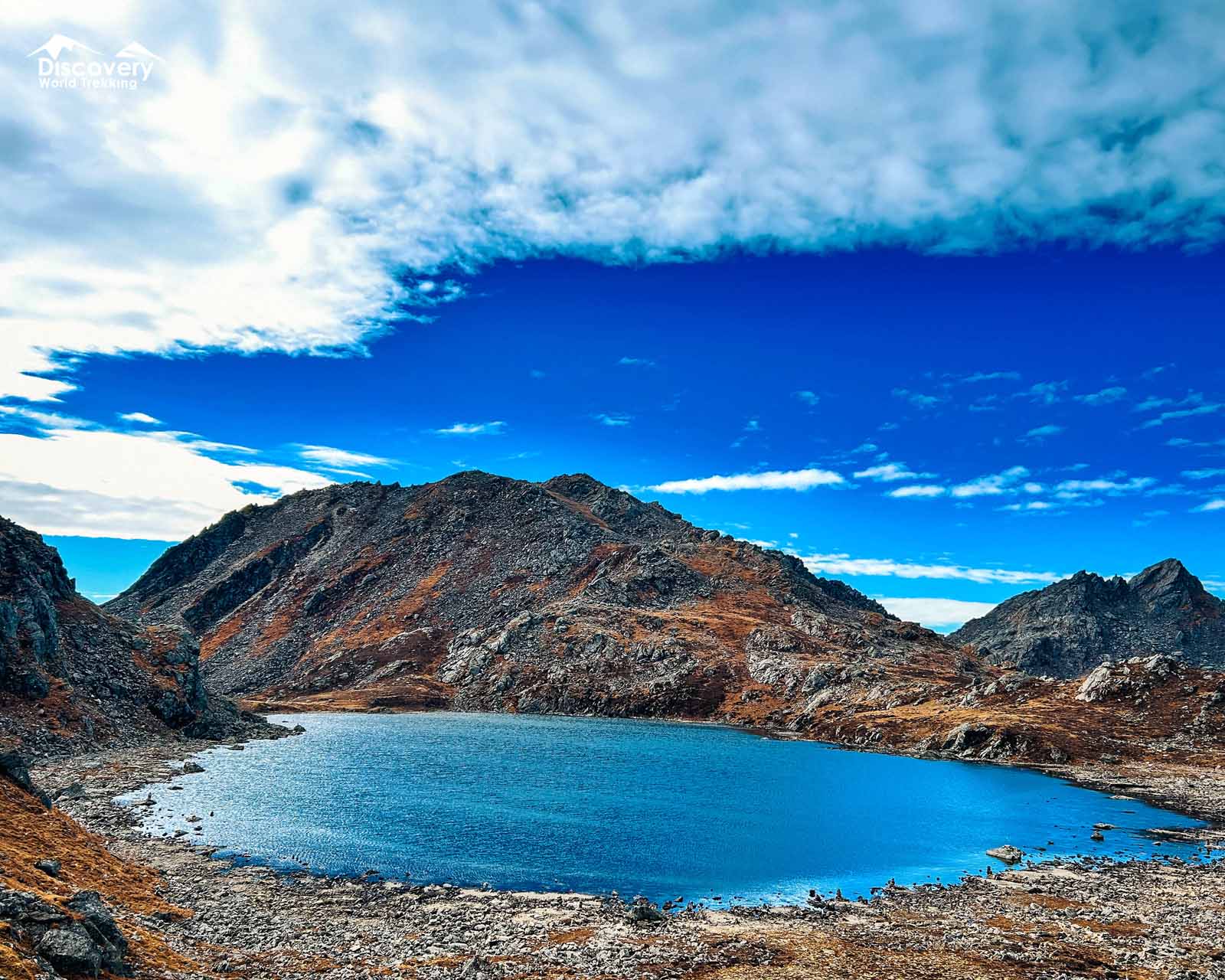
Religious activity reaches its height during Janai Purnima, the full-moon festival that normally falls around August. Large numbers of devotees trek to Gosainkunda and take a ritual dip in its icy water, which Hindu belief regards as spiritually purifying.
Janai Purnima also brings jhankris, or traditional shamans, to Gosainkunda. Their drumming, chanting and rituals form a distinctive part of the pilgrimage gathering.
Pilgrims also pray, make offerings and visit the sacred places around the lake. Because Gosainkunda remains an active religious site rather than simply a trekking attraction, visitors are recommended to respect ceremonies and give worshippers enough space during rituals.
What to See and Do Around Gosainkunda Lake?
Gosainkunda offers more than a single lakeside viewpoint. The surrounding basin contains smaller sacred lakes, rocky ridges, high passes, shrines, and open mountain terrain.
1. Walk Around Gosainkunda and Nearby Lakes
A short walk around the main lake gives visitors different views of the water, surrounding cliffs, prayer flags, and nearby peaks. The full lakeshore circuit usually takes around 30–60 minutes, depending on snow, ice, and trail conditions.
Walk carefully because the shoreline contains uneven stones and slippery sections. Avoid entering the water unless you are taking part in a religious ritual and understand the risks of cold shock and high-altitude exposure.
2. Visit Bhairav Kunda, Saraswati Kunda, and Other Lakes
Saraswati Kunda and Bhairav Kunda lie on the approach to Gosainkunda from Cholangpati. They appear as the trail rises through the rocky upper basin, with streams and waterfalls linking parts of the lake system.
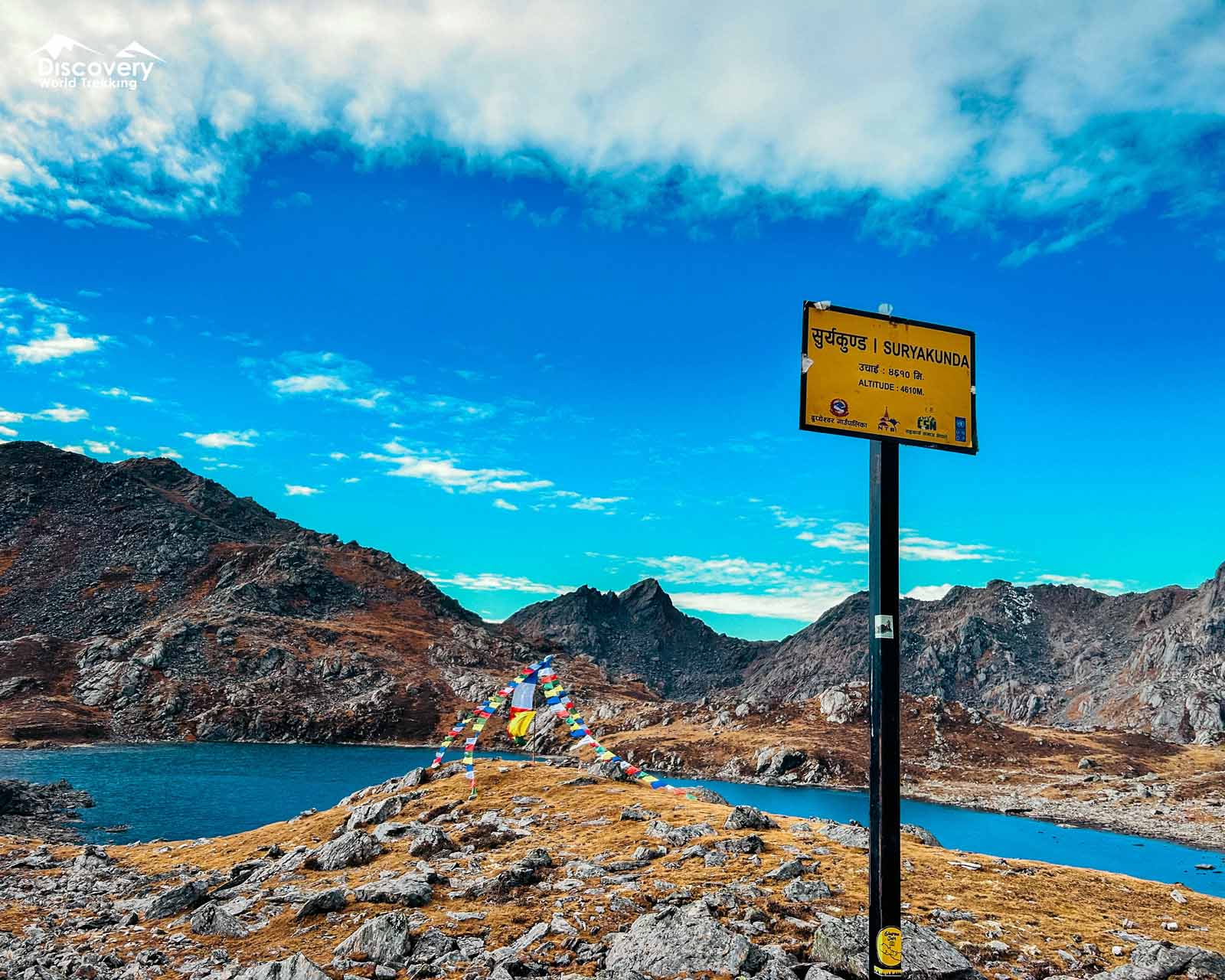
Other smaller lakes, including Surya Kunda and Ganesh Kunda, lie around the wider Gosainkunda basin. Visibility and access depend on snow, fog, and trail conditions.
3. Watch Sunrise and Sunset Over the Glacial Lake
Early morning provides the best chance of seeing the lake reflect the surrounding ridges. The water changes from dark blue to turquoise and silver as sunlight reaches the basin.
Sunset can also be striking when the sky remains clear, but temperatures fall quickly after dark.
4. Take Short Acclimatisation Walks and Ridge Walks
Short walks around the lake help trekkers move gently at 4,380 metres. You can walk to nearby viewpoints above the lodges, follow sections of the northern shore, or walk along a short ridge with a guide.
Keep the walk easy if you have arrived from Cholangpati on the same day. Headache, nausea, dizziness, unusual tiredness, and shortness of breath can indicate altitude sickness. Rest and report symptoms rather than continuing higher.
5. Photograph the Lake, Mountains, Pilgrims, and Prayer Flags
Gosainkunda offers a very different type of photography from the forested sections of the Langtang route.
It offers photography subjects like:
- The blue lake surrounded by rocky ridges.
- Prayer flags and the lakeside shrine.
- Pilgrims performing rituals during Janai Purnima.
- Snow-covered shorelines in winter.
- Saraswati Kunda and Bhairav Kunda along the approach.
- Laurebina La Pass and the route towards Ghopte.
Also, ask permission before photographing pilgrims or religious ceremonies and make sure to protect camera batteries from the cold.
6. Cross Laurebina La Pass Towards Ghopte and Tharepati
Trekkers continuing beyond Gosainkunda cross Laurebina La Pass at approximately 4,610 metres (15,124 feet). The pass lies about 2 km from the lake, although the steep, rocky route usually takes 1–2 hours.
After the pass, the trail descends through High Camp and Phedi before reaching Ghopte. The complete walk from Gosainkunda to Ghopte takes around 8–9 hours, making it a full-day trekking stage rather than a short walk.
The route then normally continues through Tharepati towards Kutumsang or Chisapani, depending on the itinerary. Snow, wind, and poor visibility can make the pass unsafe, so while doing it, make sure to check conditions with a guide before starting.
Popular Trek Passing Through Gosainkunda Lake
- Langtang Gosainkunda Trek – 13 Days: The route reaches Gosainkunda after passing through Kyanjin Gompa, Lama Hotel, Thulo Syabru, and Cholangpati. It then crosses Laurebina La Pass and continues towards Ghopte, Kutumsang, Chisapani, and Kathmandu.
Local Culture and Life Around Gosainkunda
Gosainkunda has no large permanent village beside the lake. Most activity around the lake comes from pilgrimage, trekking and seasonal teahouse services, while communities along the lower route maintain close cultural ties with the area.
Tamang communities have deep roots across Rasuwa and the wider Langtang region. Buddhism and local beliefs remain important parts of their cultural connection with the mountains and sacred lakes.
The atmosphere changes most during Janai Purnima. Pilgrims, priests and jhankris gather for prayer, ritual bathing and religious ceremonies. For several days, the normally quiet lake becomes an active pilgrimage centre.
Outside the festival period, teahouse owners, trekking staff, pilgrims and trekkers account for much of the activity around Gosainkunda. Tourism and pilgrimage also support seasonal income along the route through Thulo Syabru, Sing Gompa, Cholangpati and Laure Binayak.
Also, visitors should remember that Gosainkunda remains an active place of worship. You have to give people space during prayer and bathing, ask before photographing ceremonies and keep the lake and its shore clean.
History of Gosainkunda Lake and Pilgrimage
Gosainkunda has served as a Himalayan pilgrimage destination for centuries. Its importance comes from the sacred lake itself, the surrounding cluster of holy waters, and the belief that Lord Shiva created the lake.
The lake also formed part of older travel routes between the mid-hills, Langtang, and Helambu. Local people, traders, pilgrims, and herders used the high passes long before modern trekking routes developed.
The pilgrimage grew beyond local communities as Hindu devotees from across Nepal and India began travelling to the lake, especially during Janai Purnima. The journey remained difficult because pilgrims had to cross steep mountain trails and spend nights in basic shelters.
Modern trekking brought a second group of visitors. Trekkers began combining Gosainkunda with Langtang Valley and Helambu routes, creating demand for lodges, guides, porters, food supplies, and trail improvements.
The lake and its associated wetlands received international recognition when the Gosaikunda and Associated Lakes complex became a Ramsar site in 2007. The designation recognises the ecological importance of the high-altitude wetland, not only its religious value.
Today, Gosainkunda remains both a pilgrimage site and a trekking destination.
Best Time to Visit Gosainkunda Lake
The best periods to visit Gosainkunda are spring and autumn. These seasons usually provide clearer skies, safer trails, and better visibility around the lake and Laurebina La Pass. The best month also depends on whether you want quiet trekking, flowering landscapes, or the Janai Purnima pilgrimage.
Spring: March to May
Spring gradually clears snow from the lower approach, although the lake basin and Laurebina La Pass may still hold snow in March. Trails can remain icy early in the season, particularly in shaded sections.
April and May usually provide more stable walking conditions. Rhododendrons flower in the lower forests near Sing Gompa and Cholangpati, while the upper lake area remains mostly open, rocky, and snow-covered in places.
Spring mainly suits trekkers who want quieter trails than autumn and improved mountain visibility.
Autumn: September to November
Autumn generally offers the clearest weather at Gosainkunda. The monsoon leaves the air clean, the trail becomes firmer, and the lake reflects the surrounding ridges on clear mornings.
October and early November provide the most reliable conditions for crossing Laurebina La Pass. Daylight remains suitable for the long walk from Gosainkunda to Ghopte, although nights at the lake can fall well below freezing.
Autumn is also the busiest season. Teahouses around Cholangpati, Gosainkunda, and Ghopte can fill quickly, so arrange accommodation in advance.
Winter: December to February
Winter brings freezing temperatures, strong winds, snow, and ice around the lake. Gosainkunda may freeze, and snow can cover the trail towards Laurebina La Pass.
Some lodges reduce their services or close during the coldest weeks. The route can become unsafe without snow experience, proper footwear, warm sleeping equipment, and current information from local guides.
Clear winter days can provide excellent mountain views, but the cold makes the trek a bit demanding.
Monsoon and Janai Purnima: July–August
The monsoon brings cloud, rain, fog, and slippery trails to the lower route. The high lake basin may receive rain, sleet, or snow, and the pass can become difficult to cross.
Despite the difficult weather, Janai Purnima attracts thousands of pilgrims during the full moon in July or August. The lakeside becomes busy with prayer, ritual bathing, sacred-thread ceremonies, shrines, and temporary services.
This period offers a strong cultural experience but requires realistic planning. Roads may suffer landslides, trails can become muddy, and accommodation may fill around the festival.
Temperature at Gosainkunda Lake
| Season | Months | Daytime Temperature | Night Temperature |
| Spring | March–May | -2°C to 12°C (28°F to 54°F) | -15°C to -2°C (5°F to 28°F) |
| Summer/Monsoon | June–August | 8°C to 15°C (46°F to 59°F) | -4°C to 7°C (25°F to 45°F) |
| Autumn | September–November | 2°C to 12°C (36°F to 54°F) | -10°C to 2°C (14°F to 36°F) |
| Winter | December–February | -5°C to 3°C (23°F to 37°F) | -20°C to -10°C (-4°F to 14°F) |
These are approximate temperature ranges for the high Gosainkunda area, not fixed daily temperatures. Weather changes quickly at 4,380 m, and wind, cloud and snowfall can make conditions feel considerably colder.
Where to Stay Near Gosainkunda Lake?
Gosainkunda is not a developed lakeside destination like Phewa Lake in Pokhara, where hotels, restaurants and other services spread around the surrounding area. At Gosainkunda, accommodation consists of a small group of basic teahouses and trekking lodges close to the lake.
The main lodges sit within a few hundred metres of the lake, so you do not need to stay several kilometres away and walk back to Gosainkunda the next morning.
Lakeside Teahouses and Mountain Lodges
Accommodation here follows the traditional trekking-lodge style rather than a conventional hotel setup. Most places provide simple rooms, meals and a shared dining area where guests can eat and stay warm during the evening.
Rooms generally have basic beds, mattresses, pillows and blankets. Shared toilets are common, and facilities become more limited than those available at lower stops such as Thulo Syabru and Sing Gompa.
The number of available rooms can also change with the season. This becomes particularly important during Janai Purnima, when thousands of pilgrims travel to Gosainkunda and demand for the limited accommodation increases sharply.
Facilities and Services
Facilities remain basic because Gosainkunda sits at 4,380 m with no road access. Supplies have to reach the area along the mountain route, so the lodges focus on essential services rather than comfort.
Dining rooms provide meals and the main indoor space for resting in the evening. Some lodges offer device charging, hot water and limited mobile or internet access, but availability depends on the property and local conditions.
There is no ATM at Gosainkunda, so carry enough Nepali cash before reaching the higher part of the route. Medical facilities are also very limited, making it important to pay attention to altitude symptoms while staying beside the lake.
Lodges Along the Approach
Travellers who prefer a shorter final walking stage can stay at the nearby trekking stops before reaching the lake:
- Cholangpati: Approximately 11 km from Gosainkunda. It has a small group of teahouses and offers a practical overnight stop before the final ascent.
- Lauribinayak: Approximately 7–8 km from Gosainkunda. Several basic lodges operate here, including Hotel Mount Rest View and other family-run teahouses.
- Sing Gompa: Farther down the trail, Sing Gompa has more accommodation options and is known for its monastery and cheese production.
Staying at Cholangpati or Lauribinayak means reaching the lake as a day destination rather than sleeping beside it. This can be more comfortable for trekkers who prefer better lodge facilities or want to avoid spending the night at 4,380 metres.
Food and Local Cuisine Around Gosainkunda Lake
Food at Gosainkunda focuses on warm, filling meals that suit the cold conditions and long trekking days.
Dal bhat is one of the most common options, combining rice, lentil soup and vegetables. Hot noodle soup and thukpa are also useful choices once temperatures drop in the evening.
Depending on the teahouse, you can also find momo, fried rice, noodles, potatoes, eggs, porridge, Tibetan-style bread, pancakes and hot drinks.
Food generally costs more at Gosainkunda than at lower stops because supplies have to reach the lake by mountain trail.
During Janai Purnima, food services become much busier as large numbers of pilgrims arrive in the area.
Permits Required for Gosaikunda Trek
Gosainkunda lies inside Langtang National Park, so trekkers must carry the required park and trekking documents before entering the route.
- Langtang National Park Entry Permit: The current fee is NPR 3,000 per person. Officials check it at Dhunche and at checkpoints along the trail.
Flora and Fauna Around Gosainkunda Lake
At 4,380 m, Gosainkunda has a very different environment from the forested lower sections of Langtang. Low alpine vegetation, open grassland, rocky slopes and wetlands shape most of the area around the lake.
Flora Around Gosainkunda Lake
Vegetation becomes shorter as the trail moves above Cholangpati and Laure Binayak.
Around Gosainkunda, alpine grasses, sedges, small flowering herbs and low shrubs grow in areas protected enough to support vegetation. Dwarf rhododendron also occurs within the wider high-altitude environment.
The Gosainkunda wetland system supports more than 100 species of flowering plants, with the warmer months bringing the most visible plant growth.
Winter changes the landscape considerably as snow and freezing temperatures cover much of the vegetation.
Fauna Around Gosainkunda Lake
The surrounding mountain environment provides habitat for several animals adapted to high altitude.
Himalayan tahr, musk deer and pika occur within the wider area. High-altitude birds can also appear around the open slopes, ridges and wetlands.
Langtang National Park also protects rare animals such as the red panda and snow leopard. However, red pandas favour forest habitat lower along the route, while snow leopard sightings remain extremely rare.
Wildlife sightings are not guaranteed, particularly during the busy pilgrimage season.
What Should You Pack for Gosainkunda Lake and the Gosainkunda Trek?
When packing for Gosainkunda, you have to be prepared for its 4,380 m altitude, freezing nights and exposed high-altitude terrain.
Bring a warm down or insulated jacket, thermal base layers, fleece, waterproof and windproof outer layer, warm hat and gloves. A suitable sleeping bag also helps because rooms around the lake generally have no heating bed.
Wear broken-in trekking boots with good grip. Trekking poles can make the steep uphill and downhill sections more comfortable.
Strong sunlight at this altitude makes sunglasses, sunscreen and a sun hat important. Also carry a headlamp, reusable water bottle, water purification method, personal medication, basic first-aid supplies and a power bank.
Keep enough Nepali cash with you before reaching the higher route because you will not find dependable ATM access around the lake.
If your route continues across Laurebina Pass at 4,610 m, pack for the colder and more exposed conditions around the pass rather than preparing only for the overnight stay at Gosainkunda.
Is Gosainkunda Lake Worth Visiting?
Yes. Gosainkunda brings together a sacred lake, high-altitude scenery and an active pilgrimage tradition within one trekking journey.
The experience builds gradually along the way. Forest trails give way to open mountain terrain, Saraswati Kunda and Bhairav Kunda appear on the final approach, and Gosainkunda itself sits among rocky slopes at 4,380 m.
Its religious importance makes the experience different from simply visiting a mountain lake. Pilgrims have travelled here for generations, and Janai Purnima continues to bring thousands of devotees to its shore.
You can also continue across Laurebina Pass towards Helambu, making Gosainkunda an important part of a longer journey through the Langtang region.
For travellers interested in mountain scenery, trekking, pilgrimage and local culture, Gosainkunda offers all four in one place.
Plan Smarter, Trek Better
Connect with our local expert for honest recommendations, personalised guidance, and insider tips to make every step of your adventure count.


Get our free Nepal travel guide filled with expert insights, local tips, and essential planning advice.