
Permits for Everest Base Camp Trek

The Everest Base Camp Trek requires two permits: the Sagarmatha National Park Entry Permit and the Khumbu Pasang Lhamu Rural Municipality Entry Permit. Both are mandatory for foreign trekkers following the classic route to Everest Base Camp.
You can obtain the national park permit at the Nepal Tourism Board office in Kathmandu or at the park entrance in Monjo. The municipality permit is available in Lukla and, in some cases, Monjo.
If you are planning the Everest Base Camp Trek, understanding the permit requirements will help you prepare your documents, budget for the fees, and avoid unnecessary delays along the trail.
You do not need a TIMS card for trekking in the Khumbu region, although additional permits may apply if you follow alternative routes or plan to climb a trekking peak.
At Discovery World Trekking, we arrange the necessary permits for our guests, allowing you to focus on preparing for the journey.
What Permits Do You Need for the Everest Base Camp Trek?
You need two permits for the standard Everest Base Camp Trek:
-
Sagarmatha National Park Entry Permit: Required to enter the protected area surrounding Mount Everest.
-
Khumbu Pasang Lhamu Rural Municipality Entry Permit: Required to enter the Khumbu region under the local government's trekking regulations.
Both permits are checked at designated points along the trekking route, particularly in Lukla and Monjo.
|
Permit |
Cost for Foreign Nationals |
Where to Get It |
|
Sagarmatha National Park Entry Permit |
NPR 3,000 plus 13% VAT |
Nepal Tourism Board, Kathmandu, or Monjo |
|
Khumbu Pasang Lhamu Rural Municipality Permit |
NPR 3,000 |
Lukla or, in some cases, Monjo |
The Gaurishankar Conservation Area Permit is only required if you follow the classic Jiri or Shivalaya approach to Everest.
Note: Permit fees and nationality-based rates are subject to government and local authority changes. Confirm the applicable fees before departure.
Want help?
- Walk through the itinerary, the gear and the weather you will meet
- Advice on physical and mental preparation for the trek
- Personalised tips and insider advice from the team that runs it
1. Khumbu Pasang Lhamu Rural Municipality Entry Permit
The Khumbu Pasang Lhamu Rural Municipality Entry Permit is a local entry permit introduced by the Khumbu Pasang Lhamu Rural Municipality in 2018. It replaced the TIMS card system for trekkers entering the Khumbu region.
The permit supports local development and infrastructure projects, including trekking trail maintenance, bridges, waste management, and community services in the Everest region.
Permit Cost
-
Foreign nationals: NPR 3,000 per person
-
SAARC and Chinese nationals: NPR 2,000 per person
The fee is generally paid in Nepalese Rupees at the designated permit counter.
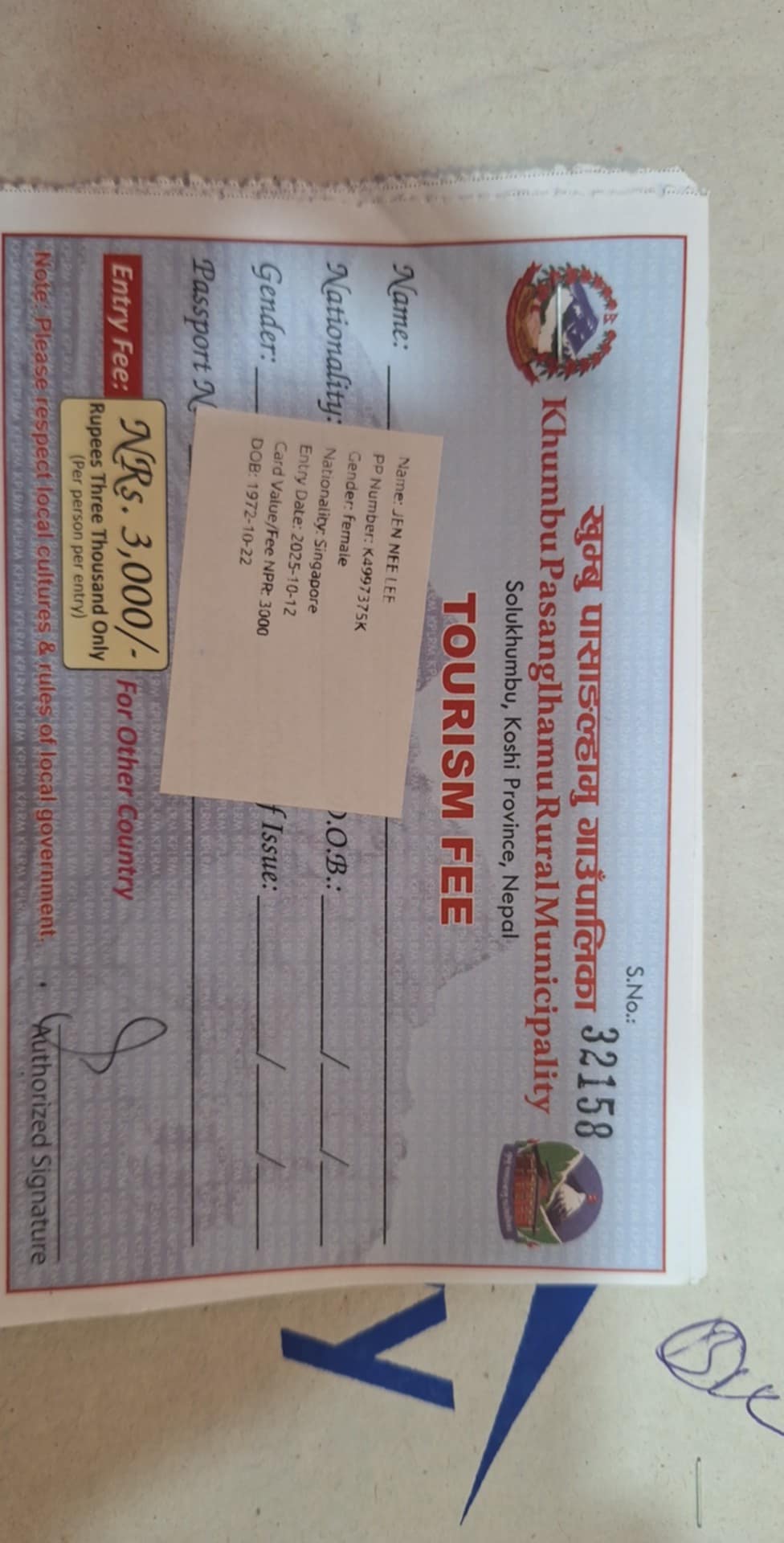
Where Can You Get the Khumbu Rural Municipality Permit?
The location where you obtain this permit depends on your trekking route.
If you fly to Lukla:
You can obtain the permit at the Khumbu Pasang Lhamu Rural Municipality permit counter in Lukla. The counter is located along the main trekking trail, so you can complete the process after landing before continuing towards Phakding.
If you trek from Jiri or Salleri:
Trekkers entering the Khumbu region from the lower hills can obtain the municipality permit at Monjo. The exact arrangements may depend on the route and the local permit office.
Important: You cannot obtain the Khumbu Pasang Lhamu Rural Municipality Entry Permit at the Nepal Tourism Board office in Kathmandu. Independent trekkers must collect it after reaching the Khumbu region.
Where Is the Permit Office in Lukla?
The municipality permit counter is located along the main trekking trail in Lukla. You will pass the office as you begin your trek, so you do not need to make a separate journey to find it.
Keep your passport and the required payment ready to make the process easier.
2. Sagarmatha National Park Entry Permit
The Sagarmatha National Park Entry Permit allows you to enter and trek within Sagarmatha National Park, a UNESCO World Heritage Site in northeastern Nepal.
Established in 1976, Sagarmatha National Park protects the natural landscapes, glaciers, forests, and wildlife of the Everest region. It is home to Mount Everest, Lhotse, Cho Oyu, Ama Dablam, and several other Himalayan peaks.
The park also protects important wildlife, including the Himalayan monal, musk deer, and snow leopard.
Every foreign trekker entering the national park must obtain this permit.

Sagarmatha National Park Permit Cost
The entry fees vary according to nationality.
|
Nationality |
Permit Fee |
|
Foreign nationals |
NPR 3,000 per person |
|
SAARC nationals |
NPR 1,500 per person |
|
Nepali citizens |
NPR 100 per person |
|
Children below 10 years |
Free |
A 13% VAT applies to the foreign national entry fee. Confirm the applicable rates for other categories when obtaining the permit.
Where Can You Get the Sagarmatha National Park Permit?
You can obtain the Sagarmatha National Park Entry Permit from either of the following locations:
1. Nepal Tourism Board Office, Kathmandu
You can get the permit from the Nepal Tourism Board's tourist service centre at Pradarshani Marg, Kathmandu.
Website: https://ntb.gov.np/
Getting the permit in Kathmandu is a convenient option because you can complete the process before flying to Lukla.
2. Sagarmatha National Park Entry Gate, Monjo
You can also obtain the permit at the national park entrance in Monjo, between Phakding and Namche Bazaar.
The park authorities check your documents, collect the applicable fee, and register your details before allowing you to enter the protected area.
During the busy spring and autumn trekking seasons, the permit counter can become crowded. Getting your permit in Kathmandu beforehand can help you avoid waiting at Monjo.
Note: At Discovery World Trekking, we arrange the Sagarmatha National Park Entry Permit for our guests before the trek.
Do You Need a TIMS Card for the Everest Base Camp Trek?
No. You do not need a Trekkers' Information Management System (TIMS) card for the Everest Base Camp Trek.
The Khumbu Pasang Lhamu Rural Municipality introduced its local entry permit in 2018, replacing the previous TIMS requirement in the Khumbu region.
Therefore, trekkers following the standard Everest Base Camp route only need:
-
Sagarmatha National Park Entry Permit
-
Khumbu Pasang Lhamu Rural Municipality Entry Permit
The same two permits generally cover the Gokyo Valley Trek and Everest Three Passes Trek.
However, TIMS requirements may differ in other trekking regions of Nepal. If you plan to combine your Everest trek with another destination, check the applicable permit requirements for that region.
Additional Permits for Alternative Everest Trekking Routes
The two standard permits cover the classic Everest Base Camp Trek. However, you may need additional permits if you choose a different approach or include a climbing expedition.
Jiri to Everest Base Camp Trek
If you follow the classic Jiri to Everest Base Camp route, you will pass through the Gaurishankar Conservation Area.
You must obtain an additional Gaurishankar Conservation Area Permit before entering the protected area.
-
Permit cost: NPR 3,000 per person for foreign nationals.
-
Where to get it: Nepal Tourism Board office in Kathmandu.
Trekkers following the route through Shivalaya also need this additional permit.
Required Documents for Everest Base Camp Trek Permits
Preparing the necessary documents before your trek makes obtaining the Everest Base Camp permits easier.
You should carry the following:
|
Document |
Purpose |
|
Original passport |
Identification and permit registration |
|
Passport photocopies |
Additional identification and administrative requirements |
|
Passport-sized photographs |
May be requested by permit offices |
|
Valid Nepal visa |
Proof of legal entry into Nepal |
|
Travel insurance details |
Emergency contact and evacuation information |
1. Original Passport
Your original passport is the primary identification document for obtaining trekking permits. Keep it accessible because authorities may request it at permit counters and checkpoints.
2. Passport Photocopies
Carry a few photocopies of your passport. These can be useful during permit registration and other administrative procedures.
3. Passport-Sized Photographs
Carry two to three recent passport-sized photographs. Although not every permit counter requires photographs, having spare copies can prevent unnecessary delays.
4. Travel Insurance
Travel insurance is not a standard permit application document, but it is essential for the Everest Base Camp Trek.
Your policy should cover high-altitude trekking, emergency medical treatment, and helicopter evacuation at the maximum altitude of your itinerary.
Keep your insurance policy number and emergency contact details accessible throughout the trek.
A helpful tip: If you are trekking with Discovery World Trekking, send us a clear copy of your passport before departure. Our team will prepare the necessary paperwork and arrange your permits.
Where Are Everest Base Camp Trek Permits Checked?
There are two main permit checkpoints along the classic Everest Base Camp route.
1. Lukla
After landing at Tenzing-Hillary Airport in Lukla, you will obtain your Khumbu Pasang Lhamu Rural Municipality Entry Permit. Authorities may also check the permit as you begin your trek.
2. Monjo
The Sagarmatha National Park entrance gate is located in Monjo, between Phakding and Namche Bazaar.
Here, park authorities check your national park entry permit and record your details before you continue towards Namche Bazaar.
Additional checks may take place at other locations along the trail.
Keep both permits safe and accessible throughout your trek. If you are travelling with a trekking agency, your guide will generally carry and manage the group permits.
Rules and Regulations for Trekking in Sagarmatha National Park
Sagarmatha National Park is a protected area. All visitors must follow the park's environmental and cultural regulations.
Here are some important rules to follow during your Everest Base Camp Trek.
1. Do Not Litter
Carry your rubbish until you find a designated disposal point. Avoid leaving plastic wrappers, bottles, batteries, or other waste along the trekking trails.
2. Respect Wildlife
Do not feed, chase, disturb, or approach wild animals. Maintain a safe distance and avoid damaging their natural habitats.
3. Stay on Marked Trails
Always follow designated trekking paths. Taking shortcuts can damage fragile mountain ecosystems and increase the risk of accidents.
4. Avoid Campfires
Do not light unauthorized campfires. Use designated cooking facilities and avoid activities that can damage forests or create fire hazards.
5. Respect Local Culture
The Everest region is home to Sherpa communities with strong Buddhist traditions.
When visiting monasteries and religious sites:
-
Remove your shoes before entering designated indoor areas.
-
Walk clockwise around stupas, chortens, and mani walls.
-
Ask permission before photographing local people or religious ceremonies.
-
Dress respectfully when visiting monasteries.
6. Obtain Permission Before Flying Drones
Drone flights in Sagarmatha National Park require special permission. Do not fly a drone without obtaining the necessary authorization from the relevant authorities.
7. Respect Restricted Areas
The Khumbu Icefall and expedition camps at Everest Base Camp are restricted to authorized climbing teams. A regular trekking permit does not grant access to these areas.
Following these rules helps protect the national park and preserve the natural and cultural heritage of the Everest region.
FAQs
How many permits do I need for the Everest Base Camp Trek?
You need two permits for the standard Everest Base Camp Trek: the Sagarmatha National Park Entry Permit and the Khumbu Pasang Lhamu Rural Municipality Entry Permit. If you trek through Jiri or Shivalaya, you also need a Gaurishankar Conservation Area Permit.
How much do Everest Base Camp Trek permits cost?
For foreign nationals, the Sagarmatha National Park Entry Permit costs NPR 3,000 plus 13% VAT, and the Khumbu Pasang Lhamu Rural Municipality Entry Permit costs NPR 3,000. The combined cost is NPR 6,390 per person, excluding any additional permits.
Can I get Everest Base Camp Trek permits in Kathmandu?
You can obtain the Sagarmatha National Park Entry Permit at the Nepal Tourism Board office in Kathmandu. However, the Khumbu Pasang Lhamu Rural Municipality Entry Permit is obtained in Lukla or, in some cases, Monjo. You cannot obtain the municipality permit in Kathmandu.
Can I get Everest Base Camp Trek permits in Lukla?
Yes. You can obtain the Khumbu Pasang Lhamu Rural Municipality Entry Permit in Lukla. However, the Sagarmatha National Park Entry Permit must be obtained separately in Kathmandu or at the park entrance in Monjo.
Is a TIMS card required for the Everest Base Camp Trek?
No. A TIMS card is not required for the Everest Base Camp Trek. The Khumbu Pasang Lhamu Rural Municipality Entry Permit replaced the TIMS requirement in the Khumbu region.
Can I pay for Everest Base Camp permits in US dollars?
Permit counters generally accept payment in Nepalese Rupees. Carry sufficient NPR in cash because card payments may not be available at the trail checkpoints.
Do children need Everest Base Camp Trek permits?
Children also need the applicable trekking permits. However, the Sagarmatha National Park Entry Permit is free for children below 10 years of age under the stated fee category. Confirm the applicable municipality permit fee for children before departure.
Do local guides need Everest Base Camp Trek permits?
Local guides do not need to purchase the same tourist entry permits as foreign trekkers for their work in the region. Permit arrangements for guides and trekking staff follow their applicable local and professional requirements.
Do I need to carry my permits throughout the trek?
Yes. Keep your permits accessible throughout the journey because authorities may check them at Lukla, Monjo, and other points along the trail.
Can I obtain Everest Base Camp Trek permits myself?
Yes. Independent trekkers can obtain the Sagarmatha National Park permit in Kathmandu or Monjo and the municipality permit in Lukla or, in some cases, Monjo. However, check the current guide regulations before planning an independent trek.

About the author
Paul Gurung
Paul has an extensive experience in the tourism industry. Through his blogs, he shares his deep knowledge about the stunning trek regions in Nepal, inspiring trekkers worldwide to explore these regions and enrich their lives. In addition to geography, his writings delve into the human side of the trek regions, including culture, traditions, religions, and etiquette, offering a comprehensive and enriching perspective on the Himalayan trekking and expedition experience.
Questions about this article?
Ask our team on WhatsAppPlan Smarter, Trek Better
Connect with our local expert for honest recommendations, personalised guidance, and insider tips to make every step of your adventure count.

Other Blogs

15 Reasons to trek Nepal in Spring
Spring brings warmer walking days, flowering forests, and more time outdoors on Nepal’s trekking trails. From March to May, you can walk beneath rhododendron trees around Ghorepani, follow the river through Langtang, or head higher towards Everest Base Camp. The choice is part of the appeal. A short trip can...

Everest Base Camp Trek During Spring
Spring is one of the best seasons for the Everest Base Camp trek , running from March to May. During this time, the trails are filled with blooming rhododendrons and fresh greenery, especially in Sagarmatha National Park, a UNESCO World Heritage Site. Temperatures at lower altitudes, such as Lukla and...
15 Best Spring Treks in Nepal
Spring brings trekkers from around the world to Nepal for flowering forests, warmer walking days, and snowy mountain views. The spring trekking season runs from March to May. During these months, rhododendrons brighten the forest trails, days grow longer, and temperatures gradually rise after winter. Each trek in Nepal offers...

Get our free Nepal travel guide filled with expert insights, local tips, and essential planning advice.