

Annapurna Base Camp Trek in February
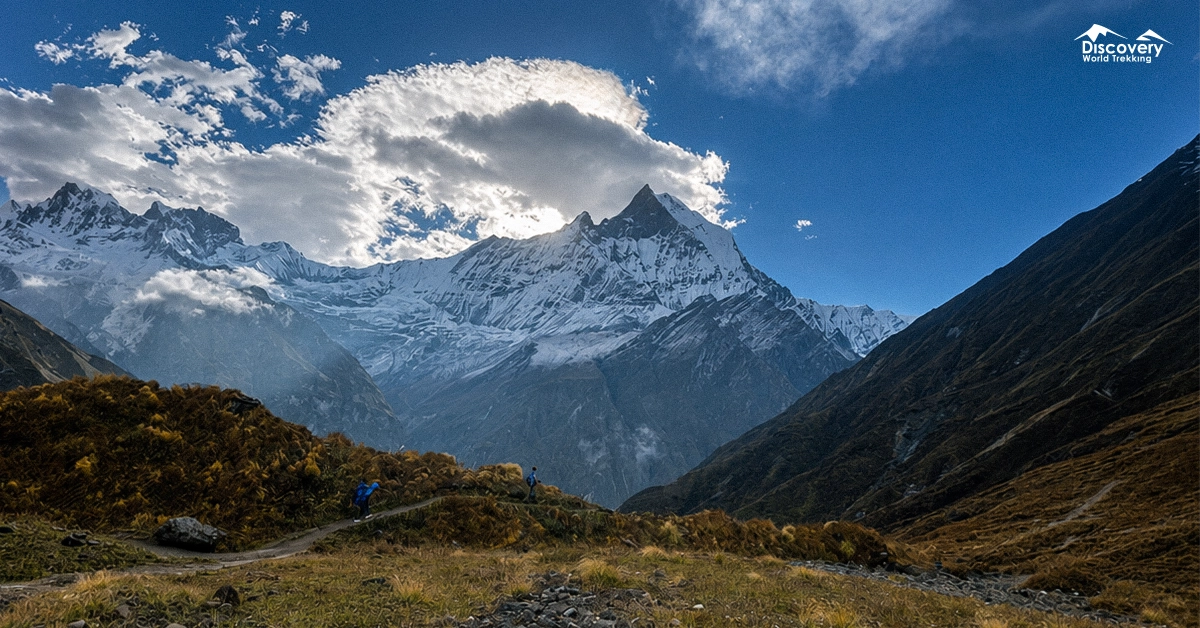
The Annapurna Base Camp Trek in February is a rewarding winter journey for trekkers who want clear Himalayan views, snow-covered landscapes, peaceful trails, and a quieter teahouse experience.
February remains cold at higher elevations, but conditions gradually become milder as the month moves toward spring.
Lower villages can feel comfortable in daytime sunshine, while Annapurna Base Camp stays below freezing for long periods, especially overnight.
Why Trek Annapurna Base Camp in February?
February is worth choosing for Annapurna Base Camp Trek because it combines winter scenery with gradually improving weather and fewer trekkers on the trail.
The month sits at the transition between deep winter and early spring, so conditions often become noticeably more comfortable toward late February.
Clear winter air is one of the biggest advantages. Mountain visibility can be excellent, particularly during the morning, when Annapurna South, Machhapuchhre, Hiunchuli, Gangapurna, and the surrounding peaks often stand sharply against blue skies.
The quieter trail also changes the trekking experience. Teahouse dining rooms are calmer, viewpoints have more space, and villages feel less hurried than during the main spring and autumn trekking seasons.
Key Highlights
- Snow-covered scenery around the upper Annapurna Sanctuary
- Clear morning views of the Annapurna and Machhapuchhre massifs
- Fewer trekkers than during peak trekking months
- Peaceful forests between Ghorepani, Tadapani, Chomrong, and Sinuwa
- Winter sunrise photography with strong mountain contrast
- Comfortable daytime walking temperatures at lower elevations
- Gradually milder conditions toward the end of February
- A chance to experience the Annapurna region before the main spring season begins

Annapurna Base Camp Trek Weather in February?
February weather on the Annapurna Base Camp Trek is generally cold, dry, and clearer than Nepal's wetter months, with temperatures changing dramatically according to elevation.
At lower elevations, daytime temperatures can commonly reach around 10°C to 15°C, while mid-elevation areas may stay around 0°C to 5°C.
In the higher alpine zone, daytime temperatures can remain around or below freezing, with nights commonly dropping to approximately -10°C to -15°C.
Early February Weather
Early February usually feels the most distinctly wintry part of the month.
Snow can remain well established above the upper forest zone, while shaded stone steps may stay frozen during the morning. At lower villages, sunlight creates much warmer daytime conditions than trekkers experience around Deurali, Machhapuchhre Base Camp, and ABC.
This period suits travelers who specifically want a strong winter atmosphere. Starting after sunrise where practical allows the sun time to soften frost on lower sections of trail.
Mid February Weather
Mid-February generally brings slightly longer daylight and a gradual improvement in daytime comfort.
Higher elevations remain cold, but sunny sections can feel surprisingly pleasant while walking. Snow is still common in the upper sanctuary, and temperatures at Annapurna Base Camp may remain around freezing during daytime and well below freezing after sunset. February observations commonly place ABC daytime temperatures near 0°C to 4°C, with nights below -10°C.
Layering becomes especially useful because trekkers can feel warm while climbing and cold soon after stopping.
Late February Weather
Late February usually offers the best balance between winter scenery and approaching spring conditions.
The sun sits higher, daylight lasts longer, and exposed lower trails receive more warmth. Snow can still cover higher sections, so late February should still be treated as a winter trek rather than an early spring trek.
Toward the end of the month, subtle seasonal changes may become visible in lower forests. Rhododendron flowering usually becomes much more prominent during spring, although early signs can occasionally appear as February approaches March.
Average Temperature in February
Trail Conditions of ABC Trek during February
Trail conditions in February vary from mostly clear lower paths to snow-covered alpine sections near Annapurna Base Camp.
From Pokhara to Ulleri
The trail toward Ulleri is usually one of the warmer and more straightforward February sections.
After leaving Pokhara and approaching the trekking trail, the landscape remains relatively low and green. The long stone staircases approaching Ulleri provide a strong first-day workout, but significant snow is less common here than higher on the route.
Morning frost can occasionally remain in shaded places. Lightweight gloves are useful even when afternoon conditions feel mild.

From Ulleri to Ghorepani
The Ulleri-to-Ghorepani section becomes cooler as the trail climbs deeper into forest.
The route passes through Banthanti and Nangethanti before reaching Ghorepani. Oak and rhododendron forest creates long shaded stretches where compact snow or frost may remain longer than on sunny slopes.
Ghorepani can receive winter snow, transforming its surrounding forest into one of the most photogenic sections of the journey.
From Ghorepani to Tadapani
The trail between Ghorepani and Tadapani can combine packed snow, forest paths, ridges, and repeated ascents and descents.
The route commonly includes Poon Hill before continuing toward Deurali, Banthanti, and Tadapani. Early mornings may bring firm snow underfoot, while sunny sections often soften later in the day.
Microspikes can make walking more comfortable when packed snow has become polished by repeated footsteps.

From Tadapani to Chomrong
The Tadapani-to-Chomrong section is generally greener and less wintry because the route loses elevation before climbing again.
The trail passes through forest, villages, terraces, river crossings, and hillside paths toward Chomrong. The reference route runs through Chuile, Gurjung, Durbin Danda, and Chomrong.
The constant changes in elevation mean trekkers should avoid dressing too heavily at the start. A breathable base layer combined with an easily removable insulation layer works better than one heavy jacket.
From Chomrong to Annapurna Base Camp
The trail above Chomrong becomes progressively more alpine, with snow increasingly likely after the upper forest settlements.
The route continues through Sinuwa, Bamboo, Dovan, Himalaya and Deurali before reaching Machhapuchhre Base Camp and Annapurna Base Camp.
February snow is most relevant on this upper section. A guide can assess recent snowfall, trail condition, and the most suitable departure time each morning.
An overlooked winter detail is sunlight exposure. A trail section that feels firm and frozen at 8 AM can become soft by midday, while a north-facing shaded section may remain hard all day. Footwear choices therefore matter more than the simple amount of snow visible.

How difficult is it trek ABC in February?
The ABC Trek in February is moderately challenging and requires more winter preparation than the same trek during warmer trekking months.
The difficulty comes from repeated stone staircases, long walking days, cold mornings, snow at higher elevations, and the final ascent above 3,000 metres. Trekkers with regular hiking experience and good cardiovascular fitness can prepare effectively for these conditions.
A steady pace is more useful than walking quickly. February trekkers should build extra flexibility into the schedule instead of treating every overnight stop as fixed.
Where to stay during February?
Teahouses are the practical accommodation choice during a February ABC trek, although it is wise to confirm availability at higher settlements in advance.
Rooms are usually simple, with twin beds, mattresses, blankets, and basic furnishings. Dining rooms are the social and warmest areas of many teahouses.
At higher elevations, carry a proper winter sleeping bag even when blankets are available. A sleeping-bag comfort rating around -10°C or lower gives useful additional insulation for February nights.
What Food to eat during February?
Warm, carbohydrate-rich meals are the most useful foods for trekking ABC in February.
Dal bhat is especially practical because it provides rice, lentils, vegetables, and carbohydrates in one hot meal. Other useful options include garlic soup, vegetable soup, noodles, potatoes, porridge, eggs, pasta, fried rice, Tibetan bread, and hot lemon or ginger drinks.
Breakfast should combine slow-release carbohydrates and protein. Porridge with eggs or bread works better for a cold trekking morning than relying only on tea.
Keep snacks inside your backpack rather than an exposed outer pocket at higher elevations. Chocolate and energy bars can become extremely hard when left in freezing temperatures.
Flora and Fauna in February
February offers evergreen forest scenery, large rhododendron stands, and good opportunities to notice Himalayan birds and mammals along quieter trails.
The Annapurna Conservation Area supports exceptional biodiversity, including 1,226 flowering plant species, 105 mammal species, and 523 bird species. Ghorepani also contains one of the world's largest rhododendron forest areas.
Rhododendrons are generally not yet in full bloom during most of February, but the mossy oak, bamboo, and rhododendron forests remain atmospheric.
Trekkers may encounter langurs and mountain birds, while patient early-morning walkers sometimes have better opportunities to notice wildlife on quieter forest sections.
Popular Festivals and Occasions in February
February can coincide with important religious and cultural celebrations in Nepal, especially Losar and Maha Shivaratri, depending on the lunar calendar.
Different Himalayan communities celebrate forms of Losar, the Tibetan New Year, around this seasonal period.
Maha Shivaratri also frequently falls in February or nearby dates according to the Hindu lunar calendar. It is one of Nepal's major Hindu festivals and is especially important at Pashupatinath in Kathmandu.
Because festival dates change every year, travelers should check the Nepali calendar for their exact trekking year.
Photography in ABC Trek During February
February is excellent for Himalayan photography because clear winter air, snow, and low-angle sunlight create strong contrast.
Early morning works best for broad mountain panoramas before stronger afternoon light creates harsh highlights on snow. Poon Hill, Ghorepani ridges, Tadapani, Chomrong, Machhapuchhre Base Camp, and ABC provide very different compositions.
Carry spare batteries close to the body because cold temperatures reduce battery performance. Keep the camera inside its bag when entering a warm dining room so condensation forms on the bag rather than immediately across cold camera surfaces.
For snow scenes, slightly increasing exposure compensation can prevent bright snow from appearing dull grey.
What to pack for ABC Trek in February?
Pack for sub-zero nights, snowy high trails, sunny lower hills, and rapid temperature changes.
Essential February equipment includes:
- Down jacket with good insulation
- Thermal base layers
- Fleece or synthetic mid-layer
- Waterproof and windproof outer shell
- Insulated trekking trousers or thermal leggings
- Waterproof trekking boots
- Microspikes
- Trekking poles
- Warm hat and sun cap
- Insulated gloves plus lightweight liner gloves
- Wool or synthetic trekking socks
- Sunglasses with strong UV protection
- SPF 50 sunscreen and lip balm
- Sleeping bag rated around -10°C or colder
- Headlamp
- Insulated water bottle
- Power bank and spare camera batteries
- Personal medicines and basic first-aid supplies
Carry a backpack that allows easy access to layers. February clothing adjustments happen repeatedly during a normal walking day.
How to Prepare for Annapurna Base Camp Trek in February?
Prepare by building hiking fitness, testing winter equipment, and allowing flexibility for changing mountain conditions.
Begin training four to six weeks before departure if possible. Combine stair climbing, brisk uphill walking, squats, lunges, and longer weekend hikes.
Train while carrying the backpack weight you expect to use in Nepal. Strong legs help, but ankle stability and controlled downhill walking are equally important because the ABC trail contains many stone steps.
Before leaving Pokhara, confirm the latest weather information with your guide. Check boots, microspikes, trekking poles, gloves, sleeping bag, and waterproof layers rather than using new equipment for the first time high on the trail.
Useful Tips for trekking ABC in February
The best strategy for a February ABC trek is to stay warm, start with current trail information, and keep the daily schedule flexible.
- Start higher-altitude walking days early enough to use the most stable part of the day.
- Keep microspikes accessible rather than buried at the bottom of the duffel.
- Drink regularly even when cold weather reduces thirst.
- Use an insulated bottle or bottle cover above the forest zone.
- Carry one completely dry pair of socks for sleeping.
- Remove layers before sweating heavily on climbs.
- Put insulation back on immediately during long rest stops.
- Keep batteries and phones inside warm clothing overnight.
- Use trekking poles on snowy steps and long descents.
- Follow your guide's assessment after fresh snowfall.
- Add at least one flexible day to a winter travel schedule.
FAQs
Is it safe to trek Annapurna Base Camp in February?
Yes, the Annapurna Base Camp Trek can be completed safely in February with proper winter equipment, a licensed guide, weather awareness, and a flexible itinerary. Higher sections can carry snow, so daily trail assessment is important.
Is ABC Trek suitable for beginners in February?
Yes, a fit beginner can trek ABC in February with preparation and professional guidance. Training on hills and stairs beforehand makes the repeated climbs much more comfortable.
Beginners should choose a gradual itinerary rather than a compressed schedule.
Are guides available in February?
Yes, licensed trekking guides operate in February. In fact, current TIMS regulations list the Poon Hill–ABC route among routes requiring a licensed guide and agency-issued TIMS Card.
How Cold is Annapurna Base Camp in February?
Annapurna Base Camp can remain around freezing during February daytime and fall below -10°C at night. Broader high-altitude February planning ranges can reach roughly -10°C to -15°C overnight, depending on weather conditions.
Plan Smarter, Trek Better
Connect with our local expert for honest recommendations, personalised guidance, and insider tips to make every step of your adventure count.


Get our free Nepal travel guide filled with expert insights, local tips, and essential planning advice.