

Annapurna Circuit Trek Accommodation
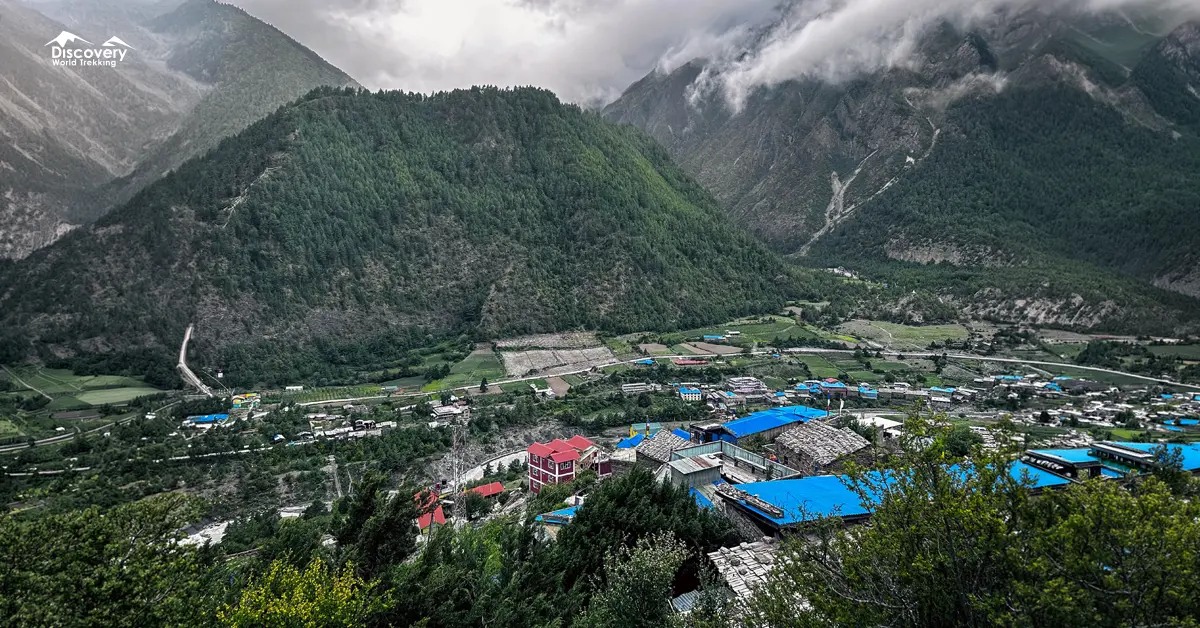
Annapurna Circuit Trek accommodation is one of the most important things to understand before beginning this classic Himalayan journey.
The trek crosses river valleys, forests, high-altitude villages, dry trans-Himalayan landscapes, and finally the famous Thorong La Pass at 5,416 meters.
This guide explains exactly what kind of accommodation you can expect on the Annapurna Circuit Trek.
Types of Accommodation on the Annapurna Circuit Trek
The Annapurna Circuit is one of Nepal’s most developed trekking routes. The route has a strong network of teahouses, guest houses, lodges, and small hotels. Broadly, trekkers will find following accommodation on the Annapurna Circuit Trek.
1. Hotels in Kathmandu and Pokhara
Although the actual trekking trail begins after the drive from Kathmandu toward Bhulbhule, most travelers spend at least one night in Kathmandu before the trek and one night in Pokhara near the end of the journey.
Hotels in Kathmandu and Pokhara are far more comfortable than anything found on the trail. These cities offer private rooms, attached bathrooms, hot showers, proper beds, WiFi, restaurants, laundry services, and easy access to shops.
Pokhara, especially around Lakeside, is a popular place to relax after the trek because of its peaceful setting beside Phewa Lake and the views of the Annapurna range.
2. Teahouses
A teahouse is more than a place to sleep. These family-run guesthouses serve simultaneously as a bedroom, restaurant, and social hub for everyone on the trail.
What to expect inside a teahouse:
- The Dining Hall: Every teahouse has a communal dining room — the warmest room in the building. At mid and high elevations, a central yak-dung or wood-burning stove (sometimes a gas heater) sits at the center, and trekkers, guides, porters, and local families gather here in the evenings. This is where friendships form, routes are compared, and mountains are discussed over dal bhat (lentil-rice meal) and butter tea.
- The Bedrooms: Rooms are simple twin-bedded spaces with wooden partitions, basic mattresses, pillows, and blankets. Privacy is functional rather than luxurious — walls are thin, and you'll often hear your neighbors.
3. Standard Lodges
Standard lodges are slightly more comfortable than basic teahouses. In many villages, locals use the words “teahouse,” “guest house,” and “lodge” almost interchangeably.

However, a standard lodge usually has better-built rooms, a cleaner dining area, more reliable meals, and sometimes attached bathrooms.
Day-by-Day Accommodation on the Annapurna Circuit Trek
One of the easiest ways to understand accommodation on the Annapurna Circuit is to look at the overnight stops day by day.
| Day | Overnight Place | Hotel / Lodge | Accommodation Note |
|---|---|---|---|
| Day 1 | Ngadi / Bhulbhule Area | Holiday Trekkers Lodge | Room with attached bathroom |
| Day 2 | Jagat | Tilicho Guest House | Room with attached bathroom |
| Day 3 | Dharapani | Hotel Gorkha’s Inn | Room with attached bathroom |
| Day 4 | Chame | Four Season Guest House | Room with attached bathroom |
| Day 5 | Upper Pisang | Hotel Mandala | Room with attached bathroom |
| Day 6 | Manang | Himalaya Cottage | Room with attached bathroom |
| Day 7 | Manang | Himalaya Cottage | Room with attached bathroom |
| Day 8 | Ledar | Dhading Laxmi Lodge | Shared Toiled |
| Day 9 | Thorong High Camp | Thorong La High Camp Lodge | Shared Toiled |
| Day 10 | Muktinath | Hotel Town House Muktinath | Room with attached bathroom |
| Day 11 | Tatopani | Hotel Himalaya | Room with attached bathroom |
| Day 12 | Ghorepani | Hotel Snow Land | Room with attached bathroom |
| Day 13 | Pokhara | Hotel Silver Oaks Inn | Room with attached bathroom |
| Day 14 | Kathmandu | Not included/arranged separately | Trek concludes after the drive from Pokhara |
What Are the Rooms Like on the Annapurna Circuit Trek?
Most rooms on the Annapurna Circuit Trek are simple twin-sharing rooms.
Twin-sharing rooms are standard on the Annapurna Circuit Trek. If you are traveling with a friend, partner, or group member, you will usually share a room with one person.
Rooms usually include:
- Two single beds
- Basic mattresses
- Pillows
- Blankets
- Wooden walls or simple partitions
- Small window
- Limited space for bags
- Shared or attached bathroom, depending on the lodge
During peak seasons, rooms can fill quickly in popular stops like Manang, Thorong High Camp, Muktinath, and Ghorepani. In busy months, lodge owners may prioritize groups with guides or agencies who book ahead. This is one reason many trekkers prefer joining an organized trek or traveling with a local guide.
Room Quality and Pricing by Elevation Zone
Accommodation quality changes noticeably as the trail gains elevation. Lower towns have better access to roads, supplies, and building materials. High-altitude settlements have fewer resources and harsher weather, so the rooms are simpler.
| Elevation Zone | Main Overnight Stops | Altitude Range | Room Quality | Estimated Room Price |
|---|---|---|---|---|
| Lower Elevation | Bhulbhule / Ngadi, Jagat, Dharapani, Chame | 845 m – 2,710 m | Basic to comfortable rooms, attached bathrooms often available, better food choices | Budget: USD 5–15 / Standard: USD 10–30 |
| Mid Elevation | Upper Pisang, Manang | 3,300 m – 3,540 m | Comfortable mountain lodges, attached bathrooms in selected lodges, colder nights | Budget: USD 8–20 / Standard: USD 15–40 |
| High Elevation | Ledar, Thorong High Camp | 4,210 m – 4,925 m | Basic rooms, colder bedrooms, limited insulation, shared facilities common | Budget: USD 10–25 / Standard: USD 20–40 |
| Post-Pass Descent | Muktinath, Tatopani, Ghorepani | 1,200 m – 3,760 m | Comfort improves again, attached bathrooms common in selected lodges | Budget: USD 8–25 / Standard: USD 15–45 |
| City Stay | Pokhara, Kathmandu | 820 m – 1,320 m | Hotel-standard comfort, private bathrooms, WiFi, hot showers, better bedding | Standard: USD 25–80+ / Boutique: USD 80+ |
These prices are estimates and can change depending on season, room availability, negotiation, and whether meals are included. Many teahouses keep room prices low because they expect trekkers to eat dinner and breakfast at the same lodge. This is a normal and fair system throughout Nepal’s trekking regions.
Toilet, Bathroom, and Shower Facilities
Bathroom quality on the Annapurna Circuit Trek depends on elevation. In lower and more developed villages, Western toilets and attached bathrooms are common in many lodges. As you rise higher, shared bathrooms become more common, and hot showers become less reliable.
| Facility | Lower Route: Ngadi–Chame | Mid Route: Pisang–Manang | High Route: Ledar–Thorong High Camp | Descent Route: Muktinath–Pokhara |
|---|---|---|---|---|
| Western Toilet | Common | Common in better lodges | Limited | Common |
| Squat Toilet | Available | Available | Common in some lodges | Available |
| Attached Bathroom | Available in selected lodges | Available in selected lodges | Rare | Common in selected lodges |
| Shared Bathroom | Common | Common | Very common | Common |
| Running Water | Usually available | Usually available | Limited and may freeze | Usually available |
| Hot Shower | Common, often paid | Available, usually paid | Rare or unreliable | Common, usually paid |
| Bucket Shower | Rarely needed | Sometimes offered | Possible but often skipped | Sometimes offered |
| Toilet Paper | Usually not provided | Usually not provided | Not provided | Usually not provided |
Trekkers should carry their own toilet paper, hand sanitizer, wet wipes, and quick-dry towel. Even when a lodge has attached bathrooms, toilet paper is rarely included. At higher elevations, water pipes can freeze overnight, so bathroom conditions may be more challenging in the early morning.
Hot Showers on the Annapurna Circuit Trek
Hot showers are available in many places on the Annapurna Circuit, but they are not always free.
At lower elevations, hot showers may be included or available for a small fee. In mid-elevation villages like Manang, hot showers are usually available but often cost extra. At high-altitude stops such as Ledar and Thorong High Camp, showers may be limited, cold, or unavailable.
The best strategy is to take showers when they are easily available and avoid depending on them during the highest part of the trek. Many trekkers shower in Chame or Manang, then skip showers until after crossing Thorong La Pass and reaching Muktinath or Tatopani.
Tatopani is especially popular because of its natural hot springs. After crossing Thorong La and completing several demanding trekking days, soaking in the hot springs can feel incredibly relaxing.
Food and Drinks Facilities
Food is closely connected to accommodation on the Annapurna Circuit Trek. Every lodge also works as a restaurant, and trekkers usually eat breakfast and dinner at the place where they sleep. Lunch is taken at a teahouse or restaurant along the trail.
Menus are surprisingly varied considering the mountain location. However, food choices become more limited and more expensive as you ascend higher.
| Food Category | Common Items |
|---|---|
| Nepali Meals | Dal bhat, rice, lentil soup, vegetable curry, pickles, fried rice |
| Tibetan / Local Meals | Tibetan bread, thukpa, noodle soup, momos, tsampa, potato dishes |
| Western Meals | Pasta, pancakes, pizza, toast, omelets, fried potatoes, porridge |
| Breakfast | Boiled eggs, omelet, pancakes, muesli, porridge, Tibetan bread, tea |
| Hot Drinks | Milk tea, black tea, ginger lemon honey, coffee, hot chocolate |
| Snacks | Biscuits, chocolate bars, energy bars, crisps, popcorn |
| Desserts | Apple pie, pancakes, cake, chocolate pudding, mostly lower down |
Dal bhat is the most reliable meal on the trek. It is filling, nutritious, and often comes with refills.
Many guides recommend dal bhat for dinner because it provides steady energy for the next day.
At higher elevations, vegetarian meals are generally safer because meat has to be transported from lower regions and may not always be fresh.
Food prices rise as you gain altitude. This is not overcharging; it reflects the cost of carrying supplies into the mountains.
A cup of tea in Manang or Thorong High Camp costs more than in Kathmandu because everything has to travel a long way before reaching your table.
Electricity and Charging Facilities
Electricity is available in most overnight villages along the Annapurna Circuit, but room outlets are not guaranteed. Charging is often done in the dining hall or at a central charging station. In many lodges, charging costs extra.
| Location / Zone | Charging Availability | Estimated Cost | Notes |
|---|---|---|---|
| Kathmandu / Pokhara | Free | Included in hotel stay | Easy access in rooms |
| Ngadi – Chame | Common | USD 1–3 | Available at most lodges |
| Upper Pisang – Manang | Available | USD 2–5 | Solar or local power dependent |
| Ledar – Thorong High Camp | Limited | USD 4–8+ | High demand, limited supply |
| Muktinath – Ghorepani | Common | USD 2–5 | Better after descent |
| Tatopani / Pokhara | Reliable | Often free or low cost | Easier access |
Bring a power bank and charge devices whenever electricity is available. Do not wait until your phone or camera battery is empty, especially before crossing Thorong La Pass. Cold temperatures also drain batteries faster, so keep your phone, camera batteries, and power bank inside your sleeping bag at night.
WiFi and Internet Availability
WiFi is available in many places along the Annapurna Circuit, but it should not be treated as reliable. In lower towns, WiFi is usually better. In higher regions, it can be slow, expensive, or unavailable due to weather, solar power issues, or network problems.
| Internet Option | Estimated Cost | Reliability |
|---|---|---|
| Hotel WiFi in Kathmandu / Pokhara | Usually free | High |
| Lodge WiFi in lower villages | USD 1–5 | Medium |
| WiFi in Manang | USD 3–8 | Medium to low |
| WiFi near Ledar / High Camp | USD 5–10+ | Low |
| Local SIM data | Depends on package | Good lower down, weak higher up |
A local SIM card can work well in lower sections, but signal becomes weaker in remote valleys and high-altitude areas. Trekkers should inform family and friends that they may be offline for parts of the trek, especially around Ledar, Thorong High Camp, and the Thorong La crossing.
Extra Service Costs on the Annapurna Circuit Trek
Room rates are only one part of the total accommodation cost. Extra services like hot showers, charging, WiFi, boiled water, bottled water, and laundry can add up over two weeks.
| Extra Service | Lower Elevation Cost | Mid Elevation Cost | High Elevation Cost |
|---|---|---|---|
| Hot Shower | USD 2–4 | USD 3–6 | USD 5–10 or unavailable |
| Phone Charging | USD 1–3 | USD 2–5 | USD 4–8+ |
| Power Bank Charging | USD 2–5 | USD 4–7 | USD 6–10+ |
| WiFi | USD 1–5 | USD 3–8 | USD 5–10 or unreliable |
| Boiled Water / Liter | USD 1–2 | USD 2–3 | USD 3–5 |
| Bottled Water | USD 1–2 | USD 2–4 | USD 3–5 |
| Extra Blanket | Usually free | Free or small fee | Limited availability |
| Laundry | USD 2–5 per item | Available in Manang | Usually unavailable |
| Hot Springs | Varies | Not applicable | Available in Tatopani after descent |
Carry enough Nepali rupees in small denominations before starting the trek. ATMs are not available throughout most of the route, and card payments are unreliable or impossible in many villages. Even where online payment exists, network issues can make it difficult.
Tips for Staying Comfortable
Accommodation on the Annapurna Circuit is simple, but the experience can be very comfortable if you prepare well. These practical tips can make a big difference.
- Eat where you sleep
Lodges keep room prices affordable because trekkers eat breakfast and dinner at the same place. This supports the local family running the lodge and keeps the teahouse system sustainable. Avoid sleeping in one lodge and eating elsewhere unless necessary. - Carry a proper sleeping bag
Even if blankets are provided, a warm sleeping bag is strongly recommended. This is especially important for Ledar, Thorong High Camp, and other cold nights above 4,000 meters.
- Bring cash in Nepali rupees
Do not depend on ATMs or card payments on the trail. Carry enough cash in small notes for snacks, drinks, WiFi, charging, hot showers, tips, and emergency expenses.
- Pack toilet paper and hand sanitizer
Most lodges do not provide toilet paper. Carry your own toilet roll, wet wipes, hand sanitizer, and a small waste bag for responsible disposal.
- Charge devices early
Dining hall charging points can become crowded in the evening. Charge your phone, camera, and power bank whenever you get a chance.
- Keep batteries warm
Cold weather drains batteries quickly. Keep electronics inside your sleeping bag overnight, especially before crossing Thorong La Pass.
- Use Manang wisely
Manang is the best place to rest, shower, do laundry, charge devices, buy snacks, check gear, and prepare for high altitude.
- Do not expect luxury at Thorong High Camp
Thorong High Camp is basic because of its location and altitude. Go there with realistic expectations. Warm shelter, food, and a bed are the main comforts.
- Book ahead in peak season
March to May and September to November are busy trekking months. Popular lodges in Manang, Thorong High Camp, Muktinath, and Ghorepani can fill quickly.
- Trust your guide’s lodge recommendations
Experienced guides know which lodges have cleaner rooms, better food, warmer dining halls, and more reliable service. Their local knowledge can make your trek more comfortable.
Is Annapurna Circuit Trek Comfortable?
Yes, Annapurna Circuit Trek accommodation is comfortable enough for most trekkers, but comfort depends on where you are on the route.
In lower and mid-elevation villages, many lodges offer attached bathrooms, hot showers, good meals, WiFi, and warm dining areas. Places like Chame, Upper Pisang, Manang, Muktinath, Tatopani, Ghorepani, and Pokhara can feel quite comfortable by mountain standards.
However, the highest section of the trek is basic. Ledar and Thorong High Camp are cold, remote, and limited in facilities. Rooms are simple, bathrooms are shared, and extra services cost more. This is normal for high-altitude trekking in Nepal.
The key is expectation. The Annapurna Circuit is not a luxury holiday; it is a high-altitude trekking experience through some of Nepal’s most dramatic landscapes. Accommodation gives you what you need: shelter, food, warmth in the dining hall, a place to sleep, and a connection to local mountain life.
For many trekkers, the simplicity of teahouse accommodation becomes one of the most memorable parts of the journey. Sharing meals with fellow trekkers, drinking tea in warm dining rooms, waking up in stone villages, and sleeping beneath the shadow of the Annapurna range all become part of the Annapurna Circuit experience.
FAQs
Are teahouses available throughout the Annapurna Circuit Trek?
Yes, teahouses and lodges are available throughout the main Annapurna Circuit route. Facilities are better in lower villages and more basic at higher elevations such as Ledar and Thorong High Camp.
Do teahouses provide blankets?
Most teahouses provide blankets, but you should carry a warm sleeping bag. Nights can be very cold above Manang, especially in Ledar and Thorong High Camp.
Is WiFi available on the Annapurna Circuit Trek?
WiFi is available in many villages, but it is not always reliable. It is usually better in lower villages and weaker or more expensive at higher elevations. Do not depend on WiFi near Thorong High Camp.
Can I charge my phone during the trek?
Yes, phone charging is available in most lodges, but it often costs extra. Charging becomes more expensive and limited as you ascend higher. Bring a good power bank.
Are hot showers available on the Annapurna Circuit Trek?
Hot showers are available in many lower and mid-elevation villages, usually for an extra fee. They become less reliable at higher elevations. Tatopani and Pokhara are better places to enjoy proper hot water after the difficult high-altitude section.
Plan Smarter, Trek Better
Connect with our local expert for honest recommendations, personalised guidance, and insider tips to make every step of your adventure count.

Get our free Nepal travel guide filled with expert insights, local tips, and essential planning advice.