Discovery World Trekking Outreach Fund
Discovery World Trekking allocates a certain percentage of business profit to rural development and relief programs.
The 7-day Annapurna Base Camp Short Trek is a moderate trek that takes you through rhododendron forests, terraced farmlands, rivers, and charming Gurung villages toward Annapurna Base Camp (4,130 m / 13,550 ft). As a short trek, it offers stunning views of the Annapurna range, Machhapuchhre, Gangapurna, Khangsar, and Hiunchuli, with a relaxing stop at the natural hot springs in Jhinu Danda along the way.
The Annapurna Base Camp Short Trek is a scenic Himalayan adventure that takes you to Annapurna Base Camp (4,130 m / 13,550 ft). It is a fast-paced trek that lies in the Annapurna region of central Nepal.
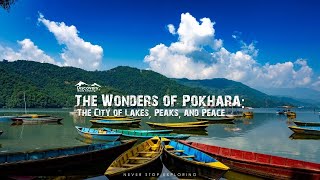
Your journey begins with a drive from Pokhara (820 m / 2,690 ft) to Kimche (1,784 m / 5,853 ft) via Nayapul and Syauli Bazaar.
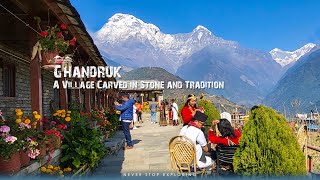
From here, you continue the route on foot through terraced hills and forested slopes to Ghandruk (1,940 m / 6,365 ft). It is a traditional Gurung village known for its stone-paved alleys and slate-roofed houses.
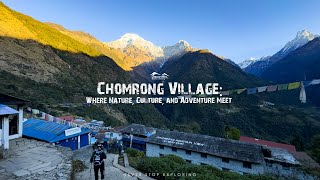
You head towards Chomrong (2,170 m / 7,119 ft), a village mainly inhabited by the Gurung community. The village has well-established lodges, teahouses, and bakeries for trekkers. As you approach, you get clearer views of Annapurna South and Hiunchuli.
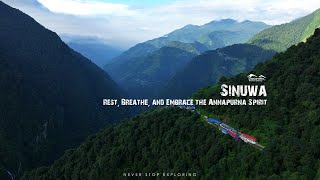
The trail takes you through dense rhododendron, bamboo, and oak forests to Dovan and Bamboo. Then you continue along the steep stone steps after crossing the Chomrong Khola on a suspension bridge. The final stretch leads you to Sinuwa, a peaceful stop surrounded by dense forest.
Leaving the dense forest behind in the Himalaya, the path continues deeper into the sanctuary. As you approach Machhapuchhre Base Camp (3,720 m / 12,205 ft), the landscape opens into alpine terrain.
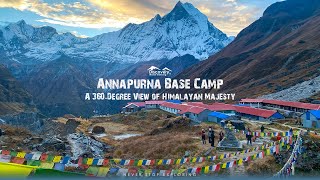
Alongside the Modi Khola valley, the trail enters the wide Annapurna Sanctuary above the tree line. You pass Farsang and memorial shrines before a gentle uphill walk to Annapurna Base Camp (4,130 m / 13,550 ft). The amphitheater of snow-covered peaks makes it the highlight of the trek.
At the top, Annapurna I, Annapurna South, Hiunchuli, and Gangapurna surround you. You can take time for panoramic mountain views and explore the high-altitude surroundings.
You retrace the trail from Machhapuchhre Base Camp and continue downhill to Bamboo (2,350 m / 7,710 ft). As you descend, the air warms and the landscape turns greener.
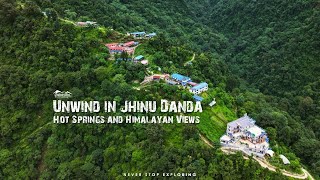
The trail then continues through the forest to Jhinu Danda (1,780 m / 5,840 ft). After the long hours of trekking, you can relax in the natural hot springs beside the Modi Khola.
On the final day, the local bus drives you from Jhinu Danda to Nayapul (1,050 m / 3,445 ft) and continues to Pokhara. Reaching Pokhara marks the end of your seven-day Annapurna Base Camp adventure.
The Annapurna Base Camp Short Trek begins with a 6–7 hour drive (around 200 km) from Kathmandu to Pokhara by tourist bus, which is included in the package. For a faster, more comfortable journey, you can choose a 20-minute flight or a private vehicle to Pokhara for an additional cost.
We recommend arriving in Kathmandu at least one day before the trek, preferably by 3 p.m. It gives you enough time for final preparations and any last-minute arrangements.
Once you confirm your booking with a 10% deposit, we will request the necessary documents. You can send them conveniently by email or WhatsApp. After receiving them, we will schedule your online trip briefing at a time that suits you and send the meeting details by email.
During the briefing, our team head, Paul, will take you through the trek itinerary, packing requirements, trail conditions, and essential preparations. You can also ask questions and clear up any concerns you have. This will help you understand what to expect and feel well prepared before you start your trek.
Drive from Pokhara to Nayapul-Syauli Bazaar-Kimche (1,784 m). Trek to Ghandruk (1,940 m / 6,364 ft). Drive time: Approx. 3 hrs. Trek time: Approx. 2 hrs.
Trek from Ghandruk to Chomrong (2,170 m / 7,120 ft). Trek time: Approx. 4 hrs.
Trek from Chomrong to Himalaya (2,900 m / 9,515 ft). Trek time: Approx. 7 hrs.
Trek from Himalaya to Annapurna Base Camp (4,130 m / 13,550 ft) via Machhapuchchhre Base Camp (3,720 m / 12,205 ft). Trek time: Approx. 5 hrs.
Trek from Annapurna Base Camp to Bamboo (2,350 m / 7,700 ft). Trek time: Approx. 6 hrs.
Trek from Bamboo to Jhinu Danda (1,780 m / 6,393 ft) and nearby natural hot springs. Trek time: Approx. 4 hrs.
Drive from Jhinu Danda (1,780 m / 6,393 ft) to Pokhara (1,070 m / 3,510 ft).Trek time: Approx. 4 hrs. Drive time: Approx. 3 hrs.
If the published schedule does not suit you, we can build the trek around your dates, your pace and what you want to see.
The calendar below displays the available trek schedules. Please select the exact trek start date. Ensure your arrival day is before the trek start date and your departure day is after the trek end date.
We begin our Annapurna Base Camp Short Trek with a scenic drive from Pokhara through Nayapul and Syauli Bazaar to Kimche.
The road follows the Modi Khola area through terraced hills and green countryside before reaching Ghandruk, the starting point of our trek.
Pokhara → Nayapul → Syauli Bazar → Kimche → Ghandruk
From Kimche, the trail is relatively short toward Ghandruk, a well-known Gurung village in the Annapurna region. Traditional stone houses, mountain views, and local indigenous culture give us our first taste of rich customs and lifestyles.
You spend the night in Ghandruk, enjoying views of the surrounding mountains: Annapurna South, Hiunchuli, and Machhapuchhre. Here, you will not miss a chance to explore Buddhist monasteries and the Gurung Museum.
After breakfast, we leave Ghandruk and follow the trail toward Chhomrong. The route takes you down into a river gorge and back up, passing through small ridge settlements and hillside hamlets.
Ghandruk → Komrong Danda → Kimrung Khola → Gurjung → Chhomrong
With a cup of tea, you follow the hillside trail toward Komrong Danda. The route alternates between forest and open sections, with terraced slopes and distant mountain views appearing between the trees.
From the ridge, the trail drops steeply toward the Kimrong Khola. You descend through rhododendron and oak forests and cross the river on a suspension bridge.
The trail then takes you uphill on the other side of the gorge toward Gurjung. Small hillside communities and farmed slopes appear along the way.
You reach Chhomrong after a final ascent from Gurjung. The village stretches along a steep hillside and offers views toward Annapurna South and Hiunchuli. It is your final stop for today, with plenty of teahouses and bakeries to enjoy.
Today, we leave Chhomrong and descend toward the river before ascending back through dense forest. The trail gradually becomes quieter and more rugged as we move deeper into the valley, ending at Himalaya.
Chhomrong → Sinuwa → Khuldigar → Bamboo → Dovan → Himalaya
You have breakfast at Chhomrong and begin the journey toward the Chhomrong Khola. Crossing the suspension bridge, you follow an uphill trek toward Sinuwa. The forest becomes denser here, with rhododendron, bamboo, and other vegetation surrounding the trail.
The trail continues to Khuldigar through a quieter woodland, following the valley contours. You walk between steep green slopes, with occasional openings giving you glimpses of the valley below.
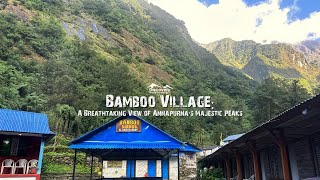
After another stretch through the forest, you reach Bamboo, a small village in the Annapurna region. The village sits beside the trail in a narrow valley, giving you a quiet place to rest before heading deeper into the mountains.
From Bamboo, you continue toward Dovan through thick forest. As you go deeper into the valley, you can hear the Modi Khola flowing nearby.
You finish the day at Himalaya after continuing through the forest above Dovan. The surroundings become increasingly rugged as the valley narrows and the elevation rises.
Today is the most important day of your Annapurna Base Camp Short Trek as you enter the Annapurna Sanctuary and reach Annapurna Base Camp.
Himalaya → Deurali → Machhapuchhre Base Camp → Annapurna Base Camp
You leave Himalaya after breakfast and follow the Modi Khola through a narrow valley toward Deurali. The trail passes waterfalls, bamboo patches, and the Hinku Cave, with steep cliff walls along the way.
Some sections can be prone to avalanches, so you need to follow your guide’s instructions carefully.
From Deurali, the trail continues deeper into the sanctuary along the Modi Khola. The vegetation gradually thins as you move above the tree line, and the valley opens into a broad glacial landscape surrounded by towering peaks.
You reach Machhapuchhre Base Camp and continue along the gradual trail toward the Base Camp. The surrounding mountains become increasingly beautiful and dramatic as you move above the tree line.
The final stretch leads you into the open basin of Annapurna Base Camp. Here, you are surrounded by Annapurna I, Annapurna South, Hiunchuli, and Machhapuchhre, with the massive Annapurna glacier adding to the scenery.
Today, we leave Annapurna Base Camp in the morning and retrace the trail toward Machhapuchhre Base Camp. The landscape changes as we gradually descend through the sanctuary.
ABC → Machhapuchhre Base Camp → Deurali → Himalaya → Dovan → Bamboo
At Machhapuchhre Base Camp, the trail looks more sheltered as you move away from the open alpine valley. Machhapuchhre remains prominent behind you while the lower slopes gradually come back into view.
Passing along the rocky slopes, glaciers, and snow-covered peaks, you continue down to Deurali. As you lose altitude, the rocky landscape slowly gives way to more vegetation. You can see that low shrubs and grasses begin to appear around the trail.
Beyond Deurali, you pass through Himalaya, where the trail enters denser woodland. You walk among rhododendron, bamboo, and moss-covered trees as the valley becomes greener.
The warmer air and thicker forest show that you are gradually returning to the lower valley. You continue through Dovan and deeper into the forest. Following the Modi Khola through the narrow valley, you cross thick vegetation and steep slopes.
You finally reach Bamboo, a small, well-known village surrounded by lush forest. After the stark alpine landscape of ABC, you can see the clear change in altitude and scenery.
Day 6 ends your trekking-on-foot experience in the Annapurna region. Today, you leave Bamboo and retrace the forested trail toward Chhomrong before descending to Jhinu Danda. The route takes you through lush woodland and steep hillside trails as you gradually lose altitude.
Bamboo → Sinuwa → Chhomrong → Jhinu Danda
After breakfast at Bamboo, you continue through the forest to Sinuwa. The trail is surrounded by bamboo and rhododendron, with occasional openings giving you views of the hills across the valley.
From Sinuwa, you continue toward Chhomrong along the familiar hillside route. As you leave the forest, the village gradually comes into view.
You then walk down long stone staircases from Chhomrong toward the Chhomrong Khola. Be cautious and follow your guide’s instructions while walking on the steep slopes.
As you cross the suspension bridge, you pass down through the small farm fields to reach Jhinu Danda. The village is known for its natural hot springs, located downhill near the river, where you can relax after the trek.
Day 7 is the last day of your Annapurna Base Camp Short Trek Journey. Today, you continue your return journey by bus from Jhinu Danda to Pokhara.
Jhinu Danda → Siwai → Syauli Bazaar → Birethanti → Nayapul → Pokhara
After breakfast, you drive from Jhinu Danda toward Siwai, following the winding mountain road through green hills and small communities.
You continue to the broader and more settled valleys through Syauli Bazaar and Birethanti. You pass the terraced fields, local villages, and the changing landscape of the lower Annapurna region.
You then drive through Nayapul and continue along the road toward Pokhara. As the hills open into the wider valley, you arrive in Pokhara. It marks the completion of your 7-day Annapurna Base Camp Short Trek.
You have seen all 7 days.Next, choose the date you want to start.
See trip datesIf the published schedule does not suit you, we can build the trek around your dates, your pace and what you want to see.
Chat with our trek expert on WhatsApp.
Depending on the season, you need different equipment and clothing for the Annapurna Base Camp trek. However, here is a packing list we prepared for your comfort. Please only bring the essentials. You can store your non-essentials for free at the Discovery World Trekking store.
We provide one porter for every two trekkers, and the luggage weight limit per trekker is 9 kg. We recommend you partner with a fellow traveler and pack your things in a duffle bag of over sixty liters capacity. Moreover, we expect you to bring a regular backpack for your valuables and essential documents.
Connect with our local expert for honest recommendations, personalised guidance, and insider tips to make every step of your adventure count.
17 steps · Everything you need to know before you book: permits, meals, costs and what each day looks like. No rush, take your time.
Your ABC Short Trek begins with your arrival in Kathmandu. The first day gives you time to settle in, complete necessary preparations, and prepare for the journey to Pokhara, the starting point of your trek.
When you arrive at Tribhuvan International Airport, our representative will welcome you and transfer you to your hotel in Kathmandu. You can use the remaining time to rest, explore the city, or make any last-minute purchases before heading toward the Annapurna region.
Note: The journey to Pokhara is an important part of the ABC Short Trek. Your Kathmandu–Pokhara and Pokhara–Kathmandu tourist bus travel is included in the package.
Before you leave for the trek, our team lead, Paul, will go through the key details of your ABC Short Trek. It includes:
This is also the time to check your trekking equipment and make sure you have everything you need for the changing conditions between Ghandruk and Annapurna Base Camp. Our team can also help you with any last-minute preparation before you begin the trek.
Having the correct travel documents makes your journey to Nepal and the 7-day Annapurna Base Camp Short Trek easier to manage.
You need to have the required documents ready: your passport, Nepal visa, travel insurance, and permits. These documents let you enter the Annapurna Conservation Area, travel legally in Nepal, and get help if something unexpected happens during the trek.
The Annapurna Conservation Area Permit (ACAP) is required for the ABC Short Trek because the trekking route passes through the Annapurna Conservation Area. The permit helps regulate trekking activities and supports the conservation of the region's natural environment and local communities.
For the ABC Short Trek, you need:
DWT will arrange the ACAP before you begin the trek, so you do not need to visit the permit office yourself.
Note: Keep your passport details accurate when booking your trek, as the information is used for the necessary permit arrangements.
A valid passport and Nepal tourist visa are essential for international travelers joining the ABC Short Trek. We also use your passport when completing the required trekking permit arrangements.
To enter Nepal, most foreign nationals need a tourist visa, while Indian citizens follow separate entry provisions. If you are eligible, you can obtain a visa on arrival at Nepal’s Tribhuvan International Airport and designated land border crossings.
You can also obtain a visa through a Nepalese embassy or consulate in your home country before traveling.
To obtain a visa, you need:
Note: Visa requirements and fees can change. Check the latest Nepal entry and visa requirements before your departure.
You need comprehensive travel insurance for the ABC Short Trek. Although the trek reaches a maximum altitude of 4,130 m at Annapurna Base Camp, you will be walking through a mountainous area. Here, access to medical facilities can be limited.
So your insurance policy should ideally cover:
Note: Check your policy carefully before traveling. Most of the standard travel insurance plans exclude trekking at higher elevations (above 3,500 m) or helicopter evacuation. Confirm with your insurance provider that your ABC trek and the maximum altitude of 4,130 m are covered.
Accommodation on the 7-Day ABC Short Trek combines a comfortable hotel stay in Pokhara with traditional teahouse lodging along the trekking route.
You move from relatively developed villages such as Ghandruk and Chhromrong to simpler mountain lodges as you approach Annapurna Base Camp.
Before and after the trek, you stay at a comfortable hotel in Pokhara. Your package includes a 2-night stay at Silver Oaks Inn, with a private room, attached bathroom, and breakfast.
Inside your room, you can expect:
The hotel provides a comfortable place to rest before starting the trek and after returning from the mountains. You can also use the time in Pokhara to explore the city, relax by the lakeside, or make any last-minute preparations for the trek.
During the trek, you normally stay in local teahouses in villages such as Ghandruk, Chomrong, Himalaya, Bamboo, and Annapurna Base Camp. These family-run mountain lodges provide basic but practical accommodation for trekkers.
You can get standard accommodation that is simple, clean, and designed mainly for resting after a day on the trail.
Most teahouse rooms typically include:
The main heating facility is usually in the communal dining area, where trekkers gather around a stove in the evening. You can not find any heating facility in your individual rooms. So, carry a warm sleeping bag and suitable layers as temperatures can drop below zero at higher elevations.
Note: As you move higher toward Annapurna Base Camp, rooms become more basic. Facilities become increasingly limited due to the remote location.
You can generally find twin-sharing rooms, with two trekkers sharing a room. The exact room size, furniture, and facilities vary between teahouses and locations along the trail.
You can generally expect:
Additional points to expect:
Note: Teahouse facilities vary by location, season, weather, and availability. The higher you go, the more basic the accommodation becomes. So, it is best to prepare for shared facilities and limited in-room amenities rather than expecting hotel-style rooms.
Electricity is available in almost every village in the Annapurna region. However, charging and Wi-Fi become less reliable as you gain elevation. You may need to pay extra for power sockets (charging).
Note: Wi-Fi and electricity can be slow or unavailable at times, particularly around Annapurna Base Camp. Do not rely entirely on an internet connection during the trek.
Bathrooms are available at the teahouses, although facilities become more basic at higher elevations. Hot showers are generally available for an additional charge at lower and mid-altitude villages. Options become more limited as you approach ABC.
Note: As you get closer to Annapurna Base Camp, shower facilities can be limited. Many trekkers prefer to use wet wipes and freshen up rather than taking a full shower at higher elevations.
You can get 3-course meals throughout the 7-day ABC Short Trek, from the start in Ghandruk until you finish at Jhinu Danda. Your package includes 7 breakfasts, 7 lunches, and 6 dinners, served at the teahouses or lodges where you stop for meals.
Breakfast and dinner are generally served at your overnight teahouse. Lunch is taken at a teahouse along the day's trail. The menu becomes simpler as you move higher into the Annapurna Sanctuary, but you can still choose from several common trekking meals.
Teahouses along the ABC route serve a mix of Nepali, Tibetan, Indian, and basic Western-style dishes. Dal bhat is one of the most common meals because it provides a filling combination of rice, lentils, vegetables, and curry.
Common breakfast options include:
Common lunch and dinner options include:
Generally, you get more varied food choices in Ghandruk and Chhomrong. Here, you can find larger teahouses and more established trekking facilities.
As you continue through Bamboo, Dovan, Himalaya, and toward ABC, menus may become more limited. This is because supplies have to be transported farther into the sanctuary.
Note: The exact menu and available dishes can vary between teahouses and according to seasonal supply.
You can get clean drinking water, hot or boiled water, at teahouses for an additional charge of NPR 150-300 ($1.5 - 3.5 USD) per litre. As you move higher, natural water sources become more common, but you should not drink untreated stream or tap water directly.
We recommend carrying a reusable water bottle and using a suitable purification method. Also, bring enough water for each day's trekking, particularly on longer sections where refill points may be limited.
You can use:
Tip: Plastic bottles are banned in the Annapurna Region. A reusable bottle with a purification method is more practical and environmentally friendly for the ABC trail.
Your meals should provide enough energy for several hours of walking each day. So, you should avoid some foods and drinks while you are at higher elevations.
We recommend limiting or avoiding:
Tip: Choose freshly prepared, warm meals and drink plenty of safe water. Your guide can also suggest suitable food choices based on the day's walking conditions.
We can accommodate common dietary requirements when you inform us before the trek. Most teahouses along the ABC route can prepare vegetarian meals, while other dietary requests may need advance planning.
Common dietary requirements teahouses can accommodate include:
Please inform us of any dietary requirements or food allergies when booking so we can coordinate with the teahouses in advance.
Important: Food choices become more limited at higher elevations. If you follow a strict diet or have a serious allergy, we recommend carrying some suitable snacks or backup food items with you.
Each day on the Annapurna Base Camp Short Trek follows a simple routine of breakfast, trekking, rest stops, lunch, and arrival at the next overnight village. The walking time varies depending on the route, terrain, and altitude.
Your guide will brief you each night about the next day's trail, expected walking time, elevation changes, and any conditions you should be aware of.
Your trekking day usually begins early, especially on the longer sections toward Annapurna Base Camp. The exact timing can change depending on weather, trail conditions, and the group's pace.
A typical day includes:
On the ABC to Bamboo descent, the schedule can be adjusted according to the group's energy and trail conditions.
The 7-day itinerary combines shorter walking days with longer and more demanding sections. This allows you to reach Annapurna Base Camp within a limited timeframe while still having time to experience the villages and landscapes along the route.
Shorter walking sections include:
Longer or more demanding sections include:
Tip: The longest days can feel more demanding because of the combination of walking hours, stairs, and elevation. Follow your guide's pace rather than focusing only on reaching the destination quickly.
The trek starts from Pokhara and gradually takes you into the Annapurna Sanctuary. The most significant elevation gain occurs as you move from the lower villages toward Machhapuchhre Base Camp and Annapurna Base Camp.
Some important elevation points are:
The route does not gain elevation continuously. You will also encounter descents, particularly around Chhomrong, before climbing again toward the sanctuary.
You can complete the 7-day Annapurna Base Camp Short Trek in different seasons, but weather, visibility, and trail conditions vary throughout the year.
Spring (March to May) and Autumn (September to November) generally offer the most favorable conditions. They offer stable weather, clear mountain views, and comfortable trekking temperatures.
The trek is also possible during winter and monsoon, but snowfall, rain, cloud cover, and slippery trails can make the journey more challenging.
Spring brings warmer temperatures, clearer mornings, and colorful rhododendron blooms along the lower sections of the trail. As you climb toward Annapurna Base Camp, the landscape gradually changes from forested hills to alpine terrain.
What to expect:
Autumn follows the monsoon, bringing clearer skies, drier trails, and excellent visibility across the Annapurna range. You can enjoy views of Annapurna I, Annapurna South, Machhapuchhre, and Hiunchuli as you move through the sanctuary.
What to expect:
June to August brings Nepal's monsoon season, with frequent rainfall along the lower and middle sections of the ABC trail. The forest becomes lush and green, but wet conditions can make the trail muddy and slippery.
You can see that Mountain views are often limited by clouds and mist, particularly in the afternoon. Heavy rainfall can also affect road access to and from the trekking areas.
What to expect:
Winter brings cold temperatures and snowfall to the higher parts of the route. Snow can cover sections around Machhapuchhre Base Camp and Annapurna Base Camp, while the lower valleys remain comparatively warmer.
What to expect:
The weather becomes noticeably colder as you climb above Deurali toward Machhapuchhre Base Camp and Annapurna Base Camp. Conditions can change quickly, with strong winds, clouds, snowfall, and reduced visibility possible even when the lower trail has comfortable weather.
You should carry warm layers and waterproof protection throughout the trek, regardless of the season.
The upper section of the Annapurna Sanctuary, particularly around Deurali, Machhapuchhre Base Camp, and the approach to Annapurna Base Camp, can be exposed to avalanche risk during periods of heavy snowfall or unstable conditions.
Your guide monitors the weather and trail conditions and may adjust the day's timing or route when necessary for safety.
The Annapurna Base Camp Short Trek is considered moderate to challenging. You don't need technical climbing experience. You should be comfortable walking long hours a day on uneven trails and steep stone steps.
During the trek, the highest altitude you reach is Annapurna Base Camp at 4,130 m. So altitude, daily elevation gain, and the long ascent toward the sanctuary are the main challenges.
The trekking days become more demanding as you move from the lower hills toward the Annapurna Sanctuary. Early sections around Ghandruk and Chhomrong involve moderate trekking. The route toward Machhapuchhre Base Camp and ABC takes you into higher and colder terrain.
Tip: Being a short itinerary, it saves time by using road transport to reach the trailhead. But it does not remove the physical challenge of reaching 4,130 m.
The ABC trail combines stone staircases, forest paths, suspension bridges, rocky sections, and uneven mountain trails. Weather can also change quickly, mainly at higher elevations.
The famous stone steps around Chhomrong can be especially tiring because you encounter repeated rising and dropping trails.
Note: Trail conditions vary by season. Your guide adjusts the walking pace and route according to weather, trail conditions, and your group's situation.
The ABC trail is not continuously uphill. Instead, you encounter frequent rises and drops in terrain around Chhomrong and the Modi Khola valley.
Some sections can place more pressure on your knees and legs. You need to pace carefully when descending after reaching higher elevations.
The final section from Machhapuchhre Base Camp to Annapurna Base Camp is one of the trek’s most demanding parts. You will be walking at high altitude, where the air becomes thinner, and the landscape more exposed.
The trail follows the Modi Khola valley through the Annapurna Sanctuary before reaching ABC.
Tip: Do not rush the final ascent simply to reach ABC earlier. A steady pace helps you manage both the altitude and physical effort.
Safety on the 7-day ABC Short Trek depends on preparation, sensible pacing, and suitable equipment. The route reaches 4,130 m, so altitude awareness is important even though the trek is relatively short.
Weather, trail conditions, and your physical condition can change during the journey. So the guide and team monitor these factors and adjust the trekking plan as required.
Altitude sickness can affect trekkers as they gain elevation, particularly when approaching Machhapuchhre Base Camp and Annapurna Base Camp. You should understand the early symptoms and immediately inform your guide if you feel unwell.
Avalanche risk can occur in the Hinku Cave–Deurali section, mainly during heavy snowfall or unstable conditions. You can also see further avalanche-prone areas between Deurali, Bagar, and Machhapuchhre Base Camp.
Important: If serious altitude symptoms develop, descending to a lower altitude is the primary response. Your guide will coordinate appropriate assistance if evacuation becomes necessary.
You do not need mountaineering experience for the ABC Short Trek, but you need to be prepared both mentally and physically. You can start at least 4–6 weeks of preparation that helps you make the journey more comfortable. If you already exercise or hike regularly, 2–4 weeks of focused preparation may be sufficient.
The most useful preparation is regular walking and cardiovascular exercise combined with strength training for your legs and core.
Tip: You do not need to train like a climber. Consistent walking, stair training, and basic strength exercises are more useful preparation for this trek.
Good hydration and a steady pace matter, especially as you climb toward 4,130 m. Walking too quickly can increase fatigue and make it harder to adjust to the altitude.
Tip: On the ABC trail, slow and steady is safer than fast and exhausted. Your guide will help maintain a pace suitable for the group and the altitude.
Our licensed trekking guide stays with you throughout the 7-day ABC Short Trek and helps you manage the changing trail, weather, and altitude conditions. Your guide also monitors your pace and overall well-being, especially as you approach Machhapuchhre Base Camp and Annapurna Base Camp.
Your guide supports you by:
Important: If you develop serious altitude symptoms or another medical emergency, inform your guide immediately. Depending on the situation, your guide and our team will coordinate the safest available response. It may include descending to a lower altitude or arranging evacuation.
Packing for the 7-day ABC Short Trek means preparing for changing temperatures, varied trail conditions, and basic mountain facilities. You move from relatively warm, green valleys to the colder alpine environment around Annapurna Base Camp at 4,130 m. So, carrying versatile layers and essential trekking gear is more important than carrying a large amount of luggage.
Temperatures can change considerably as you gain altitude. You may start the day walking through warm villages and forests and finish in much colder conditions, particularly around Machhapuchhre Base Camp and Annapurna Base Camp.
We recommend carrying:
Note: Dress in layers so you can add or remove clothing as the temperature changes during the day.
The ABC trail includes stone steps, forest paths, uneven sections, steep climbs, and long descents. A comfortable pair of trekking shoes with good grip will help you handle these changing surfaces.
You need to carry:
Trekking poles are particularly useful on the steep stone staircases and downward sections, as they provide support for your knees and help with balance on uneven terrain.
Note: Wear your trekking shoes before the trek so your feet are comfortable and you can avoid blisters during the longer walking days.
Weather in the Annapurna region can change quickly, particularly during the monsoon and shoulder seasons. Rain, strong sunlight, and cold winds are all possible during the trek.
So you need to carry:
Note: Even on cloudy days, UV exposure can be strong at higher elevations, so keep your sunglasses and sunscreen accessible throughout the trek.
Although teahouses provide beds, mattresses, pillows, and blankets, nights become colder as you approach Annapurna Base Camp. A warm sleeping bag is beneficial, as it provides an extra layer of insulation.
We recommend carrying:
Note: DWT provides a sleeping bag as part of the trekking equipment, so you do not necessarily need to bring one from home.
Carry your personal medicines and everyday essentials in your daypack so they're easy to access. Since the ABC trail has limited access to pharmacies and medical facilities, it is best to bring any medication you use regularly from home.
You can include the following essentials:
Our guides are licensed, English-speaking, and trained in first aid and basic mountain safety. They are experienced with the ABC route and familiar with the terrain, local communities, weather changes, and common challenges of Himalayan trekking.
We provide a private guide for your group. Your guide will:
A porter is recommended for the ABC Short Trek because carrying a heavy backpack for several hours can make the steep ascents and descents more tiring. Your porter carries your main luggage, while you keep your daily essentials in a small daypack.
We generally provide one porter for every two trekkers. Each porter carries a duffel bag or rucksack (60 litres) up to 18 kg of combined luggage. So you need to pack your luggage up to 9 kg and share the porter’s luggage allowance with your partner.
Your main bag can include:
You can leave any luggage you do not need for the trek in Kathmandu or Pokhara instead of carrying it to Annapurna Base Camp. We provide complimentary secure luggage storage for the duration of your trek. You can collect it after finishing your Annapurna Base Camp Short Trek.
You can also check with your hotel (Kathmandu or Pokhara), as many of them offer free storage for their guests. Storing your luggage in Pokhara is especially convenient if you are staying there before or after the trek.
You can store items such as:
Note: Keep essential trekking gear, valuables, passport, and medicines with you rather than storing them in luggage storage.
The 7-Day Annapurna Base Camp Short Trek brings together mountain scenery, Gurung culture, diverse landscapes, and the Annapurna Sanctuary in a compact Himalayan journey.
You start in Pokhara and quickly enter the mountain trails through Ghandruk and Chhomrong, before reaching Machhapuchhre Base Camp and Annapurna Base Camp. After enjoying the high-altitude scenery, the trail descends through the sanctuary and ends with a relaxing visit to Jhinu Danda Hot Springs.
Ghandruk is one of the first major highlights of the short ABC trek. This traditional Gurung village sits on a hillside surrounded by green forests and mountain views.
The village is known for its stone-paved paths, traditional houses, local teahouses, and Gurung culture. Walking through Ghandruk gives you an early introduction to the communities and landscapes of the Annapurna region.
What can you see?
The trail enters the Annapurna Sanctuary, a natural amphitheatre surrounded by some of the highest peaks in the region. As you climb from the lower villages toward the base camp, the vegetation changes noticeably with elevation.
Lower sections are covered with rhododendron, bamboo, oak, and other woodland vegetation, while the upper sanctuary becomes colder, more open, and alpine.
Along the Annapurna Sanctuary trail, you:
Note: Wildlife sightings are not guaranteed, as animals usually remain away from busy trails and human activity.
Reaching Machhapuchhre Base Camp (3,720 m) and Annapurna Base Camp (4,130 m) is the main achievement of the 7-day trek.
From the Himalaya, your trek continues through Deurali and Machhapuchhre Base Camp before continuing into the Annapurna Sanctuary. As you approach ABC, the surrounding peaks become increasingly close and impressive.
The MBC to ABC section offers:
Tip: The final approach to ABC is at high altitude, so walk steadily, stay hydrated, and follow your guide's advice on pace and rest.
Chhomrong is both an important village and one of the most recognizable parts of the ABC trail. The route passes through long sections of stone steps, connecting the village with the valleys and settlements below.
The staircases can feel demanding, particularly on the descent, but they are also part of what makes the Annapurna trail distinctive.
Tip: Trekking poles are especially useful on the long stone staircases, particularly when descending.
Mountain scenery remains one of the main reasons to choose the short ABC trek. The views change throughout the journey, from distant peaks around Ghandruk to close-up Himalayan walls inside the Annapurna Sanctuary.
Major mountain views include:
The scenery becomes increasingly dramatic as you move from the green hills around Ghandruk and Chhomrong into the high alpine landscape around MBC and ABC.
The short ABC trek takes you through communities where Gurung culture and Himalayan mountain traditions remain an important part of everyday life.
You will pass through villages where traditional houses, local food, farming, monasteries, and community life are closely connected to the surrounding mountains.
Cultural experiences along the ABC trail include:
The Annapurna region is a protected mountain environment, so responsible trekking helps reduce pressure on its forests, wildlife, water sources, and local communities.
At Discovery World Trekking, we encourage our trekkers to travel responsibly and respect both the natural environment and local culture.
Our ecotourism practices include:
Note: Responsible trekking helps keep the Annapurna trail clean and supports the communities that depend on tourism.
Your 7-day ABC Short Trek does not end immediately after reaching the Base Camp. Your final days take you through the lower Annapurna landscape, with time to relax at Jhinu Danda before returning to Pokhara.
After descending from the higher sections of the Annapurna Trail, you reach Jhinu Danda, a popular stop known for its natural hot springs.
You can take a short walk down to the hot springs. You pass through a forested hillside before reaching the riverside pools.
From Jhinu Danda, we provide private vehicle transport back toward Pokhara through the lower Annapurna hills.
The drive offers you a final look at the changing landscape. Along the way, the trail gives way to roads, villages, farmland, and the city environment of Pokhara.
After completing your 7-Day Annapurna Base Camp Short Trek, we provide a trekking certificate as a memento of your journey.
The DWT ABC Short Trek completion certificate marks your successful completion of the trek. It serves as a lasting reminder of your adventure in the Annapurna region.
After returning to Pokhara, we can help arrange your hotel or airport transfer according to your travel plans.
If your ABC trek is connected with an international flight or further travel in Nepal, our team can coordinate the transfer arrangements so you do not have to manage the logistics alone.
If the 7-day ABC Short Trek does not match your available time or preferred trekking pace, we also offer other Annapurna trekking options.
You can choose a longer itinerary if you want more time in the mountains or a different route through the Annapurna region.
The normal cost for the 7-day ABC Short Trek ranges from $600 to $690 USD per person. The price varies depending on your group size, travel dates, and any additional services you request.
| Group Size | Cost per Person | Ideal for? |
| Small group (2-5 people) | $690 USD | Couples, friends, or a small private group wanting more personal attention and flexibility |
| Medium group (6-9 people) | $630 USD | A good balance of group interaction and personalized trekking support, with a lower cost per person. |
| Large group (10-15 people) | $600 USD | Best for larger families, friends, or organized groups looking for the most economical private trek rate. |
Note: Since all our treks are private, you can trek with your own group without being combined with other groups. So, discounts are exclusive to your group size only.
Your ABC Short Trek package covers the main services included in your itinerary, but you should carry some extra money for personal expenses and services that are not included in the package.
You may need extra for:
Tip: Carry some Nepalese rupees in cash because card payments and ATMs may not be available in the remote trekking villages.
Booking the 7-Day ABC Short Trek with Discovery World Trekking is straightforward. Once you confirm your trip, we begin the necessary preparations for your permits, accommodation, transportation, and trekking arrangements.
Once you decide to book your ABC Short Trek, we recommend contacting us early, particularly during the busy trekking seasons.
The general booking process is:
To make booking your 7-Day ABC Short Trek convenient, Discovery World Trekking provides several payment options.
You can choose from the following payment options:
Note: We will directly message you the payment instructions and account details. Please use only the official payment details shared by our team when making a transfer.
We are the only trekking agency to provide a private and exclusive trip. This allows you to trek with your own group without being combined with another group.
A private trek is particularly useful for families, couples, friends, and small groups who prefer more flexibility and privacy during the journey.
With a private trek:
We understand that not every trip can be well-planned. So we also take last-minute bookings for the ABC Short Trek, depending on availability.
However, we recommend booking in advance during the spring and autumn trekking seasons. This is due to the high demand for accommodation, transportation, and guides.
For a last-minute booking, contact our team as soon as possible with:
We will check the availability and confirm what arrangements can be made for your requested dates. You should pay the remaining 90% 24 hours before the trip start date.
Note: Last-minute arrangements are subject to availability, so we cannot guarantee every service or preferred accommodation at short notice.
Although the 7-day ABC Short Trek follows a carefully planned itinerary, we can discuss adjustments. It is totally dependent on your travel schedule, fitness level, and preferences.
Possible adjustments may include:
Note: Any itinerary change depends on trail conditions, accommodation availability, transportation, permits, and the overall feasibility of the requested arrangement.
Talk to Paul. Free advice, no pressure.

Discovery World Trekking allocates a certain percentage of business profit to rural development and relief programs.
Discover Nepal’s breathtaking trails at your own pace with our exclusive private treks. No strangers, no rushed schedules—just you, your adventure, and complete flexibility.
This site uses cookies to optimize your user experience. By using this site, you are consenting to our use of these cookies. Check out our Privacy policy.
Annapurna Base Camp Short Trek Reviews
Explorations that last a lifetime.
We made the decision to go on an unforgettable adventure and trek to Annapurna Base Camp with Discovery World Trekking, and it turned out to be an absolutely amazing experience. Right from the start, Paul, the CEO, demonstrated...
We opted to embark on the Annapurna Base Camp trek with Discovery World Trekking based on their exceptional reviews, and they truly lived up to our expectations! Paul, the owner of DWT, promptly responded to all our queries and...
Annapurna Base Camp short trek exceeded all my expectations! Thank you Discovery World Trekking for helping me accomplish my dream trek. How do I even explain it? The scenery is simply mesmerizing, with towering peaks, lush for...
Trekking to Annapurna Base Camp was an unforgettable experience! I am really glad I choose Discovery World Trekking for this trek. The short trek offers breathtaking views of the Annapurna range and the surrounding landscapes. ...
My husband and I had an amazing experience that exceeded our expectations. Throughout the entire trek, we felt well taken care of and attended to. Our guide, Dol, played a crucial role in making the journey enjoyable.
&...
My girlfriend and I did the 7 day Annapurna Base Camp trek with Discovery World Trekking and we had an absolutely incredible experience! This was our first time trekking and our amazing guide Saroz made our first time in ...