

Lama Hotel
Table of Contents
Lama Hotel is a small group of teahouses beside the Langtang Khola. It is a small trekking stop that provides trekkers with food, shelter, and a place to rest before continuing to Langtang Village and Kyanjin Gompa.
The name originally referred to an early lodge in the area, and as more teahouses developed around it, “Lama Hotel” gradually became the name used for the wider trekking stop.
Where is Lama Hotel Located?
Lama Hotel lies inside Langtang National Park on the main Langtang Valley trail. It sits between Syabrubesi and Langtang Village, beside the Langtang Khola and within a forested section of the lower Langtang Valley.
Lama Hotel is approximately 11.3 km from Syabrubesi and around 14.8 km from Langtang Village by trail. The route from Syabrubesi climbs through Bamboo and Rimche before reaching the teahouses at Lama Hotel.
| Country | Nepal |
| Province | Bagmati Province |
| District | Rasuwa District |
| Municipality | Gosaikunda Rural Municipality |
| Region | Langtang region |
| Protected area | Langtang National Park |
| Latitude | Approximately 28.17° N |
| Longitude | Approximately 85.43° E |
| Elevation | 2,470 metres (8,103 feet) |
| Distance from Syabrubesi | 11.3 km by trail |
| Distance from Langtang Village | 14.8 km by trail |
How to Reach Lama Hotel?
To reach Lama Hotel, you have to travel from Kathmandu to Syabrubesi by road and then continue on foot along the Langtang Valley trail.
By Road up to Syabrubesi
Route: Kathmandu → Trishuli Bazaar → Dhunche → Syabrubesi
The road journey from Kathmandu to Syabrubesi covers approximately 122 km and usually takes 7–9 hours.
The route follows the Trishuli corridor to Dhunche before descending towards Syabrubesi, the last motorable point on the standard Langtang Valley route.
On Foot from Syabrubesi
Route: Syabrubesi → Bamboo → Rimche → Lama Hotel
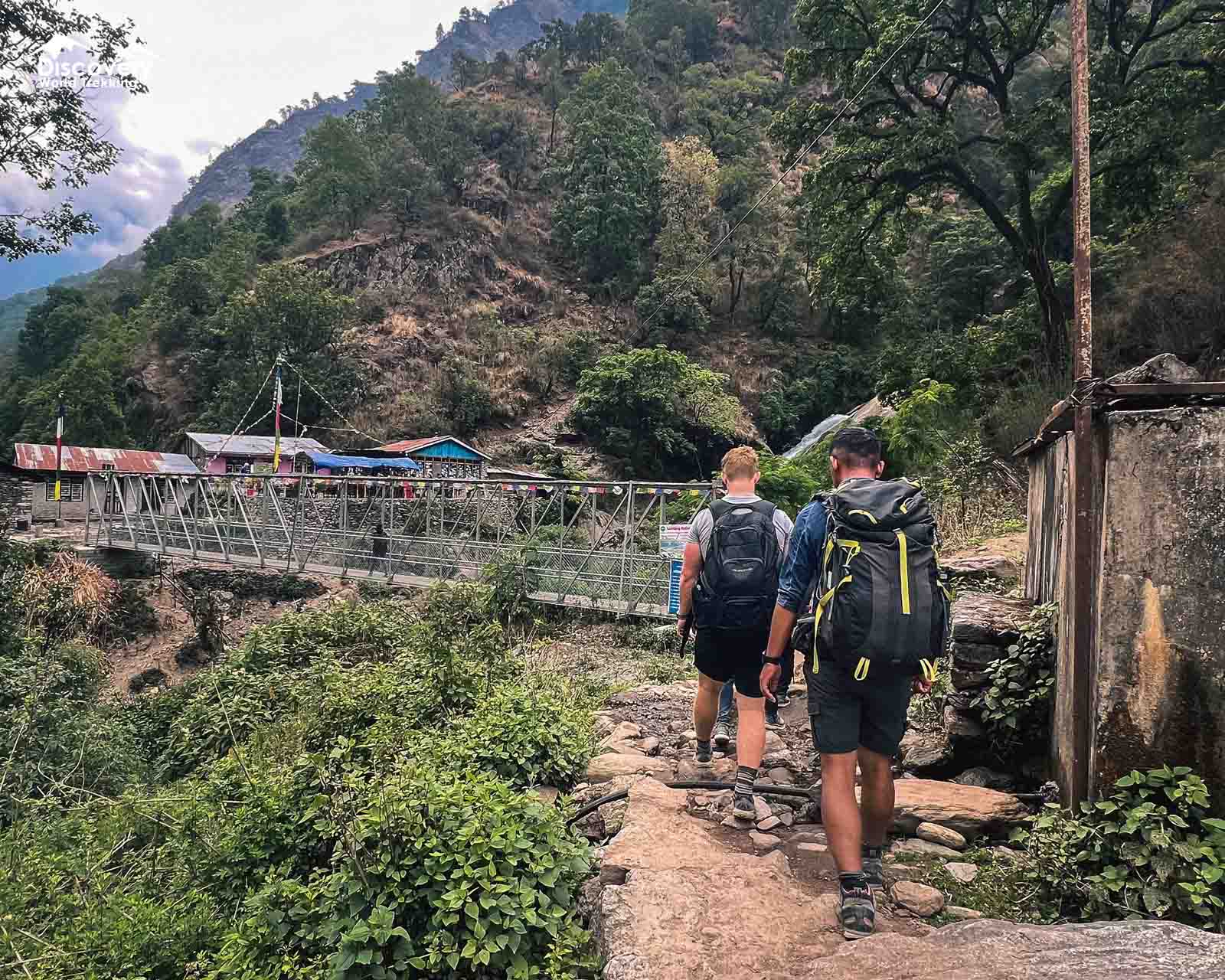
The trek from Syabrubesi to Lama Hotel covers approximately 11 km and usually takes 5–6 hours. The trail crosses a suspension bridge and follows the Langtang Khola through cultivated land and dense forest.
After around 2–2.5 hours, trekkers reach Bamboo, a small group of teahouses beside the river. The trail then climbs through bamboo and rhododendron forest to Rimche. From Rimche, the final section takes around 25–30 minutes and leads to the teahouses at Lama Hotel.
What Can You See Around Lama Hotel?
-
Langtang Khola and the Forested Valley
The Langtang Khola is the main natural feature around Lama Hotel. The teahouses sit close to the river, while the trail repeatedly rises and falls above the water through a narrow, heavily wooded valley.
The river remains visible or audible for much of the route. In some sections it runs below steep rock walls; in others, it widens beside small clearings and riverside lodges. This enclosed valley setting explains why the trail feels shaded and cooler than the open settlements farther above.
-
Rhododendron, Oak, and Bamboo Forests
The forest around Lama Hotel combines bamboo, oak, rhododendron, birch, pine, and other Himalayan trees. Bamboo grows densely along the lower trail, while oak, pine, and rhododendron become more prominent as the route climbs.
In spring, rhododendrons add red, pink, and white flowers to the woodland. During the monsoon, moss, ferns, and undergrowth cover the damp forest floor.
-
First Views of Langtang Lirung and Nearby Peaks
Lama Hotel itself sits in a relatively enclosed section of the valley, so mountain views remain limited compared with the upper settlements. However, nearby clearings and sections of the trail towards Ghoda Tabela begin to open towards Langtang Lirung and other peaks.
The views improve as the valley widens beyond the forest. Early morning usually offers the best visibility before clouds gather around the ridges.
Things to Do in Lama Hotel
There are a few things you can do in Lama Hotel.
1. Take a Short Forest Walk
A short walk around the nearby forest provides an easy way to explore the area without committing to another long trekking day. Make sure to stay on established trails and avoid walking alone into dense forest.
2. Visit Nearby Teahouse Clusters
Rimche and the smaller lodge clusters along the Langtang Khola show how accommodation is distributed across the trekking route. You can visit nearby sections of the trail, observe lodge life, and return to Lama Hotel for the night.
Also, do not treat these clusters as separate villages with large populations. Most exist primarily to support trekkers and the staff who operate the lodges.
3. Photograph the River and Forest
Lama Hotel provides close-range photography rather than wide mountain panoramas. The strongest subjects include:
- The Langtang Khola flowing below the trail.
- Bamboo and rhododendron forest around the lodges.
- Suspension bridges and stone sections of the trail.
- Mist moving through the forest during the monsoon.
- Clearings where the valley begins to open towards Langtang peaks.
- Teahouses built beside the river.
Be extra careful near the river and make sure to avoid photographing residents without permission.
4. Rest Before the trek to Langtang Village
The main purpose of staying at Lama Hotel is to recover before the next day’s ascent. The route to Langtang Village covers approximately 14.8 km and takes around six hours, with a significant gain in elevation.
You can use the evening to eat properly, refill your water bottles, charge essential devices, organise your daypack, and discuss the next day’s route with your guide.
Short Hikes from Lama Hotel
There are not many dedicated side hikes from Lama Hotel, as it is mainly an overnight stop on the Langtang Valley trail. If you arrive early, you can take a short hike along the main trail towards nearby areas such as Rimche or Ghodatabela, or simply explore the surrounding forest and riverside.
1. Hike Towards Rimche
Rimche lies on the main trail between Bamboo and Lama Hotel. From Lama Hotel, the hike towards Rimche takes approximately 1.5–2 hours one way, depending on the exact lodge and walking pace.
The route follows the Langtang Khola through bamboo and mixed forest. It provides a manageable short hike, although it includes uneven ground and several short hikes.
2. Short Hike Towards Ghodatabela
Ghodatabela lies on the trail between Lama Hotel and Langtang Village. A short hike in that direction takes approximately 1–2 hours one way, depending on where you turn around.
The trail continues through forest before gradually opening into wider sections of the valley. This hike offers a preview of the next day’s route, but trekkers should avoid going too far because the complete distance to Ghodatabela is considerably longer.
Popular Treks Passing Through Lama Hotel
- Langtang Trek – 8 Days: The route passes through Lama Hotel on the way from Syabrubesi to Langtang Village and Kyanjin Gompa. Trekkers stay here while ascending and again while returning from the upper valley.
- Tamang Heritage Trail – 12 Days: After passing through Gatlang, Tatopani, Thuman, and Briddim, the trail reaches Lama Hotel before continuing towards Langtang Village and Kyanjin Gompa.
- Langtang Gosainkunda Trek – 13 Days: The route passes through Lama Hotel on the way to Langtang Village and Kyanjin Gompa. After returning, trekkers continue from Lama Hotel towards Thulo Syabru and Gosainkunda.
Best Time to Visit Lama Hotel
Spring and autumn offer the most reliable conditions for reaching and staying at Lama Hotel. These seasons provide firmer forest trails, clearer sections of sky, and more comfortable temperatures for the trek from Syabrubesi.
-
Spring: March to May
Spring changes the forest around Lama Hotel from winter brown to fresh green. Rhododendrons begin flowering along the trail, while bamboo, oak, and pine create dense shade around the Langtang Khola.
March can still bring cold mornings and occasional snow on higher sections. April and May usually provide warmer trekking conditions, but afternoon cloud can hide the mountains and bring short showers.
The forest is at its most colourful in April and May. You can start early if you want clearer views and a drier trail, especially on the open sections above Lama Hotel towards Ghodatabela.
-
Autumn: Late September to November
Autumn is generally the best season for Lama Hotel. The monsoon leaves the forest clean and green, the Langtang Khola runs strongly, and the air becomes clearer as September ends.
October and early November usually bring the best combination of dry trails, cool trekking temperatures, and improved views towards Langtang Lirung. The forest remains shaded and cool, while clearings above Lama Hotel offer better mountain scenery.
This is also the busiest period. The small number of teahouses can fill quickly, particularly in October, so arrange accommodation before starting the trek.
-
Winter: December to February
Winter brings cold nights, frost, and occasional snow around Lama Hotel. The settlement usually remains more accessible than Langtang Village or Kyanjin Gompa, but snow and ice can still affect the trail.
The forest receives limited sunlight, so the trail can feel cold even during the day. Carry a warm sleeping bag, insulated jacket, gloves, and a hat.
Winter suits trekkers who prefer quieter trails and can manage basic lodge conditions. Check whether the teahouses are operating before setting out, as some may reduce their services during the coldest weeks.
-
Summer and Monsoon: June to August
The monsoon makes the forest around Lama Hotel thick, wet, and intensely green. Waterfalls appear along the slopes, the Langtang Khola becomes louder, and mist often hangs between the trees.
Rain creates slippery sections, muddy ground, leeches, and occasional landslide problems on the road to Syabrubesi. The river also rises quickly after heavy rainfall, so avoid unstable banks and follow local advice around bridges.
If you are trekking during this season, carrying waterproof clothing, dry bags, quick-drying layers, trekking poles, and shoes with strong grip is a must. Leaving early each day is recommended because rain and cloud often increase later in the afternoon.
| Season | Approximate daytime temperature | Approximate night temperature |
| Spring | 10–18°C | 2–7°C |
| Summer/monsoon | 15–22°C | 8–12°C |
| Autumn | 10–17°C | 0–5°C |
| Winter | 3–10°C | -8 to -2°C |
Where to Stay at Lama Hotel?
Lama Hotel has a small group of basic teahouses and lodges beside the Langtang Khola. These lodges cater specifically to trekkers travelling between Syabrubesi and Langtang Village.
Most lodges provide twin-sharing rooms with simple beds, mattresses, pillows, and blankets. Rooms usually do not have heating, so carrying a sleeping bag, especially in autumn and winter, is recommended.
Common facilities include:
- Bathrooms: Shared toilets are standard. Some lodges have Western-style toilets, but squat toilets remain common.
- Hot showers: Available at some lodges for an extra charge. Availability depends on fuel, water, and weather.
- Dining rooms: Dining rooms usually have a stove or central heating area where trekkers eat and warm themselves in the evening.
- Charging: Electricity may be available in common areas for a fee. A power bank remains useful.
- Wi-Fi: Some lodges provide paid Wi-Fi, but the connection can be slow and unreliable.
- Mobile network: Coverage varies because the settlement lies in a narrow, forested valley.
There are no reliable ATMs, pharmacies, or advanced medical facilities at Lama Hotel. It is recommended to carry enough Nepali cash, personal medication, and essential first-aid supplies from Kathmandu or Syabrubesi.
Food and Local Cuisine in Lama Hotel
Food at Lama Hotel is designed to give trekkers enough energy for the ascend towards Langtang Village. The ingredients are simple, filling, and easy to prepare in a remote lodge kitchen.
What to Eat?
- Dal bhat: The most dependable full meal, made with rice, lentils, vegetables, pickle, and sometimes with meat. Many lodges provide extra rice.
- Thukpa: A hot noodle soup influenced by Tibetan cooking and useful on cold evenings.
- Momo: Steamed dumplings filled with vegetables or meat, although vegetable momo is often the safer choice in remote lodges.
- Tibetan bread: A fried bread commonly served at breakfast with eggs, jam, or honey.
- Porridge and eggs: Practical breakfast choices before a long trekking day.
- Noodles and fried rice: Quick meals for trekkers who want something lighter than dal bhat.
- Potato dishes: Potatoes appear in soups, curries, and fried meals because they store well at altitude.
- Garlic soup: A popular hot soup among trekkers, although it should not be treated as a cure for altitude sickness.
Drinks and Hydration
Lodges serve black tea, milk tea, ginger tea, lemon tea, coffee, hot chocolate, and hot water. Drink regularly throughout the day because the following stage ascends to a much higher elevation.
Also, it is advised not to drink directly from the Langtang Khola or untreated taps. Use boiled, filtered, or treated water. Carry a reusable bottle and purification tablets or a filter.
Permits Required for Lama Hotel
You need to obtain a Langtang National Park Entry Permit to visit Lama Hotel.
As Lama Hotel lies inside Langtang National Park, trekkers must carry a valid park entry permit. The fee is NPR 3,000 per person. Officials check the permit at the park entrance near Dhunche and at checkpoints along the trekking route.
Flora and Wildlife Around Lama Hotel
Lama Hotel lies inside Langtang National Park, the first Himalayan national park established in Nepal. The park protects the landscape from lower river valleys and dense forests to alpine meadows, glaciers, and high mountain terrain.
Flora in Lama Hotel
The forest around Lama Hotel contains bamboo, oak, pine, birch, ferns, mosses, and several rhododendron species. Bamboo is common along the lower sections near Bamboo and Rimche, while mixed oak, pine, birch, and rhododendron forest becomes more noticeable as the trail rises towards Lama Hotel and Ghodatabela.
Documented rhododendrons in Langtang National Park include Rhododendron arboreum, Rhododendron barbatum, Rhododendron campanulatum, Rhododendron lepidotum, and Rhododendron anthopogon. Around Lama Hotel, the most relevant species are the tree rhododendrons found in the mid-elevation forest, particularly Rhododendron arboreum and Rhododendron barbatum.
The lower-growing species, such as Rhododendron campanulatum and Rhododendron anthopogon, become more typical at higher elevations.
Rhododendrons generally flower from March to May, with April often bringing the strongest display along the lower Langtang trail. Flowering time varies according to altitude, temperature, and rainfall.
Fauna in Lama Hotel
The forests around Lama Hotel provide habitat for red pandas, Himalayan black bears, Himalayan tahr, musk deer, wild boars, langurs, and smaller mammals. Dense vegetation keeps most animals hidden, so sightings are uncommon.
Birds are easier to spot along the trail. As for trekkers, you can see Himalayan pheasants, eagles, vultures, and smaller woodland species, particularly during quiet morning walks.
Also, it is not recommended to feed wildlife, leave food waste outside lodges, or approach animals.
FAQs
Where is Lama Hotel located?
Lama Hotel is located inside Langtang National Park in Rasuwa District, Bagmati Province. It lies beside the Langtang Khola on the trail between Syabrubesi and Langtang Village.
What is the altitude of Lama Hotel?
Lama Hotel stands at approximately 2,470 metres (8,103 feet) above sea level.
How far is Lama Hotel from Syabrubesi?
Lama Hotel is approximately 11.3 km from Syabrubesi by trail. The trek normally takes around six hours.
How long does it take to trek from Syabrubesi to Lama Hotel?
The trek usually takes about six hours. The route passes through Bamboo and Rimche before reaching Lama Hotel.
How far is Lama Hotel from Langtang Village?
Lama Hotel is approximately 14.8 km from Langtang Village by trail. The trek normally takes around six hours and rises to 3,430 metres (11,253 feet).
Plan Smarter, Trek Better
Connect with our local expert for honest recommendations, personalised guidance, and insider tips to make every step of your adventure count.


Get our free Nepal travel guide filled with expert insights, local tips, and essential planning advice.