Langtang Trek - 8 Days
The 8-day Langtang Trek is a moderate-level journey that starts and ends in Kathmandu. It starts with a drive from Kathmandu to Syabrubesi, the gateway to Langtang Valley. The trail passes through Langtang National Park, Langtang Village, and Kyanjin Gompa. Along the way, trekkers walk through forests, alpine landscapes, and glacier-fed valleys. The journey continues, enjoying mountain views, Tamang culture, ancient monasteries, and trek to Kyanjin Ri for breathtaking views of the towering Himalayan peaks.
Langtang Trek Highlights
- Scenic drive from Kathmandu to Syabrubesi
- Visit Langtang village and Kyangiin Monastery
- Panoramic mountain views from Kyanjin Ri (4,773m)
- Amazing Lirung and Kimshung glaciers
- Cheese factory and hike to Tserko Ri (4,984m)
- Tserko Ri (4,984m/17,880ft) and Kyanjin Ri (4,773m / 15,655 ft) viewpoints
- Majestic views of Langtang Lirung (7,345m), Gang Chhenpo (6,388m), Naya Kanga (5,846m), Dorje Lakpa (6,966m), Kimsung (6,781m), and Yansa Tsenji (6,575m)
Langtang Trek Overview
The Langtang Trek takes you to the least crowded yet beautiful mountain region, the Langtang Region. This 8-day trek is a mix of attractive Himalayan scenery and Tamang-rich culture. One of the most unforgettable moments is trekking to Tserko Ri at 4,984 m, where the snow-capped Langtang Range surrounds you.
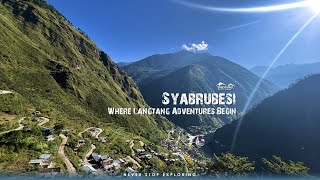
The journey begins with a public bus ride from Kathmandu to Syabrubesi. The road passes to the north alongside the Trishuli River. You will pass through the small town named Dunche. With a glimpse of Ganesh Himal (7,422 m / 24,350 ft) behind the hills, you will reach Syabrubesi (1,503 m / 4,655 ft). It is a lively town where you can experience the Tamang culture.
The trek to Langtang Valley starts from Syabrubesi. It passes alongside the Langtang River and enters Langtang National Park, a home to rare wildlife. You might spot red pandas, black bears, monkeys, snow leopards, and many bird species.
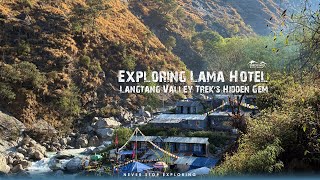
You will follow the Bhote Koshi River and walk through dense bamboo forests mixed with rhododendrons to reach Rimche (2,400 m / 7,874 ft). It is a traditional village full of Tamang culture. With almost 1 to 1.5 hours of trekking from here through the bamboo fields, you will reach the Lama Hotel. It is a popular rest spot for trekkers.
The journey continues towards Langtang Village (3,430 m / 11,255 ft). You'll pass through a narrow river valley, enjoying the stunning mountain views: Dorje Lakpa (6,966 m), Gangchempo (6,387 m), and Langshisa Ri (6,427 m). This valley opens onto Ghoda Tabela (3,030 m), where ancient culture and spirituality coexist. The path will then come across Mani walls, fluttering prayer flags, and Chortens to reach Chyamki Village (3,203 m).
The main destination of the trek, Kyanjin Gompa (3,870 m/12,565 ft), awaits you ahead. It is a village famous for an ancient monastery and local cheese factories (yak cheese).
Continuing the journey, you will reach the highest point of the trek, Tserko Ri (5,450 m / 17,880 ft). From here, you can experience a stunning view of different peaks like Langtang Lirung (7,227 m) and Langtang II (6,586 m). Also, you can trek to Kyanjin Ri (4,773 m / 15,655 ft) for a beautiful view of the Langtang mountain range with a majestic sunset.
After completing our Langtang trek, we will return the same way we came: from Kyanjin Gompa to Syabrubesi, then drive to Kathmandu. Before the journey ends, catch a final glimpse of the snow-capped peaks and lifelong memories.
The mountains may fade away from sight, but the adventure is yours to begin.
Note
To ensure everything runs smoothly, we suggest arriving in Kathmandu by 3 p.m. at least one day before your trek begins. This gives time for any last-minute adjustments.
This trek includes public bus transport, but a private jeep can be rented for extra comfort at an additional cost.
Online Trip Briefing
The online briefing will clear all your doubts about the trek, including things to bring (equipment checklist) for the hike, the itinerary details, and what you can expect on the trails. As soon as you complete the booking, we will email you the available dates and times for the trek briefing, and once we receive your essential documents, we will conduct the online trek briefing.
Day to Day Short Itinerary
Drive from Kathmandu to Syabrubesi (1,503m). Drive time: Approx. 7-9 hrs.
Trek From Syabrubesi to Lama Hotel (2,470m). Trek time: Approx. 6 hrs.
Trek from Lama Hotel to Langtang village (3,430m). Trek time: Approx. 6 hrs.
Trek from Langtang village to Kyanjin Gompa (3,865m). Trek time: Approx. 3 hrs.
Exploration day at Kyanjin Gompa
Trek from Kyanjin Gompa to Lama Hotel (2,470m). Trek time: Approx. 6 hrs.
Trek from Lama Hotel to Syabrubesi (1,420m). Trek time: Approx. 5 hrs.
Drive from Syabrubesi to Kathmandu. Drive time: Approx. 7-9 hrs.
Select the start and end dates for your trek. Keep in mind that your travel arrangements, including arrival and departure, should align with your complete itinerary and schedule.
Langtang Trek Video
Langtang Trek Itinerary
Drive from Kathmandu (1400m / 4,393ft) to Syabrubesi (1,503m / 4,655ft)
After early morning breakfast, the drive to Syabrubesi begins. We head north out of Kathmandu. During the journey, you can catch fantastic views of rivers, terraced fields, small villages, and snow-capped mountains.
The road takes you to a small town - Dhunche. While on the road that follows Trishuli River banks, you will catch glimpses of Ganesh Himal (7,422 m / 24,350 ft). From Dhunche, we continue the drive until we reach Syabrubesi. You can explore this town for a while but do not forget to experience the riverside hot spring.
Trek From Syabrubesi (1,503m / 4,655ft) to Lama Hotel (2,470m / 8,103ft)
We begin our trek from Syabrubesi, following the Bhote Kosi and Langtang Rivers, passing through fertile jungles, terraced fields, and rural settlements rich in bamboo and birch groves. You might spot rare wildlife like the red panda along the path. After a while, the trek ascends gently to Rimche (2,400m / 7,874ft) through dense bamboo fields alongside the banks of Langtang River. We continue on our route until we reach Lama Hotel, the destination for the day.
Trek from Lama Hotel (2,470m / 8,103ft) to Langtang village (3,430m / 11,255ft)
We begin our day with an early morning breakfast and start trekking alongside a river through the lush landscape, climbing upward through the dense forests. Along the way, you might see the snowy peaks ahead if the weather is favorable. Ultimately, the narrow river valley broadens out at Ghoda Tabela (3,030m). In the past, there was a Tibetan resettlement project running here, but currently, Ghoda Tabela has an army check post where we will register our papers. In addition to the army check post, there are a few lodges here.
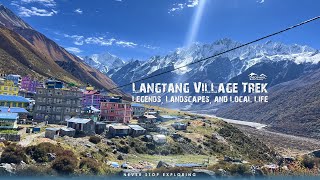
As we trek further, we will come across Chyamki village (3,230m), a small settlement, and walk past Chortens, water mills, mani walls, and prayer wheels, which signals we are nearing Langtang Village. We continue past prayer wheels driven by flowing water and prayer flags to scenic Langtang, a large settlement of mostly Tamang people.
Trek from Langtang village (3,430m / 11,255ft) to Kyanjin Gompa (3,865m / 12,675ft)
The trek today will be short and easy. We will pass by many small plateaus, big mani walls, yak pastures, small villages, and meadows. Since we will be gaining elevation, we trek slowly so that our bodies can acclimatize. After hiking for a while, we will come across water mills, prayer wheels, sacred mounds of rocks with inscriptions carved on them. It signals that we have reached the ancient monastery - Kyanjin Gompa (3,830m / 12,565 ft). Kyanjin Gompa lies surrounded by the Himalayas, and from here, we get stunning views of several snow-capped peaks.
Exploration day at Kyanjin Gompa
Today is our rest day to acclimatize and explore this beautiful Langtang region. The Langtang valley has so much to offer for trekkers. Higher elevation means you will be getting stunning views of the Himalayas ranges and glaciers.
You will be visiting Kyanjin Gompa and observing monks offering their prayers. The cheese factory would also be another interesting site to visit. We can also hike to Langshisa Kharka and the viewpoint of Tserko Ri (5,450m/17,880ft) - the highest point of this trek. Tserko Ri is the perfect viewpoint to admire peaks like Langtang Lirung (7,227m), Langtang II (6,586m), and many more. Yet another viewpoint - Kyanjin Ri (4,773m / 15,655 ft) provides majestic views of the Langtang range. As the sun begins to set, we will return to Kyanjin Gompa for the night.
Trek from Kyanjin Gompa (3,865m / 12,675ft) to Lama Hotel (2,470m / 8,103ft)
We will leave Kyangjin Gompa, admiring the last glimpse of the beautiful mountains standing with pride and glory. But it is time for us to retrace the previous route we took to Langtang Village, and we will stop at Ghoda Tabela for lunch. The army check post at Ghoda Tabela will also register our exit. After a leisurely lunch, we continue down through the dense river valley forests to Lama Hotel, where we will be staying for the night.
Trek from Lama Hotel (2,470m / 8,103ft) to Syabrubesi (1,420m / 4,655ft)
Today being the final trekking day, we head to Syabrubesi to drive back to Kathmandu. We will be walking along the Langtang River, heading downwards to the beautiful river valley. As you descend through bamboo and birch forests, you will see amazing landscapes and cross the Langtang and Bhote Koshi rivers to reach Syabrubesi. This marks the end of our trekking journey. The next day we will be driving back to Kathmandu.
Drive from Syabrubesi (1,420m / 4,655ft) to Kathmandu (1400m / 4,393ft)
We will drive from Syabrubensi to Kathmandu, which will take about seven to nine hours. This drive begins early in the morning. During this drive, you will be getting scenic views of the Trishuli River valley as we head south from the hills. Along the way, you will see terraced farmlands, meadows, and hopefully final glimpses of the snow-capped mountains. Once we arrive in Kathmandu, we will drop you at your hotel.
What is included in this trek package?
Transportation
- Both way transportation between Kathmandu and Syabrubesi by local bus
- Private transportation to and from Kathmandu Airport and your hotel
Accommodations
- Accommodation (Total seven nights) - Five nights accommodation with private attached bathroom at Syabrubesi and Langtang Village, Kyanjin Gompa, two nights standard accommodation at Lama Hotel(2N)(Twin Sharing Room)
Food
- Standard full-board meals (8 Lunches, 7 Dinners, and 8 Breakfasts) with one main course per meal during the trek.
- Seasonal fresh fruits every day
Guide and Porter
- Government licensed and experienced trek guide (an assistant guide for 5 or above trekkers) and porters to help trekkers luggage (1 porter for two trekkers, 9 kg luggage limit per trekker)
- Guides and porters costs, their insurance, salary, lodging, transportation, and other necessary equipment
Trek Permits and Expenses
- Langtang National Park entry permit fee
- Trekkers Information Management System (TIMS) card fee
- All government, local taxes, and official expenses
Medical Assistance
- Arrangement of the rescue operation in case of health condition emergencies (funded by travel insurance)
- Medical kits, including an oximeter to monitor blood oxygen saturation levels in high altitudes
Souvenir
- Souvenir - company's T-shirt & cap
Farewell
- Discovery World Trekking trek achievement certificate
- Farewell dinner in Kathmandu at the end of the trek
Benefits
- Sleeping bags and down jackets, duffle bag (one for every two trekkers) if you do not have your own
- Free excess luggage storage at the Discovery World Trekking store for the duration of the trek
What is excluded in this trek package?
International Flight
- International flight costs
Accommodations
- All accommodations in Kathmandu, before and after the journey
- Extra night accommodation in Kathmandu due to early arrival, late departure, or early return from the trek.
Food
- All meals in Kathmandu, before and after the journey
- Extra night meals in Kathmandu due to early arrival, late departure, or early return from the trek.
Guide and Porter
- Tips for guide and porters
Visa
- Nepal entry visa fees at Tribhuvan International Airport- (15 days - $25-30, 30 days- $40-50 and 90 days- $100-110)
Travel Insurance
- Travel insurance which has to cover emergency high-altitude rescue and evacuation (compulsory)
Personal Expenses
- Personal expenses - shopping, snacks, boiled bottled water, hot(tea/coffee) and cold drinks, hot shower, alcohol, Wi-Fi, telephone call, battery re-charge fee, extra porters, etc
- Personal clothing and gear
Other Expenses
- Excess baggage charges (Limit is 9kg per person)
- Additional costs or delays caused by circumstances beyond our control, for example, landslide, weather condition, itinerary modifications due to safety concerns, illness, change of government policies, strikes, etc
- All the costs and expenses which are not listed in "What is included in the package?" will be counted as excludes
Official Langtang Trek Map
Equipment Checklist for Langtang Trek
We recommend you carry the basic clothing and accessories needed for the trek. We understand that our valuable clients have their preferences. However, this is the suggested list we have created. Porters will carry the main luggage. The luggage weight limit is 9 kg per trekker. We provide one porter for every two trekkers. Hence, we advise you to find a partner and pack your things in a duffel bag of over 60 liters.
Head
- Sun hat (wide-brimmed)
- Beanie (for warmth)
- Buff or neck gaiter (for sun protection and warmth)
- Lightweight headlamp (with adjustable brightness)
- High SPF sunscreen
- Lip balm with SPF
- Sunglasses with UV protection
- Face wipes
Upper Body
- Moisture-wicking t-shirts (short and long sleeves)
- Thermal base layer (for colder conditions)
- Fleece jacket and down jacket **
- Lightweight puffy jacket (for extra warmth)
- Waterproof and windproof jacket (Gore-Tex or similar)
- Raincoat
- Lightweight, breathable long-sleeve shirt
- Polypropylene underwear (four)
Hands
- Insulated gloves or mittens (for cold weather)
- Waterproof gloves (for wet conditions)
Lower Body
- Quick-drying pants/trousers (convertible or full-length)
- Insulated pants (for colder conditions)
- Lightweight cotton pants
- Thermal leggings or long underwear (for colder weather)
- Two pairs of thermal/trekking trousers (pants)
Foot wear
- Thick Wool or synthetic moisture-wicking socks (4 pairs)
- Waterproof, ankle-supportive broken-in full hiking boots (with good traction)
- Sandals (for camp use or river crossings)
- Gaiters (for protection against mud, water, and debris)
Toiletries
- Biodegradable bar soap
- Toothbrush and toothpaste
- Medium-size drying towel
- Wet wipes or hand sanitizers
- Toilet paper (In a Ziplock bag)
- Feminine hygiene products
- Travel-sized shampoo
- Nail clippers
- Small mirror
Backpacks
- Duffle bag (capacity of over 60 liters) for porters** (One duffle bag for two trekkers).
- Backpack or daypack (capacity 20-30 liters) for yourself
Personal accessories
- Adjustable and lightweight poles (preferably collapsible)
- Water bottle or bladder with a capacity of at least 2 liters (insulated for cold weather)
- Water purification system (tablets, filter, or UV purifier)
- Sleeping bag (-10 to -15 degrees is the best) **
Extra items
- Camera/smartphone (extra memory cards and batteries)
- Extra batteries or rechargeable power bank(for charging devices)
- Two-pin charging plug
- Basic first aid supplies (band-aids, antiseptic wipes, pain relievers, Diamox)
- Personal medications (inhalers, allergy meds, etc.)
- Few passport-size photos
- Passport photocopies
- Notebook and pen
- Binoculars
- Swiss army knife or multi-tool (with scissors, can opener, etc.)
**We can provide you with a (used, nonwaterproof) duffle bag, (used) down jacket, and (used) sleeping bag if you do not have your own.
Langtang Trek Package Information
Kathmandu: Airport Pickup and Welcome
When you arrive at the Tribhuvan International Airport, our team will greet you outside the arrival terminal with a pamphlet displaying your name.
As part of our Nepali traditional welcome, we will offer a marigold garland or a Khada before transferring you to your hotel in a private vehicle.
Required Arrival Time Before the Trek
Before starting the trek, you need to have sufficient time for trip preparation. We recommend you arrive at least a day before the Langtang trek begins, preferably before 3:00 PM in Kathmandu.
This time frame will be adequate for:
- Remaining Trek fee payment: You can pay the remaining balance (90% of the trek cost) using cash or other approved payment methods at our office.
- Last-minute Checking: You can check your clothing and other requirements before starting our trek. Our team will check your gear and equipment.
- Pre-trek Briefing: Our owner, Paul, will welcome you and explain the route, schedule, and important safety tips.
- Introduction with guides and porters: Paul will further introduce you to our guides and porters. They will be your support during the path.
Your journey to the Langtang region starts with an 8 – 9 hour drive to Syabrubesi, the gateway to Langtang Valley.
Our package covers local transportation, whereas you can also choose a private jeep at an additional cost.
Kathmandu Stay Information
Generally, two nights are required in Kathmandu.
- One night before the trek
- One night after returning
Accommodation in Kathmandu is not included in our package. But we can recommend a hotel that suits your budget and preference.
Where will you stay during the Langtang Trek?
Teahouses are local mountain lodges that provide comfortable shelter for trekkers. Our trip package to Langtang Valley covers the accommodation at the best available teahouses for 7 nights.
It includes:
- Five nights with a private attached room in Syabrubesi, Langtang Village, and Kyanjin Gompa.
- Two nights with a standard twin-sharing room at the Lama Hotel.
- Rooms are equipped with basic beds, mattresses, pillows, and blankets.
During peak seasons (spring and autumn), trekking is busy, so we recommend booking in advance or arriving early to secure a room at the teahouses.
Toilet and Shower
Toilets and bathrooms in these teahouses are often small and shared. Mostly squat-style toilets are popular here, though some lodges in popular villages may offer Western-style toilets.
You can bring your own soap, toilet paper, and towel.
Depending on the lodge and altitude, you can see varying shower facilities along the trek.
- Showers are available at an extra cost ($2 - $5).
- Hot showers are mainly solar-heated, so check on availability.
- Lodges at higher altitudes could only offer you bucket showers.
Electricity and Charging
Our route passes through villages where electricity availability depends on location and altitude. Most tea houses at lower altitudes offer free charging in your room or dining area. At higher altitudes, you may be charged per hour or per device.
- In Syabrubesi and Lama Hotel, you may have to pay for a charging station in your room or common areas.
- Power depends on solar energy or small hydroelectric systems at a higher altitude.
- In Langtang Village and Kyanjin Gompa, they may charge you around $3 per hour for charging electronics.
Tip: To ensure your devices stay charged, it is a good idea to carry a power bank on your travels.
Mobile Network
Throughout our Langtang trek, we encountered a variety of landscapes, including valleys, ridges, hills, and gorges. Trekking in these landscapes, you may experience unpredictable connectivity. Signals may be weak or unavailable in narrow gorges or forests.
Generally, you can carry either an NTC or an Ncell SIM for network and communication.
- NTC (Nepal Telecom) works better at higher altitudes. You can rely on it up to Langtang Village and can work at Kyanjin Gompa on clear days.
- Ncell may stop working from the Lama Hotel.
Do not rely on the mobile network for emergencies. Maintain contact with the guide who can contact the head office for safety.
Internet Access
Wi-Fi is usually available freely at most teahouses on the Langtang Valley trek. It is reliable in Syabrubesi, Lama Hotel, and Kyanjin Gompa, where many lodges offer local Wi-Fi for trekkers.
- They may charge a small fee of $2 - $4 (NPR 300-500) for you.
- The Wi-Fi network is good enough for handling messages, WhatsApp calls, and social media browsing.
- Internet speed may be slow in remote areas.
Food and Drinks during the Langtang Trek
Throughout the Langtang trek, we provide nutritious, balanced meals at local teahouses. Our package includes eight breakfasts, eight lunches, and seven dinners on a regular full-board basis. The meals are simple and filling, served as one main course per sitting, providing sustained energy for long trekking days.
While you will have limited meal options in higher-altitude regions, we offer a menu featuring Nepali, Tibetan-influenced, and Western dishes.
Recommended Food
In Nepal, Dal Bhat is the most popular food for trekkers, as it is a balanced diet and provides high energy. We also recommend some hot, soupy drinks to keep you warm.
| Meal | Food Options |
| Breakfast | Tibetan Bread/Chapatti, Porridge, Pancakes, Eggs (Boiled/Fried/Omelette), Coffee/Tea, Toast with Honey |
| Lunch/Dinner | Dal Bhat, Fried Rice, Chowmein, Thukpa, Momo, Chapatti with Curry, Sherpa Stew, Pasta/Pizza |
Recommended Drinks at Altitude
Hydration is the main key to high-altitude trekking. We recommend some hot, soupy drinks to keep you warm.
Water is the main source of hydration, so you must be careful about where you get it. Do not consume water directly from taps, rivers, or other sources. You can go for sealed mineral water bottles at lower regions (Syabrubesi and Lama Hotel) and opt for boiled or filtered water at higher regions (Langtang Village) for a fee. Make sure to use water purification tablets for extra safety.
| Tea | Ginger Tea, Lemon Tea, Black/Milk Tea |
| Coffee | Black/Milk Coffee |
| Others | Hot Lemon with Honey, Garlic Soup, Hot Chocolate, Warm Water |
Items Not Included
Our package includes main meals only. We also provide seasonal fruits.
You have to count your personal expenses on these beverages:
- Bottled drinks
- Soft drinks
- Tea and Coffee
- Alcoholic beverages
What not to eat?
Tea houses in high-altitude villages may lack a consistent electricity supply. Transportation and storage conditions can affect the freshness of foods. So we generally recommend a vegetarian diet.
Foods you need to avoid are:
- Raw vegetables and Salad
- Dairy products
- Meat dishes
- Direct tap or river water
- Caffeinated drinks
- Alcohol
Specific Diets and Food Allergies
Local tea houses prepared fresh meals during the Langtang trek using simple ingredients such as rice, lentils, eggs, spinach, noodles, and seasonal vegetables.
Do you have any dietary restrictions or preferences?
If you have any dietary restrictions, please inform us before the trek begins. We can coordinate with lodges so that they can adjust your meals to accommodate basic dietary preferences.
- Vegetarian Diet: The Langtang valley trek is suitable for vegetarians. You will find a variety of Himalayan dishes with natural plant-based ingredients. Some common dishes are Dal bhat, Veg. Chowmin, Veg. Momo, Fried Rice, and soups.
- Vegan Diet: If you want a vegan diet, many lodges can accommodate your needs with simple requests. You can request that they prepare your food without butter, milk, eggs, or cheese.
- Lactose Intolerant: For trekkers who are lactose intolerant, the best option is to avoid dairy products, milk, tea, cheese, and creamy soups. You can choose some safe options, such as black tea, vegetable curries, and plain rice dishes.
- Gluten-free Diet: If you follow a gluten-free diet, you will find limited options on this trek. So, we recommend you to bring some gluten-free snacks such as energy bars or crackers.
Do you have any food allergies?
If yes, you don’t need to worry. Your safety is our priority, so please inform our team or guide before starting our trek. Our guides will notify each teahouse kitchen before preparing your food.
- Please let us know if you have any food allergies, such as nuts, pollen, dairy, or gluten.
- Tea houses have small kitchens, so cross-contamination is possible.
- If you have serious allergies, carry essential medicine like an EpiPen in an easy-access pack with clear instructions.
Food Safety Tips
Foods served on the Langtang Trek are generally safe as they include a local Himalayan plant diet. The diet may include different spices that you may not be familiar with. So, you can follow some precautions to avoid stomach problems during your journey.
- Go with a vegetarian diet food (Dal Bhat is preferable)
- Eat freshly cooked meals
- Include hot soups and drinks over cold ones
- Avoid raw and uncooked vegetables or Salad
- Drink boiled or filtered water
- Carry water purification tablets
- Use wet wipes and sanitizer before eating
- Avoid ice and overeating of new foods
- Bring electrolyte tablets or ORS
- Drink 3-4 litres of water daily (Regular sipping)
- Limit or exclude meat consumption
Porter and Luggage Management in Langtang Trek
To make your Langtang trek more comfortable, we include a porter and handle your luggage.
Weight Limit Per Trekker
- Each trekker can carry up to 9 kg.
- We assign one porter for every two trekkers.
- One porter can carry a bag weighing up to 18 kg (a combined bag of two trekkers).
Duffel Bag Recommendation
For your easy trek experience, we recommend using a duffel bag of at least 60 litres. You can partner up with your fellow trekker and pack your clothes, gear, and essentials.
- We provide you with a used duffel bag/rucksack if you don’t have one.
- A porter will carry a duffel bag or your trekking backpack.
- You should carry a small daypack with personal items.
Extra Luggage Storage in Kathmandu
We offer free storage at our Kathmandu office, so you can safely leave any extra bags or luggage with us.
Most hotels in Kathmandu also provide complimentary storage, so we recommend checking with your hotel before your trek.
What documents should you have during the Langtang trek?
You have to carry a few essential documents while trekking to the Langtang Region. Travel documents such as a visa, a right permit, and insurance are crucial for a safe journey.
Nepal Visa Information
A visa is compulsory for all foreign nationals except Indian citizens to enter Nepal. Many tourists can get a visa on arrival at Tribhuvan International Airport.
If you are entering Nepal and applying for a visa at Tribhuvan Airport, then you need:
- A valid passport for at least 6 months
- One passport-size photo
- $50 fee for a 30-day visa
Citizens from some countries cannot get a visa on arrival. They must apply in advance at a Nepalese embassy.
You can get more info here: Nepal Immigration
Permits for the Langtang Trek
Permits are the legal entry to conservation areas, so you must obtain two permits before heading to the Langtang trek. These permits are checked at the entry and exit points of Syabrubesi and Dunche. So you have to carry these two permits with you. Either you can keep a digital backup too.
1. Langtang National Park Entry Permit
You can get it from the Department of National Parks and Wildlife Conservation Office in Kathmandu (Bhrikutimandap) or the tourist entry checkpoint in Dhunche.
- Mandatory for all trekkers entering the Langtang region
- A passport copy and a passport-sized photo are required
- Costs about $25 per person
- This fee goes to wildlife protection at the Langtang conservation area
2. TIMS Card (Trekkers Information Management System)
It is not required for trekkers with a licensed guide from a registered agency. But it is mandatory for the individual trekkers to have a TIMS Card.
You can get it from Nepal Tourism Board Offices in Kathmandu/Pokhara or the TAAN (Trekking Agencies’ Association of Nepal) offices. It will cost about $15 - $20 (NPR 2,000)
We arrange these permits before the trek, which will be valid for the entire trek time. These permits are non-refundable and non-transferable.
3. Travel Insurance
Travel insurance is most necessary for the Langtang region trek. We pass through remote mountain areas within Langtang National Park, which have limited medical services.
It must cover:
- High altitude trekking
- Emergency medical care
- Hospital expenses
- Helicopter Rescue up to 4,770 m
In case of emergencies like altitude sickness or injury, we will coordinate with your insurer for an immediate rescue. You will be evacuated to the hospitals in Kathmandu.
Please confirm that your policy includes high-altitude trekking and helicopter evacuation before sharing it with us.
Money and Personal Expenses on Langtang Trek
Although all major expenses are included in our Langtang trek package, you should be prepared for small personal expenses.
Currency Exchange in Nepal
The official currency of Nepal is the Nepali Rupee (NPR), and you are required to have some cash in NPR. You could easily find money exchange services around Kathmandu, starting from the airport.
- You should have NPR.
- Exchange rate: 1 USD = 147.21 NPR (You can find the accurate rate each day: Foreign Exchange Rate)
- Go to a genuine money exchange office in Kathmandu for the best rates.
- You should avoid old, torn, or damaged foreign notes, as banks may not accept them.
ATM and Cash Service
ATMs are available in major towns, such as Kathmandu. But, they have withdrawal limits and may charge withdrawal fees. After starting your trek, you could not find any reliable ATMs along the trekking route. We recommend you carry sufficient cash for your personal expenses.
Additional Expenses
All common personal expenses, except those included in the package, are considered additional. It includes:
- Snacks like chips, chocolates, etc
- Charging fee for electronic devices
- Wi-Fi access fees
- Tips for guides and porters
- Beverages such as cold drinks and beer.
- Souvenirs
On average, trekkers spend around $10 - $15 per day. So you can plan accordingly.
Tipping Culture
Guides and Porters play an important role in your trek, managing the route and carrying heavy loads across the mountains. Tipping your guides and porters is a traditional way to show your appreciation for their support throughout the route.
It is not mandatory in Nepal, but a common way to say thank you at the end of a trip. During your pre-trek briefing, Paul will explain the tipping guidelines so you know what is appropriate.
Trekkers in small or private groups usually tip on the higher side. In larger groups, you can collect your tips together and share them with the staff.
Best time to trek to Langtang Valley
You can go on a Langtang Valley trek throughout the year. However, Spring and Autumn are considered the best seasons due to the stable weather, comfortable temperature, and clear views.
Langtang looks different in every season, and every season brings a unique trekking experience. So, you have to understand the weather and trail conditions before choosing the best time for your Langtang adventure.
Quick Seasonal Overview
| Season | Months | Best for? | Things to Consider |
| Spring | March – May | Forests filled with blooming rhododendron, favourable weather | Moderate crowds, wet path, bugs may be found in the forested area |
| Autumn | September – November | Clear skies, high visibility of mountain peaks | Most popular season, dusty and crowded trails |
| Summer | June – August | Uncrowded trails, vibrant green landscapes | Rain, muddy and slippery paths, landslides |
| Winter | December – February | Peaceful trekking, Snow experience, clear mountain views | Cold temperatures (below 0 degrees at night) |
You can check our Langtang Guide for more detailed information.
Spring (March-May)
Langtang looks most beautiful during the Spring season. When the weather starts to warm up after winter, the forests of the Langtang region are covered with blooming rhododendrons and wildflowers.
With a moderate crowd, you can enjoy the clear views of the peaks during this time. The trails may feel lively but comfortable with moderate temperatures. Wildlife activity increases at this time in Langtang National Park, giving you a chance to spot local animals such as red pandas, musk deer, and snow leopards.
Tips to Consider
- Bring layers: Mornings and evenings can be cooler, so bring some light and warm layers.
- Sun Protection: Clear skies mean strong sunlight. You can bring sunglasses, hats, and sunscreen to protect yourself from the sun.
- Wildlife Spotting: Animals are more active during this time. So you must stay close to your group for safety.
Autumn (September–November)
Autumn is the best season for trekking in Langtang Valley. After the monsoon rain washes away the dust, you can feel the fresh air. Clear air means you can enjoy the best mountain visibility of the year.
The Langtang offers you stable weather during this season, making it an ideal trekking condition. Daytime temperatures are generally comfortable, while nights can get cooler, which is easily managed with a few warm layers.
During this period, you can also experience the vibrant celebrations of Nepal's two major festivals, Dashain and Tihar.
Due to these excellent conditions, dry trail, favourable weather, and clear peaks, many trekkers choose this season for their Langtang adventure.
Tips to Consider
- Bring a light jacket: After warm days, nights can be chilly. You can add a layer of a jacket to protect from the cold.
- Cultural experience: You can be a part of two main festivals of Nepal. The place may be crowded.
- Busy trails: You may encounter crowds on the way back as other trekkers are also returning.
Summer (June-August)
This season has fewer trekkers, yet the Langtang region transforms into a green, scenic landscape. Even though rainfall can make your trek a bit challenging, you can breathe in the fresh air. The valley will come alive around you with vibrant forests, flowering rhododendron, and waterfalls.
Summer is the local farming season in Langtang. You might get to see Tamang farming practices and enjoy their hospitality.
Tips to Consider
- Rainfall: You may experience frequent rainfall. So you need to carry a raincoat and an insect repellent.
- Slippery trails: The path can be muddy and slippery, so you have to bring shoes with a good grip.
- Hot weather: The day in June will be hotter and more prone to sunburn. You should have a hat, sunscreen, and sunglasses for prevention.
- No clear views: The mountain views may be hidden by clouds and rain.
Winter (December–February)
Winter is considered the coldest season, which brings colder temperatures to the Langtang region. However, trekkers who prefer less crowded paths and solitude with winter landscapes will appreciate this season. You can enjoy your walk on snowy trails, admiring views of sharp mountains ahead.
Snow will cover the Langtang area at higher altitudes at any time, and temperatures can drop to very low levels. You need to be prepared for the situation where the temperature can be below zero.
Tips to Consider
- Bring crampons: Crampons are your support system while walking on the snow. They will provide grip on your shoes.
- Cold Temperatures: Temperatures can go below 0 degrees Celsius. You need to bring clothes and jackets that can handle this freezing cold.
- Weather variations: You may encounter heavy snowfall or snowstorms on your way. You have to be prepared for this unstable weather.
A Typical Day on the Langtang Trek
Every day on the Langtang path is carefully structured in a flexible way. So that you can appreciate the mountains, trails, and local culture without feeling rushed. A typical day starts with breakfast at 7:00 AM and ends with dinner at 7:00 PM.
While you are at the lodge, you can relax, meditate, explore the village, and admire the mountain views.
Morning (8:00 AM – 12:00 PM)
Our day begins with breakfast at the teahouse between 7:00 AM and 8:00 AM, which provides fuel for the day. After breakfast, you can prepare a day pack with a water bottle, snacks, sunscreen, a camera and other personal essentials. A porter will carry your main luggage.
The morning trek usually lasts 3 to 4 hours. It passes through rhododendron forests and traditional villages. Along the way, your guide might pause to point out snow-capped peaks and local prayer flags, and to share stories about Buddhist monasteries.
Lunch Break (12:00 PM – 1:00 PM)
Around midday, you will have lunch at a teahouse along the trail. This is a great time to recharge with a hot meal and a cup of tea. You can enjoy the time snapping photos of the surrounding valleys, peaks and views of Langtang Ri, Dorje Lakpa, and Langtang Lirung.
Afternoon (1:00 PM – 4:00 PM)
Generally, the afternoon trek is shorter. You will trek for 2–3 hours to reach the lodge where we stay overnight. Along the way, you will pass through mountain streams, green fields, and yaks grazing, making every step memorable.
Evening (4:00 PM – 6:00 PM)
After arriving at the lodge, you can settle into your rooms and relax. You will have enough time to get some rest, explore the village and the surrounding area, and appreciate the beauty of the mountain at sunset. This time will be your reset time. You can use it to stretch, meditate, take photos, play games, and socialize with locals.
Dinner and Briefing (6:00 PM – 7:00 PM)
Around 6-7 PM, you will be served with a refuelling dinner in the dining area of the lodge. You can enjoy any local or western meals around the heating area with your fellow trekkers.
After dinner, your guide will provide a next-day briefing including the route, weather, expected landscape, and interesting facts.
Usually, we recommend an early bedtime so you are well-rested and ready for the next day's trek into the mountains.
Key Takeaways:
- Start your day with breakfast at the teahouse for energy
- Carry your small daypack with water, snacks or other essentials.
- 3 – 4 hours of trekking in the morning
- Lunch break at a teahouse along the way
- 2 – 3 hours of trekking in the afternoon
- Relax and explore villages after reaching the lodge in the evening
- Follow your guide for the evening briefing about the next day
- Early to bed to resume your next day trek easily
Trek Safety and Support on the Langtang Trek
Your safety comes first on the Langtang trek. Our experienced guides and support staff carefully monitor your trekking pace, daily altitude gain, and trail conditions. They ensure your safety even when the weather changes unexpectedly.
Safety on the Langtang trek
We designed our itineraries with gradual altitude gains and planned rest time to minimise the risk of altitude sickness. Our guides constantly monitor how you feel, checking your energy levels and your acclimatization to the altitude.
The trail can change easily from easy forest paths to rocky ridges. So we adjust our pace, monitoring the weather, terrain, and each trekker’s condition. Each morning, our team reviews weather updates, assesses landslide-prone paths, and checks seasonal trail conditions. This helps us pick the safest route for the day.
We provide trekking equipment and supplies for all participants. This includes walking poles, first-aid kits, and oxygen cylinders. It ensures that help and support are always available whenever you need them on the trail.
Emergency Rescue Support
You need to take quick, precise action in emergencies in the mountains. In rare cases of serious illness or injury, our team follows clear emergency protocols. Such as on-site first aid, moving to safer heights, and helicopter evacuation when necessary.
Our guides are trained to handle minor injuries on the spot and quickly identify serious conditions. For serious medical emergencies, we coordinate with helicopter rescue teams. They help in bringing trekkers to hospitals in Kathmandu.
We recommend every trekker to have travel insurance that covers high-altitude trekking and helicopter evacuation. This will help you to access rapid treatment without unexpected costs.
No matter if it’s a serious injury or sudden illness, our team maintains regular communication and helps you through each step of the rescue.
Altitude Sickness: Symptoms and Prevention
On this Langtang trek, we reach the highest elevation of 4,500 meters, where the oxygen level is lower. So, altitude sickness can happen to anyone.
Early symptoms include headache, fatigue, nausea, dizziness, and difficulty breathing. If you have a severe symptom, seek immediate medical help from guides and go to a lower altitude.
Our guide checks each trekker. They change the trekking pace, add more rest stops, and provide oxygen support if needed. In severe cases, such as High Altitude Pulmonary Edema (HAPE) or High Altitude Cerebral Edema (HACE), you will be evacuated urgently to the hospital.
After Completing the Langtang Trek
After returning to Kathmandu, we organize a farewell for all trekkers. It is a gesture of appreciation after completing the trek. This is a special moment to celebrate your journey, share stories, and relive the highlights of the Langtang trek. It also gives a chance to connect with your fellow trekkers and guides who supported you on the trail.
Trek Completion Certificate and Token
We provide a Langtang Trek Completion Certificate for all trekkers as a memory of the adventure. This certificate is a reminder of your achievement and memories made on the trek.
We also provide you with a souvenir: the company’s T-shirt and Cap, as a token of appreciation for choosing us. Some groups also shared photos and small souvenirs to honor the journey.
Departure Transfer
On your departure day, we provide a complimentary airport transfer to ensure a smooth end to your stay in Nepal. Please share your hotel name, room number, and flight details in advance so we can schedule your transfer efficiently. With this service, you don’t have to worry about logistics.
Why book this Langtang Trek with Us?
Trekking in the Langtang region is an opportunity to explore hidden Himalayan trails and visit traditional Tibetan-influenced villages. Our Langtang trek package prioritizes safety, expert guidance, and support at every step.
Private Treks
We organize private treks only so you and your group can enjoy a fully personalized experience. We can accommodate groups of any size and offer discounts depending on the number of participants. We do not combine groups, so no additional trekkers are added to your group.
For groups of 12 or more trekkers, we include an assistant guide to provide additional support and a smoother trekking experience.
Safe Trek Bookings
We are a government-authorized trekking operator in Nepal with over 16 years of experience. We are also proud members of the Trekking Agencies’ Association of Nepal (TAAN) and the Nepal Mountaineering Association (NMA).
To confirm your trek, a 10% advance payment is required. You can make a payment by bank transfer, credit card, Wise, or directly on our website.
After booking, please submit the following documents within a week:
- a copy of your passport
- passport-size photos
- travel insurance details
- flight information
You can pay the remaining balance upon arrival in our office in Kathmandu using cash, bank transfer, Western Union, Wise, or Credit Card.
Last-Minute Bookings
We also welcome last-minute bookings for travellers who decide to trek on short notice. To arrange your trek at the last minute:
Ensure all documents and travel insurance are ready
Contact Paul at +977-9840055491 or email info@discoveryworldtrekking.com
Make the full payment at least 24 hours before departure.
NOTE: Last-minute bookings may face slight delays due to weather conditions, landslides, or limited accommodation availability. But our team will do its best to keep your trek on schedule.
Flexible Schedule
Our Langtang trek has a fixed departure schedule, but we can adjust the itinerary to fit your travel plans. Share your preferred dates with us, and we will arrange a trek that suits you and ensures safety.
Trip Extension
Want to explore more of Nepal after your trek?
We can help you add customized adventures based on your interests, such as:
- Chitwan National Park Safari
- A Day Tour to Nagarkot
- Other trekking experiences across Nepal
We can arrange all extensions to match your schedule, making it easy to continue your journey in Nepal.
Responsible Tourism
We follow sustainable trekking practices to support eco-tourism in the Langtang region. We believe in protecting the natural environment while also supporting local communities.
During the trek, we stay at family-run lodges along the route so local people can benefit directly from tourism. We also encourage our trekkers to avoid plastic where possible, and respect local wildlife and culture.
Our Team
Our team includes experienced trekking professionals who know the Himalayas well. Many of our guides and Sherpas have spent years leading trekkers across Nepal’s mountain regions. They are familiar with various trails and local culture. They are trained in mountain safety, wilderness first aid, and environmental conservation.
Our government-licensed guides work alongside dedicated porters and coordinators. They guide you, manage logistics and ensure a hassle-free trek.
Our company is led by Paul, whose vision is to provide well-organized treks while maintaining the highest safety standards.
Together, we as a team work to make your Langtang trip safe, enjoyable, and meaningful.
Now Offering 100% Private Treks
Discover Nepal’s breathtaking trails at your own pace with our exclusive private treks. No strangers, no rushed schedules—just you, your adventure, and complete flexibility.

Langtang Trek Reviews
Explorations that last a lifetime.
Normally I don’t write reviews, but I have to make an exception for this Langtang trek with World Discovery Trekking. In 1990 I hiked the Everest Base Camp trek with my brother, and now I just finished Langtang with my ne...
Last month, I completed the Langtang Trek with my sister through World Discovery Trekking, and it was absolutely incredible. We wanted to do something adventurous together, and this trek was the perfect choice. The scenery was ...
We decided to book the Langtang trek through Discovery World Trekking. Right from the start, we were impressed by Paul's responsiveness and his ability to promptly address any queries we had. Due to the ongoing national electio...
We had an absolutely delightful experience during the Langtang trek! Our guide, Nabin, was incredibly attentive, catering to all our needs and enriching our journey with valuable insights. Throughout the trek, he ensured we wer...
Trekking through Langtang was unlike anything I’ve ever experienced. Mr. Bim, our guide, kept our group energized and informed, sharing insights about local culture and geography, while Buddiman managed everything seamles...
I recently completed the Langtang trek with World Discovery Trekking, and it was an experience I’ll never forget. I went with a small group of friends, and each day brought something new—crossing wooden suspension b...
Never in my life have I had an impactful opportunity like the one the Langtang Trek has given me. Hence, I will be forever grateful to Paul Gurung and Discovery World Trekking for creating a life...
Spending my time in Langtang Valley in the company of Discovery World Trekking boss Paul Gurung turned out to be a memorable event of my life. Indeed, the guidance and skills of Paul gave us a se...
We did the Langtang trek as a group of three friends, and it was an incredible experience. One of our friends had a birthday during the trek, and Mr. Bim and Buddiman helped us make it special with a small surprise and cake at ...
I did the Langtang trek with my father through World Discovery Trekking, and it was fantastic. The trails were challenging but well-managed, and the views were incredible. Mr. Bim dai made sure we were safe, explained the local...
Yet another incredible trek with Discovery! Paul and the entire Discovery team put together a meticulously planned itinerary tailored to our preferences. They thoroughly discussed every aspect with us before we embarked on our ...
I want to express my heartfelt gratitude to the Discovery World Trekking team for their exceptional planning of the trek, providing us with all the necessary equipment, tools, and medical assistance.
I ex...