


Muktinath
Table of Contents
Muktinath Temple is a sacred pilgrimage destination in Nepal known for its spiritual importance to both Hindus and Buddhists. It represents liberation, devotion, and the peaceful coexistence of two major religious traditions. Muktinath is also a well-known landmark along the Annapurna Circuit Trek.
What Does "Muktinath" Mean?
Muktinath comes from two Sanskrit words: "Mukti," meaning liberation or salvation, and "Nath," meaning lord or master. Together, the name translates to "Lord of Liberation."
For Hindus, the name points to Moksha, freedom from the cycle of birth, death, and rebirth.
Buddhists have their own perspective. For Buddhists, Muktinath is a place where spiritual awakening becomes possible.
Where Is Muktinath Located?
Muktinath sits at 3,760 m (12,336 feet) in Mustang District, Gandaki Province, near the base of Thorong La Pass. It is about 197 kilometres northwest of Pokhara, in a dry, rain-shadow landscape behind the Annapurna and Dhaulagiri ranges.
The temple stands on a ridge above Ranipauwa, the village where most lodges, shops, and services are based.
The Kali Gandaki River flows through the valley below, and it is this river's black ammonite fossils, called shaligram, that give the region much of its religious significance.
| Province | Gandaki Province |
| District | Mustang District |
| Region | Annapurna Conservation Area |
| Elevation | 3,760 m, 12,336 feet |
| Latitude | 28.816° N |
| Longitude | 83.871° E |
What Makes Muktinath Temple Special?
Muktinath is one of the most popular temples in Nepal as well as the whole world.
- World's Highest Temple
Muktinath is widely regarded as one of the highest-altitude Hindu temples in the world, sitting at 3,760 m, higher than almost any other worshipped Hindu shrine on Earth.
- Two Religions, Two Different Priests
Muktinath is jointly worshipped by Hindus and Buddhists, and the temple runs on a schedule that reflects both traditions.
A Hindu priest opens the temple each morning and performs the first arati.
Once that is finished, a Buddhist monk, referred locally as a Jhuma or Aani, takes over for the rest of the day.
In the evening, the Hindu priest returns for the closing arati, after which the temple shuts for the night.
Inside, the same golden image is read differently by each tradition. Hindus worship it as Vishnu; Buddhists see it as Avalokiteshvara (also spelled Chenrezig), the bodhisattva of compassion.
- Part of the Char Dham of Nepal
Nepal has its own version of the Char Dham pilgrimage circuit. The four sites are Baraha Kshetra, Pashupati Kshetra, Ruru Kshetra, and Mukti Kshetra, with Muktinath representing the last of these.
Many Hindu pilgrims consider visiting all four at least once in their lifetime to be an important spiritual milestone. This is why Muktinath continues to draw large numbers of Indian and Nepali devotees each year.
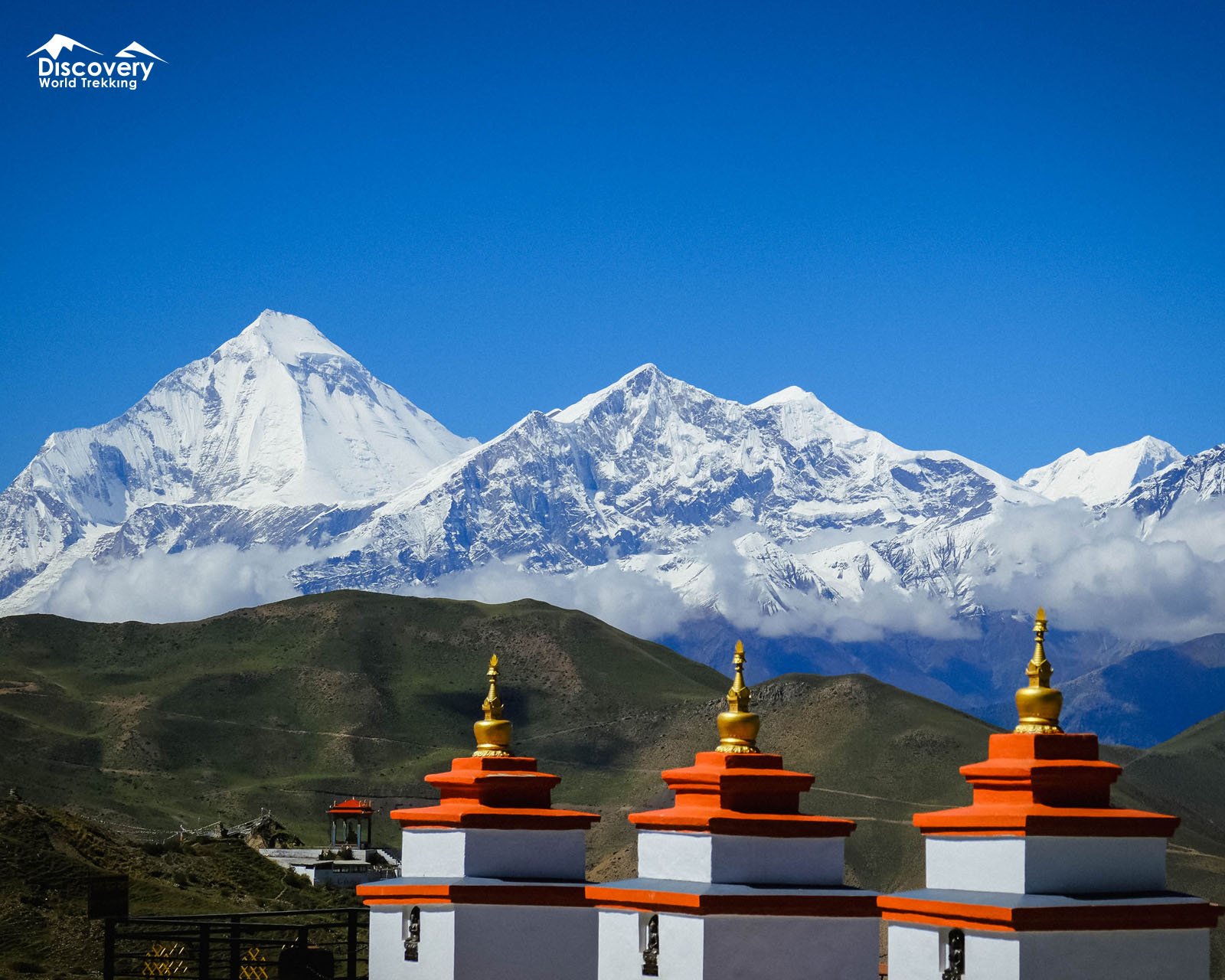
Highlights of Muktinath Temple
There are many elements that make Muktinath Temple whole. Let’s have a look at them.
1. Jwala Mai Temple And Eternal Flame
Jwala Mai Temple stands to the south of the main temple. It is associated with a naturally occurring flame, traditionally regarded by pilgrims as eternal. Natural gas escapes through cracks in the bedrock and ignites on contact with air. Hindus regard the flame as a manifestation of the goddess Jwala Ma.
2. Muktidhara (108 Water Spouts)
Behind the main temple, 108 bovine-head-shaped spouts release cold spring or mountain water in a semicircular arrangement.
Pilgrims walk the full line, letting the icy water hit their skin from each spout in turn. Hindus believe this washes away accumulated sin; Buddhists interpret the same act as cleansing 108 mental defilements on the path toward enlightenment.
3. Muktinath Yagyashala
Pilgrims who wish to perform a yagna, a formal Vedic fire ritual, can do so at the Yagyashala within the temple complex. It remains an active part of temple life, particularly during the larger Hindu festivals when devotees arrange havans.
4. Mukteshwar Mahadev Temple
A short walk from the main shrine sits Mukteshwar Mahadev, a smaller temple dedicated to Shiva and Parvati.
Muktinath is recognized as one of the 51 Shakti Peethas, sites believed to mark where a part of the goddess Sati's body fell after her death.
Tradition holds that her cheek landed here, which is why Shaiva and Shakta devotees, who might otherwise associate Muktinath purely with Vishnu, make a point of visiting this smaller shrine as well.
5. Muktinath Kunda
In front of the main temple are two small sacred ponds, commonly known as Paap Kunda and Punya Kunda, fed by the same water source as the 108 spouts.
Pilgrims bathe here as part of the same purification ritual, sometimes before entering the temple and sometimes after completing the round of spouts.
Some local accounts refer to these same ponds as Lakshmi Kunda and Saraswati Kunda, so don't be surprised if a guide uses a different name for the same two pools.
6. Shaligram Fossils
The Kali Gandaki River, which flows through the valley below Muktinath, is one of the few places on Earth where ammonite fossils, dark, spiral-shaped remnants of marine creatures, sit exposed at high altitude.
Hindus regard them as self-manifested forms of Vishnu, known as Shaligram Shila. Many pilgrims collect or purchase one from local vendors to keep in a home prayer room.
7. Samba Gompa
Samba Gompa, a small monastery on the left side of the main entrance to the temple complex, houses images of Shakyamuni Buddha, Chenrezig (Avalokiteshvara), and Guru Rinpoche.
8. Swaminarayan Sampradaya
Muktinath also holds religious importance for followers of the Swaminarayan Sampradaya. According to the tradition, Nilkanth Varni, the ascetic form of Bhagwan Swaminarayan, visited Muktinath in 1792 and performed intense spiritual austerities there for about two and a half months.
His stay strengthened the temple’s importance within the Swaminarayan faith and connected Muktinath with a wider tradition of devotion, discipline, and spiritual practice. A shrine at Vishnu Paduka commemorates Nilkanth Varni’s association with the sacred site.
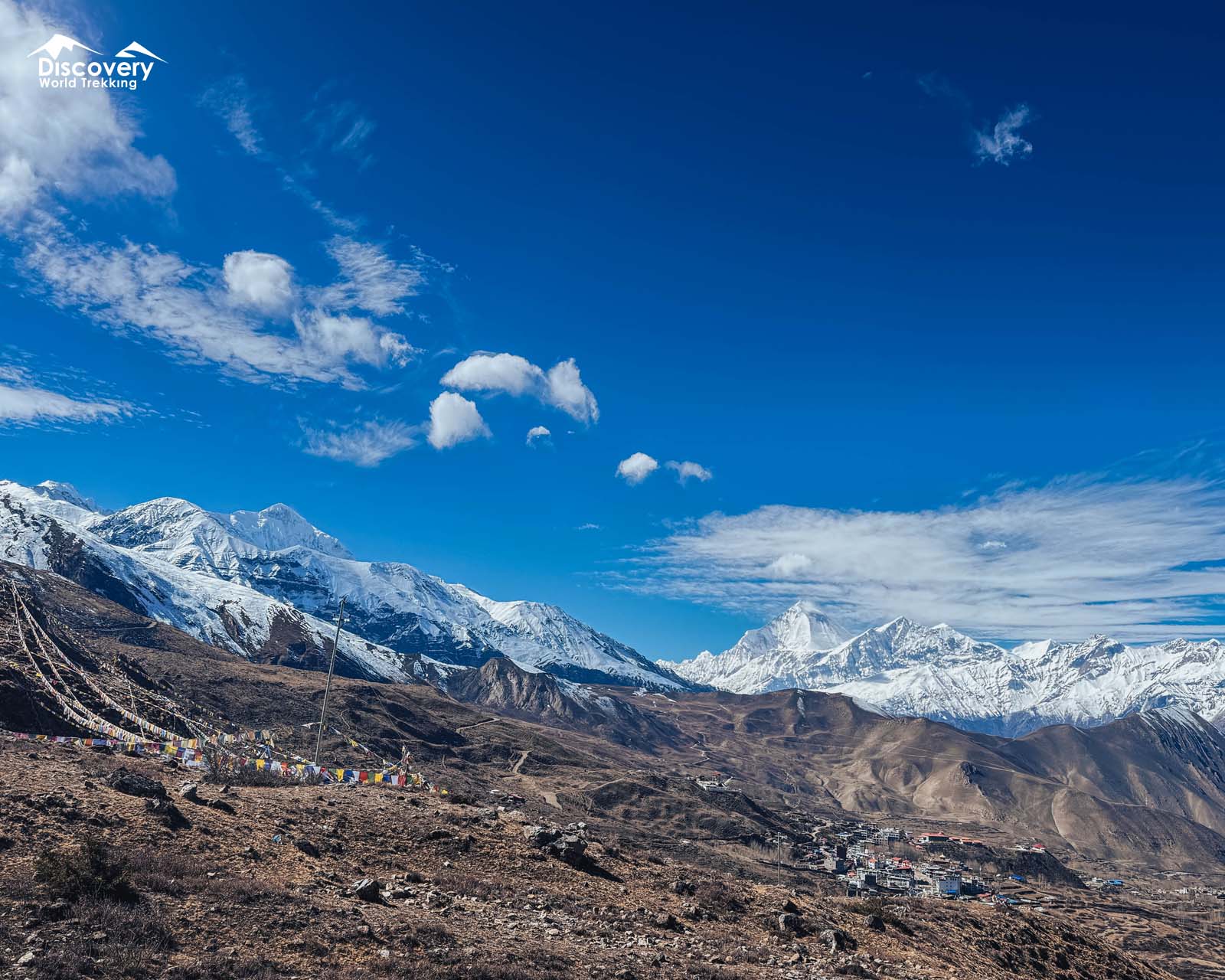
How to Reach Muktinath Temple?
You can reach Muktinath Temple by air, road, and on foot.
By Air and Jeep
- Pokhara to Jomsom to Muktinath
Regular flights from Pokhara to Jomsom take approximately 20–25 minutes, subject to weather and flight availability.
Jomsom is the main airstrip town in the region. From Jomsom, the road distance to Ranipauwa/Muktinath is approximately 20–23 km, and the jeep journey commonly takes about 1.5–2.5 hours.
From Ranipauwa, visitors walk a short distance uphill to reach Muktinath Temple.
- Direct Helicopter Charter
Chartered helicopters can reach the Muktinath/Ranipauwa area from Pokhara in roughly 35–60 minutes. From Kathmandu, the flight takes approximately 1–1.5 hours.
Flights depend on weather, aircraft availability, and landing permissions. Passengers may still need to walk from the helipad to the temple.
By Road
- Kathmandu to Pokhara to Muktinath
Route: Kathmandu → Pokhara → Beni → Tatopani → Marpha → Jomsom → Kagbeni → Muktinath
A private jeep from Pokhara covers the roughly 197 km route in about 8 to 10 hours on a mix of smooth and rough mountain roads.
From Kathmandu, the drive typically takes two full days, usually with an overnight stop in Pokhara along the way.
Along the route, stops often include Tatopani's hot springs, Marpha village, and Kagbeni.
On Foot
- Route: Manang → Thorong La Pass → Muktinath (via the Annapurna Circuit)
Most trekkers reach Muktinath as part of the Annapurna Circuit, crossing Thorong La Pass (5,416m) from Manang before descending into the Muktinath valley.
This crossing is the trek's most demanding single day, and proper acclimatization in Manang beforehand is essential.
- Route: Nayapul → Ghorepani → Tatopani → Jomsom → Muktinath
An alternative approach trek from Pokhara's side takes roughly 7 to 8 days, passing through Ghorepani, Tatopani, and Jomsom before reaching Muktinath.
Things to Do in Muktinath
Apart from witnessing the iconic Muktinath Temple, there are a few things you can do to enjoy your stay.
1. Taking a Bath in 108 Mukti Dhara
Walking the line of all 108 water spouts and letting the cold spring water pour over you is the central ritual most pilgrims come to perform. The water is cold enough to take most first-timers by surprise, and it's common to see people pause, brace, then push through the full row rather than stopping partway.
2. Horse and Dholi Ride
While making your way up to Muktinath Temple, you can also choose to ride a horse or dholi instead of walking. Dholis are traditional stretcher-style palanquins, and local youths from nearby villages operate both services.
3. Visit Kagbeni and Jharkot
Both Kagbeni and Jharkot villages sit within easy reach of Muktinath and reward a short detour. Kagbeni, about 10 km away, is a walled medieval settlement at the entrance to Upper Mustang, while Jharkot is known for its old fort-like houses and a restored monastery.
4. Meet the Local Thakali, Lopa, and Gurung Communities
The villages around Muktinath reflect the cultural diversity of Mustang, with Gurung and Thakali communities among the groups living in the wider area. Visitors can experience local culture through traditional architecture, monasteries, food, festivals, and everyday life around Ranipauwa and nearby villages.
5. Enjoy the desert landscape
The landscape around Muktinath is dry and wind-carved, creating a sharp contrast with the greener sections of the Annapurna Circuit. The surrounding hills and views toward Dhaulagiri and Nilgiri are particularly striking in the early morning and late afternoon.
History of Muktinath Temple
Muktinath has been revered for centuries by both Hindus and Buddhists.
For Hindus, the site has long been associated with Lord Vishnu and the sacred Shaligram stones found in the Kali Gandaki River.
The present pagoda-style temple is traditionally dated to around 1815 AD. The central Vishnu image is believed to date to the 16th century.
Muktinath also holds an important place in Tibetan Buddhism.
Buddhist tradition connects the site with Guru Rinpoche (Padmasambhava), the eighth-century master associated with the spread of Vajrayana Buddhism in Tibet.
Over the centuries, these Hindu and Buddhist traditions have continued side by side, making Muktinath one of the most distinctive shared pilgrimage sites in the Himalayas.
Spiritual Significance of Muktinath Temple
As we have been saying, Muktinath holds deep spiritual importance for Hindus and Buddhists, but each tradition understands the sacred site in its own way.
For Hindus
- Vaishnavas' Belief
Muktinath is counted among the 108 Divya Desams, the most sacred Vishnu shrines in the Vaishnava tradition, and is commonly described as the only one located outside present-day India.
It is also considered a Svayam Vyakta Kshetra, a site where Vishnu is believed to have manifested on his own rather than through a formal installation ceremony. For devout Vaishnavas, visiting all 108 Divya Desams during their lifetime is a significant spiritual goal, and Muktinath is often the most physically demanding of them to reach.
- Shaivas' Belief
Shaiva and Shakta devotees know Muktinath through its status as one of the 51 Shakti Peethas, sites believed to mark where parts of the goddess Sati's body fell after her death. Tradition holds that her cheek landed here.
This is why the Mukteshwar Mahadev shrine sits within the temple complex, drawing Shiva worshippers who might otherwise associate the site purely with Vishnu.
For Buddhists
Buddhists, particularly those following Tibetan Vajrayana tradition, know Muktinath as Chumig Gyatsa, meaning "Hundred Waters," and count it among the 24 major tantric pilgrimage sites.
Its significance is tied directly to Guru Rinpoche, who is said to have meditated here on his journey into Tibet.
For Buddhist pilgrims, the 108 water spouts represent the cleansing of mental defilements rather than sin in the Hindu sense, and the site is approached as a place for meditation and tantric practice as much as ritual bathing.
Festivals at Muktinath
Muktinath receives pilgrims throughout the year, but visitor numbers often increase during major Hindu festivals and cultural celebrations in Mustang.
1. Janai Purnima
Janai Purnima, the Hindu festival of the sacred thread, is one of the most significant pilgrimage occasions at Muktinath.
It takes place on the full moon of Shrawan, usually in August. Pilgrims traditionally bathe beneath the 108 water spouts and worship Lord Vishnu. Hindu men also change their janai, or sacred thread, during the festival.
2. Yartung Festival
Yartung is one of Mustang’s best-known cultural festivals and is especially celebrated around Muktinath and Ranipauwa.
Usually held around the August full moon, often close to Janai Purnima, the festival features horse racing, archery, dancing, music, feasting, and community gatherings.
It marks the end of summer and brings together residents from surrounding villages and other parts of the Mustang region.
3. Ram Navami
Ram Navami celebrates the birth of Lord Rama and is observed by Hindu pilgrims who visit Muktinath during the spring festival season.
Devotees perform prayers, make offerings, and visit the temple as part of their pilgrimage.
4. Buddha Jayanti
Buddha Jayanti commemorates the birth of Siddhartha Gautama, the Buddha. Buddhist communities in the Muktinath area and nearby monasteries observe the occasion through prayers, meditation, butter-lamp offerings, and religious ceremonies.
5. Losar
Losar is the Tibetan Buddhist New Year, celebrated by Buddhist communities throughout Mustang. Festivities include monastery ceremonies, prayers, family gatherings, traditional food, music, and cultural performances.
Popular Treks Passing Muktinath
- Annapurna Circuit Trek: The classic route around the Annapurna massif, descending into Muktinath immediately after crossing Thorong La Pass from Manang.
- Annapurna Circuit Trek with Tilicho Lake: The same route through Muktinath, extended with the side trip to Tilicho Lake before Manang.
Best time to visit Muktinath
You can visit Muktinath all year-round, but spring and autumn are the two seasons that offer the most reliable weather and travel conditions.
Spring (March to May)
Spring brings milder daytime temperatures to the Muktinath valley as winter loosens its grip.
March mornings can still feel sharp at this altitude, but April and May are noticeably more comfortable, making both the road journey from Jomsom and the final walk up to the temple easier going.
Mornings tend to offer the clearest views of Dhaulagiri and Nilgiri, with cloud building up later in the day as the season moves toward May.
Autumn (September to November)
Autumn is generally considered the best season to visit Muktinath. The monsoon clears by mid-September, leaving the trail and roads drier and the air noticeably cleaner heading into October.
By October and November, days are typically dry and stable, with some of the clearest mountain views of the year. This is when Dhaulagiri and Nilgiri are most likely to stay visible for days at a stretch, rather than clouding over by afternoon.
Dashain and Tihar, Nepal's two biggest festivals, usually fall during this period too, adding a cultural layer to the temple for anyone passing through.
Winter (December to February)
Winter is quiet at Muktinath, with far fewer pilgrims on the trail and a noticeably calmer pace at the lodges in Ranipauwa. Nights turn bitterly cold, and some lodges reduce services or close for the season entirely.
Monsoon (June to August)
Muktinath sits in a rain shadow behind the Annapurna and Dhaulagiri ranges, so monsoon here is drier than in most of Nepal.
Days at Muktinath itself are milder and often clear, but flights between Pokhara and Jomsom face frequent delays or cancellations due to changing mountain weather, which makes monsoon the least predictable season for reaching the temple.
Permits Required to Visit Muktinath
| Permit | Cost |
| Annapurna Conservation Area Permit (ACAP) | NPR 3,000 |
Is Muktinath Worth Visiting?
Yes, Muktinath is worth visiting for its spiritual significance, cultural importance, and unique Himalayan setting.
It is one of the rare places in Nepal where Hindu and Buddhist traditions are practiced side by side. The temple also sits in a stark, high-altitude landscape that looks very different from the greener trails most trekkers pass through to reach it.
The journey adds to the experience. Fly in from Pokhara for a quick pilgrimage, or reach Muktinath on foot as part of a longer Himalayan adventure.
Either way, the sacred sites, beautiful mountain landscape, and distinctive local culture make the visit memorable.
FAQs
What is the altitude of Muktinath?
Muktinath sits at 3,760 m, 12,336 feet above sea level.
How do Hindus and Buddhists share the same temple?
Hindu Brahmin priests and Buddhist nuns both serve at Muktinath Temple. Hindus worship the central deity as Vishnu, while Buddhists revere the same figure as Avalokiteshvara (Chenrezig).
Can I visit Muktinath without trekking?
Yes. Muktinath is reachable by road, flight to Jomsom followed by a short jeep ride, or direct helicopter charter from Pokhara or Kathmandu, without needing to trek the Annapurna Circuit at all.
Is Muktinath suitable for elderly pilgrims?
Many elderly pilgrims visit Muktinath each year, and improved roads mean a jeep can now get quite close to the temple. Given the altitude, it's still important to rest, stay hydrated, and acclimatize gradually, and to consult a doctor beforehand if there are existing health concerns.
Plan Smarter, Trek Better
Connect with our local expert for honest recommendations, personalised guidance, and insider tips to make every step of your adventure count.


Get our free Nepal travel guide filled with expert insights, local tips, and essential planning advice.