

Shree Kharka
Table of Contents
Shree Kharka is a quiet high-altitude pasture along the Annapurna Circuit. For trekkers, it serves as a peaceful overnight stop and an important staging point before continuing toward Tilicho Lake.
Shree Kharka is not a traditional village but a seasonal settlement. Families from nearby Khangsar and Manang come here during the trekking seasons to run the teahouses and stay with their livestock.
Where Is Shree Kharka Located?
Shree Kharka sits in Manang District, Gandaki Province, within the Annapurna Conservation Area, at 4,060 metres.
You can reach Shree Kharka via a side trail that branches off the main Annapurna Circuit route near Manang, running west through Khangsar rather than continuing north toward Yak Kharka and Thorong La Pass.
| Province | Gandaki Province |
| District | Manang District |
| Region | Manang, Annapurna Circuit |
| Elevation | 4,060 m (13,320 ft) |
| Latitude | 28.681° N |
| Longitude | 84.015° E |
| Nearby villages | Khangsar (3,745 m), Manang (3,540 m) |
| Conservation Area | Annapurna Conservation Area |
Why Is Shree Kharka Popular?
Shree Kharka's popularity comes down to one thing above all: it is the gateway to Tilicho Lake. Trekkers doing the detour to one of the highest lakes in the world pass through Shree Kharka.
What can you see from Shree Kharka?
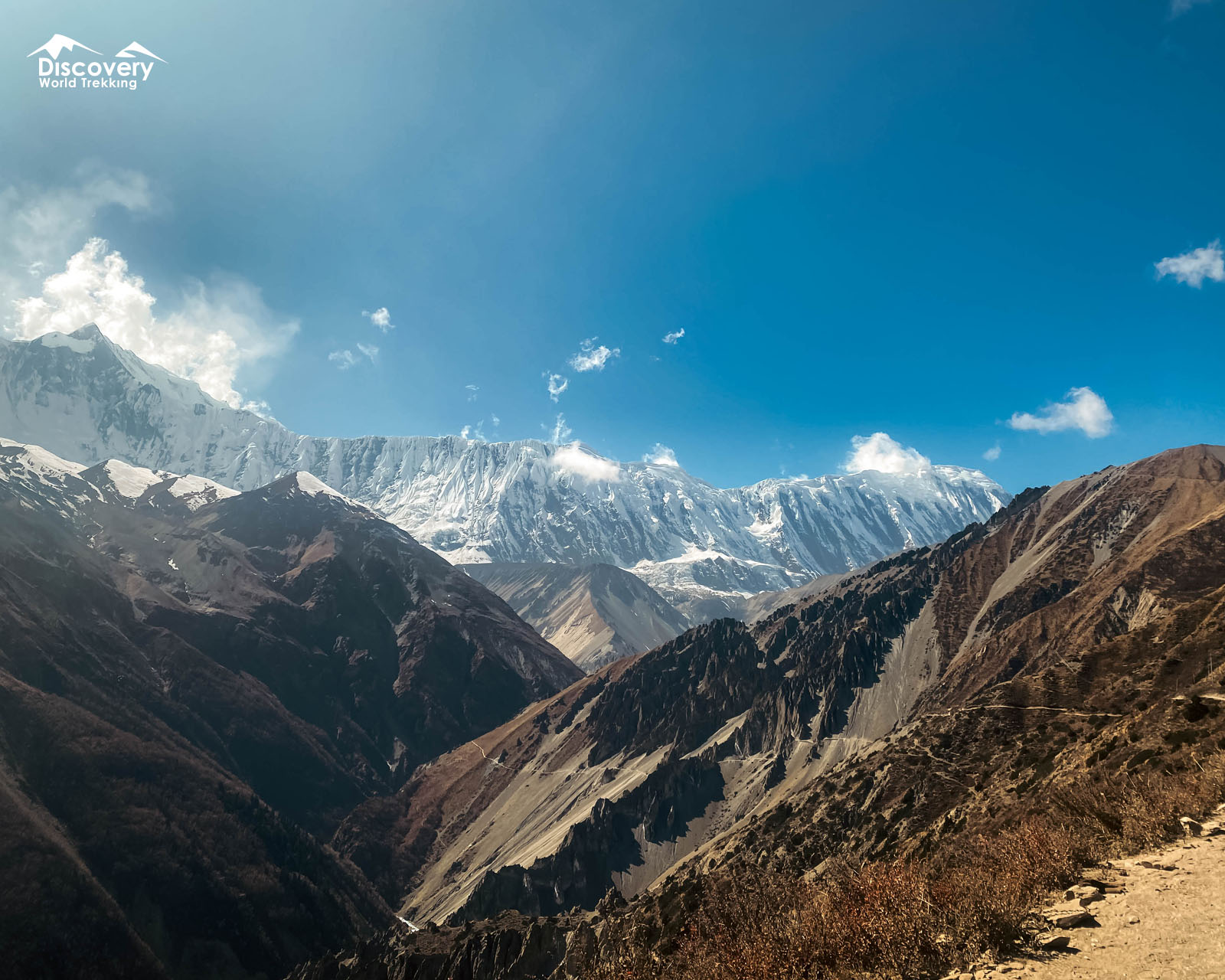
From Shree Kharka on the Tilicho Lake route, you can see dramatic views of the Annapurna and Manang Himalaya ranges. The main sights include:
- Gangapurna (7,455 m), rising prominently to the south.
- Khangsar Kang, part of the Great Barrier near the Tilicho Valley.
- Annapurna II and Annapurna III, visible across the upper Manang Valley.
- Chulu peaks, particularly toward the east; Chulu East reaches about 6,584 m.
- Tilicho Peak, visible in the direction of Tilicho Lake, although the clearest views are generally farther along the trail.
- The Manang Valley, including sections of the trail and scattered settlements, is visible when looking back from the surrounding slopes.
The most impressive panorama is generally toward the Annapurna range, Gangapurna, and Khangsar Kang, whose rocky and snow-covered faces dominate the landscape around Shree Kharka. On a clear morning, the mountain views are especially sharp before clouds build up.
Shree Kharka itself does not provide a direct view of Tilicho Lake; it is mainly the overnight stop and gateway for the hike to the lake.
How to Reach Shree Kharka?
There is no road and no airstrip anywhere near Shree Kharka. It's reached entirely on foot, usually as a side trip from Manang.
Route: Manang → Khangsar → Shree Kharka
From Manang, the trail climbs gently above the riverside path, passes through coniferous forest, dips to cross a river, and then climbs steadily to Khangsar, the last major settlement before the trail becomes more remote.
Beyond Khangsar, the trail crosses the Khangsar Khola, passes through cultivated fields, and climbs along the hillside above the river before reaching Shree Kharka.
The walk from Manang to Shree Kharka takes around 5–7 hours, with the steepest section coming during the final two hours.
Best Time to Visit Shree Kharka
Shree Kharka can technically be reached most of the year, but timing matters more here than on lower sections of the Circuit, since this section leads directly into the more exposed, weather-dependent trail to Tilicho Lake.
Spring (March to May)
Spring brings milder daytime temperatures, though the final approach to Tilicho Lake can stay snow-covered well into April in years with a heavier winter, sometimes requiring extra traction underfoot. Checking recent trail conditions with a local operator before committing is more reliable than going on general seasonal guidance alone.
Autumn (September to November)
Autumn is generally the more consistent season. Skies tend to stay clear, visibility toward the Annapurna range and Tilicho Peak is at its best, and the trail conditions on the landslide-prone section past Shree Kharka are usually more stable once the monsoon has fully cleared. It's also the busiest season, so teahouses fill up quickly, particularly in October.
Winter (December to February)
Winter brings cold temperatures and heavy snow, but the landscape can be especially beautiful with snow-covered peaks and clear mountain views. Heavy snowfall can sometimes close the Tilicho detour, and some teahouses may reduce services or close for the season, so conditions and accommodation availability should be checked in advance.
Monsoon (June to August)
Monsoon brings rain to the lower sections, but Shree Kharka can still offer peaceful surroundings and lush landscapes. However, cloud cover can reduce mountain views, while the landslide-prone section between Shree Kharka and Tilicho Base Camp becomes more challenging when wet. Trekking conditions should be checked carefully before heading toward Tilicho Lake.
Temperature in Shree Kharka
| Season | Daytime | Nighttime |
| Spring (Mar–May) | 5°C to 12°C (41°F to 54°F) | -10°C to -3°C (14°F to 27°F) |
| Autumn (Sep–Nov) | 5°C to 10°C (41°F to 50°F) | -12°C to -5°C (10°F to 23°F) |
| Winter (Dec–Feb) | -8°C to 2°C (18°F to 36°F) | -20°C to -12°C (-4°F to 10°F) |
| Monsoon (Jun–Aug) | 8°C to 14°C (46°F to 57°F) | -3°C to 3°C (27°F to 37°F) |
Popular Treks Passing Through Shree Kharka
- Annapurna Circuit Trek with Tilicho Lake: The main route that includes Shree Kharka, branching off from Manang to reach Tilicho Base Camp and Tilicho Lake before rejoining the classic Circuit toward Thorong La Pass.
Where to Stay in Shree Kharka?
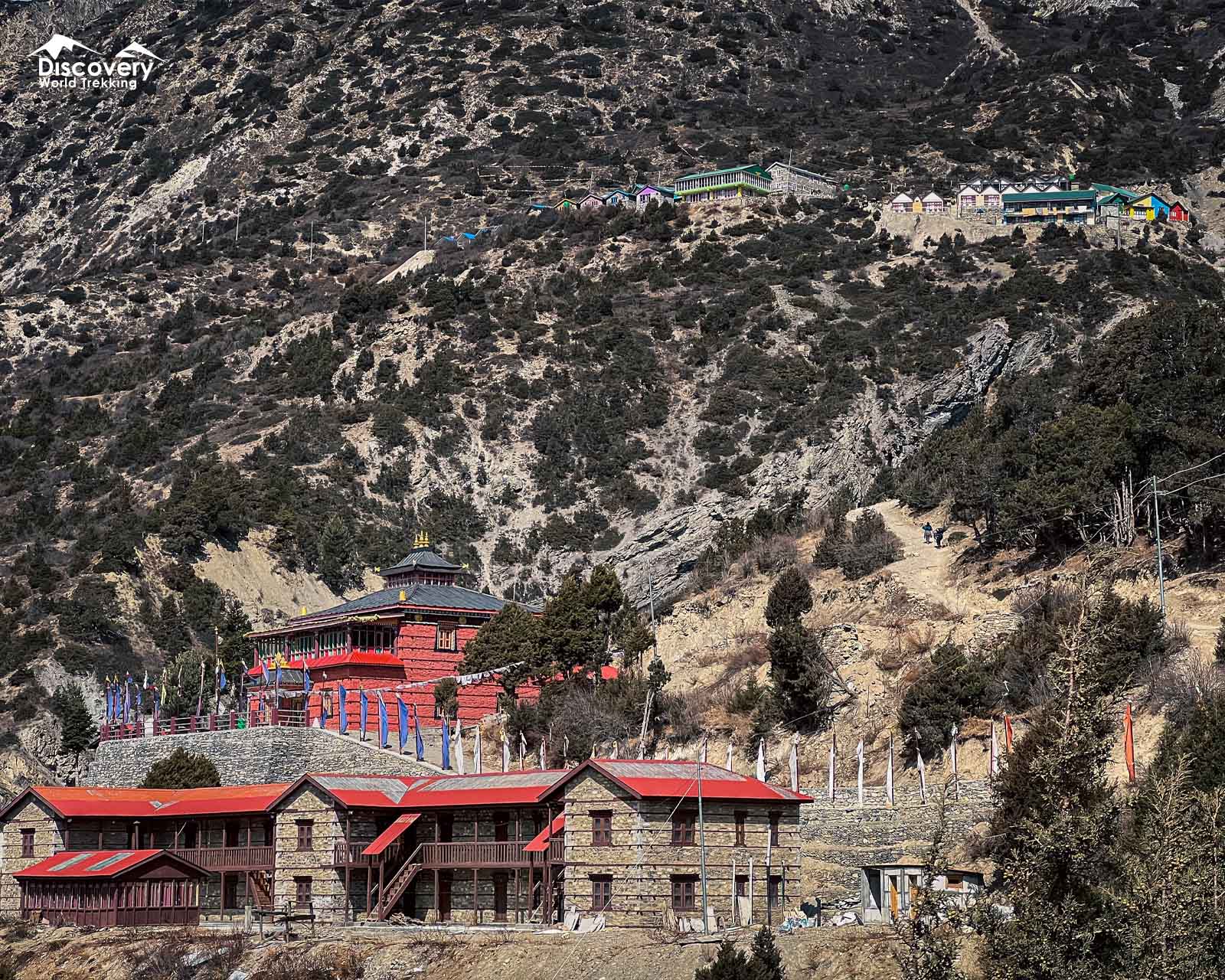
Accommodation in Shree Kharka is basic. The stone and wood lodges are built to handle the cold and wind rather than to impress, with small twin-share rooms, thin walls, and shared bathrooms.
A shared dining hall, heated by a central stove, is the social centre of each teahouse and the main place trekkers exchange notes on trail conditions ahead.
Electricity is limited and usually solar-powered, so charging devices can take longer than at lower elevations, and it's worth carrying a power bank as backup.
Accommodation in Shree Kharka is simple but comfortable, with a few teahouses offering basic rooms, meals, hot water, and limited Wi-Fi.
Hot water may be available by bucket, while Wi-Fi can be slow or limited. As there are only a few places to stay, rooms can fill up quickly during the peak trekking seasons, so arranging accommodation in advance is recommended.
Permits required to visit Shree Kharka
| Permit | Fee |
| Annapurna Conservation Area Permit (ACAP) | NPR 3,000 |
An Annapurna Conservation Area Permit (ACAP) is required for the route through Shree Kharka. The permit is checked at trail checkpoints, so it is important to carry it throughout the trek.
Culture and Lifestyle in Shree Kharka
Shree Kharka does not have its own resident community. The families who run its teahouses come up seasonally from Khangsar and Manang, both home to Manangi and Gurung communities shaped by Tibetan Buddhist tradition.
That seasonal rhythm, moving up to the high pastures for the trekking months and back down before winter closes in, reflects a way of life built around this landscape for generations, long before trekking tourism existed.
Despite being a temporary settlement, Shree Kharka still offers the warm hospitality found throughout Manang. Teahouses provide simple meals and a welcoming place to rest, while lodge owners often share useful local knowledge and information about trail conditions.
Flora and Fauna Around Shree Kharka
Sitting above 4,000 metres, Shree Kharka is well above the treeline. The landscape here is open pasture, rock, and scree, a marked contrast to the forested trail lower down between Dharapani and Manang.
Rosehip bushes, with their deep red autumn leaves, line parts of the trail, one of the few splashes of colour in an otherwise stark, high-altitude setting.
Wildlife sightings centre on blue sheep (bharal), regularly seen grazing the rocky slopes above the trail, and Himalayan marmots, more visible during the warmer months.
The area has occasional, well-documented snow leopard sightings too, though actually spotting one remains rare and mostly a matter of luck, usually reported around sunrise or sunset when the cats are most active.
What to pack for Shree Kharka?
- Down jacket rated for sub-zero temperatures: Nights at this elevation drop well below freezing regardless of season.
- Layered clothing: A moisture-wicking base layer, insulating mid-layer, and windproof, waterproof outer shell to handle the shift from still, sunny mornings to windier afternoons.
- Trekking poles: Useful on the steady climbs into Shree Kharka and essential if continuing on to the landslide-prone section toward Tilicho Base Camp.
- Sunglasses with strong UV protection: Sun exposure intensifies significantly at this altitude.
- Basic personal first-aid kit: Including altitude medication discussed with a doctor beforehand, since Shree Kharka sits well beyond easy access to medical facilities.
Is Shree Kharka Worth Visiting?
Yes, particularly for trekkers planning the detour to Tilicho Lake, Shree Kharka is worth visiting, since there is no way around passing through it.
But even setting Tilicho aside, Shree Kharka offers something genuinely different from the busier stops on the Circuit: real quiet, wide-open views of Gangapurna and Chulu, and a landscape that feels more like remote high pasture than a trekking hub.
It is not a destination in the way Manang or Muktinath are, and it is not trying to be. What it offers is a place to properly acclimatize and a launch point for one of the most demanding, rewarding side trips in the Annapurna region.
Trekkers who take the extra time here, rather than rushing straight through, tend to find the ground beyond it- the landslide crossing, Tilicho Base Camp, and the lake itself- considerably more manageable.
FAQs
What is the altitude of Shree Kharka?
Shree Kharka sits at 4,060 metres (13,320 feet) above sea level.
How far is Shree Kharka from Manang?
Shree Kharka is reached via Khangsar, covering a combined distance that takes 5 to 7 hours of walking from Manang.
How long does it take to trek from Manang to Shree Kharka?
Most trekkers take 5 to 7 hours to walk from Manang to Shree Kharka in a single day. Some itineraries split the walk into two shorter days, overnighting in Khangsar first.
Is Shree Kharka the last village before Tilicho Lake?
Shree Kharka is the last proper staging point with teahouses before Tilicho Base Camp, which sits closer to the lake itself. From Shree Kharka, trekkers typically walk to Tilicho Base Camp, stay overnight, then make an early push to the lake the following morning.
Can you reach Shree Kharka by road?
No. There is no road to Shree Kharka. The nearest road access ends well below Manang, and the entire stretch from Manang through Khangsar to Shree Kharka must be walked.
Plan Smarter, Trek Better
Connect with our local expert for honest recommendations, personalised guidance, and insider tips to make every step of your adventure count.



Get our free Nepal travel guide filled with expert insights, local tips, and essential planning advice.