

Annapurna Base Camp Trek in April
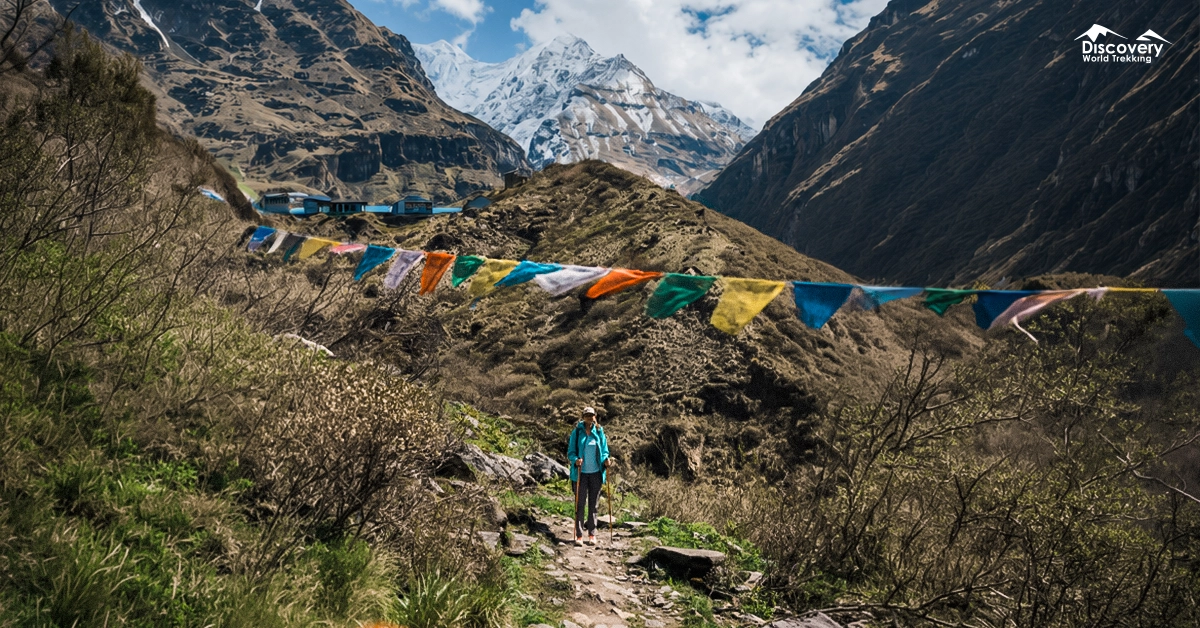
The Annapurna Base Camp Trek in January is a journey into the Annapurna Sanctuary at the peak of the winter season in Nepal.
January is one of Nepal’s coldest trekking months, but it also offers some of the clearest visibility of the year.
How is the Annapurna Base Camp Trek in January?
January on the Annapurna Base Camp Trek is generally dry, cold, and clear, with freezing conditions becoming more noticeable as elevation increases.
At Annapurna Base Camp, daytime conditions often stay close to freezing, while nighttime temperatures can fall to around -10°C to -15°C during colder periods.
Temperatures are considerably milder in lower villages. Sunlight can make daytime walking pleasant, so trekkers often change layers several times between a cold morning, sunny midday, and cool evening.

Early January Weather
Early January usually brings settled winter conditions with cold mornings and excellent visibility. Frost becomes common on shaded trails, especially above Ghorepani and inside the sanctuary.
Recent snowfall can leave attractive white sections above approximately 3,000 metres. Starting after sunrise rather than before dawn can make ordinary trekking days more comfortable, except when an early start is needed for viewpoints.
Mid January Weather
Mid January is typically one of the coldest parts of the month, especially during nights at higher elevations. Daytime sunshine still provides noticeable warmth on open slopes, while shaded forest and gorge sections remain cooler.
This is also when Nepal observes Maghe Sankranti. The festival marks the first day of Magh and traditionally represents the transition toward longer and gradually warmer days.
Late January Weather
Late January remains fully wintry, but slightly longer daylight makes trekking routines more convenient. Snow can still cover higher paths, and overnight temperatures at ABC remain well below freezing.
Trekkers should therefore plan around actual weather rather than assuming late January will automatically be warmer. A clear late-January morning can still feel extremely cold before direct sunlight reaches the valley.
Average Temperature in January
Trail Conditions of ABC Trek during January
January trail conditions change noticeably with altitude, progressing from mostly clear stone paths to possible packed snow and ice near the sanctuary.
From Pokhara to Ulleri
The approach to Ulleri from Pokhara usually remains largely snow-free in January. After travelling through the lower foothills, the trekking section involves stone staircases and village paths where morning frost is more relevant than deep snow.
The steps can feel demanding at the beginning of the trek. Trekking poles help maintain a steady rhythm and reduce strain during the long ascent.
From Ulleri to Ghorepani
The Ulleri–Ghorepani section becomes cooler and may contain frost or light snow as the trail approaches 2,800 metres. The route climbs through Banthanti and Nangethanti before entering Ghorepani.
Shaded forest retains cold longer than open slopes. Lightweight traction is useful when packed frost develops on stone steps.

From Ghorepani to Tadapani
Expect a mixture of forest trail, ridge walking, stone steps, and possible snow around the higher points between Ghorepani and Tadapani. The route crosses Poon Hill and continues through Deurali and Banthanti before reaching Tadapani.
This section has frequent ascents and descents. Fresh snow can make the forest especially photogenic while also rewarding slower, controlled footwork.
From Tadapani to Chomrong
Conditions generally become milder as the route drops toward Chomrong. The journey passes through Chuile and Gurjung before reaching the Chomrong area.
Stone staircases remain the main physical feature. Morning frost may appear, but direct sun usually improves walking conditions later in the day.
From Chomrong to Annapurna Base Camp
This is the section where winter conditions become most noticeable. The trail continues through Sinuwa, Bamboo, Dovan, Himalaya and Deurali before reaching Machhapuchhre Base Camp and Annapurna Base Camp. Above Deurali, vegetation gradually gives way to open alpine terrain.

How difficult is it to trek ABC in January?
The Annapurna Base Camp Trek in January is moderately challenging and becomes more demanding mainly because of winter conditions rather than technical climbing.
The standard trail does not require mountaineering skills, but trekkers need good cardiovascular fitness, confident footing, and suitable cold-weather equipment.
As ABC reaches an altitude of 4130 m, altitude sickness can recommends gradual ascent, good hydration, and careful attention to altitude symptoms once travelling above 2,500 metres.
A beginner with regular hiking experience can complete the trek with proper preparation. Someone starting from a low fitness level should train before arriving in Nepal.
Where to stay during January?
Trekkers stay in mountain teahouses and trekking lodges throughout the January ABC Trek.
Main overnight villages generally retain accommodation options in winter, although the number of operating rooms can be smaller than during peak season.
Choose a lodge before late afternoon whenever possible. At higher elevations, prioritize a clean room, thick blankets, a dining room with heating, and easy access to hot water.
A -10°C to -15°C comfort-rated sleeping bag adds significant warmth even when blankets are provided.
What Food to eat during January?
Warm, carbohydrate-rich meals are the most practical food choices for January trekking.
Dal bhat provides rice, lentils, vegetables, and useful calories, while thukpa, vegetable soup, noodle soup, potatoes, porridge, eggs, and fried rice are easy winter options.
Start mornings with porridge, eggs, or Tibetan bread rather than trekking on a light snack.
During the day, carry nuts, chocolate, energy bars, or dried fruit that can be eaten without a long stop.
Hot ginger, lemon, tea, and soup also make hydration easier in cold conditions.
Flora and Fauna in January
January offers a quieter form of wildlife and forest observation rather than the colourful flowering displays associated with spring.
Lower and middle sections retain bamboo, oak, rhododendron, mosses, ferns, and other hardy Himalayan vegetation.
Possible wildlife includes Himalayan langurs, Himalayan monal or danphe, small forest birds, and Himalayan tahr in suitable higher terrain.
Snow can make animal tracks easier to notice even when the animals themselves remain distant.
Popular Festivals and Occasions in January
Maghe Sankranti is the most relevant major Nepali festival for January trekkers. It is celebrated on the first day of Magh, normally around mid-January, and represents renewal and the beginning of longer days.
Traditional winter foods include til ko laddu, chaku, ghee, sweet potatoes, yam, and tarul. Trekkers passing through larger settlements around the festival may notice these seasonal foods and family gatherings.
Photography in ABC Trek During January
January is excellent for Himalayan photography because dry winter air, snow contrast, and quieter viewpoints create clean compositions.
For snow, check the histogram because cameras can underexpose bright white landscapes. Exposure compensation around +0.3 to +1 EV often preserves a naturally white appearance, depending on the scene.
Keep spare batteries inside an inner jacket pocket because cold reduces battery performance. When entering a warm lodge, place the camera inside a closed bag before bringing it indoors; gradual warming helps reduce condensation on lenses and electronics.
Sunrise works particularly well for Annapurna South, Machhapuchhre, and the sanctuary walls, while late afternoon provides deeper shadows that reveal mountain texture.
What to pack for ABC Trek in January?
Pack for temperatures well below freezing rather than relying only on average daytime forecasts.
Essential January equipment includes:
- Moisture-wicking thermal base layers
- Fleece or insulated mid-layer
- Warm down jacket
- Waterproof and windproof outer shell
- Thermal trekking trousers
- Waterproof trekking boots
- 3–4 pairs of warm trekking socks
- Insulated gloves plus lighter liner gloves
- Warm beanie and neck gaiter
- UV-protection sunglasses
- SPF 50 sunscreen and lip balm
- Microspikes or lightweight traction
- Trekking poles
- Gaiters for fresh snow
- Headlamp with spare batteries
- Insulated water bottle or thermos
- -10°C to -15°C sleeping bag
- Power bank
- Personal first-aid supplies
A layered system works better than one extremely heavy jacket because effort and sunlight can change body temperature quickly.
How to Prepare for Annapurna Base Camp Trek in January?
Prepare by combining endurance training, stair climbing, leg strength, and practice hikes for at least four to six weeks before departure.
Aim for two or three cardio sessions each week and one longer walk carrying a small backpack. Add squats, lunges, calf raises, step-ups, and core exercises to prepare for Nepal’s long stone staircases.
Break in trekking boots before travelling. Test gloves, layers, poles, backpack fit, and traction equipment at home rather than learning how they work on a snowy trail.
It is equally useful to plan flexibility into the itinerary. An additional day provides room to adjust the schedule around fresh snowfall or local trail conditions without rushing.
Permits for Annapurna Base Camp Trek in January
The Annapurna Conservation Area Permit costs NPR 3,000 for foreign nationals and NPR 1,000 for SAARC nationals. Buying the ACAP permit at a trail check-post can result in double fees, so arranging it beforehand is more practical.
Useful Tips for trekking ABC in January
The best January strategy is to trek steadily, use daylight efficiently, and make daily decisions according to local conditions.
- Begin normal trekking days after frost starts softening in sunlight.
- Keep water inside an insulated bottle to slow freezing.
- Put electronics and batteries inside your sleeping bag overnight.
- Carry microspikes even when lower trails appear completely dry.
- Use trekking poles on snowy descents.
- Keep one dry pair of socks specifically for evenings.
- Eat a full breakfast before cold morning departures.
- Reapply sunscreen because snow reflects strong UV radiation.
- Confirm the next lodge before leaving during quiet winter periods.
- Check weather and upper-trail conditions with guides and lodge owners each morning.
- Allow extra walking time after fresh snowfall.
- Maintain a gradual pace above 3,000 metres instead of competing with faster trekkers.
January rewards trekkers who remain flexible. A slower winter schedule often creates more time for photography, village interaction, and enjoying the mountain environment.
FAQs
Is it safe to trek Annapurna Base Camp in January?
Yes. Annapurna Base Camp can be trekked safely in January with winter equipment, gradual pacing, current weather checks, and experienced guidance. The upper section deserves the most attention after fresh snowfall.
Is ABC Trek suitable for beginners in January?
Yes, provided the beginner has trained beforehand and is comfortable walking several hours daily. January is better suited to fit first-time trekkers who are prepared for cold temperatures and winter footing.
Are guides available in January?
Yes. Licensed trekking guides operate during January. Nepal Tourism Board currently lists the Poon Hill–ABC Trek among routes requiring a licensed guide and agency-issued TIMS documentation.
Does it snow on the ABC Trek in January?
Yes. Snowfall is possible, particularly around Deurali, Machhapuchhre Base Camp, and Annapurna Base Camp. Research in the Annapurna region shows that winter snowfall becomes much more significant above approximately 3,000 metres.
How Cold is Annapurna Base Camp in January?
Nighttime temperatures at ABC can commonly reach around -10°C to -15°C, while sunny daytime temperatures can rise close to or slightly above freezing. Wind, cloud cover, and individual weather systems can make conditions feel colder.
Plan Smarter, Trek Better
Connect with our local expert for honest recommendations, personalised guidance, and insider tips to make every step of your adventure count.

Get our free Nepal travel guide filled with expert insights, local tips, and essential planning advice.