
Manaslu Circuit Trek in April
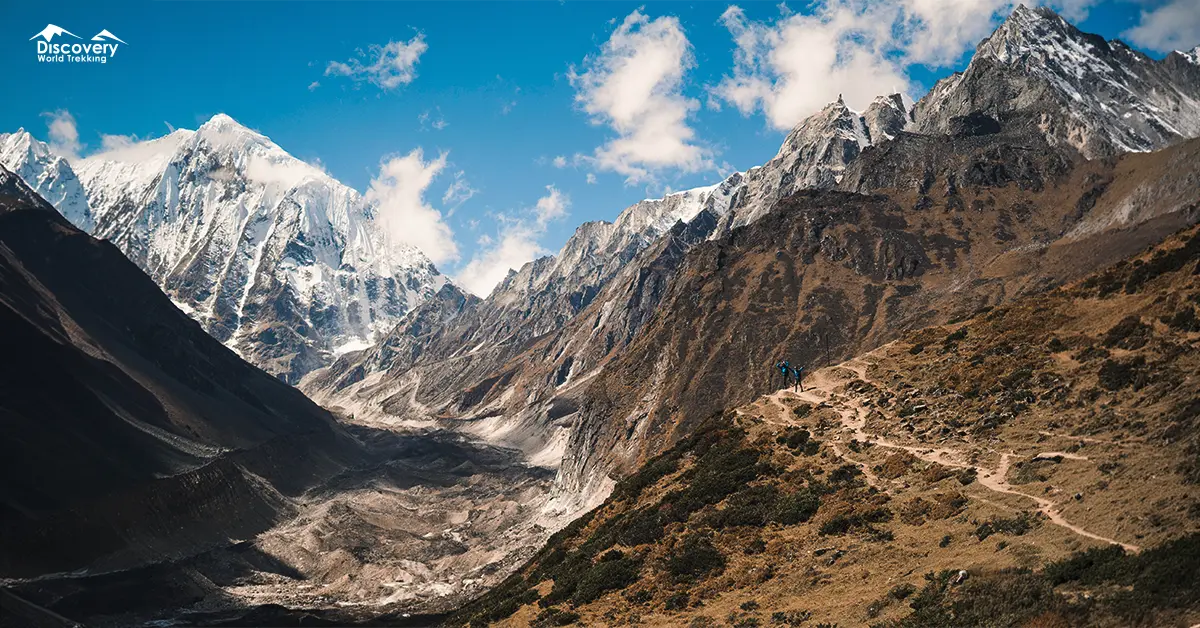
The Manaslu Circuit Trek in April combines spring flowers, increasingly comfortable walking temperatures, and a high Himalayan pass crossing.
April is a peak spring trekking month in Nepal, making it a strong choice for trekkers who enjoy mountain scenery alongside village life. Allow roughly two weeks for the circuit, with additional time for individual acclimatization and travel flexibility.
The experience changes with elevation: warm valley walks lead into cool forests and alpine terrain where winter conditions can linger. A rewarding April trek depends on matching the itinerary to your fitness, preparing for cold nights, and giving each stage enough time.
Why Trek the Manaslu Circuit in April?
Manaslu Circuit Trek in April suits trekkers who want spring vegetation and a substantial mountain journey within the same holiday. It falls within the region’s established March–May trekking season, when walking through lower forests and reaching the alpine valley can fit naturally into one itinerary.
One attraction is the gradual change in the surroundings. Riverside settlements give way to stone villages, cultivated terraces, and grazing country, making each overnight stop feel different. Spending time in these villages adds context to the landscape: stacked firewood, water channels, and field boundaries reveal how households organize mountain life.
April also brings a sociable rhythm to the teahouses. Shared dining rooms offer chances to exchange trail observations, compare photographs, and meet trekkers following different schedules. An afternoon arrival leaves time for these conversations before dinner.
For photographers, spring offers subjects beyond distant summits. Fresh leaves, carved prayer stones, village doorways, and flowers can fill the hours between the morning mountain light and the evening meal.
Manaslu Circuit Trek Weather in April?
April weather is generally warmer at the beginning of the trail and progressively colder toward the high camps. Elevation matters more than the calendar alone: Nepal’s broad temperature gradient is approximately 6°C per 1,000 metres of ascent, although local conditions vary.
The tables below give indicative packing estimates, not measured ten-day averages or forecasts. They illustrate a possible seasonal warming pattern; actual temperatures can fall outside these ranges, and a particular late-April week can be colder than an early-April week.
Early April Weather
Early April, approximately April 1–10, often retains more of winter’s character in the upper valley. Sunny stretches can feel pleasant while shaded ground and mornings remain cold, so daily comfort depends on both elevation and exposure.
| Overnight area | Approximate daytime °C | Approximate nighttime °C |
| Lower Elevation | 15 to 25 | 5 to 15 |
| Mid Elevation | 5 to 15 | −5 to 5 |
| High Elevation | −5 to 5 | −15 to −5 |
Mid-April Weather
Mid-April, approximately April 11–20, often brings a comfortable balance between warming afternoons and cool walking hours. Trekkers can usually adjust their clothing throughout the day as the trail moves between forest shade and open slopes.
| Overnight area | Approximate daytime °C | Approximate nighttime °C |
| Lower Elevation | 15 to 30 | 5 to 15 |
| Mid Elevation | 5 to 15 | −5 to 5 |
| High Elevation | 0 to 10 | −10 to 0 |
Late April Weather
Late April, approximately April 21–30, generally brings the warmest lower-valley walking conditions of the month. Spring cloud development and afternoon showers become more relevant to daily planning as the pre-monsoon season advances.
| Overnight area | Approximate daytime °C | Approximate nighttime °C |
| Lower Elevation | 20 to 30 | 10 to 20 |
| Mid Elevation | 5 to 20 | 0 to 10 |
| High Elevation | 0 to 10 | −10 to 0 |
Average Temperature in April
Trail Conditions of Manaslu Circuit Trek during April
April trail conditions change from stone steps and riverside paths to open moraine and seasonal snow. The following sections describe the terrain you can expect; your guide should confirm the current trail alignment and recent conditions before each stage.
Machha Khola to Philim
This opening section involves repeated short climbs, suspension bridges, and stone stairways above the Budhi Gandaki. Much of the walking follows a river corridor, but reaching successive villages still requires climbing around cliffs and tributaries.
Dividing the section with a night at Doban gives approximately 4–5 walking hours from Machha Khola, followed by 5–6 hours to Philim. That split creates a useful introduction to consecutive trekking days before the higher stages.
At bridges, secure loose straps and let approaching pack animals finish crossing. When passing a mule train on a narrow path, wait on the uphill side where there is enough room. Take photographs from a stable stopping place so both hands remain available while moving.
Philim to Namrung
Philim to Namrung is a forested stretch with frequent changes in gradient and river level. Overnight stops at Deng and Ghap distribute this terrain across three days, allowing time for bridges, shaded paths, and village approaches.
The forest floor can stay damp where streams cross the trail or sunlight reaches the ground only briefly. Short steps work well over roots and uneven stones, especially on the sustained climb approaching Namrung.
There is also a cultural distinction worth noticing here. Bihi belongs to the Kutang area, while the upper villages around Prok, Lho, and Samagaun belong to Nubri; these names describe different local areas within the conservation landscape. Asking your guide about them makes village visits more meaningful.
Namrung to Samagaun
This section follows village paths and forest trails before opening into the broader upper valley. An overnight stop at Lho divides the walk between Namrung and Samagaun, with Shyala visited on the following day.
Expect stone paving near settlements and narrower earth paths between them. Morning frost can linger beside shaded water channels, while sun-facing ground may already be dry. Place each foot deliberately when moving between those surfaces.
At Lho, allow time to ask about access to the monastery above the village. At Shyala, pause where the valley opens rather than treating it only as a refreshment stop. These visits fit most comfortably when optional detours are agreed with the guide before departure.
Samagaun to Larkya La Pass
Above Samagaun, the route becomes an open alpine journey through Samdo and Dharamsala toward Larkya La. Gravel, glacial debris, and snow patches require a steady pace and close attention to the guide’s chosen line.
The pass is commonly advertised at approximately 5,160 metres, although mapped elevations also quote 5,106 metres. For preparation, the meaningful figure is a crossing above 5,100 metres, followed by a substantial descent to Bimthang.
Snow can be firm in the morning and soften as the day warms. Discuss traction equipment and departure time with the guide using recent crossing reports. Microspikes can help on suitable icy walking surfaces, but deeper snow or difficult conditions may require waiting for a better crossing window.
How difficult is it to trek Manaslu Circuit in April?
The Manaslu Circuit in April is a challenging trek because of sustained walking, altitude, and the long pass day. Under suitable conditions, it follows a trekking route rather than a technical climbing itinerary, but it rewards preparation and controlled pacing.
Most walking stages in this 14-day schedule take about 4–6 hours. Allow around 8–9 hours for Dharamsala–Larkya La–Bimthang; snow conditions, group speed, and rest stops can extend that time.
The descent deserves as much preparation as the ascent. Reaching Bimthang after the pass involves roughly 1,400 metres of downward travel. Strong thighs, comfortable footwear, and practiced pole use help you maintain control late in the day.
Sleeping altitude is another useful measure of difficulty. Moving from Samdo at approximately 3,875 metres to Dharamsala at 4,480 metres gains about 605 metres. General altitude guidance recommends limiting sleeping gains above 3,000 metres to around 500 metres per day, with additional acclimatization nights.
Discuss an extra night at Samdo when planning that transition. April’s seasonal advantages support the journey, while your acclimatization and the day’s conditions determine the appropriate pace.
How to Prepare for Manaslu Circuit Trek in April?
Prepare through progressive hill walking, strength work, and an itinerary that allows your body to adjust. Begin around six to eight weeks beforehand if you already have a regular walking habit, allowing longer when building fitness from a lower starting point.
Build toward these practical sessions:
- Two or three weekly walks of 45–90 minutes, including hills or stairs.
- One longer weekly hike, gradually extending toward five or six hours.
- Two short strength sessions using step-ups, controlled step-downs, calf raises, and squats.
- An occasional pair of consecutive hiking days with your planned daypack.
Use those outings to test socks, boot fit, snacks, and how you recover overnight. A useful readiness check is completing a substantial hill walk and still feeling comfortable walking again the following morning.
Keep the full acclimatization day at Samagaun and select its excursion according to how you feel. Birendra Lake offers a shorter outing, generally around 2–3 hours return; Manaslu Base Camp is a much longer ascent and deserves its own careful assessment.
Arrange a travel-health consultation for existing medical conditions or altitude concerns. Also obtain insurance that explicitly covers your planned trekking elevation and emergency evacuation arrangements.
Where to stay during April?
Stay in village teahouses along the circuit, with the simplest high-camp accommodation at Dharamsala. April demand makes advance coordination worthwhile, particularly when a group needs several rooms together.
Overnight stops for this schedule are Machha Khola, Doban, Philim, Deng, Ghap, Namrung, Lho, Samagaun, Samdo, Dharamsala, and Bimthang. Samagaun is used for two nights, followed later by a hotel night in Besisahar during the return journey.
Most teahouse rooms offer twin beds and bedding, with bathrooms either shared or attached depending on the property. At Dharamsala, confirm whether your arrangement is a room, shared dormitory, or tent before heading higher.
Where a dining-room stove is used, that shared space is usually the warmest place to spend the evening. Bedrooms are commonly unheated, making your own sleeping system an important part of a comfortable night.
Ask three specific questions when accommodation is confirmed: Is the bathroom private? Is hot water included? Are charging and Wi-Fi charged separately? An attached bathroom describes access to the toilet and washing space; ask separately about shower facilities.
Keep your room organized for the morning with a small bag holding toiletries, headlamp, and sleepwear. This makes early departures easier when other guests are still resting.
What Food to eat during April?
Choose freshly cooked meals that combine carbohydrates with a regular source of protein. Teahouses commonly prepare rice, potatoes, noodles, lentils, and eggs, giving trekkers several straightforward ways to build satisfying meals.
| Meal | Useful choices | Practical reason |
| Breakfast | Porridge, eggs, toast, chapati | Choose a portion you can comfortably walk after |
| Lunch | Dal bhat, vegetable rice, noodle soup | Replenishes energy between walking stages |
| Dinner | Dal bhat, potato dishes, thukpa | Offers a warm meal with flexible portion sizes |
| Trail snacks | Nuts, dried fruit, biscuits, familiar bars | Easy to eat during short breaks |
Ask whether the kitchen has local foods such as tsampa, made from roasted barley flour. Where available, try a small serving first and learn how the household prepares it.
Explain food allergies and dietary requirements before the trek, then confirm ingredients with each kitchen. Order breakfast the evening before and agree on a packed meal before the pass crossing. Confirm meal inclusions when booking, especially lunches on driving days and drinks ordered between overnight stops.
For a cultural side hike such as Pungyen Gompa, carry the food and water you need for the whole outing. Treat the monastery as a visit to a religious site and arrange your refreshments beforehand.
Drink regularly according to thirst and walking conditions, using boiled or appropriately treated water. Follow your treatment product’s instructions for cold water, including the required contact time.
Flora and Fauna in April
April’s botanical highlight is spring flowering in the forest belt, especially rhododendrons where elevation and local temperatures suit the bloom. Flowering progresses unevenly, so lower sunny slopes and higher shaded woods can look quite different during the same trek.
The Ghap–Namrung forests and wooded sections around Lho are worth exploring slowly. Look at the smaller details as well as the canopy: new shoots beside the path, moss on shaded trunks, and the changing leaf shapes between forest types.
Higher up, scan open slopes for blue sheep and watch the sky for Himalayan griffons or golden eagles. These species occur in the conservation area, while an individual sighting depends on location, timing, and quiet observation.
A useful wildlife technique is to stop walking before searching a hillside. Give your eyes a minute to pick out movement, then use binoculars to examine the same area. Keep animals free to move naturally and photograph flowers where they grow.
Popular Festivals and Occasions in April
Nepali New Year is April’s main nationwide occasion, usually falling around April 13 or 14. It marks the beginning of the Bikram Sambat year and can add family gatherings, special meals, and holiday outings to your time in Nepal.
For a larger public celebration, consider Bisket Jatra in Bhaktapur before or after the trek. Its chariot processions and neighbourhood rituals belong to the Kathmandu Valley, so visiting requires time beyond the mountain itinerary. Confirm the annual programme before arranging transport.
In the upper trekking villages, local Buddhist observances provide a different cultural experience. Spring herder blessings are associated with Pungyen Gompa, where communities seek blessings before moving livestock into higher pastures. These follow local arrangements rather than a fixed visitor schedule.
Ask your guide whether any ceremony welcomes visitors during your stay. Follow the host’s directions, request permission for photography, and allow worshippers space to participate. A quiet, respectful visit can offer more understanding than trying to fit a festival into every day.
What to pack for Manaslu Circuit Trek in April?
Pack a layering system for warm walking, cold evenings, and a potentially snowy crossing. Choose items that work together, and test the full combination before leaving home.
| Category | April essentials |
| Walking clothes | Two or three quick-drying tops, trekking trousers, underwear |
| Insulation | Thermal top and leggings, fleece, insulated jacket |
| Weather protection | Waterproof jacket and overtrousers, warm hat, neck covering |
| Hands and feet | Liner gloves, insulated gloves, broken-in boots, several trekking socks |
| Sleeping | Sleeping bag with a comfort rating around −10°C to −15°C, adjusted to forecast and personal needs |
| Snow and balance | Trekking poles, gaiters, guide-approved traction equipment |
| Sun protection | UV-protective sunglasses, sunhat, sunscreen, lip protection |
| Daily equipment | Headlamp, spare power, water bottles, treatment supplies, snacks |
| Personal kit | Prescribed medicines, blister supplies, toiletries, earplugs |
| Bags | Comfortable daypack, waterproof liner, porter duffel if applicable |
Check the sleeping bag’s comfort rating when choosing it; an emergency survival rating describes a different level of protection. Trekkers who sleep cold should discuss a warmer option with their outfitter.
Keep one dry clothing set for evenings and sleeping. Carry essential layers, medication, and water in your daypack so they stay available between overnight stops.
Practice finding and operating your headlamp while wearing gloves. For an early start, it helps to know exactly where the switch, spare batteries, and essential clothing are packed.
Useful Tips for trekking Manaslu Circuit in April
Good April planning includes permits, cash, communication, and flexibility around the road journey. Settle these arrangements before departure so daily decisions on the trail stay simple.
- Have a registered agency confirm the restricted-area permit, licensed guide, and Manaslu and Annapurna conservation permits required for your itinerary.
- Carry your passport and accessible permit copies in waterproof protection for checkpoints.
- Budget Nepalese rupees for drinks, showers, charging, personal purchases, and staff tips; carry smaller notes for everyday payments.
- Download maps and save your itinerary offline. Agree on a realistic check-in plan with family before entering the upper valley.
- Reconfirm the vehicle pickup point near the trek’s end, because usable road access can change.
- Leave spare time between the return journey and your international flight.
For monastery visits, walk clockwise around chortens and mani walls where the path allows. Ask before entering prayer rooms and keep the guide involved when an invitation or explanation would help.
FAQs
Is it safe to trek Manaslu Circuit in April?
April is a favourable season for a well-prepared, guided trek. Safety depends on current trail conditions and acclimatization; report headache with nausea or dizziness promptly, pause ascent, and descend with assistance if symptoms worsen. Breathlessness at rest, confusion, or trouble walking calls for immediate descent and urgent medical help.
Is Manaslu Circuit Trek suitable for beginners in April?
It can suit a fit beginner who has trained on long hill walks and chooses a supportive itinerary. A porter, flexible daily pace, and time to acclimatize make it more manageable for someone new to multi-day Himalayan trekking.
Are the mountains in the Manaslu Circuit visible in April?
Yes, April offers opportunities for mountain views when skies are clear. Lho and Shyala are rewarding viewpoints for Manaslu and neighbouring peaks; arrange photography around the clearer periods your guide observes each day.
Plan Smarter, Trek Better
Connect with our local expert for honest recommendations, personalised guidance, and insider tips to make every step of your adventure count.


Get our free Nepal travel guide filled with expert insights, local tips, and essential planning advice.