Manaslu Circuit Trek - 16 Days

2241 Reviews in TripAdvisor
Recommended by 99% of travelers
Destination
Nepal
Grade
Challenging
Start / End Point
Kathmandu / Kathmandu
Accommodation
Hotel/Lodge/Tea House during the trek
Best Season
Mar, Apri, May, Sep, Oct & Nov.
Meals Included
All Meals (Breakfast, Lunch & Dinner) during the trek
Activity
Manaslu Treks
Max. Altitude
5,160m at Larkya la pass

The 16-day Manaslu Circuit Trek takes you around Mount Manaslu (8,163 m), guiding you through remote valleys, deep gorges, and Tibetan-influenced villages rich in Buddhist culture. Crossing the challenging Larkya La Pass (5,106 m), the trail shifts from lush lowlands to rugged alpine terrain, making it one of Nepal’s most scenic and less-crowded adventures.

Manaslu Circuit Trek Highlights

  • Cross the challenging point of the trek – Larkya La Pass (5,106m / 16,751ft)
  • Trek along the Budhi Gandaki gorge with suspension bridges and cliffside trails
  • Walk through remote and less crowded Manaslu Conservation Area
  • Visit ancient monasteries such as Ribung Gompa (Lho) and Pungyen Gompa (Sama Gaun) with views of glacial valleys
  • Views of stunning Himalayan peaks including Mount Manaslu (8,163m), Himalchuli, Ngadi Chuli, and Annapurna ranges
  • Acclimatization stop at Samagaun, the main village beneath the Manaslu north face
  • Side hike to Manaslu Base Camp (4,800m /15,748ft) and Birendra Lake, for glacier and icefall views
  • Explore Samdo village, influenced by ancient Nepal–Tibet trade routes and traditional yak caravan culture
  • See Tibetan Buddhist culture with mani walls, chortens, prayer wheels, and flags
  • Experience rich biodiversity with forests, alpine valleys, and glacier landscapes
  • Deep cultural experience of Tibetan Buddhist and Nubri village lifestyle
  • Chance to spot rare wildlife like Himalayan monal, blue sheep, and musk deer
  • Trek through rhododendron/pine forests in lower region and juniper bushes/moss in upper zones
  • Pass through the less crowded trails with a more remote trekking experience

Manaslu Circuit Trek Overview

The Manaslu Circuit Trek is a remote and adventurous journey that encircles Mount Manaslu (8,163 m), offering a quieter alternative to Nepal’s more crowded trekking routes. This trek lies in the Manaslu region of north-central Nepal, close to the Tibetan border, and passes through the protected Manaslu Conservation Area.

The journey begins with a drive from Kathmandu to Soti Khola via Arughat along the Trishuli River. The trail follows the Budhi Gandaki River, entering narrow valleys with suspension bridges, waterfalls, and forested hills. 

Soti Khola (730 m) marks the beginning of the Manaslu trek, where you experience the shift from road travel to a remote mountain trail.

The path leads to Machha Khola (890 m), walking along rocky terrain, watching waterfalls, and passing through the sal forests. You need to follow a sharp ascent and descent through the small Gurung villages like Lububesi and Khursani, which offer early cultural encounters.

As you move ahead, you cross two major rivers, Tharo and Machha Khola, on a suspension bridge and reach Doban (1,070 m). Doban is a confluence of Shari Khola and Sarpu Khola. Natural hot springs at Tatopani add a refreshing highlight along the route.

The route then ascends to Louri until you reach the Thado Bharyang below Jagat, a key checkpoint village with Tibetan-style architecture and terraced fields. Then you cross a philim bridge to reach Philim (1,570 m), which opens into a wider valley with Gurung settlements.

Moving towards Deng (1,860 m), the trail becomes narrower with deep gorges, bamboo forests, and frequent river crossings. Following the bank of the Deng Khola River, the landscape feels more remote with terraced millet fields.

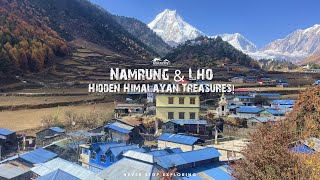
The trek continues to Ghap (2,250 m) and Namrung (2,660 m) through dense pine, oak, and rhododendron forests. Crossing suspension bridges toward Bihi Phedi and Ghap, you begin to experience a strong Buddhist influence with mani walls, chortens, and sacred imagery along the trail. Namrung opens up with the first clear mountain views, along with culturally rich villages and barley fields.

Trekking through the Lihi Village, you pass across the glacial stream to reach Lho (3,180 m). It is a beautiful village filled with monasteries, prayer flags, and traditional homes, with a stunning view of Simnang Himal (6,251 m).  

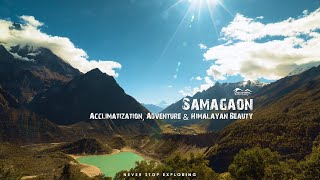
Passing through the Shyala village with agricultural fields, streams, and wooden resting places, you reach Samagaun (3,530 m). It is one of the most important acclimatization stops, where you have time to explore nearby highlights such as Birendra Lake or even take a side trip to Manaslu Base Camp.

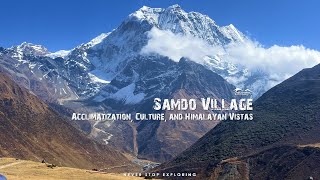
As the route continues towards Samdo (3,875 m), a Tibetan refugee village, you cross juniper and birch forests and enjoy views of Manaslu mountain. Located close to the Tibet border, the village reflects strong cross-border culture and trade influence.

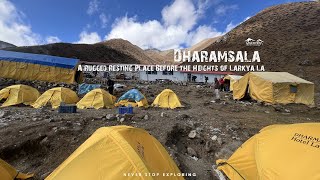
Following Athahra Saya and Larke River towards Larkya Glacier, the trek continues through Samdo edges and fields. The path becomes more rugged and alpine landscape until you reach Dharmsala (4,480 m), a community dormitory or Larkya La Phedi. 

While encircling the Manaslu circuit, the vegetation thins out, and the environment feels remote and dramatic as you prepare for the highest point of the trek.

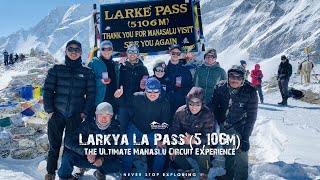
Crossing the Larkya La Pass (5,106 m) is the most challenging and rewarding part of the journey. From the top, you are rewarded with breathtaking panoramic views of Himlung Himal, Cheo Himal, Kang Guru, and Annapurna II.

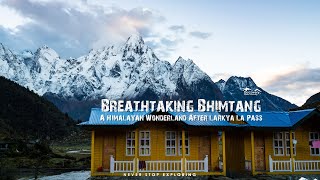
After a rough descent from the pass, you reach a grassy moraine around 4,450 m, and the landscape opens into wider alpine meadows. As the valley broadens, small stone houses come into view, marking your arrival at Bhimtang (3,720 m).

Descending through the rhododendron forests and cultivated fields near the Budhi Gandaki valley, you reach Gho (2,550 m). From here, the landscape gradually turns greener with wider valleys and a quieter riverside setting. 

On the final trekking day, you pass through Tilje, a Gurung village known for local brandy. You then cross Thonje village and Chamche waterfall to reach Dharapani (1,910 m). The path feels more settled, with villages and farmland along the way.

The trek concludes with a drive (local bus) along the Marsyangdi River to Besisahar (760 m). From here, you return to Kathmandu the same day if time allows, or stay overnight at Besisahar if arriving late.

The trek to Manaslu Circuit is a complete Himalayan experience, combining remote landscapes, cultural diversity, and high mountain adventure. 

Note

Discovery World Trekking kindly asks all clients to arrive in Kathmandu at least one weekday before starting the Manaslu Circuit Trek. We need one full working day to get the special Manaslu permit, which requires your original passport with a Nepali visa. The trek includes public bus transport, but a private jeep can be rented for extra comfort at an additional cost.

Online Trip Briefing

Online trip briefing is a pre-trek information session conducted through WhatsApp video call to clear all your doubts before your journey begins. Once we confirm your booking and receive your documents (a passport copy is sufficient initially), we will send your online briefing schedule via email.

During the briefing, we go through the full itinerary, the required packing list, and what to expect on the trail. We aim to answer all your queries so you feel confident and well prepared for the journey ahead. 

For easier communication, please add us on WhatsApp at +977-9840055491 or share your contact number with us.

Day to Day Itinerary

Day 1

Drive from Kathmandu via Arughat to Soti Khola (730 m). Drive time: Approx. 8 hrs.

Day 2

Trek from Soti Khola to Machha Khola (890 m). Trek time: Approx. 7 hrs.

Day 3

Trek from Machha Khola to Doban (1,070 m). Trek time: Approx. 5 hrs.

Day 4

Trek from Doban to Philim (1,570 m). Trek time: Approx. 6 hrs.

Day 5

Trek from Philim to Deng (1,860 m). Trek time: Approx. 5 hrs.

Day 6

Trek from Deng to Ghap (2,250 m). Trek time: Approx. 5 hrs.

Day 7

Trek from Ghap to Namrung (2,660 m). Trek time: Approx. 5 hrs.

Day 8

Trek from Namrung to Lho (3,180 m). Trek time: Approx. 6 hrs.

Day 9

Trek from Lho to Samagaun (3,530 m). Trek time: Approx. 5 hrs.

Day 10

Rest Day in Samagaun

Day 11

Trek from Samagaun to Samdo (3,875 m). Trek time: Approx. 4 hrs.

Day 12

Trek from Samdo to Dharamsala (4,480 m). Trek time: Approx. 4 hrs.

Day 13

Trek from Dharamsala to Bhimtang (3,720 m) by crossing Larkya la Pass (5,160 m). Trek time: Approx. 7 hrs.

Day 14

Trek from Bhimtang to Gho (2,550 m). Trek time: Approx. 4 hrs.

Day 15

Trek from Gho (2,550 m) to Dharapani (1,910 m). Trek time: Approx. 4 hrs.

Day 16

From Dharapani to Besisahar (760 m). Drive back to Kathmandu. Drive time: Approx. 12 hrs.

Planning Your Trek Schedule
Select Departure Date

Plan your trek by selecting the exact start and end dates from the calendar below. Ensure your arrival and departure dates align with your itinerary and schedule. 

Trip Duration16 days
Trip Start and End PointKathmandu / Kathmandu
Su
Mo
Tu
We
Th
Fr
Sa
1
2
3
4
5
6
7
8
9
10
11
12
13
14
15
16
17
18
19
20
21
22
23
24
25
26
27
28
29
30
31
Su
Mo
Tu
We
Th
Fr
Sa
1
2
3
4
5
6
7
8
9
10
11
12
13
14
15
16
17
18
19
20
21
22
23
24
25
26
27
28
29
30
31
Sold out dates

Group-Size Discounts will be applied in next step.

Continue Booking

Manaslu Circuit Trek Video

Manaslu Circuit Trek Video
Trek to the Himalayas with DWT

Manaslu Circuit Trek Itinerary

Day 1

Drive from Kathmandu via Arughat to Soti Khola (730m / 2896ft)

Driving Hours
(160km / 99.4miles) 6-8hrs

The trek starts from a drive from Kathmandu on Prithvi Highway that follows the Trishuli River. The views on the road are unlike anything you have ever seen -traditional villages, terraced fields, white water rivers, lush forests, giant mountains - including Annapurna, Manaslu, Langtang, and Ganesh Himal. We will continue our bus ride until we reach Soti Khola. Soti Khola is the gateway to the Manaslu trek.  We will be spending our first night in the trek region at Soti Khola.

Overnight stay at Green Valley Hotel
Included all standard meals (Breakfast + Lunch + Dinner)
Day 2

Trek from Soti Khola (730m / 2896ft) to Machha Khola (890m / 2,965ft)

Trek Distance
9.7km / 6miles
Highest Altitude
890m / 2,965ft
Trek Duration
6-7 hrs

This will be the first day on the trails. We wake up at Soti Khola, prepare for a long day trek, and head to Maccha Khola. The path itself is stunning, with waterfalls crossing our way. You need to be careful as the path has sharp ascents and descents. We will also be passing through Sal forests, walking by the side of towering cliffs, and at times you might encounter mules on the path. Our path will take us through Khursani village and to Lububesi Gurung settlement and finally to Machha Khola. 

Overnight stay at Hotel Everest View
Included all standard meals (Breakfast + Lunch + Dinner)
Day 3

Trek from Machha Khola (890m / 2,965ft) to Doban (1,070m / 3510ft)

Trek Distance
9.5km / 5.9miles
Highest Altitude
1,070m / 3510ft
Trek Duration
4 to 5 hrs

We have not gained much height, which you can tell from the sub-tropical vegetations lying around the trek. However, be prepared to traverse some ups and downs. You will be crossing two major rivers- Tharo Khola and Machha Khola. After crossing Machha Khola on a suspension bridge, we will be entering Tatopani, but we continue on our path that passes through forests and finally to Doban. Doban means the confluence of two rivers in Nepal, and sure enough, Doban lies at the confluence of Shari Khola and Sarpu Khola.

Overnight stay at Doban Guest House
Included all standard meals (Breakfast + Lunch + Dinner)
Day 4

Trek from Doban (1,070m / 3510ft) to Philim (1,570m / 5,150ft)

Trek Distance
13km / 8miles
Highest Altitude
1,570m / 5,150ft
Trek Duration
5-6 hrs

After breakfast at Doban, we continue through our journey to reach Philim by the end of the day. The trek starts with a sharp climb to Louri and continues until Thado Bharyang below Jagat. Then we cross a river to reach Jagat - a Tibetan-style settlement, and we cross another river to reach Philim - another Gurung village.

Overnight stay at Manaslu River View
Included all standard meals (Breakfast + Lunch + Dinner)
Day 5

Trek from Philim (1,570m / 5,150ft) to Deng (1,860m / 6,102ft)

Trek Distance
11km / 6.8miles
Highest Altitude
1,860m / 6,102ft
Trek Duration
4-5hrs

We continue our trek northwards through terraced millet fields eventually reaching Ekle Bhatti. Our path becomes steeper, passing through sharp gorges and crossing Budhi Gandaki River. We continue on the banks of Budhi Gandaki and then through bamboo forests that lead to the Deng Khola river. Then, we cross this river to reach Deng - our destination. 

Overnight stay at Windy Valley Lodge
Included all standard meals (Breakfast + Lunch + Dinner)
Day 6

Trek from Deng (1,860m / 6,102ft) to Ghap (2,250m / 7382ft)

Trek Distance
11.5km / 7.14miles
Highest Altitude
2,250m / 7,382ft
Trek Duration
4-5hrs

Our journey continues after a hearty breakfast intending to reach Ghap. The route takes us through Bihi Phedi and Bihi, but it starts as a short descend followed by a sharp ascend that leads to Rana Bridge. We continue further through the pine forest and cross a bridge to reach Bihi Phedi. As soon as you cross the bridge, you will realize that you have entered a Buddhist region by seeing Mani walls and other portraits of different gods and goddesses. You will cross another suspension bridge before you finally make it to Ghap. 

Overnight stay at Lama Hotel
Included all standard meals (Breakfast + Lunch + Dinner)
Day 7

Trek from Ghap (2,250m / 7,382ft) to Namrung (2,660m / 8,727ft)

Trek Distance
9km / 5.5miles
Highest Altitude
2,660m / 8,727ft
Trek Duration
4-5hrs

From Ghap, our next destination will be Namrung. The route takes us through dense fir, rhododendron, oaks, and bamboo forest, past steep ascends, suspension bridges, and stone stairs to Namrung. Around Namrung, you will get to see large barley fields. 

Overnight stay at Namrung Guest House with attached bathroom
Included all standard meals (Breakfast + Lunch + Dinner)
Day 8

Trek from Namrung (2,660m / 8,727ft) to Lho (3,180m / 10,433ft)

Trek Distance
11km / 6.8miles
Highest Altitude
3,180m / 10,433ft
Trek Duration
5-6hrs

We continue on our journey after having breakfast, intending to reach Lho. Our path takes us through the beautiful Lihi village, and then we will cross a stream that originates from Lindanda Glacier to reach Sho while enjoying the views of Simnang Himal (6251m). However, we will be pressing ourselves ahead to reach Lho - a culturally rich village adorned in prayer flags, Mani Walls, Chortens, and other stupas.

Overnight stay at Hotel Blu Sky
Included all standard meals (Breakfast + Lunch + Dinner)
Day 9

Trek from Lho (3,180m / 10,433ft) to Samagaun (3,530m / 11,581ft)

Trek Distance
17.2km / 10.6miles
Highest Altitude
3,530m / 11,581ft
Trek Duration
4-5hrs

From Lho, we start the trek early morning and head to Samagaun. Our path passes through a forest and reaches Shyala village. The Shyala village sits surrounded by agricultural fields and has several wooden resting places. As we move ahead, we will be crossing a small stream that drains the Punggen glacier and reach a flat village called Samagaun. Samaguan is the closest village to Manaslu Base Camp.  

Overnight stay at Hotel Manaslu with attached bathroom
Included all standard meals (Breakfast + Lunch + Dinner)
Day 10

Rest Day in Samagaun

During this trek, we acclimatize at Samagaon to adjust to the thin air as we would have reached a higher elevation. We will not stay idle but will explore Samagaun. Sure enough, you will be noticing the lifestyles of the locals and experiencing their culture. Moreover, there are other options such as a hike to Manaslu Base Camp or Birendra Lake or visiting Pungyen Monastery. 

Pungen Monastery lies in the south of Samagaon and is about two and a half hours hike away. It is hidden behind the ridge in front of Manaslu and provides tremendous views of the glaciers. Birendra Tal is a glacial lake at 3,450m where ice blocks tumble into the lake with thunderous displays. Samagaon is indeed an interesting place for acclimatization.

Overnight stay at Overnight stay at Hotel Manaslu with attached bathroom
Included all standard meals (Breakfast + Lunch + Dinner)
Day 11

Trek from Samagaun (3,530m / 11,581ft) to Samdo (3,875m / 12,713ft)

Trek Distance
8.2km / 5miles
Highest Altitude
3,875m / 12,713ft
Trek Duration
3-4 hrs.

The trek today is comparatively more interesting and pleasant. We will be crossing the pasture areas and ascending to the valley. The trail leads us to forests with juniper and birch. As we reach down the Budhi Gandaki river, we will cross the wooden bridge over Budhi Gandaki and climb up steeply across the river. We will be getting amazing views of mountains, especially Manaslu, as we reach Samdo - a Tibetan refugee village. Upon reaching Samdo, we will also explore this village and the surrounding hills.

Overnight stay at Hotel Little Tibet
Included all standard meals (Breakfast + Lunch + Dinner)
Day 12

Trek from Samdo (3,875m / 12,713ft) to Dharamsala (4,480m / 14,698ft)

Trek Distance
11.7km / 7.2miles
Highest Altitude
4,480m / 14,698ft
Trek Duration
3-4 hrs.

We walk down the Samdo edge through fields and old Mani walls, crossing the wooden bridge over the Budhi Gandaki River. We will walk past Athahra Saya River and then along the Larke River. You will be noticing the Mani walls, and the prayer flags hung on the route, signifying the closeness of the Larkya La Pass.

Then comes Larkya Glacier, which is unquestionably magnificent. As we enjoy the view, we further trek around the valley of Salkha Khola and climb up again to reach the stone guest house (4,450m). The stone guest house is not a lodge, but it is a kind of community dormitory better known as Dharamsala or Larkya La Phedi. This day would be a great day as we will get amazing views of the Larkya Glacier and Mt. Manaslu. 

Overnight stay at Dormitory / Tent
Included all standard meals (Breakfast + Lunch + Dinner)
Day 13

Trek from Dharamsala (4,480m / 14,698ft) to Bhimtang (3,720m / 12,205ft) by crossing Larkya la Pass (5,160m /16,929ft)

Trek Distance
16 km / 9..95miles
Highest Altitude
5,160m / 16,929ft
Trek Duration
8-9 hrs

The exciting part of the journey awaits us, as we will be trekking around the Manaslu circuit, crossing the Larkya La Pass (5,100m). After early morning breakfast, we will leave Dharamsala as it will be a long trek. The weather is the most important factor as the weather decides if the trek becomes more challenging due to strong winds or storms.

We begin by crossing the moraine, and descending to a small lake. The trail begins to be rough and unclear as we cross the south of a steep grassy slope. Our route stays on the moraine to an edge, marked by two landmarks. The prayer flags mark the route giving us a sense of trek direction. We descend carefully to four frozen lakes, then finally climb a steep trail to the Larkya La Pass. 

From the pass, you can enjoy the panoramic views of Himlung Himal, Cheo Himal, Kang Guru, and the great Annapurna II. The marvelous trail takes us to the top of the moraine, heads west, and makes steep, rough bends. We further cross the moraine then descend gently to another grassy moraine at 4,450m. As we descend, the trail becomes easier to walk in, as we arrive at a small meadow. The valley begins to widen as we near the large meadow, Mani walls, and small houses that indicate we have reached Bhimtang.

Overnight stay at Punkar Guest House with attached bathroom
Included all standard meals (Breakfast + Lunch + Dinner)
Day 14

Trek from Bhimtang (3,720m / 12,205ft) to Gho (2,550m / 8,367ft)

Trek Distance
10km / 6.2miles
Highest Altitude
3,720m / 12,205ft
Trek Duration
4-5hrs

Last day's trek must have been tough, but you can wake up assured that today's trek will not be very taxing. You start by descending to Budhi Gandaki River and cross it to enter the rhododendron forest that opens to Karche - a cultivated area near the top of Budhi Gandaki valley. You continue along the river bank to reach Gho.

Overnight stay at Hotel Hill Top (room with attached bathroom)
Included all standard meals (Breakfast + Lunch + Dinner)
Day 15

Trek from Gho (2,550m / 8,367ft) to Dharapani (1,910m / 6,266ft)

Trek Distance
6km / 3.7miles
Highest Altitude
2,550m / 8,367ft
Trek Duration
3-4 hrs.

This will be the last day on the trails. After waking up at Gho, we head to Dharapani. The route descends so the trek should be easy. You will be trekking through many fields and pastures and arrive at Tilje - a large Gurung settlement. This village is famous for brandy. However, we continue forward passing several Mani walls to reach Thonje village and then enter Dharapani village. 

Overnight stay at Heaven Guest House
Included all standard meals (Breakfast + Lunch + Dinner)
Day 16

From Dharapani (1,910m / 6,266ft) to Besisahar (760m / 2,493ft) - then drive back to Kathmandu.

Driving Hours
224km / 139miles (11 -12 hours)
Highest Altitude
1,910m / 6,266ft

Today will be your last day on the road. After early morning breakfast, we leave Dharapani to Besishar on a local bus, which will take about six to seven hours. The drive will be scenic as we will pass many villages, Marsyangdi River, Bhulbhule town, and Khudi. We will reach Besisahar before 3 pm to catch the last bus to Kathmandu. If we are late, we will have to extend a day in the itinerary. 

After catching a bus to Kathmandu, on our way, you will see the Marsyagdi River meeting the Trishuli River, as we head east on the Prithivi Highway. The drive allows you to appreciate beautiful and natural scenery - including the terraced lands and high peaks.

Included all standard meals (Breakfast + Lunch)

What is included in this trek package?

Transportation

  • Private transportation to and from Kathmandu Airport and your hotel
  • Transportation from Kathmandu to Arughat to Soti Khola (trek start) and from Dharapani (trek end) to Kathmandu by public bus

Accommodations

  • Total 15 nights. Seven nights room with private attached bathroom at Sotikhola, Namrung, Lho, Samagaun(2N), Bhimtang, and Gho. Eight nights standard room at Machha Khola, Doban, Philim, Deng, Ghap, Samdo, Dharamsala, and Dharapani (Generally twin Sharing room)

Food

  • Standard full-board meals (16 Lunches, 15 Dinners, and 16 Breakfasts), with one main course per meal during the trek
  • Water purification tablets for safe drinking water
  • Seasonal fresh fruits every day

Guide and Porter

  • Government licensed English speaking Discovery World Trekking experienced trek leader (One assistant guide for a group of 12 or more trekkers) and porter(s) to help trekkers luggage. (one porter for every two trekkers. Each trekker luggage limit is 9 kg.)
  • Guides and porter wages, their meals, insurance, lodging, transportation, and equipment cost)

Trek Permits and Expenses

  • Manaslu Special Permit with Conservation Area Permit and Annapurna Conservation Area Permit (ACAP)
  • All government, local taxes, and official expenses

Medical Assistance

  • Rescue operation arrangement in case of complicated health conditions (funded by travel insurance)
  • Medical kits, including an oximeter to monitor blood oxygen saturation levels in high altitudes

Souvenir

  • Souvenir - a company T-shirt & cap

Farewell

  • Discovery World Trekking trek achievement certificate after the successful trek
  • Farewell dinner in Kathmandu at the end of the trek

Benefits

  • Sleeping bags and down jackets, duffle bag (one for every two trekkers) if you do not have your own
  • Free excess luggage storage at the Discovery World Trekking store for the duration of the trek

What is excluded in this trek package?

International Flight

  • International flight airfare

Accommodations

  • All accommodations in Kathmandu, before and after the journey
  • Extra night accommodation in Kathmandu due to early arrival/late departure or early return from the trek.

Food

  • All meals in Kathmandu, before and after the journey

Guide and Porter

  • Tips for guide and porters

Visa

  • Nepal entry visa fees at Tribhuvan International Airport (paid in cash)

Travel Insurance

  • Travel insurance has to cover emergency helicopter high-altitude rescue, and evacuation along with medical costs (compulsory)

Personal Expenses

  • Personal expenses (shopping, snacks, bottled water or boiled water, hot (tea, coffee) and cold drinks, hot shower, alcohol, Wi-Fi, telephone call, battery re-charge fee, extra porters, etc
  • Personal clothing and gear

Other Expenses

  • Excess baggage charges (limit is 9 kg per trekker)
  • Additional costs due to delays caused by circumstances beyond our control, for example, landslides, bad weather, itinerary modification due to safety concerns, illness, change of government policies, strikes, etc
  • All the costs and expenses which are not listed in "What is included in this Trek package?" will be counted as excludes.

Lists of Equipments for the Trek

The exact clothing/equipment/gear you need for the trek varies according to season. However, here is our recommendation packing list. Please bring only the essentials. You can leave the rest of the stuff at our company store for free. We assign one porter for every two trekkers, and the luggage limit per trekker is 9 kg.

Head

  • Sun hat (wide-brimmed)
  • Beanie (for warmth)
  • Buff or neck gaiter (for sun protection and warmth)
  • Lightweight headlamp (with adjustable brightness)
  • High SPF sunscreen
  • Lip balm with SPF
  • Sunglasses with UV protection
  • Face wipes

Upper Body

  • Moisture-wicking t-shirts (short and long sleeves)
  • Thermal base layer (for colder conditions)
  • Fleece jacket and down jacket
  • Lightweight puffy jacket (for extra warmth)
  • Waterproof and windproof jacket (Gore-Tex or similar)
  • Raincoat
  • Lightweight, breathable long-sleeve shirt
  • Polypropylene underwear (four)

Hands

  • Insulated gloves or mittens (for cold weather)
  • Waterproof gloves (for wet conditions)

Lower Body

  • Quick-drying pants/trousers (convertible or full-length)
  • Insulated pants (for colder conditions)
  • Lightweight cotton pants
  • Thermal leggings or long underwear (for colder weather)
  • Two pairs of thermal/trekking trousers (pants)

Foot wear

  • Thick Wool or synthetic moisture-wicking socks (4 pairs)
  • Waterproof, ankle-supportive broken-in full hiking boots (with good traction)
  • Sandals (for camp use or river crossings)
  • Gaiters (for protection against mud, water, and debris)
  • Crampons/spike

Toiletries

  • Biodegradable bar soap
  • Toothbrush and toothpaste
  • Medium-size drying towel
  • Wet wipes or hand sanitizers
  • Toilet paper (In a Ziplock bag)
  • Feminine hygiene products
  • Travel-sized shampoo
  • Nail clippers
  • Small mirror

Backpacks

  • Duffle bag (capacity of over 60 liters) for porters** (One duffle bag for two trekkers).
  • Backpack or daypack (capacity 20-30 liters) for yourself

Personal accessories

  • Adjustable and lightweight poles (preferably collapsible)
  • Water bottle or bladder with a capacity of at least 2 liters (insulated for cold weather)
  • Water purification system (tablets, filter, or UV purifier)
  • Sleeping bag (-10 to -15 degrees is the best, we provide a used one if you don't have your own) **

Extra items

  • Camera/smartphone (extra memory cards and batteries)
  • Extra batteries or rechargeable power bank (for charging devices)
  • Two-pin charging plug
  • Basic first aid supplies (band-aids, antiseptic wipes, pain relievers, Diamox)
  • Personal medications (inhalers, allergy meds, etc.)
  • Few passport-size photos
  • Passport photocopies
  • Notebook and pen
  • Binoculars
  • Swiss army knife or multi-tool (with scissors, can opener, etc.)


Note

**We can provide you with a (used, nonwaterproof) duffle bag, (used) down jacket, and (used) sleeping bag if you do not have your own.

Ready to Pack for Your Trip? Download Checklist

Manaslu Circuit Trek Package Information

Planning this 16-day Manaslu Circuit Trek is an adventurous journey through raw landscapes, restricted regions, and deep cultural immersion. Compared to Everest or Annapurna, this route offers fewer crowds, more traditional, untouched villages, and a challenging high pass crossing at Larkya La. 

This section covers everything you need, including arrival logistics, food, permits, safety, and the daily trekking schedule.

Arrival in Kathmandu Before the Manaslu Circuit Trek

Your trek begins after landing in Kathmandu, where final preparations, rest, and coordination with your trekking team take place before heading toward the Manaslu region. 

Airport Pickup and Hotel Transfer

We ensure a smooth and comfortable arrival experience from the moment you land in Tribhuvan International Airport

You can easily recognize our team, as a representative will be waiting outside the terminal holding a placard with your name. You will be greeted with a Namaste and welcomed with a garland or Khada.

We provide a complimentary airport pick-up with a private vehicle transfer directly to your hotel in Kathmandu. If you haven’t booked accommodation yet, we can also assist in arranging a suitable hotel based on your preference and budget. 

We recommend staying in Thamel for easy access to gear shops and local/international restaurants, convenient transport, and last-minute essential shopping before your trek.

Note: We also arrange your airport transfer from the hotel for your return international flight after the trek.

When Should You Arrive Before the Trek?

For the Manaslu Circuit Trek, arriving in Kathmandu a day before departure is sufficient for final preparations. We recommend arriving by around 3 PM to: 

  • Allow time to rest after your long flight
  • Check your trekking gear and buy if missing
  • Complete your remaining 90% payment
  • Exchange your currency into Nepali Rupees (NPR)
  • Stroll around the local cultural places and enjoy the local cuisines
  • Adjust to the local time and climate before the journey begins

Meeting the Team

Before heading towards the Manaslu circuit, you will meet our team at our Kathmandu office for a structured briefing session led by our team lead, Paul.

In this session, he will: 

  • Introduce you to your guide and porter
  • Connect you with the support team in Kathmandu  
  • Share the full route: KathmanduSoti KholaJagatNamrung →  SamagaunDharamsalaLarkya PassDharapani
  • Assist in last-minute gear check and packing guidance
  • Explain the daily itinerary, walking hours, and altitude gain
  • Guide you through key safety and acclimatization tips

Transportation during the Manaslu Circuit Trek

During the Manaslu Circuit Trek, transportation is entirely by road; no domestic flights are available. 

The drive from Kathmandu to Soti Khola via Arughat marks the official start of the trek. It takes around 8–10 hours, with some rough off-road sections beyond Arughat, offering scenic views of rivers, terraced fields, and hillside villages.

Our package includes all required local transportation:

  • Kathmandu → Arughat → Soti Khola (start)
  • Dharapani → Besisahar → Kathmandu (return)

Note: A private jeep is recommended for added comfort, safety, and shorter travel time that can be reserved at an additional cost. It will cost around:

  • $165 USD from Kathmandu to Soti Khola
  • $185 USD from Dharapani to Kathmandu.

Where Will You Stay During the Manaslu Circuit Trek?

Accommodation during the trek is in teahouses or locally run lodges with basic facilities, reflecting the region’s remoteness.

You’ll need two extra days in Kathmandu, one before and one after the trek. These stays are not included in the package, but we can assist in finding the hotel based on your preferences.

Our Manaslu Circuit itinerary includes 15 nights of lodge-to-lodge accommodation at the best available teahouses along the trekking route.

Seven-night stay in rooms with a private attached bathroom:

  • 1 night at Sotikhola
  • 1 night at Namrung
  • 1 night at Lho
  • 2 nights at Samagaun
  • 1 night at Bhimtang
  • 1 night at Gho

Eight-night stay in standard rooms: 

  • 1 night at Machha Khola
  • 1 night at Doban
  • 1 night at Philim
  • 1 night at Deng
  • 1 night at Ghap
  • 1 night at Samdo
  • 1 night at Dharamsala
  • 1 night at Dharapani

Note: The Manaslu region sees fewer trekkers than the Everest and Annapurna regions. So, during peak season, rooms can be limited and are best booked in advance.

What to Expect in a Teahouse in Manaslu?

According to our trekking guides and team, teahouses on the Manaslu Circuit offer basic twin rooms with shared facilities, which become more rustic in higher altitudes.

Here’s what you can expect:

  • Basic facilities due to the remote location
  • Warm hospitality from local families
  • More peaceful environment with fewer trekkers
  • Strong cultural and local interaction
  • Costs increase with altitude due to transport difficulty

Trekking in this region, other facilities and amenities that you can get are: 

Rooms

Rooms are simple but functional, designed for rest and recovery after long trekking hours. Comfort levels vary with altitude, becoming more basic with fewer amenities and simpler setups as you go higher.

You can expect:

  • Twin-sharing rooms with wooden or plywood beds
  • Two beds with mattresses, pillows, and blankets
  • Limited furniture, usually just a small table or hooks
  • Rooms are not insulated, and they can get very cold at night
  • Windows are small, sometimes with minimal sealing against the cold
  • Limited space; best to keep luggage compact
  • Extra blankets available (may cost extra around NPR 200 - NPR 500 at higher elevations)

Note: Facilities are limited in Dharamsala. Usually, a room is shared among 5-6 people, as there are only three lodges available. 

Toilets and Showers

You can find the variation in the toilet and shower facilities depending on location and altitude, but they are generally shared and simple.

  • Common/shared toilets in most teahouses
  • A mix of Western-style and traditional squat toilets in the lower regions
  • Mostly squat-style toilets in the upper regions
  • Toilets are usually located outside the main building in higher regions
  • Hot showers available at lower altitudes (paid service)
  • Hot shower cost: NPR 300 – NPR 700 (~$3 - $5 USD)
  • Bucket showers are more common as you go higher
  • Limited or no hot water in remote/high-altitude areas

Note: You only get basic sanitation, so carrying your own toiletries, such as Toilet paper, soap, and hand sanitizer, is essential.

Heating

Heating facilities in remote areas are very limited and mainly concentrated in communal dining areas due to a lack of electricity and infrastructure. You will not find heating inside your private rooms, especially as you move towards higher-altitude villages. 

  • Only common dining halls are heated using wood or yak-dung stoves
  • There are no heating systems inside bedrooms in any teahouse
  • Heating becomes less effective in higher villages due to limited fuel supply
  • Nights are extremely cold above 3,000m, especially in Samagaun, Samdo, and Dharamsala

Note: A sleeping bag is recommended for added warmth and hygiene. We can provide a used sleeping bag if you insist.

Electricity

Electricity on the Manaslu route is available but highly inconsistent, relying mostly on small hydro and solar systems. You can see that the usage of electricity is limited, and charging is treated as a paid service.

  • Available in most villages up to Samagaun
  • Solar-based supply dominates in higher communities like Samdo and Dharamsala
  • Power cuts are common during bad weather and peak usage hours
  • Most teahouses provide charging facility in dining halls only
  • Some lodges restrict charging time during busy evenings

Charging cost per device:

  • Lower section (Machha Khola–Namrung): NPR 100 – 200 (~ $1– $1.5 USD)
  • Mid section (Lho–Samagaun): NPR 200 – 400 (~ $1.5 – $3 USD)
  • Higher section (Samdo–Dharamsala): NPR 400 – 700 (~ $3 – $5 USD)

Note: We recommend you to bring your power banks due to limited availability of charging and electricity.

Wifi

WiFi is available only in selected villages on the Manaslu Circuit and becomes weak or unavailable as altitude increases. You can use it only for messaging rather than for stable communication.

  • Available in lower villages like Jagat, Namrung, and Lho
  • Samagaun offers one of the most stable connections on the route
  • Very limited or no WiFi in Samdo and Dharamsala
  • Connectivity disappears completely near Larke La region
  • Mobile network (NTC/Ncell) works only in some portion in lower sections
  • Internet speed is slow and often affected by weather conditions

WiFi cost per session/device:

  • Lower villages: NPR 300 – 500 (~ $2 – $3.5 USD)
  • Mid villages (Lho–Samagaun): NPR 500 – 800 (~ $3.5– $5.5 USD)
  • Higher villages: NPR 800 – 1,200 (if available) (~ $5.5– $8 USD)
  • Data-heavy usage, like video calls, is not reliable

Drinking water

Drinking water is available throughout the Manaslu Circuit, but options vary depending on altitude and settlement size. You should always prioritize safe, treated water due to limited filtration systems.

  • Boiled water is available at most teahouses (paid service)
  • Bottled water is sold, but becomes expensive at higher altitudes
  • Natural water sources are available, but they are not safe to consume without purification
  • You can get refill options in some teahouses along the trail (usually paid service)
  • Hydration is critical due to cold, dry, high-altitude conditions

Water cost per liter:

  • Lower region: NPR 100 – 200 (~ $1– $1.5 USD)
  • Mid region: NPR 200 – 300 (~ $1.5 – $2 USD)
  • Higher region: NPR 300 – 500 (~ $2 – $3.5 USD)
  • Dharamsala: NPR 400 – 600 (limited availability) (~ $3 – $4 USD)
  • Use water purification tablets or filters, 30 minutes before drinking

Note: Avoid drinking water directly from springs, taps, rivers, lakes, and any other untreated sources.

Food on the Manaslu Circuit Trek

Food on the Manaslu Circuit Trek is simple, hygienic, and designed to keep you energized during long trekking days near Mt. Manaslu (8,163 m). You are served freshly prepared meals at teahouses along the trail, made from locally sourced ingredients.

As you gain altitude, the menu becomes more limited, but meals remain warm, filling, and focused on energy, hydration, and acclimatization. 

We provide three meals a day on a full board basis, including breakfast, lunch, and dinner. The package covers 16 breakfasts, 16 lunches, and 15 dinners, served at different teahouses and lodges.

Meal TimeCommon OptionsNotes
Breakfast
(7:00 AM – 8:00 AM)
Porridge, Tibetan Bread, Boiled/fried Eggs, Omelette, Pancakes, Herbal TeaLight, energy-focused start, Tibetan bread and eggs are widely available
Lunch
(12:00 PM – 1:00 PM)
Dal Bhat, Chowmein, Mo:mo, Vegetable Fried Rice, SoupsMain trekking energy meal, Dal Bhat is a chosen option
Dinner
(6:30 PM – 7:30 PM)
Dal Bhat, Thukpa, Curry Rice, Garlic or Vegetable SoupHeavier, recovery-focused meal, soups and Dal Bhat are chosen options

Breakfast Options

Your trekking day begins with a warm, energy-rich breakfast served at teahouses before you start walking. In lower villages, you can find more variety, while higher stops offer simpler, carbohydrate-heavy meals that are easier to digest in cold mornings/conditions.

Most teahouses offer these common breakfast options:

  • Oatmeal or porridge, including Tsampa-based options in higher regions
  • Tibetan bread or chapati with jam, honey, or butter
  • French Toast with jam, butter, or local cheese
  • Freshly cooked eggs (boiled, omelet, or fried)
  • Pancakes, muesli, or cornflakes in lower-altitude lodges
  • Hot drinks such as lemon and ginger tea

Lunch Options

Lunch is your main midday energy source, usually taken at teahouses along the route during breaks. You will notice more variety in the lower regions, while the higher sections offer simpler but filling meals. 

Dal Bhat is the most reliable and widely recommended option throughout the trek.

  • Dal Bhat (rice, lentil soup, seasonal vegetables, pickles) with refill servings at many stops
  • Thukpa and noodle soups for warmth and easy digestion at higher altitudes
  • Momos (dumplings filled with vegetables or potatoes)
  • Fried rice, macaroni, spaghetti, thenthuk noodles, and simple pasta dishes
  • Sherpa stew, vegetable curry, and potatoes in the lower villages
  • Sandwiches and basic bakery-style items in lower-altitude stops
  • Snacks (Papad, Prawn) and Salad Pizza (Tomato, Mushroom, Mixed)

Dinner Options

Dinner is your main recovery meal after a long day of trekking and is usually served early in the evening. It is heavier than other meals and helps you restore energy, maintain body warmth, and prepare for the next day’s trek.

  • Dal Bhat set meals (highly recommended for nutrition and portion size)
  • Thukpa (Tibetan noodle soup, especially common in Samagaun and Samdo)
  • Vegetable curry with rice, chapati, or potatoes
  • Pasta, noodles (Chowmein), and fried rice-based dishes
  • Garlic soup and vegetable soups are often preferred for altitude comfort
  • Momo (dumplings filled with different vegetables) and Salad/Vegetable Pizza
  • Light desserts like apple pie or rice pudding in the lower villages

Food Dietary Guidelines

While Teahouses offer a mix of Nepali, Tibetan, and basic international dishes, you can have limited food choices based on your preferences. It is important to understand what is included in standard meals and what items may require extra payment or careful consideration during the trek.

Meat ConsumptionMeat can be available in some teahouses, but we recommend not consuming it due to limited refrigeration and concerns about freshness in remote areas.
HydrationSip 3–4 liters of water daily. Hot drinks such as herbal tea, including ginger tea and hot lemon, are recommended.
What to Avoid?You should avoid alcohol, high-caffeinated drinks, and heavily processed foods as they cause dehydration and affect acclimatization.
Allergies and Dietary RestrictionsTeahouses can accommodate your dietary preferences and allergies if informed in advance. You should let us and your guide know beforehand about any specific needs, such as gluten-free, vegan, or lactose intolerance. Since options can be limited in remote areas and cross-contamination may occur, it is also recommended to carry some personal snacks as backup.
What is not included?Any additional items during breakfast, lunch, or dinner are not included in the package and are payable by you. You will need to pay extra for items outside the standard meals, such as soft drinks, packaged snacks, chocolate bars, desserts, extra tea, and bottled or hot water.

Best time to Trek Manaslu Circuit

The Manaslu circuit trek weather varies significantly across seasons, directly influencing trail safety, mountain visibility, and your overall trekking experience. Choosing the right time is especially important for crossing Larkya La Pass, where weather conditions can change rapidly.

SeasonTemperatureWeather conditionRecommendation
Spring
(March–May)
Day: 10°C to 20°C
Night: -2°C to -8°C
Stable with clear views of the mountains, blooming forests, and crowded trailsHighly recommended
Autumn
(September–November)
Day: 12°C to 18°C
Night: -5°C to -12°C
Dry, crisp air with a very stable environment, and clear mountain views, crowded trailsBest overall season
Winter
(December–February)
Day: 5°C to 10°C
Night: -10°C to -20°C
Very cold, heavy snowfall at altitude with frozen passes and quiet trailsExperienced trekkers only
Monsoon
(June–August)
Day: 15°C to 25°C
Night: 5°C to 10°C
Rainy, humid, and cloudy with limited visibility and quieter pathwaysNot recommended

Note: The table above shows average seasonal temperatures on the Manaslu Circuit Trek. For more detailed, month-by-month weather insights, you can explore our regional travel guide for accurate and up-to-date information.

Spring Season

Spring is one of the most visually rewarding times for the Manaslu Circuit Trek. The lower valleys become green and colorful, while the higher regions offer stable trekking conditions.

  • Months: March, April, and May
  • Temperature: 10°C–20°C (lower), down to -5°C at higher camps
  • Clear mornings with occasional afternoon clouds
  • Rhododendron forests and wildflowers bloom along the Budhi Gandaki valley
  • Clear views of Mount Manaslu (8,163 m), Himalchuli (7,893 m), Ngadi Chuli (7,871 m)
  • Good visibility of the surrounding ridges near Namrung and Samagaun
  • Balanced trekking comfort without extreme cold

Tip: Start trekking early in the day to catch the clearest mountain views before afternoon clouds form. 

Autumn Season

Autumn is the most reliable season, offering the clearest mountain visibility and stable weather conditions. It is considered the peak trekking season with more trekkers on the trail.

  • Months: September, October, and November
  • Temperature: 12°C–18°C (day), -10°C at higher elevations
  • Dry air with long-range visibility throughout the trek
  • Best views of Manaslu massif, Himlung Himal, Cheo Himal, and Larke Peak
  • Panoramic visibility from Samagaun and Dharamsala
  • Sharp sunrise views over snow-covered Himalayan ranges
  • Ideal conditions for crossing Larke La Pass (5,160 m)

Tip: Book early, as teahouses and permits are in high demand during peak season.

Winter Season

Winter transforms the Manaslu region into a remote, snow-covered wilderness. While scenic, certain sections are physically demanding due to extreme cold and limited accessibility.

  • Months: December, January, and February
  • Temperature: 5°C–10°C (day), dropping to -15°C to -20°C at night
  • Heavy snowfall around Larke La Pass and the upper valleys
  • Very low temperature above 3,500m with a quieter trekking experience
  • Frozen views of Manaslu, Naike Peak, and the surrounding ridges
  • Crystal-clear skies on stable days with dramatic snow scenery
  • Short days/daylight hours reduce trekking flexibility
  • Suitable only for well-prepared, experienced trekkers

Tip: Carry high-quality insulated gear and be flexible with timing, as snowfall can affect route conditions.

Monsoon Season

Monsoon brings lush greenery to the lower Manaslu region but creates challenging trekking conditions due to rain and unstable trails. Trail safety and visibility become major concerns during this period, making it the least favorable season for full circuit trekking.

  • Months: June, July, and August
  • Temperature: 15°C–25°C at lower valleys, 5°C–10°C in higher regions
  • Frequent rainfall and high humidity in the Budhi Gandaki valley
  • Limited visibility of the Manaslu range and Ganesh Himal due to cloud cover
  • Waterfalls and green landscapes dominate the lower sections
  • Increased risk of landslides in the lower sections
  • Leeches are common in forested areas

Tip: Use waterproof gear and expect flexible schedules due to rain and possible trail disruptions. 

Typical Day on the Manaslu Circuit Trekking

Your days on the Manaslu Circuit Trek follow a comfortable, well-paced routine, designed to keep you energized while allowing your body to adjust to the altitude. Each day, you come across fresh mountain air, ever-changing landscapes, and meaningful cultural encounters, making the journey just as rewarding as the destination.

Your typical day during the trek is:

Morning (6:30 AM – 7:00 AM): Begin your day with a warm cup of tea or coffee, taking in peaceful Himalayan views as the mountains slowly light up. This quiet moment helps you ease into the day and mentally prepare for the trek ahead.

Breakfast (7:00 AM – 8:00 AM): Enjoy a freshly prepared meal to fuel your day before setting out on the trail. A balanced and hot breakfast provides the energy needed for long hours of walking at altitude.

Beginning of the Trek (8:00 AM): After breakfast, the day’s journey begins along scenic trails, crossing rivers, streams, and suspension bridges. As you move forward, you gradually find your rhythm as the trail unfolds through diverse landscapes. 

Morning Walk (8:00 AM – 12:00 PM): It is the longest stretch of the day, giving you plenty of time to enjoy the views, take must-click photos, and maintain a steady pace. This is when you cover most of the distance, typically 3 to 4 hours, while the weather is generally clear, calm, and ideal for trekking.

Lunch Break (12:00 PM – 1:00 PM): After a few hours of walking, you need to rest and refuel your body for the journey ahead. Pause at a teahouse near the trail for a warm, fulfilling meal (a balanced high-carb meal). Followed by an hour of rest, it’s a great opportunity to relax, hydrate, and regain energy for the afternoon trek.

Afternoon Trek (1:00 PM – 3:00 PM): It is usually a shorter, more relaxed trek, typically 2 to 3 hours towards your overnight stop. The pace is slower, allowing your body to adapt to increasing altitude. 

Arrival at Overnight Stop (3:00 PM – 4:00 PM): By late afternoon, you reach your destination for the day, where you check in and settle into your teahouse lodge. Arriving early, you can enjoy light snacks or tea, relax, and give yourself enough time to recover while avoiding trekking in the colder evening temperatures.

Evening: You can have enough free time to explore the nearby village, interact with locals, or simply relax and enjoy the peaceful surroundings. It’s a perfect time to take in the views and unwind after a rewarding day on the trail. 

Dinner (6:30 PM – 7:30 PM): The final meal of the day is served in the lodge’s dining area, where you gather with fellow trekkers in a warm and cozy setting. This hearty meal helps your body recover and recharge, while the shared space makes a friendly, social atmosphere. 
Night Briefing: After dinner, you can wind down the day with light conversation and reflect on the experiences of the trek so far. Your expedition leader or guide will then brief you about the next day’s route, distance, and altitude. This helps you stay informed and prepared for the journey ahead.
Sleep: After the briefing and before going to bed, you can spend your time reading books, learning a few Nepali words from the crew, watching mountaineering documentaries, or enjoying simple games like cards or Monopoly. We recommend an early sleep to support recovery and prepare for the next day’s trek.

Manaslu Circuit Trek Difficulty

The Manaslu Circuit Trek is considered challenging for everyone, mainly due to its high altitude and remote logistics.

The trail will test your endurance with multi-day trekking, adjusting to limited facilities, and crossing a high mountain pass at 5,160 m. You need to pass the mixed terrain, rugged trails, and occasional landslide-prone sections.

Note: Even without technical climbing skills, you can complete the trek successfully with good fitness, a steady pace, and proper acclimatization.

Manaslu Circuit Trek distance

You will follow a long, continuous trekking route on the Manaslu Circuit, gradually gaining elevation without shortcuts or easy exit points.

The distance can feel more demanding as you move through varied terrain, including narrow ridges, sloped paths, river crossings, and simple bamboo bridges.

As you ascend higher, the trail becomes rougher and physically demanding, especially in the upper sections leading toward Larkya La Pass.

  • Total trekking distance: 160–180 km
  • Trek duration: 16 days
  • Daily walking time: 5–7 hours (longer on pass day)
  • Average daily distance: 10–18 km
  • The trail includes suspension bridges, stone steps, and forest paths
  • Longer stretches between Samdo → Dharamsala → Larkya Pass

Tip: Manage your day with short treks and short breaks instead of long stops.

Manaslu Circuit Trek Elevation and Altitude

The Manaslu Circuit Trek difficulty increases as you ascend to higher altitudes.

Altitude plays a major role in how your body performs during the trek. As you ascend beyond 3,000 m, oxygen levels drop significantly, making even simple activities feel more demanding.

You need to be aware of how your body responds and adjust your speed, hydration, and rest accordingly.

Thing to know:

  • Elevation gain exceeds 4,000 m from start to pass
  • Your acclimatization stop is at Samagaun
  • You may face noticeable altitude effects after ~3,000 m
  • An early morning start is required for crossing the pass
  • Long descent after Larkya Pass adds physical strain
  • Hydration and pacing directly affect performance

Tip: Follow the “trek high, sleep low” approach whenever possible to adapt better.

Fitness level

The Manaslu Circuit is well known for its remote and less-travelled surroundings, so maintaining good fitness is not something to be compromised.

The combination of long uphill walks, ridges, and constantly changing terrain requires more focus on strength and endurance than on speed. You need to be physically prepared, enhancing your stamina and recovery ability.

Since the journey involves consecutive hours of walking and steady elevation gain, your body should be conditioned to maintain a consistent pace on uphill sections over multiple days.

You should focus on:

  • Being comfortable with 5–7 hours of walking per day
  • Able to handle steep ascents and long downhill sections
  • Good cardiovascular endurance for reduced oxygen levels
  • Leg strength for uneven and rocky terrain
  • Ability to carry a light daypack for extended periods
  • Consistent energy output over 16 trekking days

Tip: If you can comfortably hike for 6 hours in hilly terrain, you are already close to the required level.

Manaslu Circuit Trek for Beginners

If you are attempting the Manaslu Circuit Trek as a beginner, you require proper preparation and the right mindset. The main challenge is not technical difficulty but altitude, remoteness, and sustained physical effort without modern comforts.

Since the route is less developed and more demanding than popular treks, you should focus on physical readiness, mental preparation, and basic trekking awareness before you arrive in Nepal.

You should be aware of the trek:

  • It is suitable for beginners with prior physical preparation
  • You should choose itineraries with proper acclimatization days
  • Doesn’t require climbing or technical mountaineering experience
  • Our guide support ensures safety and navigation assistance
  • Limited infrastructure means fewer facilities and limited medical access on the trail
  • Gradual ascent helps your body adapt to altitude changes
  • Mental adaptability is important for remote conditions

Tip: Do a shorter high-altitude trek first if you’re unsure about your endurance.

Key Preparation Advice Before Starting the Manaslu Circuit Trek

The remote nature of the Manaslu Circuit Trek includes fewer facilities, limited medical access, and no shortcut or alternative route once you are on the trail.

Your overall success depends on how well you prepare before the trek begins. Building fitness, understanding altitude, and adjusting expectations make the biggest difference.

  • Train 4–8 weeks before departure with regular hiking or cardio
  • Build endurance by walking 5–10 km daily with a backpack (5–8 kg weight)
  • Focus on cardio fitness through running, cycling, or stair workouts
  • Strengthen legs and core to handle steep ascents and long descents
  • Do at least one practice hike on uneven or uphill terrain if possible
  • Learn about altitude sickness symptoms and how your body may react above 3,000 m
  • Practice walking in your trekking boots before the trip to avoid blisters
  • Prepare mentally for basic accommodation and limited facilities in remote areas
  • Keep expectations realistic about long walking hours and simple teahouse living

Tip: During training, focus on walking uphill with a loaded backpack and descending in control. The most common trekking fatigue comes from long ascents and the downhill impact on the knees.

Difference between Manaslu Circuit and Annapurna Circuit

Choosing between the Manaslu Circuit and the Annapurna Circuit depends on the type of trekking experience you’re looking for.

Manaslu offers a more remote, less commercialized journey with raw landscapes and quieter trails, while Annapurna provides easier access, better infrastructure, and more flexibility.

Your decision should depend on your comfort level with remoteness, logistics, and overall trekking goals. You can also take help from the table below:

FeatureManaslu Circuit TrekAnnapurna Circuit Trek
Trek ExperienceYou walk through remote, less-travelled valleys where the environment feels untouched, and traditional villages are still preservedYou experience a more developed trekking route with better infrastructure and more established trekking services
Crowd LevelTrails are quiet, giving you more personal space and a peaceful walking experienceYou meet more trekkers along the route, especially in peak seasons, creating a busier atmosphere
DifficultyThe trek feels more demanding due to longer remote sections, fewer facilities, and continuous terrain changesThe trek is still challenging but more manageable due to better access and frequent stopping points
Trail ConditionsPaths are more rugged and natural, with fewer upgrades and more raw mountain terrainTrails are more maintained and developed with stairs and marking, making trekking slightly more comfortable
AccommodationYou stay in simple teahouses with basic and shared facilities, especially in higher regionsYou find more variety in lodges, including slightly more comfortable options in many villages
Maximum AltitudeCrossing Larkya Pass at 5,160 m requires careful pacing and acclimatizationCross Thorong La Pass at 5,416 m, one of the highest trekking passes in the world
Cultural ExperienceYou can experience a strong Tibetan-influenced culture, with fewer external influencesYou see a mix of cultures and more commercial interaction in villages along the route
FlexibilityThe route is fixed with limited exit options once you startYou can shorten, extend, or modify sections more easily depending on your plan

Tip: Choose Manaslu if you want solitude and authenticity; choose Annapurna if you prefer flexibility and comfort. 

Manaslu Circuit Trek Permits

To trek the Manaslu Circuit, you need three permits as the route passes through a restricted and protected Himalayan region. These permits regulate entry, support conservation, and ensure that trekkers are monitored in remote border areas.

These permits are:

  • Manaslu Restricted Area Permit (RAP)
  • Manaslu Conservation Area Permit (MCAP)
  • Annapurna Conservation Area Permit (ACAP)

You can get permits in Kathmandu at Nepal’s Tourism Board Department, except for the Restricted Area Permit. However, we all get these permits on your behalf.

Key Notes:

  • You must carry physical copies during the trek
  • Permits are non-transferable and non-refundable
  • Costs may change based on government regulations
  • Valid for a single entry and remains applicable throughout the entire trek.

Manaslu Conservation Area Permit (MCAP)

This permit is required as the trek passes through the Manaslu Conservation Area, which protects natural resources, wildlife, and local ecosystems. The permit fee directly supports trail maintenance, conservation programs, waste management, and local community development.

  • Cost is fixed
    • For Foreign nationals: NPR 3,000 per person (approx. $25 USD)
    • For SAARC nationals: NPR 1,000 per person (approx. $8 USD)
    • For Nepali citizens: NPR 100 per person
  • Requirements are: a valid passport copy, passport-sized photos, and a basic trek itinerary

Are you curious why MCAP is needed? It is mandatory to:

  • Regulate tourist movement in the conservation zone
  • Protect endangered flora and fauna
  • Support sustainable tourism practices
  • Maintain trekking routes and visitor facilities
  • Help local authorities monitor and manage trekkers during the trek

Note: Without a valid MCAP permit, trekkers are not allowed to enter the Manaslu Conservation Area checkpoints.

Annapurna Conservation Area Permit (ACAP)

The Annapurna Conservation Area Permit (ACAP) is required because the Manaslu Circuit Trek eventually enters the Annapurna Conservation Area after crossing Larke Pass. As we move towards the exit section of the trek from Dharapani onward, the trail falls within this protected conservation zone.

The permit fee directly supports environmental conservation, waste management, local infrastructure development, and sustainable tourism.

  • Cost is fixed:
    • NPR 3,000 per person (approx. $25 USD) for foreign nationals
    • NPR 1,000 per person (approx. $8 USD) for SAARC nationals
    • NPR 100 per person for Nepali citizens
  • Requirements are: a passport copy, a passport-sized photo, and trek route details
  • Legal entry into the Annapurna Conservation Area

ACAP supports:

  • Conservation of forests, wildlife, and mountain ecosystems
  • Maintenance of trekking trails, bridges, and signage
  • Proper tracking of trekkers exiting the Manaslu route
  • Visitor monitoring and environmental protection

Note: Since the trek passes through both the Manaslu and Annapurna conservation areas, you must carry both MCAP and ACAP permits during the journey.

Why is a Restricted Area Permit required for the Manaslu trek?

The Restricted Area Permit (RAP) is required because parts of the Manaslu Region lie close to the Nepal–Tibet border and are considered strategically sensitive by the Nepal government.

Unlike the MCAP, which mainly focuses on conservation and environmental protection, the RAP is primarily introduced for security, border control, and regulated tourism management.

The restricted permit applies especially from Jagat to Dharapani (core Manaslu section).

Cost varied with season and the number of days spent in the restricted area.

  • Sept–Nov: $100 USD for the first 7 days per person, then $15 USD per person per day
  • Dec–Aug: $75 USD for the first 7 days per person, then $10 USD per person per day
  • Extra days are charged if your itinerary extends beyond the initial permit duration
  • Entry and exit are logged at multiple checkpoints along the route
  • Permit duration must match your actual trekking schedule

The RAP helps authorities to:

  • Monitor foreign trekkers in remote border areas
  • Control movement in culturally sensitive villages
  • Reduce illegal border crossing and unregulated travel
  • Ensure trekkers travel with registered guides and agencies
  • Improve safety in isolated regions with limited infrastructure
  • Managing trekkers' flow to reduce overcrowding in narrow trail sections

Note: The overall cost of this permit is directly linked to your itinerary and how much time you spend within the restricted region. Cost increases if you add extra acclimatization or delay days in this area.

Tourist Visa for Manaslu Circuit

In addition to the permits, a tourist visa is mandatory for all foreign nationals except Indian citizens to enter Nepal and trek in the Manaslu region.

Most travelers can obtain a visa on arrival at Tribhuvan International Airport in Kathmandu. You also have an option to apply online in advance, which helps reduce waiting time at the immigration counter upon arrival.

You will generally need the following documents:

  • Passport with at least 6 months' validity
  • Passport-size photographs
  • Completed visa application form (if not submitted online)
  • Visa fee payment

Some nationalities may not be eligible for a visa on arrival. In such cases, travellers must apply through the Nepalese embassy or consulate in their home country. For official updates and eligibility details, visit the Nepal Immigration Department.

You have three options for acquiring a Nepali tourist visa:

  • 15 Days Visa: $30 USD 
  • 30 Days Visa: $50 USD 
  • 90 Days Visa: $125 USD 

For the Manaslu Circuit Trek, a 30-day visa is generally recommended. It provides additional flexibility for itinerary changes, weather delays, acclimatization, or extended stays in Nepal before or after the trek.

Travel Insurance for Manaslu Trekking

Travel insurance is more critical for the Manaslu Circuit Trek as it is more remote than other trekking routes. Since the highest point reached is Larkya La Pass at 5,106 m (16,752 ft), standard policies that only cover up to 5,000 m may be insufficient or legally useless.

Are you considering buying insurance capped at 3,000 m or 4,500 m altitude?

Choosing such a policy is essentially hoping that nothing goes wrong at the most challenging section of the trek, the pass. It also means you are taking a risk by travelling beyond your coverage limits. In some cases, it may even affect your ability to obtain the Restricted Area Permit (RAP) or proceed into the higher regions of Manaslu.

Additionally, two of the acclimatization hikes are already above 4,500 m, highlighting the need for adequate high-altitude coverage.

Make sure you contact your insurance provider and confirm that:

  • Must have a high-altitude coverage up to 5,106 m
  • Ensure validity for the full trekking route in high-altitude zones
  • Provide emergency helicopter evacuation
  • Cover medical emergencies such as altitude sickness, severe injuries, or illness
  • Include treatment expenses in Kathmandu
  • Protection against cancellations due to bad weather, landslides, or unexpected delays

Note: Provide a digital copy of insurance to us before booking, and carry a printed copy with you during the trek.

Manaslu Circuit Trek Cost

The Manaslu Circuit Trek cost is structured based on your group size, service level, and itinerary duration, offering flexible pricing options for different types of trekkers. Since this is a restricted and remote route, our package cost reflects permit fees, professional guide support, accommodation, meals, and full logistical arrangements.

Group SizeCost Per Person (USD)Notes

Small Group

(2–3 Trekkers)

$1,230More personalized service, flexible itinerary, but the highest per-person cost due to fixed logistics.

Medium Group

(4–7 Trekkers)

$1,190Balanced group size with slightly reduced cost and good social trekking experience.

Large Group

(8–13 Trekkers)

$1,130Better cost efficiency as fixed expenses are shared among more trekkers.

Very Large Group

(14–21 Trekkers)

$1,050Significant reduction in per-person cost with well-managed group logistics.

Extra Large Group

(22–30 Trekkers)

$1,020Best value option with maximum cost sharing across a large group.

Smaller groups offer greater privacy and flexibility in pacing, while larger groups significantly reduce individual expenses without compromising on service quality or safety standards. 

Note: All pricing adjustments are automatically applied during the booking process based on confirmed group size.

How Much Cash Do You Need For Extra Expenses?

Although our package covers the main trekking expenses, you still need extra cash for personal spending during the journey.

You should carry enough cash and plan slightly more than expected, as most remote villages rely on cash payments, and digital payment systems can be limited or unreliable.

  • Carry enough Nepalese Rupees (NPR) before starting the trek from Kathmandu
  • Budget extra for hot showers, charging devices, Wi-Fi, snacks, and drinks
  • Plan your budget for snacks and other tipping expenses
  • Food and basic items become more expensive at higher elevations
  • Personal purchases like souvenirs or bakery items are not included in trek packages
  • Emergency cash is recommended for unexpected delays or weather disruptions

Note: Your extra expenses during the trek mainly depend on your personal spending habits and additional purchases along the route.

Money Exchange

Currency exchange services are easily available in Kathmandu, especially around the Thamel area, where most trekkers prepare before starting the Manaslu Circuit Trek.

You should exchange your money before leaving the city, as reliable exchange facilities are not available once you enter the remote trekking region.

  • Exchange major foreign currencies into Nepalese Rupees (NPR) before departure
  • Digital payment systems and international cards are rarely accepted in remote villages
  • Airport exchange counters usually provide lower rates than money changers in Kathmandu
  • Most teahouses, shops, and checkpoints along the trail operate on a cash-only basis
  • Keep your exchange receipts if you plan to convert leftover currency after the trek
  • Carry smaller NPR denominations for easier transactions in villages and local shops

ATM Services

ATM access is limited and unreliable along the Manaslu trekking route, especially after entering the restricted region. Dependence on card withdrawals can create problems due to network interruptions, power outages, machine unavailability, or cash shortages in remote areas.

Things to consider:

  • Reliable ATM facilities are mainly available in Kathmandu
  • Some lower trail towns may have ATMs, but service reliability is inconsistent
  • Upon availability, ATMs often run out of cash during busy trekking seasons
  • International debit and credit cards may not function properly in remote villages
  • ATMs in Nepal have withdrawal limits per transaction or per day
  • You may need to withdraw cash multiple times to get enough money
  • Most high-altitude areas do not provide banking or withdrawal services

Note: Withdraw sufficient cash in Kathmandu before driving to the Manaslu trailhead.

Guide and Porter

We are experienced trekking operators with decades of expertise. You can feel 100% confident about booking trips with us because we are:

  • A Nepal government-authorized and bonded trekking company
  • Registered members of TAAN (Trekking Agencies Association of Nepal)
  • Affiliated with NMA (Nepal Mountaineering Association)

During the trek, you are accompanied by experienced government-licensed guides and Sherpas, supported by porters who carry your main luggage.

Our crew comes from remote Himalayan regions, giving them natural altitude endurance and deep familiarity with trekking routes. They are trained to ensure safety, efficiency, and smooth logistics throughout the journey.

Team Qualification:

  • Government-licensed trekking guides and Sherpas
  • Intensive Wilderness First Aid training
  • Fluent in English and another major language
  • Conservation and biodiversity training
  • Rock climbing and high-altitude trekking experience

Note: We prioritize our team’s well-being through fair wages, insurance, proper gear, food, lodging, and medical support when needed.

What is the luggage limit for the Porter?

Porters are the ones who often carry heavy loads through the steep terrain, suspension bridges, landslide-prone trails, and high-altitude sections beyond Samagaun.

We ensure porters are not overloaded and are treated fairly with proper safety and working conditions.

Porter guidelines are:

  • One porter is assigned for two trekkers
  • The maximum load limit is 18 kg per porter
  • Each trekker should carry around 9 kg of luggage
  • Recommended duffel bag size: 60–70 liters
  • Weight can be shared between trekking partners (9 kg each)
  • A porter carries only one duffel bag/rucksack with a combined weight

The main luggage is carried by your porter, while you must carry your personal daypack, including:

  • Your documents, such as a passport, photos, and a photocopy of permits
  • Electronics: charger, mobile, camera, etc.
  • Basic personal items such as toilet paper, hand sanitizers, and sanitary pads
  • Sun protection: sunscreen, eyeglasses, a hat, a mask, and lip gloss
  • A water bottle, snacks, a first-aid kit, and a raincoat

Note: If you don’t have one, we can provide a used, non-waterproof duffel bag; however, a waterproof duffel bag is highly recommended, especially during the monsoon season.

Tipping Culture in Nepal

Tipping trekking staff in Nepal is a common practice and considered a gesture of appreciation for the effort they put in throughout challenging mountain conditions. There is no fixed amount, as it usually depends on your trek duration, group size, and the level of service you receive.

Many trekking staff come from Himalayan mountain communities and depend heavily on seasonal trekking income. So you can tip accordingly as a reward for their good service, safety support, and professionalism.

We encourage you to tip collectively at the end of your trip based on your satisfaction and overall experience.

  • Guides and porters are typically tipped at the end of the trek
  • You can collect all contributions from your group and offer a collective tip
  • Tips are normally given in cash, so carry separate cash
  • Assistant guides and kitchen staff may also be tipped separately

Note: Tipping is not mandatory but is widely appreciated after physically demanding treks like the Manaslu Circuit.

Luggage Storage

You must leave extra luggage in Kathmandu before starting the Trek, as carrying unnecessary weight becomes difficult on remote mountain trails. 

Most hotels in Kathmandu offer a complimentary storage option for returning guests. You can confirm this directly with your hotel before departure. 

We also provide a secure locker facility to store your belongings that are not required during the trek. 

  • Store suitcases, electronics, city clothes, and other non-trekking items before departure
  • Use lockable duffel bags for extra protection and easier organization of belongings
  • Carry only essential trekking equipment on the trail
  • Keep passports, permits, cash, and valuables with you throughout the trek

Safety on the Manaslu Trek

During this trek, you pass through remote valleys, landslide-prone trails, river crossings, and steep mountain terrain where weather conditions can shift rapidly.

Your safety remains our top priority, which is why our experienced guides, support staff, proper preparation, and acclimatization play a major role in completing the trek safely.

What can you do?

  • Follow the planned itinerary to reduce altitude-related risks
  • Accompanied by a licensed guide familiar with the local trail conditions
  • Stay hydrated and maintain a steady walking pace each day
  • Be careful of weather changes that can affect visibility and trail safety near the pass
  • Have travel insurance with helicopter evacuation coverage
  • Carry a first-aid box and any regular medicine you consume in your backpack
  • Eat proper food throughout the trail

Note: Inform your guide immediately if you experience any unusual physical discomfort during the trek.

Altitude Sickness on the Manaslu Trek

The Manaslu Circuit reaches high elevations above 5,000 meters, where lower oxygen levels can affect trekkers differently, regardless of fitness or trekking experience.

The risk of altitude-related issues increases significantly beyond Samagaun as the trail gradually ascends toward Samdo, Dharamsala, and Larkya La Pass. Recognizing early warning signs and proper acclimatization can help your body adjust to thinner air.

What should you know about AMS and its prevention for your safety?

  • Common signs of AMS:
    • Headache
    • Nausea
    • Dizziness
    • Tiredness
    • Loss of Appetite
    • Difficulty in breathing
  • Acclimatization stops in villages like Samagaun help reduce stress caused by rapid elevation gain.
  • Moving too fast without enough recovery time increases the possibility of Acute Mountain Sickness (AMS).
  • You can carry Diamox (Acetazolamide) after professional advice for AMS. We can also provide these medications.
  • You may face poor sleep, unusual weakness, and lack of energy at higher elevations.
  • Severe cases may lead to HAPE or HACE, requiring immediate descent and emergency medical support.
  • Go for the traditional way of recovery, i.e., warm fluids and garlic soups to support acclimatization.
  • Smoking, alcohol, or excessive caffeine consumption can worsen the symptoms, so avoid them.
  • Don’t rush; walk at a steady pace, adjusting your body with altitude during long ascent days.

Note: Your guide will monitor your condition and assist if altitude-related issues appear during the journey.

Communication Protocols

Mobile connectivity is available in some lower villages along the Manaslu Circuit, but the signal becomes less reliable as you move toward higher elevations.

In isolated areas beyond Samdo or Dharamsala, network access may remain unavailable for extended periods. Whereas, communication can be done through satellite.

What can you expect?

  • Nepal Telecom (NTC) generally provides better coverage than Ncell in mountain regions
  • Network access is more stable in lower villages like Machhakhola, Jagat, Namrung, and Samagaun
  • Signal quality often weakens near Dharamsala and around Larkya Pass
  • Wi-Fi services are available in selected teahouses for an additional charge
  • Internet speed in remote villages is usually slow and affected by weather or power supply
  • Heavy snowfall, rain, or storms can interrupt both mobile networks and Wi-Fi connections
  • Guides maintain contact with our Kathmandu team for itinerary updates and daily progress
  • Some of our team members carry satellite phones or alternative communication devices in remote sections
  • Inform family members in advance that communication gaps of several days are possible on the trail

Note: In case of emergency, rescue coordination in remote areas may depend on local telecom coverage, guide communication, and weather conditions.

Emergency Evacuation

We go for an emergency evacuation on the Manaslu Circuit trek through a helicopter in serious medical emergencies, major injuries, or severe altitude-related conditions.

Rescue coordination in a remote area depends on weather conditions, communication, visibility, and valid insurance coverage. In many cases, the first thing you can do before the helicopter becomes available is to descend to lower altitudes.

Things to consider:

  • Helicopter rescue is the fastest evacuation option in remote mountain areas
  • Your travel insurance must include helicopter evacuation coverage
  • Make sure your policy clearly covers high-elevation trekking above 5,000 meters
  • The official team will coordinate rescue communication, location updates, and emergency procedures with your guide if needed
  • Poor weather, snowfall, or strong winds can delay rescue flights in higher elevations
  • Rescue helicopters are commonly arranged from areas like Samagaun, Samdo, or Dharamsala, depending on conditions
  • You may need to descend to a safer altitude if symptoms become severe before evacuation support arrives
  • Carry both printed and digital copies of your insurance documents during the trek
  • Keep emergency contact numbers and insurance details easily accessible in your backpack
  • Limited medical facilities along the route make early reporting of symptoms extremely important
  • Delaying communication about injuries or altitude sickness can make rescue coordination more difficult
  • Your insurance provider may require direct approval before helicopter evacuation services are activated

How to Prepare for The Manaslu Circuit Trek?

The Manaslu Circuit Trek demands physical endurance, mental readiness, and proper preparation for Himalayan landscapes and conditions.

You can prepare yourself by training before arrival in Nepal, which will help you handle long walking days, altitude gain, and rugged mountain terrain more comfortably.

  • Build stamina through hiking, stair climbing, or cardio training before the trek
  • Practice walking with a backpack on uneven trails
  • Choose used trekking boots to avoid blisters during the journey
  • Pack layered clothing suitable for changing mountain temperatures
  • Learn basic altitude awareness before trekking above 3,000 meters
  • Carry essential medications, reusable water bottles, and trekking documents
  • Be open for limited facilities, simple teahouses, and basic mountain services

Physical Fitness Preparation

Good physical conditioning improves endurance on steep ascents, rocky trails, and long trekking days around the Manaslu region. Consistent training before the trek helps reduce exhaustion and supports better acclimatization.

  • Focus on leg strength, cardio endurance, and breathing capacity
  • Train regularly for at least 4–8 weeks before departure
  • Include uphill walking or stair exercises in your routine
  • Stretching improves flexibility during long descents and uneven trails

Packing Essentials for Manaslu Circuit Trek

Packing correctly helps trekkers stay comfortable across changing elevations, cold temperatures, and remote mountain conditions. Lightweight but functional gear is best suited for the Manaslu Circuit route.

  • Insulated jacket, thermal layers, gloves, and a warm hat
  • Waterproof outer shell for rain, snow, and strong winds
  • Trekking poles for balance on steep and rocky sections
  • Sleeping bag suitable for temperatures up to 5°C
  • Water purification tablets or a filtration system
  • Sunscreen, sunglasses, lip balm, and a personal first-aid kit
  • Headlamp with extra batteries for early morning trekking days

After the Manaslu Circuit Trek

Completing the Manaslu Circuit Trek brings a strong sense of achievement after crossing remote valleys, high mountain passes, and culturally rich Himalayan villages. After returning to Kathmandu, you can take time to relax, recover, and explore nearby cultural and spiritual landmarks at your own pace.

With us (Discovery World Trekking), your post-trek experience includes a warm farewell gathering and memorable keepsakes from your Himalayan journey.

We provide:

  • A farewell gathering in Kathmandu at the end of your trek to celebrate the successful completion of your journey
  • A trek achievement certificate: Manaslu Circuit Trek Completion Certificate
  • A company souvenir, including a T-shirt and cap, as a memory of your journey
  • Private transportation from your hotel to Tribhuvan International Airport for your safe departure

Rest and recovery are important after long trekking days at high altitude, which is why many trekkers choose to stay an extra night in Kathmandu. It allows you time to:

  • Unwind with spas, cafés, restaurants, and cultural sightseeing
  • Manage laundry and gear cleaning with services available in Kathmandu
  • Plan if you want to continue your journey to destinations like Pokhara, Chitwan, or other regions in Nepal

Why Choose the Manaslu Circuit?

The trek to Manaslu Circuit is a remote experience where adventure, rich mountain culture and untouched natural beauty come together in one journey.

Crossing Larkya La Pass

Crossing Larkya La Pass (5,106 m), one of the highest altitude crossings, is the biggest achievement of the Manaslu Circuit Trek. As you ascend through the isolated settlement of Dharamsala, the final stop before the pass, the landscape opens into a stunning 360-degree view of snow-covered Himalayan peaks.

The remote atmosphere around the pass, with thinner crowds, makes it feel far more adventurous than many trekking routes in Nepal.

Main highlights of this pass are:

  • Reach a summit decorated with traditional Buddhist prayer flags
  • Begin the trek towards the pass crossing before dawn to avoid strong afternoon winds
  • Experience the most challenging and rewarding day of the Manaslu Circuit
  • Enjoy the sunrise over Himlung Himal during the pass crossing
  • Views of different mountains such as Cheo Himal, Kang Guru, and Annapurna II
  • Witness the transition from the Manaslu region into the Annapurna side
  • Walk through seasonal snow-covered landscapes and glacier views near the pass
  • Capture wide Himalayan panoramas, including Larke Peak and Manaslu North
  • Immerse yourself in a raw and peaceful high-altitude atmosphere
  • Descend from barren alpine terrain into the greener Bimthang Valley landscapes

Tip: Crossing this pass is the longest and most physically demanding. Proper acclimatization at Samagaun helps make it safer and more comfortable.

Landmarks and Scenic Highlights of Manaslu Circuit Trek

The Manaslu Circuit showcases a continuous chain of natural landmarks and constant changes in scenery, making every trekking day visually unique.

In each section of the trail, you will be introduced to a new geographic feature, from deep river-cut valleys to high alpine viewpoints and glacier-fed mountain basins. These landmarks mark the natural progression of altitude and terrain throughout the trek.

Some scenic highlights you can be part of are:

  • Budhi Gandaki Valley Corridor: a deep river valley carved between steep cliffs and gorges
  • Jagat Stone terraces and Cliff villages: traditional hillside villages built into narrow mountain ledges
  • Philim Suspension Bridge: a long hanging bridge connecting the deep gorge section of the valley
  • Namrung Forest Ridge Viewpoints: elevated forest trails where tree lines open to distant views of Himalchuli (7,893 m) and Ngadi Chuli (Peak 29)
  • Lho Ridge: Manaslu (8,163 m) dominates the skyline above Ribung Gompa, forming the first full frontal mountain exposure
  • Shyala Amphitheatre: a natural open bowl village forming a complete snow-capped mountain range, such as Manaslu and Peak 29
  • Samagaun High Basin: a broad settlement area positioned directly beneath the Manaslu north face and the massif
  • Birendra Lake (Glacial Lake Formation): a turquoise lake formed by Manaslu glacier meltwater
  • Pungyen Gompa route: rugged icefield landscape, facing the icefall wall of Pungyen Glacier beneath the southern slopes of Himalchuli
  • Manaslu Base Camp: a high-altitude glacial trail above Samagaun, offering close-up views of the Manaslu north face, surrounding icefalls, and the upper Manaslu glacier system
  • Dharamsala Alpine Plateau: isolated, barren, high-altitude stop below Larke Peak (6,249 m), used as the final staging point before the pass
  • Bimthang Alpine Valley: a wide post-pass valley bordered by Cheo Himal, Lamjung Himal, and Manaslu North ridgelines

Wildlife and Biodiversity of Manaslu Region

The Manaslu Conservation Area covers a wide range of ecosystems, protecting both Himalayan wildlife and rare mountain vegetation.

As you trek upward, the landscape filled with bamboo forests, pine trees, and rhododendron blooms transitions into rugged alpine and glacial zones.

The region is mainly known for its vibrant birdlife, especially the colorful Himalayan monal, Nepal’s national bird, found in forested zones.

  • Trek inside Manaslu Conservation Area, a protected biodiversity zone
  • Spot the Danphe (Himalayan monal) around forested areas like Namrung, Lho, and Samagaun
  • Observe blue sheep (bharal) on cliffs near Samdo and approaches to Larkya La Pass
  • See Himalayan thar grazing on rocky slopes above Samdo and Dharamsala (Larke Phedi)
  • Encounter musk deer in dense forest sections between Jagat and Deng
  • Discover rare Himalayan medicinal plants like Yarsagumba (Cordyceps sinensis) in high alpine zones near Samdo and the Larke region
  • Experience clear altitude-based vegetation zones: subtropical forests (Jagat–Deng), rhododendron and pine forests (Namrung–Lho), alpine scrub (Samagaun–Samdo)
  • Walk through glacier-fed ecosystems of the Budhi Gandaki River basin, supporting fragile high-altitude biodiversity
  • Notice less vegetation near the upper zones, covered by juniper bushes, moss, and alpine grasslands
  • Spot diverse Himalayan bird species adapted to cold environments, especially in forest and river corridors

Culture and Festivals in the Manaslu Circuit

The Manaslu region is deeply influenced by Tibetan Buddhist culture, especially in villages close to the Nepal–Tibet border.

As you trek through Sama Gaun, Samdo, and Lho, you experience ancient traditions, monastery life, prayer rituals, and mountain customs that are still actively practiced today.

The main cultural highlights of the Manaslu Circuit are:

  • Strong Tibetan Buddhist influence throughout the region
  • Ribung Gompa in Lho, an important monastery with mountain views
  • Explore Pungyen Gompa near the Manaslu Glacier
  • Mani walls carved with Buddhist prayers along the trail
  • Spinning traditional prayer wheels in village monasteries
  • Witness colorful prayer flags across mountain passes and settlements
  • Experience yak herding traditions in high-altitude villages
  • Observe local farming lifestyles in Nubri Valley communities
  • Discover villages shaped by centuries of Nepal–Tibet trade connections

Festivals Celebrated in the Manaslu region are:

  • Losar (Tibetan New Year) – Celebrated mainly in Samagaun, Samdo, Lho, and Prok by Tibetan Buddhist Nubri and Tsum communities with monastery prayers, masked dances, music, and community feasts.
  • Dumje Festival – Observed in Samagaun, Lho, and surrounding Nubri villages by Sherpa and Tibetan-origin Buddhist communities. They pray for peace, protection, prosperity, good harvests, and community unity.
  • Mani Rimdu (local monastery version) – Held in monasteries like Ribung Gompa (Lho) by Buddhist monks and local villagers, featuring sacred cham dances, spiritual ceremonies, and rituals.
  • Saga Dawa – Celebrated across Samdo, Samagaun, and Lho by Buddhist devotees, honouring Buddha’s life (birth, enlightenment, and death) through butter lamp offerings and prayers.
  • Yartung Festival – The traditional Himalayan festival seen in upper Nubri villages such as Samagaun and Lho by local Tibetan Buddhist communities, featuring horse riding/races, archery, social gatherings, and cultural performances.
  • Buddha Jayanti – The celebration in Samagaun and Lho monasteries by monks and local Buddhist residents, marking the birth of Lord Buddha with prayer ceremonies and chanting.
  • Harvest Celebrations – Seasonal village gatherings in Samdo, Samagaun, Deng, and Ghap by local farming communities after barley and potato harvests.
  • Dashain – Traditionally followed in lower trail villages like Soti Khola and Arughat by Hindu communities with family gatherings and blessings.
  • Tihar (Deepawali) – Festival of lights with oil lamps, flower garlands, “Deusi” singing, and worship of animals and gods, celebrated in the lower regions of Manaslu like Machha Khola and Arughat.

Local Dress in Manaslu Circuit

Traditional clothing in the Manaslu region is designed for cold Himalayan weather and reflects strong Tibetan cultural roots. Many locals in Sama Gaun and Samdo still wear handmade woolen garments during daily life and festivals.

During celebrations like Losar, villages become colourful with ceremonial outfits, jewellery, and traditional accessories.

  • Chuba (Tibetan robe) – long woolen robe tied with a belt, common in Samdo, Sama Gaun, Lho
  • Pangden apron – striped woolen apron symbolizing marital status, seen in Nubri Valley women
  • Bakhu / Kho – thick ankle-length coat used in daily life in high villages
  • Goncha – woolen inner dress layers worn for extreme cold by elderly villagers and monks
  • Monk robes (Gos / Zen-style) – maroon robes worn in monasteries like Ribung Gompa and Pungyen Gompa area
  • Woolen sweaters and jackets – used by farmers and yak herders in Samagaun, Deng, and Namrung
  • Yak wool shawls – worn by women during winters or festivals in Nubri villages
  • Traditional boots (Docha) – worn in high-altitude settlements like Samdo
  • Festival attire – bright layered costumes worn during Losar and Dumje celebrations
  • Tibetan-style caps and hats – worn during farming, travel, and religious events
  • Ornamental jewellery – turquoise, coral, and silver worn mainly by women in Nubri communities
  • Kera belts – woolen or yak-hide belts used to secure robes during daily work

Note: Clothing style varies by altitude. People wear heavier wool in Samdo (the coldest zone), whereas lighter woven garments are used in lower villages like Deng and Jagat.

Historic Trade Routes of the Manaslu Region

The Manaslu Circuit is a living Himalayan heritage route shaped by centuries of Nepal–Tibet exchange. Long before modern trekking began, this corridor was used by salt traders and yak caravans crossing high passes to connect remote mountain communities.

Today, as you trek on the same paths, you move through villages that still preserve their ancient identity, old trading trails, stone resting places, and traditional architecture shaped by generations of cross-border movement.

  • Follow the ancient Nepal–Tibet salt trade route that operated for centuries
  • Cross traditional caravan pathways used by yak traders carrying salt, wool, and herbs
  • Explore historic trading villages such as Samdo, Lho, Namrung, and Bihi Phedi
  • Visit Samdo, one of the last traditional villages near the Tibetan border
  • Discover stone-built Himalayan shelters and old resting points used by traders
  • Experience strong cultural influence of Nubri and Bhotia communities, shaped by cross-border trade
  • Learn how monasteries like Ribung Gompa (Lho) supported travelers spiritually and culturally
  • Pass through remote valleys with deep historical and cultural importance
  • Follow routes that once connected Nepal with Tibet through Larkya La Pass (5,106 m)
  • See how ancient trade still reflects in local lifestyle, language, and architecture

Note: This journey gives you a rare opportunity to experience a historic Himalayan corridor where culture, trade, and mountain survival were once closely linked, shaping everyday life.

Ecotourism Practice in Manaslu Circuit

The Manaslu region remains one of Nepal’s strongest examples of sustainable Himalayan trekking. Here, local communities and conservation initiatives work together to protect the fragile mountain ecosystem and the traditional Tibetan-influenced culture.

Even as a less commercialized trekking region, the Manaslu Circuit continues to follow responsible tourism practices. These implementations help preserve remote villages, wildlife habitats, forests, and the authenticity of the trail for future generations.

What do we encourage our trekkers to practice in promoting ecotourism?

  • Carry reusable water bottles/thermos and purification tablets to reduce plastic waste on the trail
  • Follow “Leave No Trace”, carrying any trash such as disposable batteries, wrappers, and non-biodegradable waste with you to dispose of properly
  • Follow the designated trails to avoid damaging the fragile landscape and vegetation
  • Stay at locally operated teahouses, support community shops and businesses
  • Respect local customs, monasteries, prayer sites, and cultural traditions throughout the trek
  • Practice responsible photography by asking permission before photographing local people and places
  • Walk clockwise around mani walls, chortens, and prayer wheels as a sign of cultural respect
  • Use water, firewood, and electricity carefully in remote mountain villages with limited resources
  • Avoid disturbing wildlife or making excessive noise in protected areas
  • Use eco-friendly trekking gear and reusable containers whenever possible

Note: We hire local guides and porters, which directly contributes to employment opportunities in the Manaslu region.

How to Book the Manaslu Circuit Trek?

Booking your Manaslu Circuit Trek is designed to keep all permits, guides, and logistics arranged well before you arrive in Nepal. Once you confirm your preferred travel dates, your booking is secured with an initial deposit and essential travel details. This allows the team to organize accommodation and support staff smoothly ahead of time.

We offer fully private treks, meaning you will not be grouped with other trekkers. You must have your own group before booking, which allows you more control over pace, daily schedule, and comfort level throughout the trek.

For larger groups of 12 or more trekkers, we provide an additional assistant guide to ensure smooth coordination and safety on the trail.

What payment methods are accepted?

To confirm your trek booking, you are required to pay a 10% advance deposit. This initial payment helps process permits and secure your trekking arrangements. You can pay the remaining balance after you arrive in Kathmandu before the trek begins.

We accept different payment gateways such as:

  • Credit or debit card payment
  • Direct bank transfer
  • Wise transfer service
  • Western Union transfer
  • Cash payment in Kathmandu for the remaining balance

Note: After booking, you have to email other documents within a week, including your photos, travel insurance details, and flight schedule.

Last-Minute Booking

We understand that not every travel plan is made months or weeks in advance. Although the Manaslu Trek requires early booking, we can still arrange last-minute departures depending on permit approval and the availability of guides, porters, and teahouses.

Things to consider:

  • You can book the package with 10% payment of the total cost
  • Pay the remaining 90% of the cost before 24 hours of departure to Manaslu Circuit
  • Suitable if you are travelling immediately or already in Kathmandu, Nepal
  • Bookings depend on real-time permit and accommodation availability
  • Changes or delays may occur due to weather or logistical conditions
  • Quick coordination is required for documents and permits
  • You should already have insurance and documents ready

Flexible Itinerary

We offer fixed departure dates for the Manaslu Circuit Trek, which can also be adjusted to suit your needs.

You can modify your itinerary based on your travel schedule in Nepal. This allows you to adjust the pace of the trek according to weather conditions, acclimatization, and your physical condition during the journey.

With flexibility, you can have the opportunity to:

  • Choose from scheduled departures or request personalized dates
  • Add additional acclimatization or rest days when needed
  • Modify start and end dates based on your travel plan
  • Maintain walking distances and adjust pace depending on group fitness levels
  • Adjust plans during weather delays or trail conditions
  • Combine the trek with nearby routes or cultural side trips

Tsum Valley Add-on

If you’re still looking for more adventure after the Manaslu Circuit, the Tsum Valley Trek is a perfect extension to continue your journey deeper into the Himalayas.

The Tsum Valley extension adds a deeper cultural and spiritual experience to your Manaslu trek. This secluded valley has remained largely untouched by modernization, where ancient Buddhist traditions and a slow-paced mountain lifestyle are still actively practiced.

What can you explore in the Tsum Valley?

  • Authentic Tsum villages such as Chumling, Nile, and Mu Gompa area communities
  • Pass through the Philim–Lokpa gateway section, which connects the main Manaslu route to the Tsum Valley
  • Lokpa Village, the first village in the Tsum Valley, was blessed by Padmashamva centuries ago
  • Experience traditional settlements like Domje and Chhekampar (Chhokangparo) with the hospitality of the local Tibetan group “Tsombo”
  • Explore St. Milarepa Piren Phu Cave, the most sacred cave, and Dhephu Doma Gompa, one of the oldest monasteries in the Tsum
  • Visit key spiritual centers, including Rachen Gompa and Mu Gompa, important Buddhist monasteries in upper Tsum
  • Walk through quieter trails with very limited commercial development and fewer trekkers
  • Enjoy stunning views of Baudha Himal (6,672 m), Ganesh Himal VI, Shringi Himal, and surrounding Himalayan ridges

This valley falls under a restricted trekking area, so entry is permitted only with a Tsum Valley Restricted Area permit. Permit costs vary with the trekking season and the duration of stay in this region.

  • September – November (Autumn): USD 40 per person for the first 7 days, then USD 7 per person/day
  • December – August (Winter, Spring, Summer): USD 30 per person for the first 7 days, then USD 7 per person/day

Note: You can add 3 more days to extend your Manaslu trek and explore the Tsum Valley. Explore Manaslu Tsum Valley Trek for more details.

Extend Your Stay in Nepal

Many trekkers choose to extend their Nepal journey after completing the Manaslu Circuit Trek to experience the country’s cultural sites, wildlife, and adventure activities. Nepal offers a wide variety of destinations beyond the Himalayan trekking routes.

You can choose any of these adventures based on your visa duration and preferences:

  • Visit Pokhara for lakeside relaxation and mountain scenery
  • Join other trekking routes, such as Annapurna Base Camp or the Everest Base Camp treks
  • Visit Tilicho Lake (4,919 m), one of the world’s highest lakes, on the Annapurna Circuit trek
  • Take extra travel days to recover before international departure flights
Travelers' Review
Dylan and many more

Conquering the Manaslu Circuit Trek: A Triumph at Larkya La Pass

Company Reviews

30,000+ Happy Trekkers

Explorations that last a lifetime.

5
Based on the opinion of at least 2022 people.
5 out of 5 reviews in
TripAdvisor
D
DanielWritten Jan 22, 2023

You won't find a better trekking company than this one. From the moment you arrive in Kathmandu until it's time to say goodbye, they treat you like family. They provided exceptional services and facilities. The hotels and food ... Read more

M
MartinWritten Apr 11, 2023

I cannot praise Discovery World Trekking enough. It's hard to imagine any other company surpassing their exceptional service. When you embark on a trek in Nepal with them, you become part of a welcoming family.

 Read more

Discovery World Trekking
5
Based on at least 758 Google reviews as a travel agency in Kathmandu.
B
Brian Jan 30, 2024

My parents and I went on to Manaslu Circuit Trek with Discovery World Trekking. This was our first family vacation outside the US. I wanted this to be special. Thanks to Paul Gurung (CEO), my vacation became one of the best mem... Read more

K
Kyler Feb 5, 2024

Manaslu Circuit Trek was an experience that left me in awe of the natural beauty and cultural richness. I am incredibly grateful to Discovery World Trekking for orchestrating such a memorable journey through the heart of the Ma... Read more

100%
100% users recommend (427 Reviews) us.
100% out of 100% reviews from
facebook
J
Jasper
5
Apr 16, 2023

I highly recommend this company to anyone contemplating a trek in Manaslu. Paul Gurung took care of every aspect of the trip, and let me tell you, there is a lot to consider! This is a challenging hike that appeals to adventure... Read more

E
Eugene
5
Dec 23, 2022

Normally, I don't write online reviews, but this time I felt compelled to create an account just to share my incredible experience. Fulfilling a lifelong dream, I embarked on the Manaslu trek in the Himalayas.

 Read more

FAQs For Manaslu Circuit Trek

General Information

Preparation & Fitness

Permits

Insurance & Visa

Guides & Porters

Accommodation

Food & Drinks

Weather & Seasons

Health & Safety

Packing & Gear

Booking & Payments

Transportation

Now Offering 100% Private Treks

Discover Nepal’s breathtaking trails at your own pace with our exclusive private treks. No strangers, no rushed schedules—just you, your adventure, and complete flexibility.

Personalized Itineraries
Tailor your trek to fit your schedule and preferences.
Dedicated Guide & Porter
Experience expert guidance with personalized attention.
Safety & Health Benefits
Custom acclimatization and emergency support.
Flexible Schedule
Pick your own dates and trek at your own pace.
Privacy & Comfort
Perfect for couples, families, and friends.