
Manaslu Circuit Trek in May
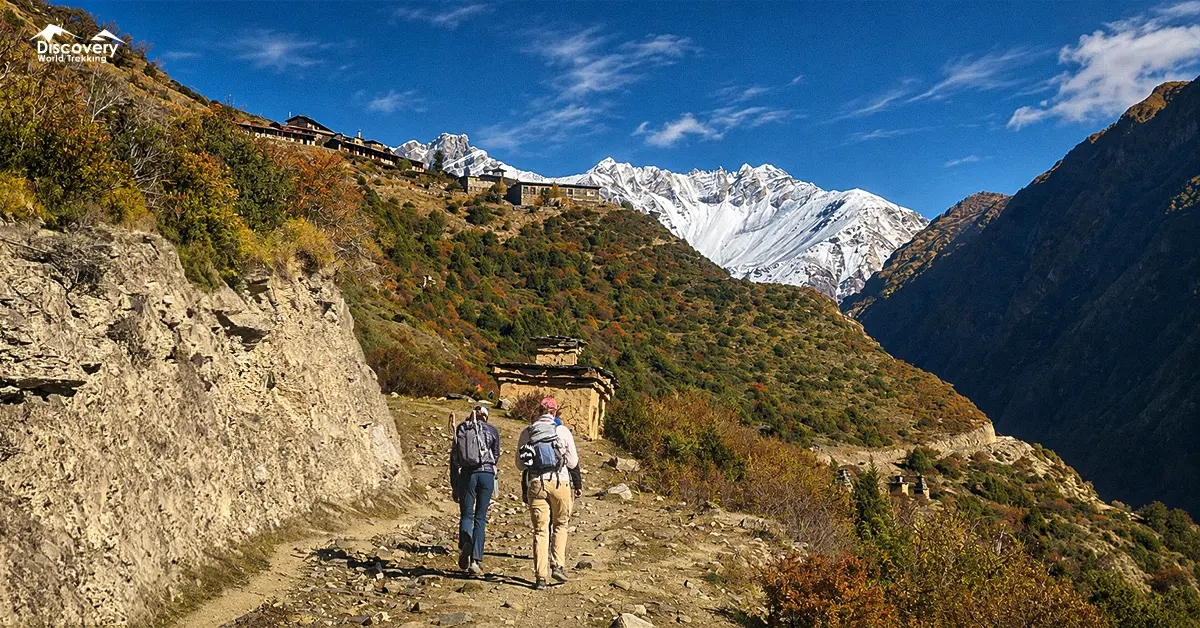
The Manaslu Circuit Trek in May sits at the heart of the spring trekking season in Nepal.
May brings the trail to life with comfortable high-altitude conditions and long daylight hours perfect for big walking days. Larkya La Pass is in one of its most reliable crossing windows of the year, and the entire route feels vibrant and active.
Why Trek the Manaslu Circuit in May?
May is one of the busiest months on the Manaslu Circuit. Even though the Manaslu Circuit sits inside a restricted and protected area, it is gaining serious momentum year on year. More trekkers are discovering this route, and May in particular sees a strong and steady flow of visitors from around the world.
Larkya La at 5,106 m is in one of its best windows of the year. With roughly 14 hours of daylight, there is genuine flexibility in how you pace each day, and that matters more than most trekkers realise until they are actually on the trail.
Manaslu Circuit Trek Weather in May
Weather on the Manaslu Circuit in May is very much an altitude story. The lower Budhi Gandaki gorge is hot and tropical. The middle forest sections feel like ideal trekking weather. Above 3,500 m, nights stay cold no matter how warm the afternoon gets.
Early May Weather
The first week or two of May offers some of the finest trekking conditions of the entire spring season.
Skies are clear, mountain views are sharp and wide, and the trail is dry from the lowest villages all the way up to the pass.
The rhododendron bloom is still active on higher slopes, and the nights at altitude, while cold, are perfectly manageable with the right sleeping setup.
| Elevation Zone | Avg. Daytime Temp | Avg. Nighttime Temp |
| Low (800–1,400 m) | 22–28°C (72–82°F) | 14–18°C (57–64°F) |
| Middle (2,600–3,200 m) | 14–18°C (57–64°F) | 4–8°C (39–46°F) |
| High (3,500–5,106 m) | 5–12°C (41–54°F) | -4 to 0°C (25–32°F) |
Mid-May Weather
Mid-May brings a shift you can feel. The lower valley gets noticeably warmer and the afternoon humidity picks up.
Brief showers roll through the Budhi Gandaki Valley in the afternoons, usually clearing well before dinner.
Up at Samagaun and Samdo, days are still pleasant and mornings are crisp and clear, though clouds tend to build from midday onward.
| Elevation Zone | Avg. Daytime Temp | Avg. Nighttime Temp |
| Low (800–1,400 m) | 25–31°C (77–88°F) | 16–20°C (61–68°F) |
| Middle (2,600–3,200 m) | 15–20°C (59–68°F) | 3–7°C (37–45°F) |
| High (3,500–5,106 m) | 5–14°C (41–57°F) | -5 to 1°C (23–34°F) |
Late May Weather
Late May is the monsoon's opening act, and it has its own distinct beauty. The lower valley turns intensely green, the waterfalls along the gorge swell with fresh water, and the whole landscape takes on a lush, tropical richness.
Afternoon showers are more regular now, but they are mostly short and the evenings stay clear. Larkya La is still very much crossable.
| Elevation Zone | Avg. Daytime Temp | Avg. Nighttime Temp |
| Low (800–1,400 m) | 27–33°C (81–91°F) | 17–22°C (63–72°F) |
| Middle (2,600–3,200 m) | 16–22°C (61–72°F) | 5–10°C (41–50°F) |
| High (3,500–5,106 m) | 6–15°C (43–59°F) | -5 to 2°C (23–36°F) |
Average Temperature in May
Trail Conditions of Manaslu Circuit Trek During May
Let's have a look at the trail conditions in different sections of the route.
Machha Khola to Philim
This opening stretch follows the Budhi Gandaki River through a narrow subtropical gorge, and in May it is in excellent shape. The trail is dry and well-defined, bridges are solid, and the river is swelling with snowmelt from the high mountains above. The forest is thick and green, and the sound of rushing water follows you almost the entire way.
The heat is real here, though. Afternoons in the gorge can feel genuinely draining, and the humidity adds to the effort. Starting by 6:30 or 7:00 AM makes a real difference to how the day feels.
After any rain, leeches come out in the denser forest sections near Tatopani and Doban. Leech-proof socks or a small bag of salt in your gaiter pocket handles them easily without any fuss.
Philim to Namrung
Step above Philim and the whole trek shifts into a different gear. The humidity drops away, the temperatures cool, and the forest opens into long stretches of pine and rhododendron that are genuinely beautiful in May.
Migratory birds are calling from every tree, waterfalls are running full from snowmelt above, and the trail has a rhythm to it that makes the hours pass easily.
Jagat to Deng is the longest day on this section and involves a fair amount of elevation gain. The trail is rocky in places but well-maintained throughout.
By the time you reach Ghap, the valley walls have closed in, and the first views of snow ridges above the treeline start appearing. That moment when the Himalaya first reveals itself above the forest is one of those things that stays with you long after the trek is over.
Namrung to Samagaun
This is where the trek really opens up. Above Namrung, the trees fall away, and the landscape becomes full high-mountain terrain with wide, unobstructed views of Manaslu, Himalchuli, and Ngadi Chuli stretching across the skyline.
The villages of Lho, Shyala, and Samagaun are proper Tibetan-Buddhist settlements, quiet and ancient-feeling, where yak trains still do the heavy lifting between homesteads.
Rhododendrons are still flowering on the slopes around Lho in the first week of May, and the Ribung Monastery there frames Manaslu in a way that stops most trekkers in their tracks. Mornings here are reliably clear and still.
Clouds usually roll in after noon, and light rain or hail is possible by mid-afternoon at Samagaun. If you have an acclimatization hike planned to Pungyen Gompa or Manaslu Base Camp, get an early start and you will have the mountain largely to yourself.
Samagaun to Larkya La Pass
Everything builds toward this section. From Samagaun, the trail pushes steadily through open terrain toward Samdo, with Manaslu's south face filling the view for the entire stretch. It is the kind of scenery that makes you stop and just look.
Dharamsala sits at 4,460 m in a raw, high-altitude setting with basic accommodation and big views. The pre-dawn start for the pass, usually somewhere between 3:00 and 5:00 AM, is cold and dark and still, and the headlamp beam against a star-filled sky makes it feel like a proper Himalayan adventure.
In May, the snow on the pass is typically consolidated and firm, making for a confident and steady crossing. Wind at the 5,106 m summit can be strong, but the 360-degree panorama from the top on a clear morning is the kind of view that justifies every hard step of the ascent.
The trail down to Bimthang is long and steep at first, but the valley opens gradually into wide alpine meadows that are just beginning to green up in May. By the time you reach Bimthang, the world feels warmer, softer, and entirely different from the high icy world above the pass.
How Difficult Is It to Trek Manaslu Circuit in May?
The Manaslu Circuit is a serious trek. It covers around 177 km over 14 to 18 days and crosses a 5,106 m pass.
May is one of the busiest months on the circuit, and the trekkers who come prepared consistently describe it as one of the most rewarding experiences of their lives.
The challenge in May comes from two very different directions. The lower valley days are warm and humid and can wear you down faster than the elevation suggests.
The high mountain days are cold and demanding in a completely different way. Managing both within the same two-week window is part of what makes this circuit such a complete and satisfying experience.
Key things to know about difficulty in May:
- Lower valley heat: The gorge section between Machha Khola and Jagat is the most underestimated part of the trek. Drinking 3 to 4 litres of water per day and starting early each morning keeps the energy levels where they need to be.
- Larkya La Pass: This is the longest and most demanding day on the entire circuit. From Dharamsala, the trail gains over 650 m before dropping nearly 1,600 m to Bimthang. It is a full, hard, unforgettable day.
- Altitude above 3,500 m: The rest days at Samagaun and Samdo are not suggestions. They are the difference between a comfortable pass crossing and a miserable one. Use them to go higher and sleep low.
How to Prepare for Manaslu Circuit Trek in May?
Good preparation for May means training for the full range of the trek rather than just the altitude section. The lower valley heat and the long daily distances require a different kind of fitness than a weekend mountain outing.
Physical training (8 to 12 weeks before departure):
- Get out 4 to 5 days per week with sustained aerobic activity. Running, cycling, and stair training all build the right base.
- From 6 weeks out, start trekking with a loaded pack on uneven terrain. Your knees and ankles need to practise, not just your lungs.
- Build toward back-to-back long days. The circuit rarely offers a complete rest day, and the body needs to get used to moving tired.
Acclimatization:
- A few days in Kathmandu before the trek starts gives the body an early nudge toward altitude adjustment.
- At Samagaun and Samdo, use the rest days to go higher and come back down to sleep. This simple pattern is what makes the pass crossing manageable and enjoyable for most trekkers.
Permits required:
| Permit | Approximate Cost (Per Person) |
| Manaslu Conservation Area Permit (MCAP) | NPR 3,000 |
| Restricted Area Permit (RAP) | USD 100 (first week) + USD 15/day thereafter |
| Annapurna Conservation Area Permit (ACAP) | NPR 3,000 |
Where to Stay During May?
May is one of the busiest trekking months on the Manaslu Circuit, and teahouses across the entire route are open and running at full capacity.
The increasing popularity of this trail in spring means accommodation options have grown and improved considerably in recent years, and trekkers today find a much wider range of lodge quality than those who came even five years ago.
Lower down at Machha Khola, Jagat, and Philim, the teahouses are simple and comfortable. Rooms are clean, bathrooms are shared, and hot showers run on solar power.
May sunshine is strong enough at these elevations that the water is genuinely hot by late afternoon, which is exactly when you want it after a warm day on the trail.
Up at Samagaun and Samdo, the teahouses are better than you might expect for that altitude. The dining rooms are warm and welcoming in the evenings, heated by wood stoves that make the communal dinner hour one of the highlights of the day.
Trekkers swap stories, guides share local knowledge, and the whole atmosphere is relaxed and social.
Because May draws a good number of trekkers, booking teahouses in advance through your trekking agency is a smart move, particularly at popular stops like Samagaun and Samdo.
Dharamsala is the most basic stop on the route. The guesthouses are small and simple, and rooms fill up quickly on busy nights. Getting there early in the afternoon rather than pushing for a late arrival is a good habit at this stop specifically.
A sleeping bag rated to -10°C is well worth carrying from Samagaun upward. The teahouse blankets are available, but a personal bag means you sleep well rather than just survive the night, and that matters enormously for how you feel on the pass crossing day.
What Food to Eat During May?
Food supply along the Manaslu Circuit is reliable in May. Roads are active and teahouse kitchens are stocked for the busy spring season, so the menus are fuller and more varied during this period than at almost any other time of year.
Dal bhat is the backbone of trekking nutrition on this route and genuinely the best thing you can eat on a long mountain day. Most teahouses offer unlimited refills, which means a proper dal bhat lunch can carry you through a big afternoon without needing to snack constantly.
Rice, lentil soup, vegetable curry, and spiced pickles sound simple, but it is one of the most well-calibrated trekking meals anywhere in the world.
Above Samagaun, the menu naturally narrows and Tibetan food takes over as the staple. Tsampa porridge made from roasted barley flour is dense and warming in the mornings.
Tibetan bread, served with honey or yak butter, is genuinely satisfying before a long day. Butter tea made from yak milk and salt is an acquired taste that most trekkers either love or politely decline, but it does warm you from the inside in a way that regular tea cannot quite match at 4,000 m.
A few practical things worth knowing about food in May:
- Eat something warm and carbohydrate-heavy before the Larkya La crossing. The kitchen at Dharamsala closes before your 4:00 AM start, so a good dinner the night before carries a lot of weight.
- Carry enough snacks for the pass day itself. Chocolate, nuts, energy gels, or whatever you personally run on during long mountain efforts.
- Above 4,000 m, keep meals simple and easy to digest. Heavy, oily food sits badly at altitude and can make an already demanding day feel much harder.
- Ginger lemon tea and hot lemon honey are on every teahouse menu on the circuit, and both are genuinely useful for staying warm and hydrated in the upper sections.
Flora and Fauna in May
May is one of the best months on the entire circuit for anyone who pays attention to the natural world around the trail. The lower Budhi Gandaki gorge is thick with subtropical vegetation in full seasonal growth, fig trees, wild orchids, dense bamboo, and hanging ferns that make the gorge feel almost jungle-like on the wetter days.
The rhododendron forest between Deng and Lho is the standout botanical experience of the trek in spring. On the higher, cooler north-facing slopes around Namrung and Lho, red and pink rhododendrons are often still in flower through the first two weeks of May. Trekking through a rhododendron forest in full bloom at 2,800 m with Manaslu appearing through the trees above is genuinely one of the more striking experiences on any Himalayan trek.
Wildlife worth looking out for in May:
| Species | Likely Sighting Zone | Notes |
| Snow Leopard | Above 3,500 m | Rare but possible near Samdo and Larkya La |
| Red Panda | 2,500–4,000 m forest zones | Dawn and dusk are the best windows |
| Himalayan Tahr | Open slopes above 3,000 m | Often seen in groups near Samagaun |
| Musk Deer | Dense forest, 2,000–3,500 m | Look near Ghap and Namrung |
| Himalayan Black Bear | Mid-elevation forest | Active in spring as bears come into lower range |
| Lammergeier (Bearded Vulture) | Throughout the route | Enormous wingspan; rides thermals above the gorge |
Popular Festivals and Occasions in May
The upper Manaslu Circuit is one of the most culturally rich parts of Nepal in May.
Tiji Festival (Tenchi)
Tiji is held over three days at Pungyen Gompa in Samagaun, and it is genuinely one of the most extraordinary things a trekker can encounter in the entire Himalayas.
The festival celebrates the defeat of a demon that threatened the Nubri Valley, and the story is retold through Cham dances performed by monks in elaborate painted masks and brocade robes.
The sound of dungchen long horns, deep drums, and cymbals fills the gompa courtyard while incense smoke drifts across the mountain backdrop.
Timing a visit to Samagaun around Tiji takes some planning since the dates shift each year with the lunar calendar, but it is absolutely worth the effort.
Saga Dawa (Month of Merit)
Saga Dawa is the holiest month in the Tibetan Buddhist year. It marks the birth, enlightenment, and passing of the Buddha, all on the same lunar date, and the entire month carries special spiritual significance.
Trekking through Lho, Samagaun, and Samdo during Saga Dawa means encountering communities genuinely engaged in their faith. Old prayer flags come down, and bright new ones go up in every village.
Monks gather at Ribung Monastery in Lho. Families carry offerings to the local gompas. It is not a performance for visitors, and that sincerity is what makes it memorable.
Buddha Jayanti
The full moon within Saga Dawa is Buddha Jayanti, a public holiday across Nepal. In villages like Philim and Namrung, residents dressed in traditional Tibetan chuba robes carry ancient handwritten scriptures from the monastery through the village in a community procession.
The tradition is believed to bless the coming harvest and bring safe passage to all travelers on the route. If you happen to arrive in a village on this day, take your time and be present.
Cham Dance at Ribung Gompa, Lho
Ribung Gompa in Lho holds its own masked Cham dance ceremony each spring, entirely separate from Samagaun's Tiji festival. The ceremony is small, intimate, and almost entirely undocumented. Trekkers who pass through Lho on the right day experience something that most visitors to Nepal never encounter.
What to Pack for Manaslu Circuit Trek in May?
The packing list for May needs to cover a wider range of conditions than most treks in Nepal. The first few days are hot and subtropical. By the end of the first week, the evenings are cold and getting colder.
And the Larkya La crossing is a high-altitude pre-dawn cold event that demands proper gear regardless of what the daytime temperatures felt like earlier in the trip.
Clothing
| Item | Specification |
| Moisture-wicking base layers (top and bottom) | 2 to 3 sets; synthetic or merino wool |
| Insulating mid-layer | Fleece or light down jacket |
| Waterproof outer shell (jacket and pants) | Worth having from mid-May onward |
| Trekking pants | 2 pairs; zip-off convertible style works well for the lower valley |
| Warm hat and gloves | Insulated; important for the pre-dawn pass crossing |
| Sun hat or cap | Useful for the lower valley days |
| Gaiters | Low gaiters for leeches and dust; full gaiters useful on the pass |
| Leech-proof socks | Specifically useful for the lower gorge sections |
Gear
- Sleeping bag rated to -10°C or lower. Teahouse blankets above Samagaun are supplementary at best.
- Trekking poles. The descent from Larkya La to Bimthang is long and steep and your knees will thank you.
- Headlamp with spare batteries. The pass start is pre-dawn and there is no substitute.
- Sunscreen SPF 50 and UV-blocking sunglasses. UV intensity at 4,000 m and above is significantly higher than at lower elevations.
- Altitude medication such as acetazolamide. Talk to a doctor before the trek, not on the way up.
- Water purification tablets or a Sawyer filter. Tap water reliability varies above Philim.
- A basic blister and first aid kit. Small, light, and worth its weight many times over.
Useful Tips for Trekking Manaslu Circuit in May
- Start early, every single day. In the lower gorge, it beats the heat. In the upper sections, it earns you the clearest mountain views of the day before the afternoon clouds close in.
- Sort permits before you leave Kathmandu. The Restricted Area Permit requires a minimum group of two trekkers and a registered licensed guide. A reputable trekking agency handles this cleanly and without last-minute complications.
- Do not skip the acclimatization days. The rest day at Samagaun is the single most important investment you make in the success of your pass crossing. Trek up toward Manaslu Base Camp at 4,900 m or Pungyen Gompa and come back down to sleep. That simple routine changes everything.
- Book teahouses in advance for busy stops. May is one of the busiest months on this circuit, and popular stops like Samagaun and Samdo can fill up. Your trekking agency can confirm bookings ahead of time so there are no surprises at the end of a long day.
- Carry plenty of Nepali Rupees in cash. The last ATM is at Arughat. Everything beyond that is cash only, including tips, extra snacks, charging fees, and any unplanned expenses that come up on a long mountain trek.
FAQs
Is it safe to trek Manaslu Circuit in May?
Yes, and for most trekkers with proper preparation, it is one of the most enjoyable months on this route. The trail is fully open, Larkya La is in a reliable spring crossing condition, and teahouses are running at full capacity across the entire circuit.
Is the Manaslu Circuit Trek suitable for beginners in May?
Yes, beginners with good physical fitness can do the Manaslu Circuit Trek in winter.
Are the mountains in the Manaslu Circuit visible in May?
Mountain views in May are genuinely excellent, particularly in the mornings. Manaslu at 8,163 m, Himalchuli at 7,893 m, Ngadi Chuli at 7,871 m, and Ganesh Himal are all visible from multiple points along the route on clear days.
Plan Smarter, Trek Better
Connect with our local expert for honest recommendations, personalised guidance, and insider tips to make every step of your adventure count.


Get our free Nepal travel guide filled with expert insights, local tips, and essential planning advice.