Deurali
Table of Contents
Deurali is a high-altitude stopping point located inside the Annapurna Sanctuary at 3,174m. It is not a traditional village such as Chhomrong or Ghandruk. The village consists of a limited cluster of teahouses and lodges, positioned along the main trail corridor. The place exists solely to support trekkers moving through a difficult and exposed section of the trail. Trekkers stop here to acclimate to the weather and trail conditions.
Functionally, Deurali acts as a buffer zone between the forested, relatively protected lower trail and the open inner sanctuary above. From here onward, there are less trees, temperatures drop faster, and wind exposure increases.
Geography & Location
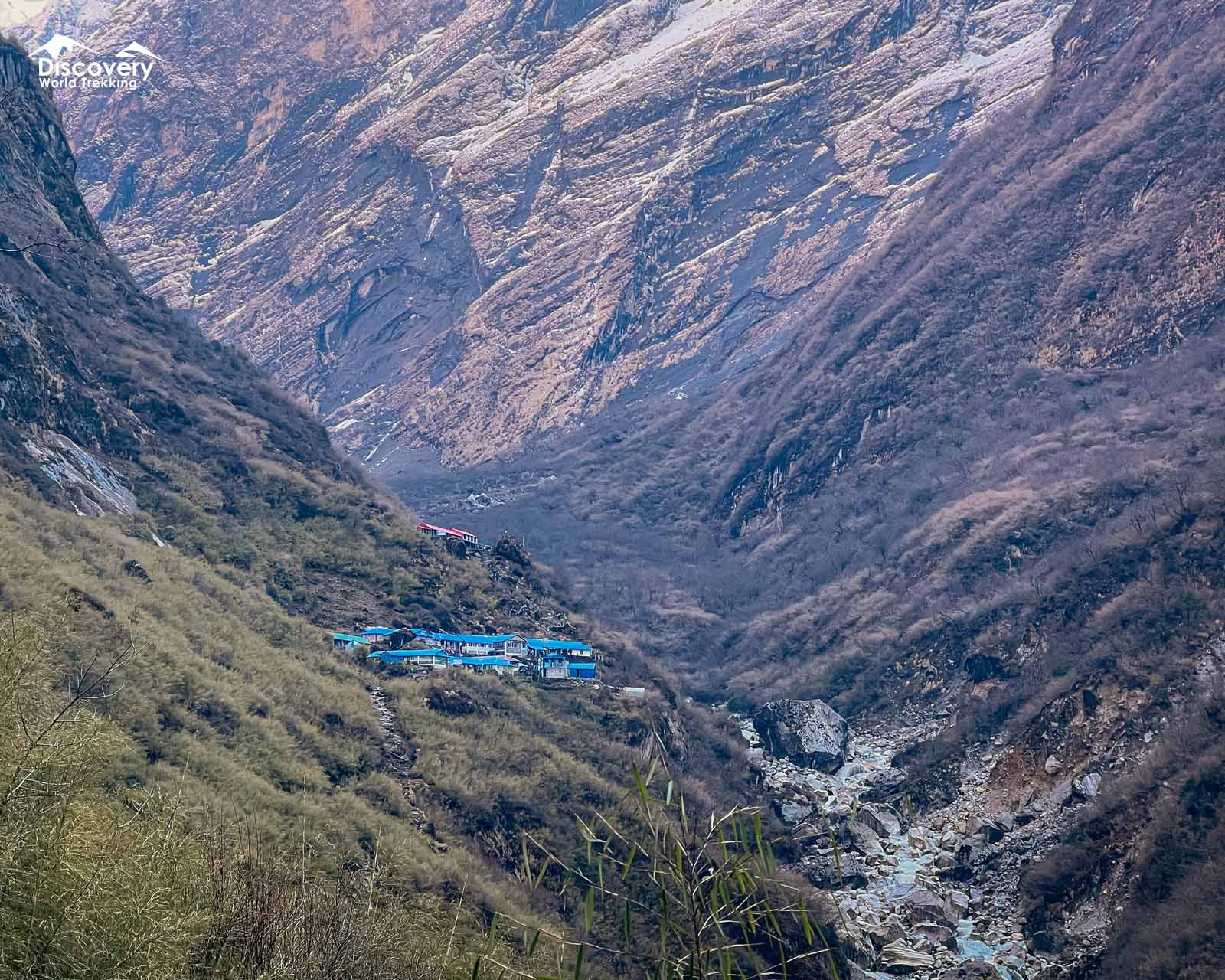
Deurali sits deep inside the Annapurna Sanctuary, within the Annapurna Conservation Area (ACA). The trail here follows a narrow valley carved by glacial and river action, with steep rock walls on both sides. The Modi Khola river runs below. This geography funnels wind, cold air, and weather systems directly through the trail corridor.
Deurali lies between Himalaya and Machapuchare Base Camp (MBC). Before Deurali, the trail from Himalaya ascends gradually through a narrowing gorge with partial shelter from rock overhangs. After Deurali, the landscape opens slightly as trekkers move toward Machapuchare Base Camp (MBC).
Quick Info Table
| Altitude | ~3,200 m / 10,500 ft |
| Distance from Himalaya | ~1.5–2 hours trek |
| Distance from MBC | ~1–1.5 hours trek |
| Nearby Landmarks | Modi Khola gorge, avalanche chutes, cliff corridors |
How to Reach Deurali?
- Chhomrong → Sinuwa → Deurali (Most Used Route)
Most trekkers start from Chhomrong after reaching it via Ghandruk or Jhinu. From Chhomrong, the trail drops steeply to Chhomrong Khola, crosses a suspension bridge, and then climbs through forested paths to Sinuwa. The route continues through Bamboo, Dovan, and Himalaya, following a narrow valley. From Himalaya, a steady uphill walk of about 1.5–2 hours leads to Deurali, just before Machapuchare Base Camp.
- Sinuwa → Deurali (Shorter Option)
Trekkers who spend the night at Sinuwa can begin directly from there, avoiding the long descent from Chhomrong. The trail passes Khuldigar, drops briefly to Bamboo, and then ascends through Dovan to Himalaya. From Himalaya, the path becomes more open and exposed, with cliffs and waterfalls along the way, before reaching Deurali. This option is shorter and slightly easier in terms of elevation loss.
Highlights & Attractions in Deurali
- Surrounded by steep cliffs and waterfalls
Deurali lies in a narrow glacial valley where tall rock walls rise sharply on both sides. During spring and early summer, snowmelt creates thin waterfalls that drop straight from the cliffs. Strong winds often pass through this corridor, making the area feel raw and powerful, especially in the afternoon.
- Transition from forest to alpine terrain
Below Deurali, trekkers walk through bamboo, rhododendron, and moss-covered forests. As you approach Deurali, vegetation becomes sparse. Trees disappear, replaced by grass patches, rocks, and exposed soil. This visible change marks the shift to a high-altitude environment with harsher weather conditions.
- Clearer views toward Machapuchare and Annapurna South
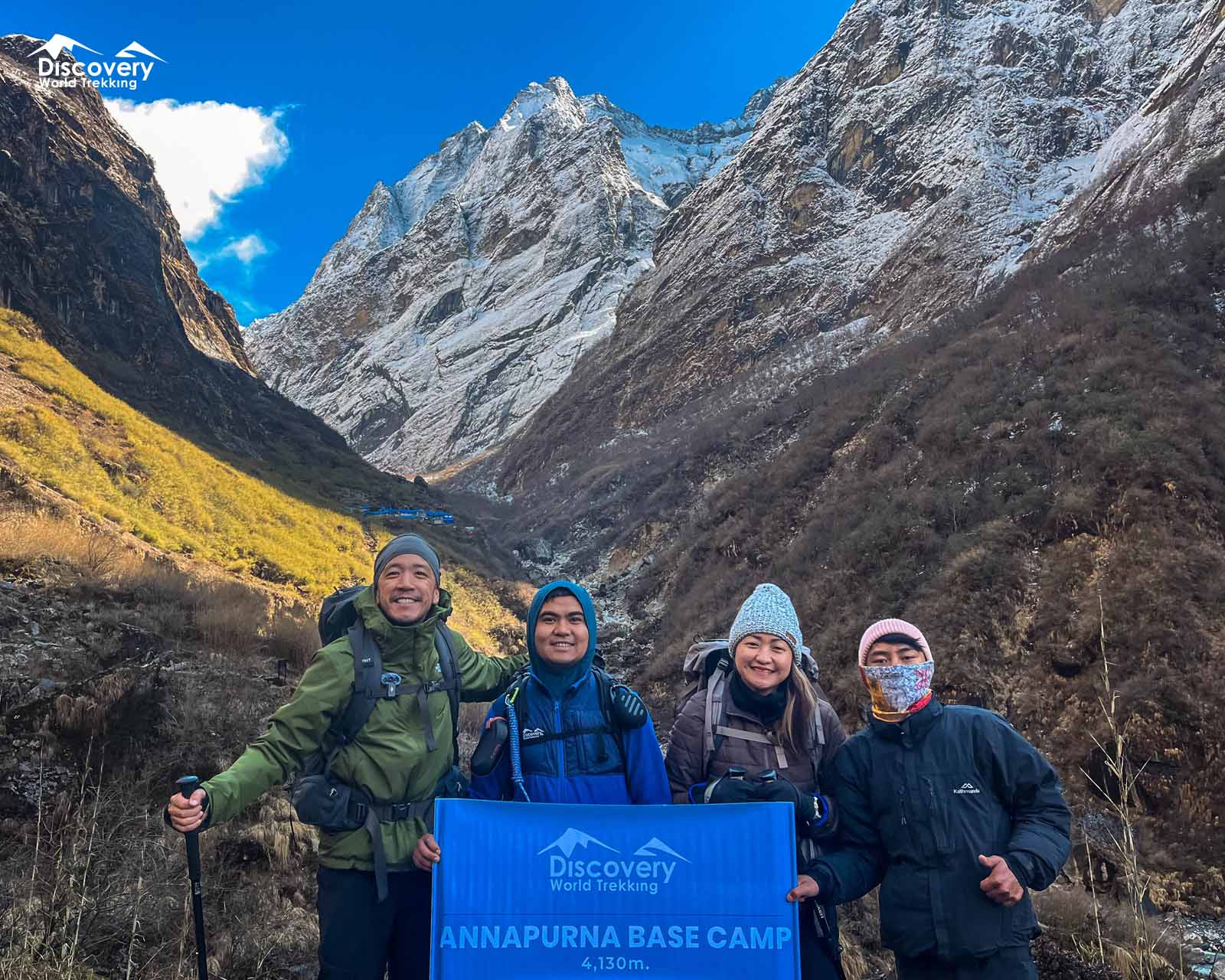
As the valley opens near Deurali, sightlines improve. On clear mornings, the lower slopes of Machapuchare (Fishtail) and Annapurna South become visible. Clouds often roll in by midday, so early hours offer the best chance for views and photography.
Trekking Significance of Deurali
- Key transition point before high-altitude terrain
Deurali marks the point where trekkers move fully out of forested landscapes and into exposed alpine terrain. Beyond this section, vegetation almost disappears, the weather becomes more unpredictable, and the physical demand of trekking increases noticeably. This makes Deurali a mental and physical checkpoint on the Annapurna Base Camp route.
- Important acclimatization and recovery stop
At an elevation of around 3,200 meters, Deurali is one of the first places where many trekkers begin to feel altitude effects such as mild headaches or breathlessness. Spending time here—either for lunch or an overnight stay—helps the body adapt before continuing to Machapuchare Base Camp and Annapurna Base Camp.
- Common overnight or lunch halt on the ABC route
Deurali is strategically placed between the Himalaya and Machapuchare Base Camp. Many trekking itineraries plan a break here to manage daily distance and elevation gain. This stop helps avoid rushing into higher altitude zones and keeps the next day’s ascent more controlled.
- Natural weather and risk assessment zone
The area around Deurali is known for strong winds, sudden weather shifts, and seasonal avalanche risk, especially in winter and early spring. Trekkers and guides often assess conditions here before moving ahead. If the weather deteriorates, Deurali becomes a practical turnaround or wait point.
Best Time to Visit Deurali
- Spring (March to May)
Spring is one of the most suitable times to visit Deurali. Days are relatively stable, temperatures remain manageable, and snow starts melting along the trail. Waterfalls around Deurali are active due to snowmelt, and lower sections of the trek still show rhododendron blooms. Morning views are often clear, though clouds can build by afternoon.
- Autumn (September to November)
Autumn is considered the most reliable season for trekking to Deurali. Skies are usually clear, visibility is strong, and weather patterns are more predictable. Cold nights are common, but daytime conditions are comfortable for trekking. This season offers the best chance to see Machapuchare and Annapurna South clearly.
- Winter (December to February)
Winter brings heavy cold, strong winds, and frequent snowfall around Deurali. The area can become difficult or unsafe due to snow accumulation and avalanche risk. Some teahouses may close, and trails can be icy. This season is suitable only for experienced trekkers with proper gear and local guidance.
- Monsoon (June to August)
During monsoon, rainfall affects the lower trail sections, while higher areas like Deurali face mist, cloud cover, and slippery paths. Visibility is limited, and landslides or trail damage may occur below Bamboo and Dovan. Trekking is possible but not ideal, and delays are common due to weather.
Accommodation & Facilities
- Basic teahouse accommodation
Deurali offers very limited accommodation, mainly in the form of small teahouses that serve trekkers on the Annapurna Base Camp route. Rooms are simple, usually with twin beds, basic mattresses, and blankets. There is no heating in rooms, and insulation is minimal, so nights can be very cold.
- Shared toilets and limited water supply
Most lodges have shared squat or basic Western-style toilets. Water availability depends on season and weather. In colder months, pipes may freeze, limiting running water. Hot showers, if available, are usually solar-heated and not guaranteed.
- Food and dining facilities
Teahouses in Deurali provide standard trekking meals such as dal bhat, noodles, soups, fried rice, potatoes, eggs, and hot drinks. Food choices are fewer compared to lower villages because supplies are carried up by porters. Meals are best taken early, as kitchens close earlier due to cold conditions.
- Electricity and charging
Electricity is limited and mainly solar-powered. Charging electronic devices is possible in some lodges but often comes at an extra cost. Power supply can be unreliable, especially during cloudy or snowy weather.
- Mobile network and internet
Mobile network coverage is weak or absent in Deurali. Internet access is very limited, and Wi-Fi, if available, is slow and unstable. Trekkers should not rely on connectivity and should inform family or contacts in advance.
- Medical and emergency facilities
There are no medical centers in Deurali. Basic first aid may be available at lodges, but serious issues require evacuation to lower villages or Pokhara. Carrying personal medications and a basic medical kit is strongly advised.
Safety & Travel Tips
- Be aware of altitude-related symptoms
Deurali sits above 3,000 meters, where altitude effects become noticeable for many trekkers. Walk at a steady pace, stay hydrated, and avoid rushing from lower camps. If symptoms like persistent headache, nausea, or dizziness worsen, it is safer to descend rather than continue upward.
- Start trekking early in the day
Weather around Deurali changes quickly, with clouds, wind, and snowfall often developing after midday. Starting early increases chances of clear views and reduces exposure to strong winds and falling debris from surrounding cliffs.
- Understand avalanche and rockfall risk
Deurali is located in a narrow valley prone to avalanches and rockfall, especially in winter and early spring. Follow local advice, listen to guides, and avoid lingering in exposed sections. If conditions seem unsafe, wait or turn back.
- Dress for sudden weather changes
Temperatures can drop sharply, even during clear days. Carry layered clothing, a windproof jacket, gloves, and a warm hat. Nights are extremely cold, so proper thermal wear is essential.
- Carry enough water and snacks
Facilities are limited, and distances between stops can feel longer at high altitude. Keep enough drinking water and energy snacks. Using water purification tablets or filters is useful, as bottled water is expensive and sometimes unavailable.
- Do not rely on mobile network or internet
Signal is weak or absent in Deurali. Inform family or contacts about your route in advance. Trek with a guide or group if you are not experienced in high-altitude trekking.
- Listen to local guides and lodge owners
Local guides and teahouse staff have firsthand knowledge of weather and trail conditions. Their advice can help you avoid risky situations and plan safer daily distances.
Interesting Facts About Deurali
- A natural funnel for wind and sound
Deurali sits in a narrow glacial corridor formed by steep cliffs on both sides. This shape channels wind strongly through the valley, which is why trekkers often notice sudden gusts and echoing sounds even on calm days.
- Carved by ice, not rivers
The dramatic cliffs around Deurali were shaped mainly by ancient glaciers rather than flowing rivers. Over thousands of years, slow-moving ice widened and deepened the valley, leaving near-vertical rock faces that still define the landscape today.
- One of the quietest stops on the ABC trek
Unlike lower villages, Deurali has no permanent settlements, farmland, or grazing areas. This makes it one of the most silent sections of the Annapurna Base Camp route, where natural sounds dominate.
- A visible boundary of plant life
Deurali marks the upper limit of sustained vegetation on the trail. Below it, bamboo and rhododendron grow well, but above Deurali, only grasses, moss, and hardy alpine plants survive due to cold temperatures and thin soil.
Conclusion
Deurali stands out as one of the most distinctive and demanding sections of the Annapurna Base Camp trek. Its stark landscape, shaped by glaciers and surrounded by towering cliffs, signals a clear shift from forested trails to high-altitude terrain. The area’s silence, strong winds, and sudden weather changes remind trekkers that they are entering a more remote and fragile environment.
Beyond its dramatic setting, Deurali plays an important role in trekking planning. It serves as a natural pause point for rest, acclimatization, and weather assessment before moving toward Machapuchare Base Camp and Annapurna Base Camp. Choosing the right season, pacing the walk carefully, and respecting local advice make a noticeable difference to safety and overall experience.
For many trekkers, passing through Deurali is more than just covering distance. It marks a moment of awareness, where preparation, patience, and respect for the mountains become essential. Approached wisely, Deurali offers not only a challenging stretch of trail but also a deeper sense of connection to the raw Himalayan landscape.