

Dingboche: An Acclimatization Stop
Table of Contents
Dingboche is a high-altitude Sherpa village in Nepal's Everest region, sitting at about 4,410 meters, best known for helping trekkers acclimatize before continuing toward Everest Base Camp.
Where Is Dingboche Located?
Dingboche is located in the Khumbu region of northeastern Nepal, within Khumbu Pasang Lhamu Rural Municipality of Solukhumbu District, Koshi Province.
Situated in the upper Imja Valley along the popular Everest Base Camp Trek route, Dingboche lies between Tengboche and Lobuche.
| Location Detail | Information |
| Country | Nepal |
| Province | Koshi Province |
| District | Solukhumbu District |
| Municipality | Khumbu Pasang Lhamu Rural Municipality |
| Region | Khumbu / Everest Region |
| Valley | Imja Valley |
| Latitude | 27.8969° N |
| Longitude | 86.8318° E |
| Altitude | 4,410 m (14,469 ft) above sea level |
Why is Dingboche Known as the "Summer Valley"?
Dingboche is known as the "Summer Valley" because it experiences a brief summer growing season used for high-altitude farming and receives more direct sunlight and warmth than neighboring valleys.
Also, it has traditionally served as the seasonal grazing area for yaks and livestock during the warmer months.
How to Reach Dingboche?
As there are no road connections to Dingboche, there is no other way but to trek in order to get there.
Trekkers generally start the journey with a flight from Kathmandu to Lukla via the Everest Base Camp trek route through Phakding, Namche Bazaar, Tengboche, Pangboche, and finally reach Dingboche.
The trek from Tengboche to Dingboche is about 10 to 12 km long, and it takes about 5 to 6 hours. This includes trekking through Debuche and Pangboche, crossing the Imja Khola, and entering the Imja Valley until one reaches Dingboche.
| Route | Distance | Time |
| Kathmandu → Lukla (Flight) | 135–140 km | 40 minutes |
| Lukla → Phakding | 8 km | 3–4 hours |
| Phakding → Namche Bazaar | 11 km | 5–7 hours |
| Namche Bazaar → Tengboche | 9–11 km | 4–6 hours |
| Tengboche → Dingboche | 10–12 km | 5–6 hours |
Why Is Dingboche an Important Stop on the Everest Base Camp Trek?
Dingboche is the place where most hikers take a break for acclimatization during the Everest Base Camp Trek.
Dingboche sits at 4,410 m (14,470 ft); the thin air here carries roughly 60% of the oxygen available at sea level.
This is why two days are spent here to adapt to the changing altitude levels before continuing to Lobuche, Gorak Shep, and Everest Base Camp.
The rest day considerably reduces the chances of developing Acute Mountain Sickness (AMS).
- Gateway to High-Altitude Adventures
Dingboche serves as a crucial junction along the trails in the Mount Everest region.
From Dingboche, trekking enthusiasts have an option to go northwards towards Lobuche, Gorak Shep, and Everest Base Camp.
They can also move eastward towards Chhukung and Island Peak Base Camp, or make their way through Kongma La Pass on the Everest Three Passes Trail.
An Acclimatization Day in Dingboche
The most common Everest Base Camp trekking itineraries involve an entire acclimatization day at Dingboche before climbing higher.
Such a rest period or acclimatization period is aimed at allowing the body to gradually adjust to the thin air, thereby increasing the safety and comfort of the trekking journey.
Instead of resting in the tent or a lodge during that day, it is advisable to be moderately active and make a walk of not more than one hour.
It is necessary to drink 3–4 liters of water during the day, eat regularly despite decreased appetite, refrain from alcohol consumption, and move slowly.
If symptoms such as persistent headache, nausea, dizziness, or unusual fatigue become more severe, it is recommended to stop ascending and seek medical advice.
Acclimatization Hike to Nangkartshang Peak
Nangkartshang Peak (5,083 m / 16,677 ft) is the most common choice among trekkers for an acclimatization hike from Dingboche. This steep track leads to a stunning viewpoint of the majestic Himalayas in the Khumbu region.
- Distance: 4 km (round trip)
- Duration: 3–4 hours
- Difficulty: Moderate to Challenging
- Highlights: Ama Dablam, Lhotse, Makalu, Nuptse, Cholatse, Taboche, and the Imja Valley.
Best Time to Visit Dingboche
The best season for visiting Dingboche is spring (March to May) and autumn (September to November).
1. Spring (March to May)
The spring season is one of the preferred trekking periods in the Everest region due to stable weather, clear skies, and pleasant daytime temperatures.
Highlights:
- Stable weather and clear skies
- Excellent mountain views
- Blooming rhododendron forests
- Comfortable daytime temperatures
2. Autumn (September to November)
Autumn is the best period to visit Dingboche as, after the monsoon, the air is fresh, the mountains are clearly visible, and the weather is dry.
Due to these conditions, it is also the busiest trekking season, so it is highly recommended to book flights and teahouses in advance.
Highlights:
- Best visibility of the year
- Stable and dry weather
- Ideal trekking conditions
3. Monsoon (June to August)
Monsoon is the least desirable season for trekking in the Dingboche area due to rain, foggy weather, slippery trails, difficult travel conditions, and potential flight delays from Lukla Airport.
Highlights:
- Fewer trekkers
- Lush green landscapes at lower elevations
4. Winter (December to February)
Winter offers quieter trails with fewer trekkers, but it also brings extremely cold weather and snow.
Many teahouses reduce their services during the coldest months, making this season more suitable for experienced trekkers with proper winter equipment.
Highlights:
- Peaceful trails with fewer crowds
- Clear skies on many days
Average Temperature of Dingboche
The temperatures of Dingboche change considerably throughout the year. Though the daytime is comfortable when there are clear skies, the nighttime is cold throughout the year because of its high altitude.
| Season | Daytime Temperature | Night Temperature |
| Spring (Mar–May) | 5°C to 11°C | -10°C to -3°C |
| Summer/Monsoon (Jun–Aug) | 12°C to 14°C | 1°C to 3°C |
| Autumn (Sep–Nov) | 5°C to 12°C | -11°C to 0°C |
| Winter (Dec–Feb) | -9°C to 2°C | -15°C to -19°C |
Note: The weather in the Himalayas changes rapidly. Regardless of the bright sunshine, the temperature drops drastically at night, so wearing warm clothing, using sunblock, and having UV-protective sunglasses is suggested.
Best Things to Do in Dingboche
While Dingboche is most famous for being the major acclimatization point on the Everest Base Camp Trek, there is much more to enjoy than preparing for the next phase of the trekking adventure.
Here are some of the top activities you can indulge in while in Dingboche.
1. Explore Dingboche Village
Walk around the village to observe the day-to-day life of the Sherpas. Here you will find stone houses, stone fences surrounding potato and barley fields, yak caravans carrying loads, and teahouses run by local families.
2. Visit the Mani Walls and Buddhist Shrines
Dingboche is known for its mani walls, prayer flags, chortens, and small Buddhist shrines that reflect the village’s strong Sherpa and Tibetan Buddhist heritage. As you walk around the village, follow local custom by moving clockwise and keeping mani walls and chortens on your right.
3. Enjoy the Acclimatization Hikes
The area around Dingboche has some of the most recommended acclimatization hikes in the Everest region, including the trek to Nangkartshang Peak, where you can enjoy mountain views while adapting to the altitude.
4. Relax at Local Bakeries and Cafés
After trekking, unwind at one of Dingboche’s local bakeries or cafés with fresh apple pie, cinnamon rolls, bread, and coffee.
5. Take a Walk in the Imja Valley
Taking an easy stroll through the Imja Valley gives you an opportunity to see alpine meadows, grazing yaks, glacier landscapes, and majestic Himalayan peaks.
6. Enjoy Stargazing/Observe the Night Sky
With almost no light pollution, Dingboche offers excellent stargazing conditions on clear nights. The high altitude and clear mountain skies provide stunning views of the Milky Way and countless stars.
Major Mountains Visible from Dingboche
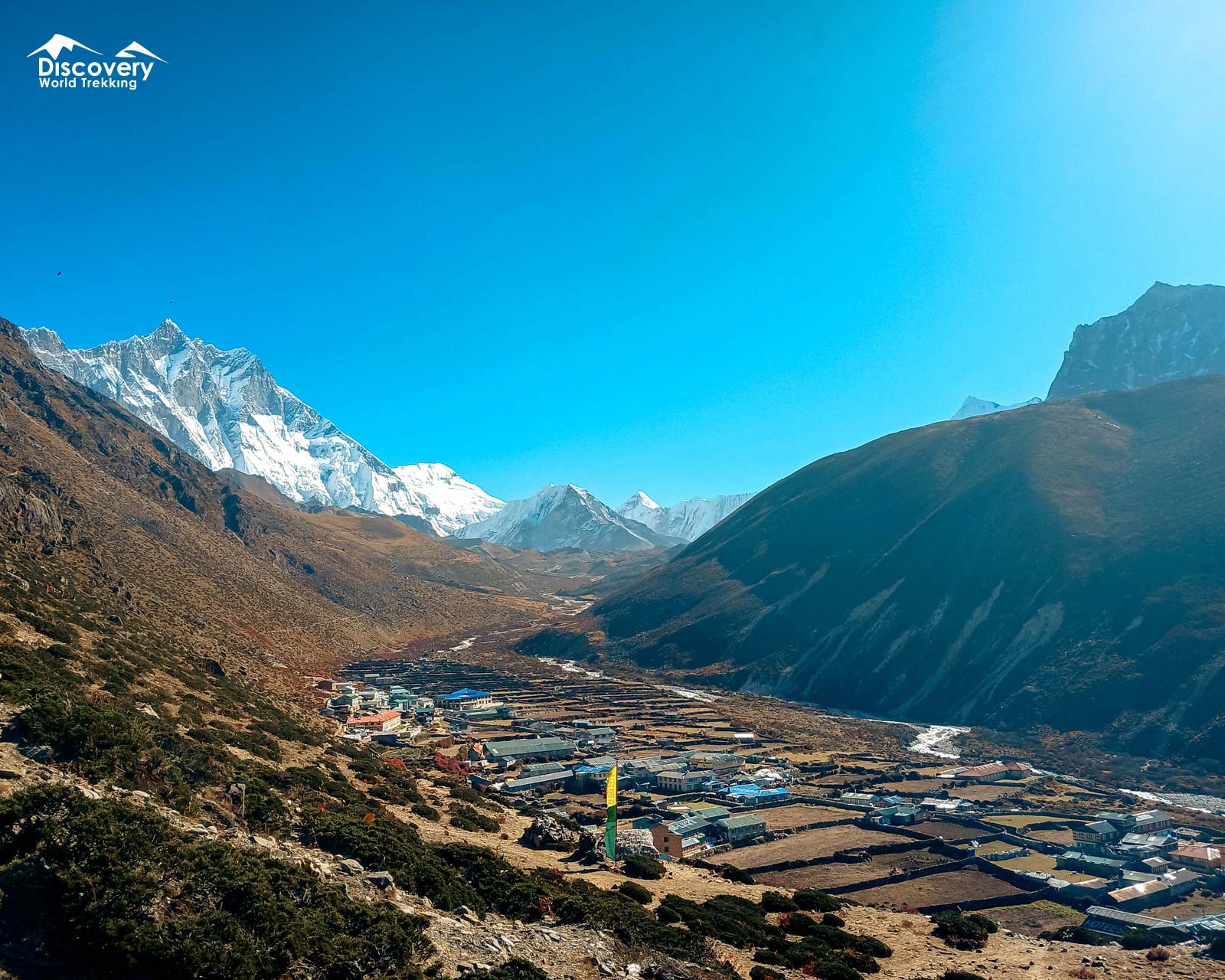
The region around Dingboche features some of the most striking mountains in the Himalayas.
Although trekkers often plan to see Mount Everest, it is not visible from Dingboche because it lies on the other side of the massive ridges of Lhotse and Nuptse.
| Mountain | Elevation | Highlights |
| Ama Dablam | 6,812 m (22,349 ft) | The most iconic peak visible from Dingboche, often called the "Matterhorn of the Himalayas." It dominates the skyline and is one of the most photographed mountains in the Everest region. |
| Lhotse | 8,516 m (27,940 ft) | Fourth-highest mountain in the world that rises abruptly from the Imja Valley through its southern face. |
| Makalu | 8,485 m (27,838 ft) | Fifth-highest mountain in the world that can be viewed clearly early in the morning or from a high vantage point like Nangkartshang Peak. |
| Nuptse | 7,861 m (25,791 ft) | A massive ridge west of Everest that blocks the view of Mount Everest from Dingboche. |
| Island Peak (Imja Tse) | 6,189 m (20,305 ft) | A popular trekking peak visible at the head of the Imja Valley and the starting point for many climbing expeditions. |
| Cholatse | 6,440 m (21,129 ft) | A striking snow-covered peak west of Dingboche, known for its steep rock and ice faces. |
| Taboche | 6,495 m (21,309 ft) | Located beside Cholatse, Taboche is a distinctive peak frequently seen from the village and surrounding trails. |
| Thamserku | 6,608 m (21,680 ft) | A beautiful pyramid-shaped mountain visible on clear days, adding to Dingboche's spectacular panorama. |
| Kangtega | ~6,780 m (~22,244 ft) | Also known as the Snow Saddle, this elegant peak can be seen from several viewpoints around Dingboche. |
Photography Tip: The most spectacular panoramic mountain views can be obtained from Nangkartshang Peak. Generally, sunrise offers the clearest visibility, while the golden hour is ideal for viewing the face of Ama Dablam.
History of Dingboche Village
The history of Dingboche Village is closely connected with the traditional way of life of the Sherpa people.
For generations, local families depended on high-altitude farming and yak herding before trekking and mountaineering transformed the village into one of the Everest region's most important acclimatization stops. Despite these changes, Dingboche continues to preserve its rich cultural heritage and historic landscape.
Early Settlement
Agriculture and yak herding have been the primary economic activities in Dingboche for centuries.
The stone walls surrounding many of the fields were constructed by villagers to prevent their crops from being blown over, eaten by grazing animals, and washed away by torrential rain. The traditional field walls are one of the historic landmarks of the village.
Growth as an Expedition Stop
With the growth of mountaineering activities in the Everest region, Dingboche emerged as a significant base for Himalayan expeditions during the 20th century.
Being situated between Pangboche and the upper Khumbu, it served as a convenient resting place for climbers, porters, researchers, and trekkers on their way to Everest Base Camp, Lhotse, Island Peak, and other high peaks.
It is also thought to be one of the villages that Sir Edmund Hillary and Tenzing Norgay Sherpa passed through on the 1953 British Everest Expedition, but this has not been substantiated by primary historical records.
Development Through Tourism
Tourism in the Everest region expanded rapidly following the establishment of Sagarmatha National Park in 1976 and its UNESCO World Heritage Site designation in 1979.
With the increasing popularity of trekking, many local families diversified their livelihood from farming and yak herding to tourism and started running lodges, teahouses, cafés, and trekking-related businesses.
Sherpa Culture and Festivals in Dingboche
Dingboche is a traditional Sherpa village where the Tibetan Buddhist faith and Sherpa culture remain deeply rooted. Tourism is an important part of the local economy, but many families continue to preserve traditions that have been passed down through generations.
Sherpa Culture
The inhabitants of Dingboche are mainly Sherpa, who are known for their close ties with the Himalayas and their long history of living at high altitude.
The clothes worn by most residents are practical for trekking and everyday use. However, many still wear traditional Sherpa dress during religious ceremonies, festivals, and family celebrations.
The chhuba or bakhu is commonly worn by men, while women traditionally wear the angi, often together with the striped pangden apron, which is worn by married women.
Festivals Celebrated Around Dingboche
Major Buddhist festivals are not celebrated in Dingboche. However, local people actively participate in celebrations at nearby monasteries, especially Tengboche Monastery, which is about 10 to 12 km away and roughly one day's walk from Dingboche.
- Mani Rimdu Festival
Mani Rimdu is the most significant Buddhist festival in the Everest region and takes place at Tengboche Monastery every October or November.
- Losar (Sherpa New Year)
Sherpa families in Dingboche celebrate Losar, the Tibetan and Sherpa New Year, during February–March. Families gather, visit monasteries, pray, enjoy traditional food, and raise new prayer flags to welcome a prosperous new year.
Flora and Wildlife in Dingboche
Due to its sparse high-altitude ecosystem, the diversity of flora and fauna is lower than in the lower parts of the Everest region. The area is characterized by alpine vegetation, cultivated fields, and cold-climate wildlife.
Flora
- Potatoes, barley, and buckwheat are commonly cultivated in the stone-walled fields surrounding the village during the brief growing season.
- Alpine flowers, primroses, poppies, and edelweiss can be found on the surrounding slopes and valley edges.
- The cold climate and high elevation limit vegetation to shrubs, grasses, and medicinal herbs in higher and more exposed areas.
Wildlife
- Common animals found around Dingboche include yaks, pheasants, and mountain goats.
- Further from the village, trekkers may also spot blue sheep, red pandas, and snow leopards.
- Birdlife is more commonly seen than large animals, particularly along the lower, less exposed sections of the route.
Where to Stay in Dingboche?
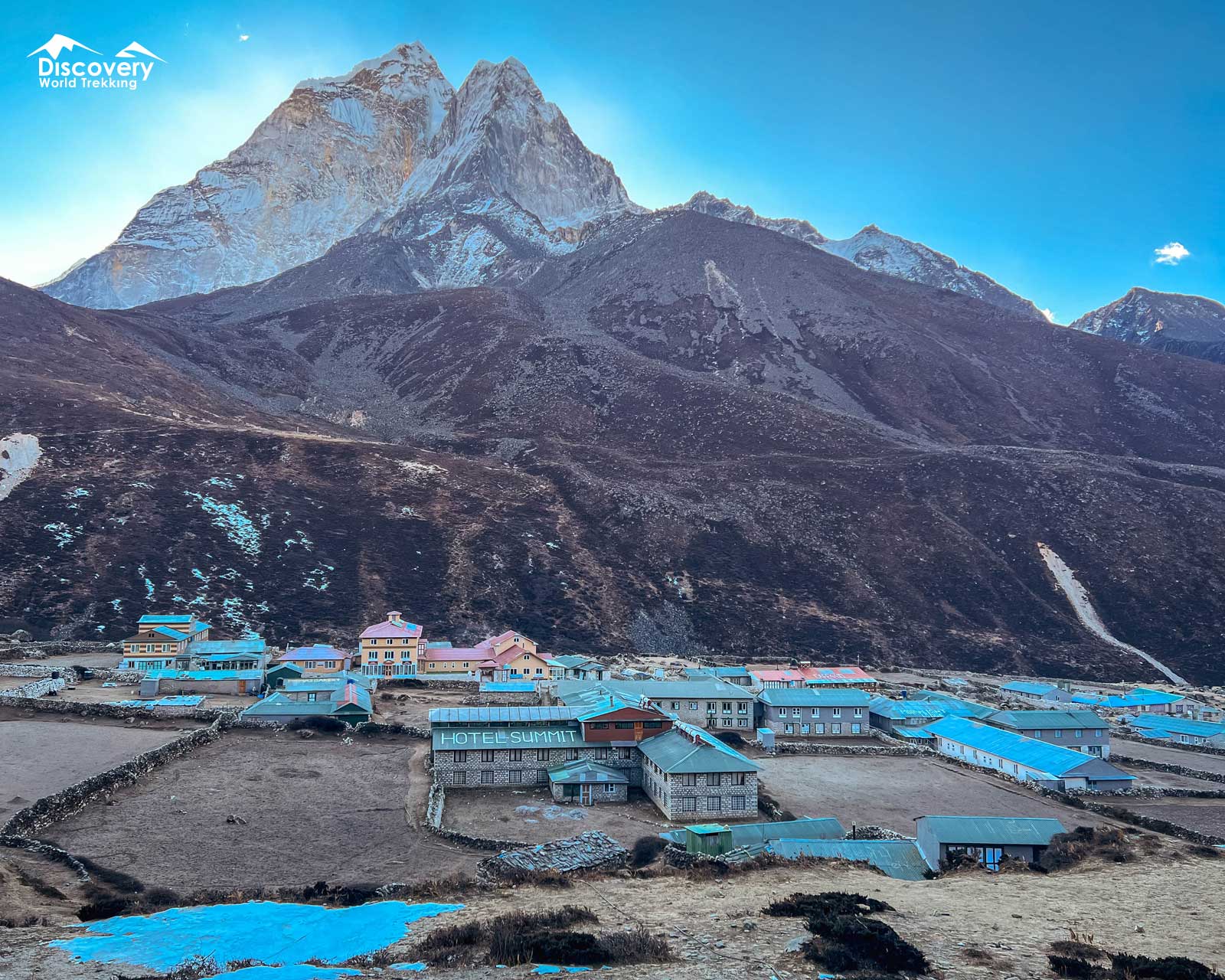
Dingboche is the primary acclimatization point on the Everest Base Camp Trek, making it a convenient place to stay for all kinds of trekkers. The village has numerous teahouses, lodges, and mountain hotels.
The village offers plenty of choices, whether you are looking for a budget room or a more comfortable room with an attached bathroom and hot shower.
Facilities You Can Expect
The majority of teahouses and lodges in Dingboche offer:
- Warm blankets and comfortable twin-sharing rooms.
- Shared or attached bathrooms (depending on the lodge).
- Hot showers (usually for an additional charge).
- Access to Wi-Fi and device charging facilities.
- Warm food rooms using yak dung stoves.
- Access to boiled or filtered water stations for safe drinking water.
- Many restaurants provide Nepali, Sherpa, Tibetan, and continental cuisine.
- Fresh bread, cakes, coffee, and snacks at bakeries and cafés.
The price of rooms and meals is normally higher than in Namche Bazaar because all food and supplies are transported by porters or yaks from the lower villages.
Popular Places to Stay in Dingboche
The following are some of the most popular and highly rated lodges in Dingboche:
- Hotel Dingboche Resort: One of the well-known hotels in the village, offering comfortable rooms, attached bathrooms in some rooms, hot shower facilities, Wi-Fi, and breathtaking views of Ama Dablam.
- Tashi Delek Lodge and Restaurant: A popular accommodation choice for trekkers with clean rooms, friendly Sherpa staff, a bakery, and a comfortable dining area. It is one of the best places to stay in Dingboche.
- Bright Star Lodge: A popular place for acclimatization, offering a great ambiance, mountain views, and modern room facilities.
- The Mountain Heritage Inn: A quieter accommodation with excellent facilities, a clean environment, and good food for trekkers resting before heading to Lobuche.
Accommodation Costs
The accommodation cost varies depending on the trekking season and the facilities provided.
Rates for a typical twin room range from NPR 500 to 1,500 per night, while rooms with an attached bathroom or higher-end finishes cost more. This is the usual practice on the Everest Base Camp route.
Note: Accommodation is in high demand during the peak trekking seasons (March–May and September–November), so advance booking is highly recommended.
Popular Foods in Dingboche
The teahouses in Dingboche typically serve a variety of Nepali, Sherpa, Tibetan, and basic international cuisine.
Popular dishes include dal bhat, momo, thukpa, Sherpa stew, Tibetan bread, garlic soup, pasta, fried rice, noodles, omelets, pancakes, and hot drinks.
As Dingboche is an acclimatization stop, warm and carbohydrate-rich meals are especially popular.
Traditional Sherpa and Nepali Food
The most popular local foods in Dingboche include:
- Dal Bhat: Nepal's traditional meal of rice, lentil soup, vegetables, pickles, and optional meat. It is the most preferred trekking meal because it provides balanced nutrition and long-lasting energy. Many teahouses also offer complimentary refills.
- Sherpa Stew (Shyakpa): A traditional Sherpa soup made with potatoes, vegetables, hand-cut noodles, and yak meat or beef (where available). It is a nutritious meal that helps trekkers stay warm.
- Momo: Vegetable, cheese, or meat-filled dumplings served with a spicy dipping sauce.
- Thukpa: Tibetan noodle soup made with vegetables, herbs, and sometimes meat, commonly enjoyed after a long day of trekking.
- Tibetan Bread: Thick fried bread usually served for breakfast with butter, honey, jam, eggs, or peanut butter.
- Garlic Soup: One of the signature dishes of the Everest region, prepared with garlic, potatoes, and vegetables. It is especially popular during acclimatization, as garlic is believed to help the body adjust to high altitude.
- Other Local Specialties: Yak cheese, roasted barley flour (Tsampa), butter tea (Su Cha), yak yoghurt, and local potato dishes.
International Cuisine
Although Dingboche is a remote destination, most hotels also serve a variety of international dishes, including:
- Pizza
- Pasta
- Fried Rice
- Noodles
- Burgers
- Sandwiches
- Omelets
- Pancakes
- Soups
- Curries
Bakeries and Hot Drinks
There are a couple of cafés and bakeries in Dingboche where trekkers can relax during their acclimatization day. After hiking to nearby viewpoints, freshly baked goods and hot drinks are especially popular.
Popular items include:
- Apple pie
- Chocolate cake
- Cinnamon rolls
- Muffins
- Cookies
- Fresh bread
- Coffee
- Hot chocolate
- Lemon tea
- Ginger tea
- Herbal tea
Some of the most popular places to enjoy baked goods and coffee include Cafe 4410, Himalayan Café Dingboche, Yak Donald's Restaurant & Bakery, and the bakeries attached to several well-known teahouses in the village.
Facilities and Services in Dingboche
Dingboche provides the basic services that most trekkers need during their stay.
- Internet and Mobile Network
The majority of lodges offer paid Wi-Fi, but the connection is usually slow and can be affected by weather and high altitude.
Nepal Telecom (NTC) and Ncell provide mobile coverage in Dingboche, although signal strength varies depending on the location and weather conditions.
- Electricity, Charging, and Hot Showers
Most lodges have electricity powered by solar energy and/or local generators. Charging mobile phones, cameras, and power banks is typically available for an additional charge.
Hot showers are available in many teahouses. However, as you ascend, they are generally available for an additional cost.
- Shops and Trekking Supplies
There are several small shops selling basic trekking gear, toiletries, batteries, gloves, hats, snacks, and bottled drinks.
Many lodges also offer sleeping bags, down jackets, trekking poles, and other trekking equipment for trekkers who have forgotten or lost their gear.
- Medical Services
There is a basic health clinic in Dingboche that provides first aid and treatment for minor illnesses and altitude-related symptoms.
The Himalayan Rescue Association (HRA) operates a seasonal aid post in nearby Pheriche, about one hour's walk away, for more specialized medical care.
Helicopter evacuation can be arranged in serious emergencies, depending on weather conditions.
- Banking and Payment
There are no ATM or banking facilities in Dingboche, and most businesses accept cash only. Some lodges accept digital or card payments, but relying on them is not recommended.
What to Pack for Dingboche?
Before continuing beyond Dingboche, it is important to prepare for colder temperatures and higher elevations.
Weather conditions become more challenging from this point onward, so carrying the right clothing and essential gear will help keep you warm, comfortable, and safe throughout the rest of the trek.
Clothing
Dressing in layers is recommended so you can easily adjust to changing weather conditions throughout the day. Some suitable clothing includes:
- Insulated down jacket
- Waterproof and windproof outer jacket
- Thermal base layers (top and bottom)
- Fleece or insulated mid-layer
- Trekking trousers
- Warm hat or beanie
- Sun hat or cap
- Neck gaiter or buff
- Waterproof gloves with liners inside
- Multiple pairs of warm or synthetic socks
Footwear
The right footwear is essential because beyond Dingboche the trails become colder, rockier, and sometimes snowy.
- Waterproof trekking boots with good ankle support
- A pair of lightweight camp shoes or sandals for use at the lodge
- Gaiters (recommended in snowy conditions or during winter)
Other Essentials
Besides clothing and footwear, carry a few important items to make your stay in Dingboche safer and more comfortable.
- Sleeping bag suitable for temperatures between -5°C and -15°C
- Trekking poles
- UV-protection sunglasses
- SPF 15+ sunscreen and lip balm
- Reusable water bottles or hydration bladder
- Water purification tablets or portable water filter
- Headlamp and extra batteries
- Power bank and charging cables
- Personal first aid kit and regular medication
- Snacks or energy bars
- Moisturiser and wet wipes
Popular Treks Passing Through Dingboche
Dingboche is an important stop on several trekking routes in the Everest region. Its location, comfortable teahouses, and ideal elevation for acclimatization make it a popular overnight stop before trekkers continue towards Everest Base Camp, the high mountain passes, or Ama Dablam Base Camp.
| Trek | Maximum Elevation | Short Description |
| Everest Base Camp Trek | 5,555 m (18,225 ft) | This trek passes through Dingboche, which is the last acclimatization village before the final ascent to Everest Base Camp and Kala Patthar via Gorak Shep. |
| Everest Three Passes Trek | 5,555 m (18,225 ft) | This challenging trek crosses the high Himalayan passes of Renjo La, Cho La, and Kongma La. The trail passes through Dingboche while descending back to Lukla. |
| Everest Base Camp Short Trek – 10 Days | 5,364 m (17,598 ft) | A shorter Everest Base Camp trek for those with limited time. The route includes Dingboche as an overnight stop before continuing to Lobuche and Everest Base Camp without an acclimatization day. |
FAQs
Can you see Mt. Everest from Dingboche?
Unfortunately, you cannot see Mount Everest from the village of Dingboche. It is hidden by the even more prominent peaks of Nuptse and Lhotse.
Why spend two nights in Dingboche?
At 4,410 m (14,469 ft.), Dingboche has an air pressure which only contains 60% of the oxygen you are used to at sea level. By staying 2 nights in Dingboche, you allow your body to acclimatize to the lower pressure and lower oxygen levels, making it much safer to proceed to even higher altitudes like Lobuche and Everest Base Camp.
Can I skip Dingboche?
No, you can't skip Dingboche if you are on the classic route to Everest Base Camp, as the trail passes right through the village. Some people do manage to skip it entirely if they are fit trekkers and have a tight schedule, but you should not skip it because it gives the much-needed rest day for acclimatization to higher altitudes.
Plan Smarter, Trek Better
Connect with our local expert for honest recommendations, personalised guidance, and insider tips to make every step of your adventure count.


Get our free Nepal travel guide filled with expert insights, local tips, and essential planning advice.