

Phakding
Table of Contents
Phakding is a charming riverside village in Nepal's Khumbu region, located along the banks of the Dudh Koshi River. The village's name, “Phakding”, is believed to have been derived from the white micaceous clay that was traditionally found in the region.
Today, it serves as the first overnight stop after Lukla on the Everest Base Camp trek, where trekkers get their first experience of Sherpa culture, traditional teahouses, and the scenic landscapes of the Everest region.
Where is Phakding located?
Phakding is located in the Khumbu region of northeastern Nepal, within the Solukhumbu District of Koshi Province. The village lies in the Khumbu (Everest) region at an altitude of about 2,610 meters (8,563 feet).
It is situated approximately 140 km northeast of Kathmandu and about 8 km north of Lukla, along the Dudh Koshi River.
| Location Detail | Information |
| Country | Nepal |
| Province | Koshi Province |
| District | Solukhumbu District |
| Municipality | Khumbu Pasanglhamu Rural Municipality (Ward No. 3) |
| Region | Khumbu (Everest Region) |
| Latitude | 27.7500° N |
| Longitude | 86.7167° E |
| Elevation | 2,610 m (8,563 ft) |
How to Reach Phakding Village?
There are different ways that one can get to Phakding depending on how their trip commences. The following provides some of the ways through which Phakding can be accessed:
-
From Lukla to Phakding
This is one of the most common routes to Phakding; it begins with a 40-minute flight from Kathmandu to Lukla (or 20 minutes from Manthali/Ramechhap during the peak trekking season) . From Lukla, it is about an 8 km trek which takes approximately 3 to 4 hours.
The trail descends from 2,860 m to 2,610 m. Along the way, you will pass through Chaurikharka, Cheplung, Thado Kosi, and Ghat, crossing the suspension bridge over the Dudh Koshi River before reaching Phakding.
-
From Namche Bazaar to Phakding
Phakding is located about 10 km south of Namche Bazaar. The trek takes 3 to 5 hours and follows the Everest Base Camp Trail via Monjo, and this is the standard route for trekkers descending from Everest Base Camp, Gokyo, or Tengboche.
The route descends through Sagarmatha National Park, crosses several suspension bridges over the Dudh Koshi River, and finishes in Phakding.
-
Alternative routes to Phakding
For those trekkers who prefer not to fly to Lukla from Kathmandu, an alternative is to travel to Salleri, Phaplu, or Jiri by road and then go on foot. It takes about 2 to 3 days extra to trek from Salleri or Phaplu to Phakding, whereas going via the Jiri route takes 5 to 7 days more trekking time and uses the same historic path that the early Everest expeditions used before the construction of Lukla Airport.
Notes:
- There are no direct roads that ever reach Phakding; flying to Lukla (or the longer Jiri/Salleri walk-in) is the only option.
- Private helicopter charters from Kathmandu to Lukla or Phakding are also available, offering the fastest but most expensive option.
- Weekly market days affect trail traffic: Lukla has one on Thursdays, Namche's runs Friday–Saturday, and trekkers walking those days are more likely to share the trail with porters, mules, and yak/jokpe loads.
What is the role of Phakding in the Everest region?
The role of Phakding village is to be the first stopover location and acclimatization site for trekkers moving into the Everest region.
This village is situated about 8 kilometers north of Lukla, and it is located 250 meters below Lukla, enabling trekkers to descend during the first day and later make a hard climb to Namche Bazaar.
The change in altitude helps the body adjust and reduces the chances of experiencing altitude sickness.
Phakding village is a key destination for those traveling from Lukla to Everest Base Camp, Gokyo Lakes, Three Passes, Island Peak, Lobuche Peak, and Mount Everest.
History of Phakding
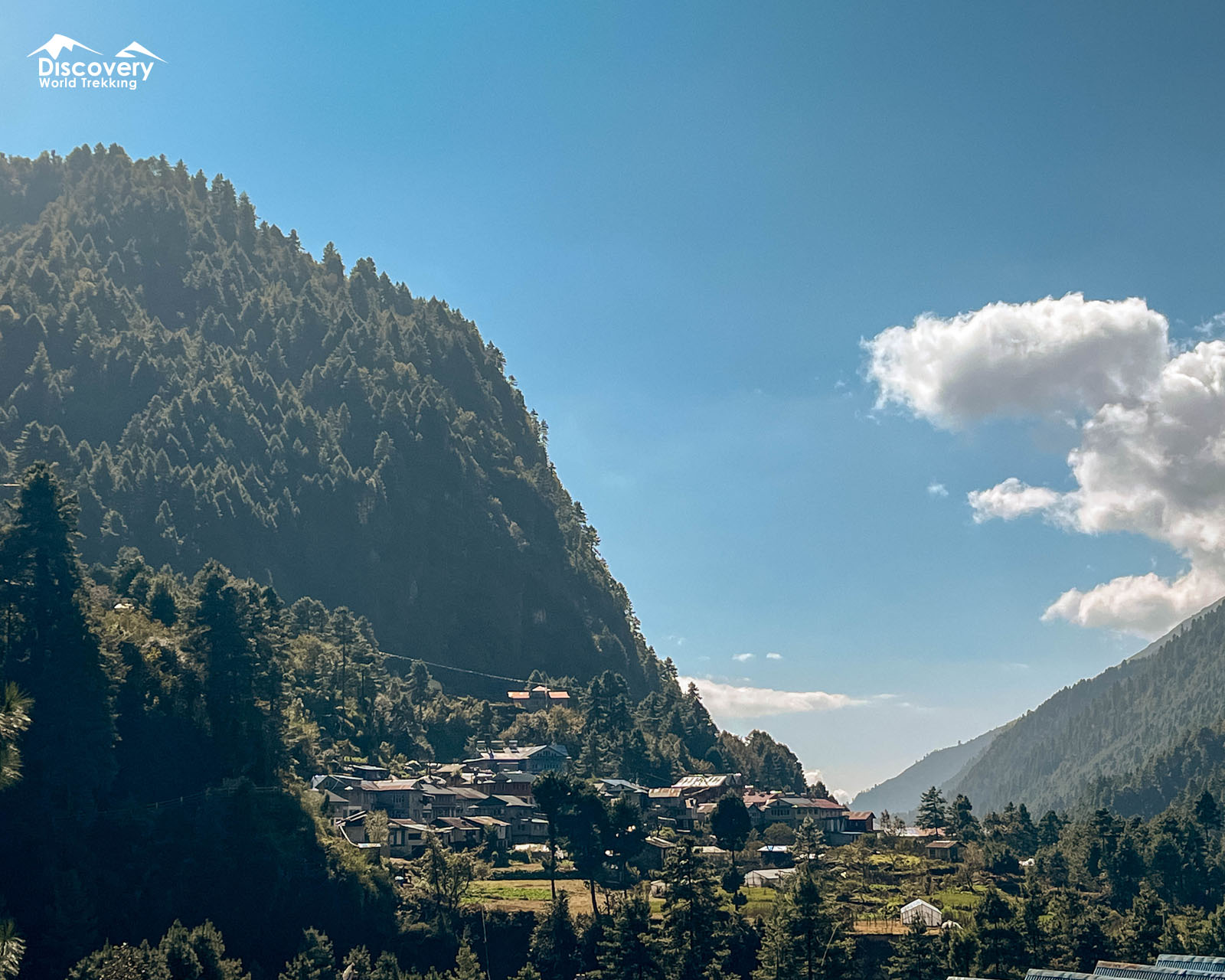
The development of Phakding was influenced by the ancient trading path connecting Nepal and Tibet, through which traders moved commodities such as salt, wool, and food grains along the Dudh Koshi Valley.
Later, the Sherpa ethnic group migrated to the Khumbu Valley about 500 years ago from eastern Tibet and brought with them Tibetan Buddhism, which shaped the village’s culture, traditions, and way of life.
The Phakding area has played a significant role in the history of mountaineering and trekking as part of the early Everest expeditions.
Prior to the construction of Lukla Airport, access to the Everest region required trekking through Jiri, located approximately 185 km (115 miles) east of Kathmandu along the original Pioneers’ Path, where Phakding served as an important overnight halt.
The opening of Lukla Airport established the village as the first major overnight stop on the Everest Base Camp route, driving the growth of teahouses, lodges, and trekking services.
Although tourism has increased in Phakding, the region’s Sherpa culture remains largely intact. Activities such as agriculture and Tibetan Buddhist practices continue alongside trekking, and the village gompa (monastery) remains an active place of worship.
Best Things to See and Do in Phakding
Even though most trekkers spend less than one day in Phakding, there are many interesting places to visit and experiences to enjoy during their stay.
-
Explore Phakding Monastery (Rimijung Monastery)
Rimijung Monastery is situated on a hill near Phakding, which takes about 15 to 30 minutes to reach from the village by walking uphill.
It is part of the Nyingma School of Tibetan Buddhism and is an operational monastery where you can learn about Buddhist ceremonies and architecture.
-
Walk Along the Dudh Koshi River
The Dudh Koshi River runs through Phakding and is one of the most beautiful features of the village.
A 30-minute walk along the river gives you a chance to enjoy the serene sight of the glacially formed turquoise river, stone cottages, and surrounding forests. This place is ideal for relaxation after your trek from Lukla.
-
Cross the Suspension Bridges
Several suspension bridges decorated with colorful prayer flags connect both sides of the Dudh Koshi River around Phakding.
Walking across them is one of the memorable parts of the trekking route and also provides an opportunity to take great photographs.
Note: The Hillary Suspension Bridge is located about 8 km north of Phakding, on the trail between Phakding and Namche Bazaar.
-
Explore Phakding Village
You can spend time strolling through the narrow streets of the village, with its traditional Sherpa stone houses, terraces, mani walls, prayer wheels, and stupas.
You can also visit local teahouses, meet Sherpa people, watch porters preparing for their next journey, and browse shops selling handmade woolen clothing and jewelry.
-
Enjoy Mountain Views
The surrounding area offers spectacular views of nearby Himalayan peaks such as Kongde Ri (6,187 m), Kusum Kanguru (6,367 m), and Thamserku (6,623 m). The best mountain views are often seen in the morning.
-
Explore the Surrounding Forests
Phakding is surrounded by forests of pine, fir, and rhododendron, making walks around the village particularly enjoyable.
Between March and May, rhododendrons bloom and add vibrant colors to the landscape. You may also spot birds such as the Himalayan Monal (Danphe), Blood Pheasant, and Golden Eagle.
Sherpa Culture and Lifestyle in Phakding
The total population of Phakding is estimated at approximately 550 people, with the Sherpa being the predominant ethnic group, along with the Tamangs. The Sherpas migrated from eastern Tibet to Khumbu about 500 years ago, introducing Tibetan Buddhism to the region.
Traditional Sherpa clothing reflects the Tibetan origins of the community. Men wear woolen robes, while women wear the anggi dress and the striped pangden apron after marriage. Silver and turquoise jewelry is also commonly worn during festivals.
Life in Phakding combines traditional mountain lifestyles with trekking tourism. Locals grow crops such as potatoes, barley, and buckwheat, raise livestock, and operate teahouses serving trekkers from around the world. Yaks and jokpe (a yak-cow crossbreed) are commonly used for transporting goods along the trekking route.
Spiritual Connection in Phakding
Even today, Tibetan Buddhism continues to play an important role in the daily lives of the people of Phakding. Rather than being a tradition preserved only for visitors, it remains a living faith actively practiced by the local Sherpa community.
Religion is central to the community, with the village gompa (monastery) and the nearby Rimijung Monastery, which belongs to the Nyingma School of Tibetan Buddhism, continuing to serve as active places of worship.
Monks and local residents gather regularly for prayers, chanting, and other religious ceremonies, which visitors may respectfully observe during their stay.
Throughout Phakding and along the trekking route, visitors can find prayer flags, mani walls engraved with the mantra "Om Mani Padme Hum", prayer wheels, chortens (stupas), and monasteries, all reflecting the region's strong Buddhist heritage.
When visiting these sacred sites, it is traditional to walk clockwise, remove your shoes before entering monasteries, and ask permission before photographing people or religious ceremonies.
Flora in Phakding
The region surrounding Phakding is covered with pine, fir, oak, and rhododendron forests, making it one of the most heavily forested sections of the Everest Base Camp Trail. These forests provide habitat for wildlife, shade for trekkers, and help maintain the cool mountain climate.
One of the most prominent plants in the area is the rhododendron, Nepal's national flower.
Several species grow in the forests around Phakding, including Rhododendron arboreum (red flowers), Rhododendron campanulatum (pink and purple flowers), and Rhododendron barbatum (deep crimson flowers).
The flowering season between March and May makes this section of the trail one of the most colorful.
Terraced farmlands around Phakding continue to be used for traditional mountain agriculture.
Wildlife in Phakding
Phakding is located within Sagarmatha National Park, making it home to a variety of Himalayan wildlife species. The surrounding forests of pine, fir, oak, and rhododendron provide food, shelter, and breeding grounds for many mammals and birds.
Mammals found in the region include the Himalayan tahr and the musk deer, both adapted to survive in the challenging mountain environment.
Bird species include the Himalayan Monal (Danphe), Nepal's national bird, as well as the Blood Pheasant and Golden Eagle.
- Himalayan Tahr: An agile wild goat capable of climbing steep rocky cliffs.
- Musk Deer: A shy deer species recognized by its elongated canine teeth.
- Himalayan Monal (Danphe): Nepal's national bird, famous for its colorful feathers.
- Golden Eagle: A large bird of prey often seen soaring above Himalayan valleys.
Wildlife sightings are not guaranteed in Phakding, but the area provides an excellent opportunity to experience the rich biodiversity of the Everest region.
White Micaceous Clay in Phakding
White micaceous clay is one such natural clay that occurs in a pale color due to the presence of tiny mica minerals. The use of such clay has been observed in the past by the local people, who would cover/coat the walls of their houses with this white substance for protection and appearance.
The name Phakding is said to be derived from the presence of white micaceous clay in the locality. Over time, the use of this traditional clay has decreased due to the increasing availability of cement, concrete, and modern paints.
Although a few old buildings may still use this clay, it is not considered much now in this village. This clay is now only an integral part of the past of Phakding.
Lodges in Phakding
The Phakding village is home to about 25 teahouses, lodges, and guesthouses, which makes it one of the most well-equipped villages along the EBC trekking route. This village can cater to approximately 300 trekkers during the peak trekking periods, with options of accommodation varying from teahouses and lodges to some high-end properties.
The majority of trekkers choose the basic teahouse, where twin-bedded rooms with shared facilities usually cost NPR 500 – 1,500 (USD 4 – 12). In the spring and autumn trekking periods, room rates might go up. Also, some teahouses provide free or discounted rooms for guests who eat all their meals at the same place.
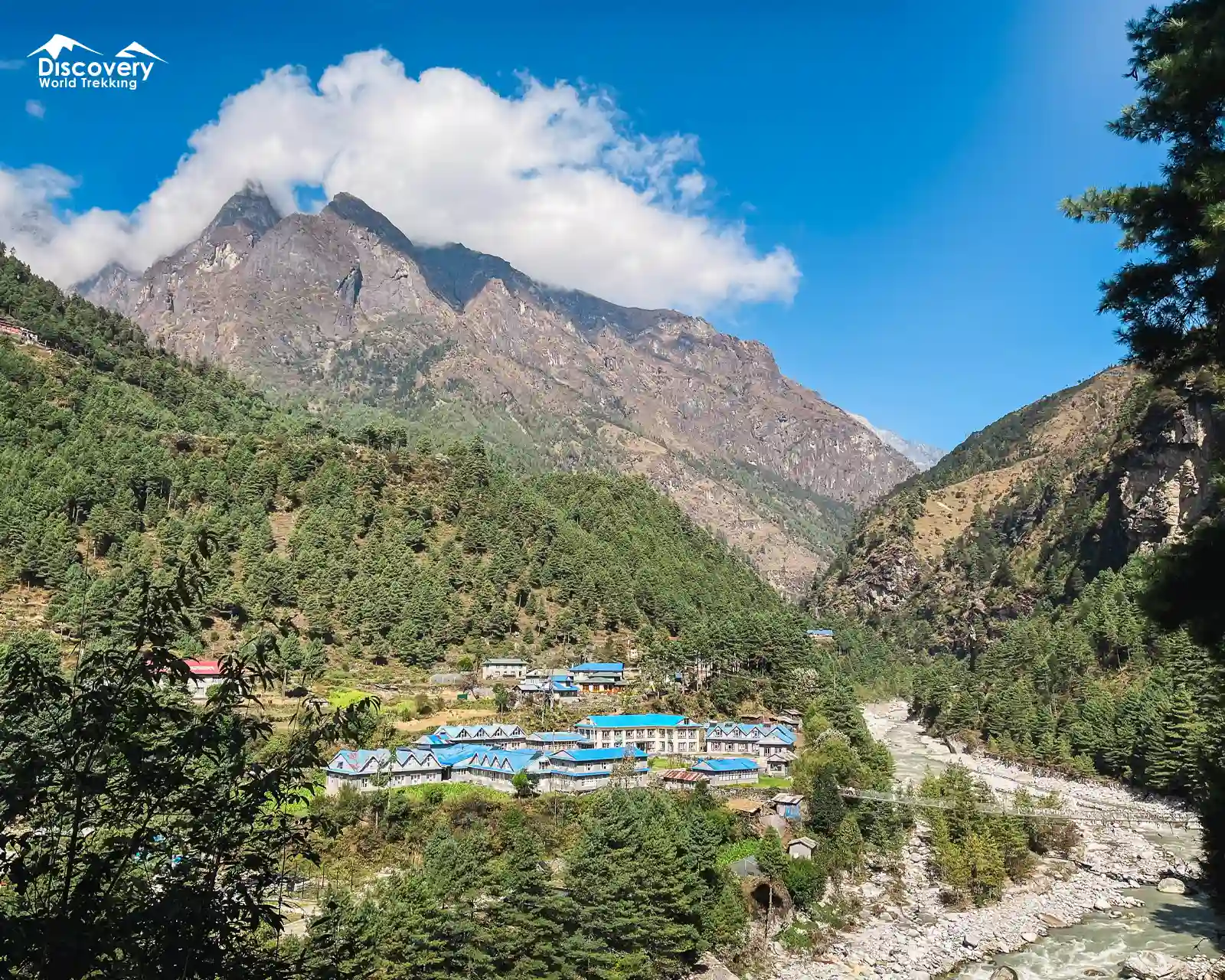
Mid-range accommodations are usually priced at NPR 2,000–5,000 (USD 15–40) per night and come equipped with better bedding, good insulation, and attached toilet facilities. Luxury accommodations, including Mountain Lodges of Nepal Phakding, provide larger rooms, attached toilet and shower facilities, and superior customer service, costing about USD 50 per night or more.
Some of the best places where you can spend nights in Phakding include Mountain Lodges of Nepal – Phakding, Sherpa Eco Home Lodge, Buddha Lodge, Kalapathar Lodge, Tashi Inn Lodge, Snowland Hotel & Restaurant, and Khumbu Traveler's Guest House.
Travel Tip: There is no ATM available in Phakding; therefore, it is advised that one carry sufficient money for their trek.
What Facilities to Expect During Your Stay?
Phakding supplies all the necessary services and facilities which are needed for an enjoyable stay before proceeding towards the higher altitudes of the Everest region. The village is not easily accessible, yet most of the facilities that are required by the trekkers are available here.
| Facility | What to expect |
| Electricity and charging | Electricity for charging your devices and lighting is available in most of the lodges in Phakding. However, the cost of charging is extra, and there can be some power cuts as well. |
| Wifi and mobile network | Although mobile network is provided by Ncell and Nepal Telecom (NTC), paid wifi internet service is available in most of the lodges. However, internet speed can be slow and dependent on weather conditions. |
| Hot showers | Hot showers are available at most of the lodges in Phakding, although hot showers come at an extra cost. The water is heated through the use of solar power or gas. |
| Drinking water | Bottled, boiled, and filtered drinking water is widely available. Many trekkers prefer boiled or filtered water in order to reduce plastic waste. |
| Laundry services | This service is available at some lodges at an extra cost. However, clothes can take time to dry in monsoons or winter months. |
| Shops and trekking equipment | You can find small shops that provide snacks, toiletries, bottled water, batteries, charging cords, trekking equipment, and some medicines and souvenirs. |
| Health service | Basic first aid can be found in most lodges. The closest health facility can be accessed in Lukla; however, for a major illness, helicopter services are needed. |
Do I Need Permits to Enter Phakding?
Yes. While there is no specific permit issued for Phakding, one needs to have the necessary trekking permits before going to the Everest region. As Phakding falls in the trekking area of Sagarmatha National Park, all trekkers need to have the relevant permits before heading further from Lukla.
| Permit | Purpose | Fee |
| Sagarmatha National Park Entry Permit | Required to enter Sagarmatha National Park. | NPR 3,000 |
| Khumbu Pasang Lhamu Rural Municipality Permit | The Khumbu Pasang Lhamu Rural Municipality permit is a local government fee, separate from the national park fee, that funds local infrastructure/services in the region. | NPR 3,000 |
| TIMS Card (if applicable) | TIMS exists for trekker safety/tracking purposes across Nepal's trekking regions generally, not specific to this route alone. | NPR 3,000 |
The Sagarmatha National Park permit can be purchased from Kathmandu or at Monjo, whereas the Khumbu Pasang Lhamu Rural Municipality permit can be purchased at Lukla prior to your trek. In case you need a TIMS card for your trekking permit, it can be sorted out through the trekking agency or the Nepal Tourism Board of Kathmandu.
Note: The requirements and permit charges may vary from time to time. Thus, it is recommended to get information about the latest guidelines regarding the permits.
Best Time to Visit Phakding
Phakding is accessible throughout the year, although the best season is determined by the climate and hiking conditions. The spring (March to May) and autumn (September to November) are the two seasons that are considered most favorable for visiting.
The table below shows the comparison of seasons and what to expect.
| Season | Weather & Temperature | What to Expect |
| Spring (March–May) | 15–20°C during the day, cooler mornings and nights | One of the ideal seasons for trekking. Rhododendron forests bloom in colors such as red, pink, and white, whereas the clear sky gives a perfect view of the mountains. |
| Summer / Monsoon (June–August) | 19–21°C during the day with frequent rainfall | Hot but wet. Hefty rain showers may make the trails slippery, creating danger of landslides, and delay the flight to Lukla. |
| Autumn (September–November) | 13–18°C during the day, colder nights | The most favorable trekking season, with dry trails, stable climate conditions, refreshed landscapes after the monsoon, and good visibility. |
| Winter (December–February) | 7–10°C during the day, temperatures often below freezing at night | Cold but generally dry. One can expect quieter trails, crisp mountain views, and freezing mornings and evenings. |
In general, the March to May and September to November periods provide travelers with the best balance of good weather, trekking safety, and picturesque Himalayas.
Expert Travel Tips for a Comfortable Stay in Phakding
- Arrive during the afternoon hours. Arrival at Phakding earlier in the day leaves you with several accommodation options, particularly during the spring and autumn trekking seasons.
- Have enough cash with you since there are no ATMs in Phakding and therefore it would be necessary for you to have some cash for expenses like accommodation, food, beverages, charging fees, etc.
- Bring your personal necessities with you. There are some small stores where you can find snacks; however, it is better to bring your own medicine, hygiene products and all necessary things.
- Bring warm clothes for the night. Although daytime weather may be comfortable, mornings and evenings in Phakding could become very chilly.
- Keep hydrated and eat well. It is important that you keep drinking lots of water and consume nutritious meals like dal bhat to help your body acclimatize to the changing altitude.
- Be respectful of local customs. Do not create a lot of noise near monasteries and temples, ask for permission to take photos of people, and respect local culture while visiting Buddhist monuments.
- Spend some time taking walks around the Dudh Koshi River or exploring the village after the sun goes down, since the peaceful ambiance and warmth of hospitality will leave an unforgettable impression of Phakding.
Popular Treks That Follow Phakding
Phakding lies on the route to many of the Everest region's most popular trekking and climbing destinations. Below are some of the most popular treks that pass through Phakding:
| Trek | Maximum Elevation | Description |
| Everest Base Camp Trek | 5,364 m | Leads to Everest Base Camp via Namche Bazaar, Tengboche, Dingboche, Lobuche, and Gorak Shep, offering views of Mount Everest and the Khumbu Glacier. |
| Gokyo Lakes Trek | 5,357 m (Gokyo Ri) | Follows the Everest trail before branching into the Gokyo Valley, visiting the Gokyo Lakes and the viewpoint of Gokyo Ri. |
| Everest Three Passes Trek | 5,535 m (Kongma La Pass) | Crosses the three high passes—Kongma La, Cho La, and Renjo La—while connecting the Everest Base Camp and Gokyo routes. |
| Everest View Trek | 3,867 m | Reaches Tengboche Monastery, the largest monastery in the Khumbu region, with views of Everest, Ama Dablam, and Lhotse. |
| Island Peak Climbing with EBC | 6,189 m | Follows the Everest Base Camp Trail up to Island Peak (Imja Tse), which is one of the most famous peaks for trekking in Nepal. |
FAQs
What is Phakding famous for?
Phakding is popularly known to be the first stop on the Everest Base Camp trail after Lukla. It is popular because of its serene environment by the river Dudh Koshi, culture of the Sherpas, suspension bridges, and the fact that it marks the entrance of Sagarmatha National Park.
What is the altitude of Phakding?
Phakding is located at an altitude of 2,610 meters (8,563 feet).
How long does it take to trek from Lukla to Phakding?
The journey from Lukla to Phakding is about 8 kilometers (5 miles) long and takes 3-4 hours through an easier trail that comprises mostly descents and some ascents as well.
Is altitude sickness possible in Phakding?
Despite being situated at an elevation of 2,610 meters, the possibility of getting altitude sickness is very minimal for most trekkers. This is because spending the night in this place helps your body acclimatize before moving to a higher elevation point.
Is Wi-Fi available in Phakding?
Yes. Wi-Fi is available in most lodges at Phakding, but for an extra payment. But the speed of the internet is often low and becomes unreliable due to bad weather conditions and the crowded trekking season.
Can I charge my phone in Phakding?
Yes. The majority of the lodges have facilities for charging phones, cameras, and other electronic gadgets; however, some charge a little for these facilities. Occasionally, there are higher chances of power outages in the monsoon
What can I do after arriving in Phakding?
Some of the activities that can be done in this location include walking along the Dudh Koshi River, visiting Rimijung Monastery, exploring the village, crossing the suspension bridges, enjoying Sherpa hospitality, and many more.
Can trekkers skip Phakding and continue to Namche Bazaar?
It is indeed possible for trekkers to proceed from Lukla to Namche Bazaar without stopping at Phakding if they arrive early at Lukla and are well-prepared. However, most trekkers prefer to make a stopover at Phakding, which helps in dividing their journey into two parts.
Plan Smarter, Trek Better
Connect with our local expert for honest recommendations, personalised guidance, and insider tips to make every step of your adventure count.


Get our free Nepal travel guide filled with expert insights, local tips, and essential planning advice.