

Langtang Village
Table of Contents
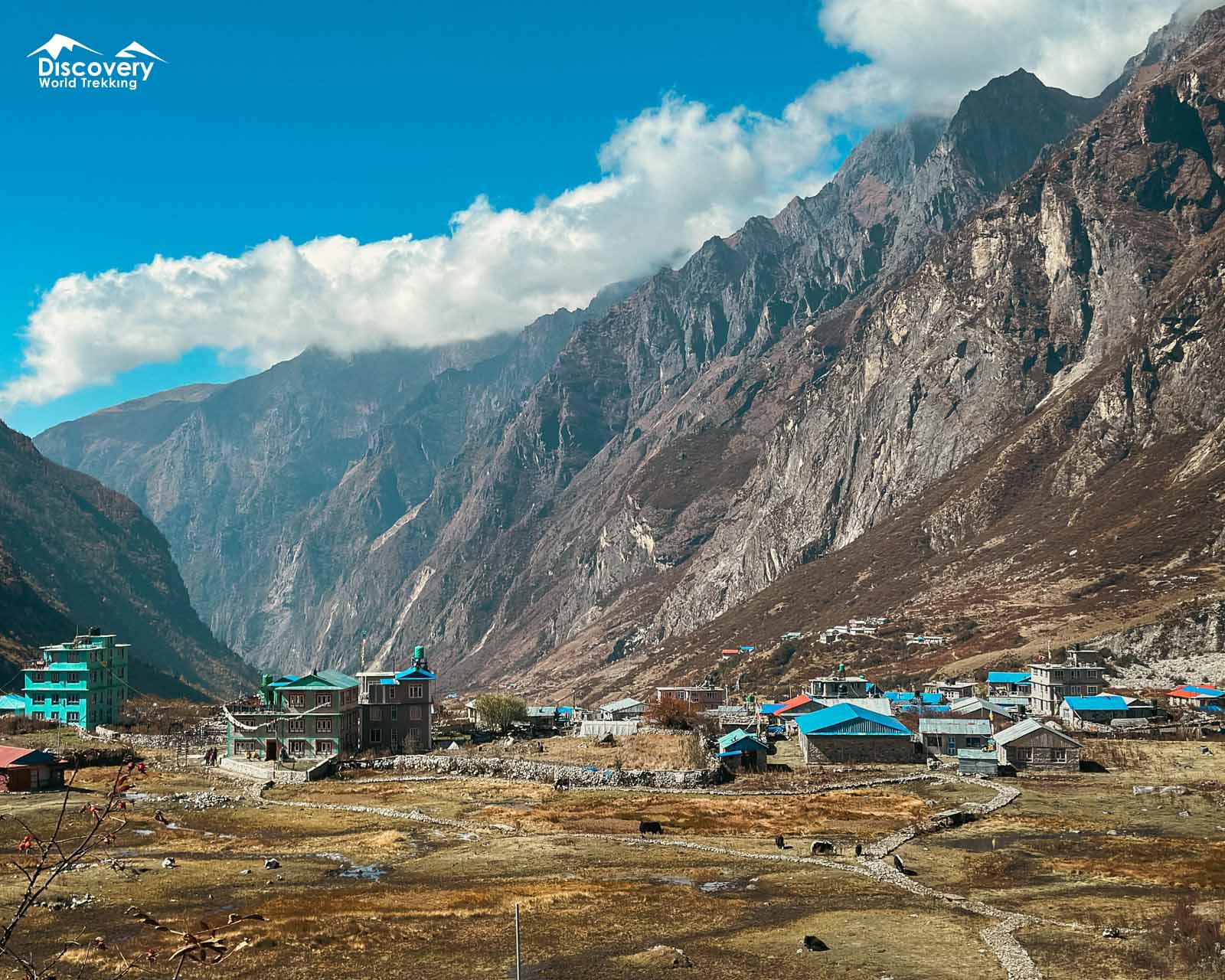
Langtang Village is one of the main mountain communities along the Langtang Valley Trek and an important stop before Kyanjin Gompa.
Rebuilt after the 2015 earthquake and avalanche, the village today combines traditional Tamang culture, Buddhist heritage, yak pastures, and trekking lodges beneath the high mountains of the Langtang range.
Where is Langtang Village Located?
Langtang Village lies in Langtang Valley within Langtang National Park, Rasuwa District, Bagmati Province. The village stands beside the Langtang Khola, north of Kathmandu and close to Nepal’s border with Tibet.
It is approximately 14.8 km from Lama Hotel and 6.8 km from Kyanjin Gompa by trail. Lama Hotel lies to the south, while Kyanjin Gompa sits further northeast in the upper valley.
| Country | Nepal |
| Province | Bagmati Province |
| District | Rasuwa District |
| Municipality | Gosaikunda Rural Municipality |
| Region | Langtang region |
| Protected area | Langtang National Park |
| Latitude | Approximately 28.217° N |
| Longitude | Approximately 85.506° E |
| Elevation | 3,430 metres (11,255 feet) |
| Distance from Lama Hotel | 14.8 km by trail |
| Distance from Kyanjin Gompa | 6.8 km by trail |
How to Reach Langtang Village?
To reach Langtang Village, trekkers first travel by road from Kathmandu to Syabrubesi and then walk through Lama Hotel and Ghoda Tabela.
1. By Road to Syabrubesi
Route: Kathmandu → Trishuli Bazaar → Dhunche → Syabrubesi
The road journey from Kathmandu to Syabrubesi covers approximately 122 km and usually takes 7–9 hours. The route follows the Trishuli River corridor to Dhunche before descending towards Syabrubesi, the last motorable settlement on the Langtang Valley route.
On Foot from Syabrubesi
Route: Syabrubesi → Lama Hotel → Ghoda Tabela → Langtang Village
The complete walk from Syabrubesi to Langtang Village takes two trekking days. The first stage reaches Lama Hotel after approximately 11.3 km and around six hours of walking.
The second stage covers about 14.8 km from Lama Hotel to Langtang Village and normally takes around six hours. The trail follows the Langtang Khola through forest before opening at Ghoda Tabela, which stands at approximately 3,030 metres (9,940 feet).
From Ghoda Tabela, the route passes Chyamki, mani walls, prayer wheels, and open valley sections before reaching Langtang Village. The final approach feels different from the lower trail because dense forest gives way to wider pastures and mountain slopes.
What is Langtang Village Famous For?
Langtang Village is known for much more than its role as an overnight stop. Its culture and history make it one of the most important places along the Langtang Valley Trek.
- A major stop on the Langtang Valley Trek: Most trekkers spend a night here before continuing to Kyanjin Gompa.
- Views of Langtang Lirung: The village sits beneath Langtang Lirung, which rises to 7,227 metres (23,711 feet).
- Tamang and Tibetan Buddhist culture: Mani walls, prayer wheels, chortens, prayer flags, and local traditions remain part of daily life.
- A rebuilt settlement: The present village was reconstructed after the 2015 earthquake and avalanche destroyed the former settlement.
- Gateway to Kyanjin Gompa: The trail from Langtang Village to Kyanjin Gompa covers approximately 6.8 km and takes around three hours.
- A natural acclimatisation point: At 3,430 metres, the village provides a useful rest stop before trekkers move towards higher viewpoints and Kyanjin Gompa.
What to See and Do in Langtang Village?
Langtang Village is not only an overnight stop. Its open valley, rebuilt houses, Buddhist landmarks, and access to Kyanjin Gompa give trekkers several ways to explore before moving higher.
Explore the Rebuilt Village and Local Architecture
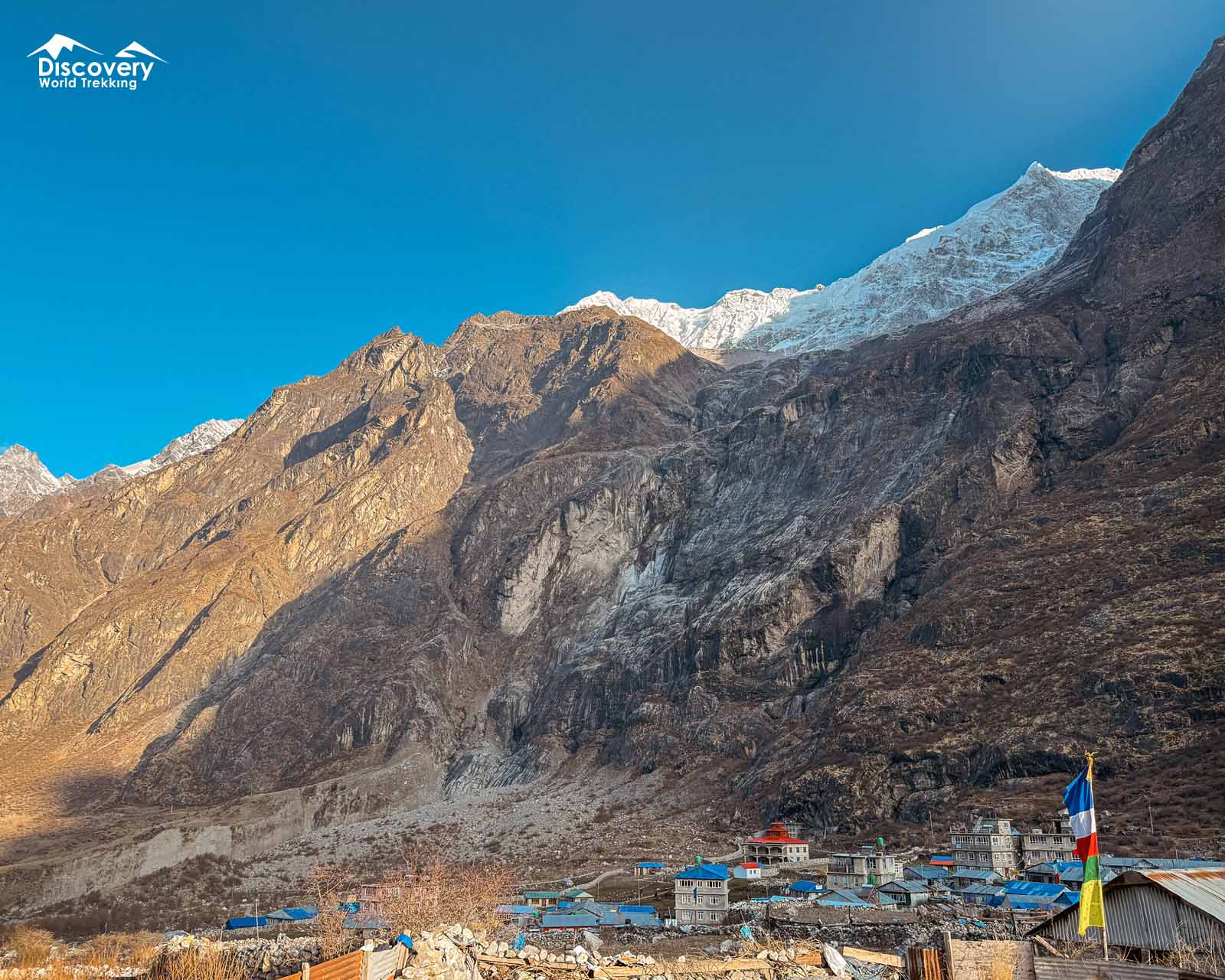
Walking through Langtang Village provides a closer look at how the community has developed since the 2015 disaster. Homes, lodges, livestock shelters and other buildings now spread along the trekking route.
Stone remains an important building material, while newer structures also use modern materials better suited to present-day homes and trekking lodges.
Rather than expecting one preserved historic village, you can see a living community that has rebuilt while continuing to support farming, livestock and tourism.
See Langtang Lirung, Yak Pastures and Valley Views
The landscape becomes noticeably more open around Langtang Village compared with the forested route around Lama Hotel.
Langtang Lirung (7,227 m) rises above the valley, while broad slopes and grazing areas surround the village. Yaks and other livestock can often be seen in the surrounding pastures, particularly during suitable grazing periods.
The open terrain also gives clearer views along the Langtang Khola valley and towards the mountains surrounding its upper reaches.
See Buddhist Chortens, Mani Walls and Prayer Flags
Buddhist features become increasingly visible as you enter the upper Langtang Valley.
Along the trail and around the village, you can see mani walls, prayer wheels, chortens and prayer flags. These are active parts of local religious life and reflect the Tibetan Buddhist traditions followed by many families in the valley.
Make sure to walk clockwise around chortens and mani walls where possible, and avoid climbing or sitting on religious structures.
Walk Around the Village and Nearby Pastures
You do not need a major side hike to explore Langtang Village. Short walks around the edge of the village and nearby grazing areas provide different views of the valley, livestock and surrounding mountains.
These walks are particularly useful if you reach your lodge early and want to remain active without adding a demanding hike before the next day's walk to Kyanjin Gompa.
Continue to Kyanjin Gompa
Kyanjin Gompa is the natural next destination rather than a short side attraction from Langtang Village.
The route covers 6.8 km in around three hours, following the upper valley towards Kyanjin. The shorter trekking day gives visitors more time to explore Kyanjin after arrival.
Major hikes such as Kyanjin Ri and Tserko Ri are better treated as activities from Kyanjin Gompa, not as hikes from Langtang Village.
Photography Around Langtang Village
Langtang Village offers a mixture of cultural and mountain photography. Prayer flags, stone structures, grazing animals, local life and the broad upper valley provide subjects beyond mountain views alone.
The changing light over Langtang Lirung and the surrounding slopes can make mornings and late afternoons particularly rewarding for landscape photography.
Popular Treks Passing Through Langtang Village
Langtang Village is an overnight stop on treks that begin at Syabrubesi and continue towards the upper Langtang Valley. Some popular treks include:
- Langtang Trek – 8 Days: The route passes through Langtang Village on the way from Lama Hotel to Kyanjin Gompa. Trekkers usually stay here for one night before continuing higher.
- Tamang Heritage Trail – 12 Days: After travelling through Tamang villages such as Gatlang, Tatopani, Thuman, and Briddim, the route joins the Langtang Valley and passes through Langtang Village before reaching Kyanjin Gompa.
- Langtang Gosainkunda Trek – 13 Days: The route passes through Langtang Village while ascending towards Kyanjin Gompa. After exploring the upper valley, trekkers return through the village before continuing towards Lama Hotel, Thulo Syabru, and Gosainkunda.
Tamang and Tibetan Culture in Langtang Village
Langtang Village is home to a Tamang community with close cultural and historical links to Tibet. Its location near Nepal's northern border helped shape a culture where Tamang language and customs exist alongside a strong Tibetan Buddhist influence.
Tibetan Buddhism remains visible in everyday life. Chortens, mani walls, prayer wheels and prayer flags appear throughout the upper valley, while monasteries and household religious practices continue to play a role in community life.
Livestock is also closely connected with the local way of life. Yak and other cattle herding have long supported families in the upper valley, providing dairy products, transport and other resources. Potatoes and other crops suited to the short mountain growing season are also cultivated where conditions allow.
Food reflects both Nepali and Tibetan influences. Dal bhat is widely available, while momo, noodle soups, Tibetan-style breads and potato-based dishes are also common in the valley. As for yak dairy products, they are available depending on the household, lodge, and season.
Tourism now forms another important part of the local economy. Many families operate lodges and teahouses or work in guiding, portering and other trekking-related services alongside traditional livelihoods.
Festivals and Buddhist observances remain important to the community, including Losar, although traditions and exact celebrations can differ between households and communities.
History of Langtang Village
Langtang Village developed over generations as a high-mountain community whose people relied mainly on livestock, agriculture and trade. Its proximity to Tibet also influenced the language, religion and cultural traditions that remain visible throughout the valley.
Trekking later became an increasingly important part of the local economy. Families opened lodges and teahouses and began working as guides, porters and other tourism service providers as more visitors came to explore Langtang Valley.
On 25 April 2015, the magnitude 7.8 Gorkha earthquake struck Nepal. In Langtang, the earthquake triggered a massive avalanche of rock, ice, and snow from the slopes above the village. The avalanche destroyed almost the entire settlement and caused an estimated 310 deaths.
Survivors relocated temporarily while rescue and reconstruction efforts began. The Langtang Management and Reconstruction Committee and outside organisations helped residents return, rebuild houses and lodges, and restore the trekking route. The new settlement stands east of the main debris field on a safer site.
Today, Langtang Village is both a functioning mountain community and a place of remembrance. Its rebuilt homes, teahouses, religious structures, and reopened trails show how residents restored their livelihoods while preserving their connection with the valley.
Best Time to Visit Langtang Village
Spring and autumn generally offer the best conditions for Langtang Village. These seasons provide clearer mountain views, more stable trails, and better conditions for the walk from Lama Hotel and the onward route to Kyanjin Gompa.
Spring: March to May
Spring brings longer days and gradually warmer weather to Langtang Village. Lower forests along the approach show rhododendron flowers, while the upper valley begins to lose its winter snow.
March can still bring icy mornings and snow on higher trails. April and May usually provide more comfortable walking conditions, although afternoon cloud and wind can develop around the open valley.
Spring is a good season for combining village exploration with a walk towards Kyanjin Gompa. Make sure to carry warm layers because nights remain cold at 3,430 metres.
Autumn: September to November
Autumn usually provides the clearest conditions of the year. The monsoon leaves the air cleaner, the trails become firmer, and the mountains stand out clearly above the broad valley.
October and early November offer particularly good conditions for photography, short walks, and the onward trek to Kyanjin Gompa. Starting early is mainly recommended because clouds and wind may increase later in the day.
This is also the busiest season. Teahouses in Langtang Village and Kyanjin Gompa can fill quickly, especially in October.
Winter: December to February
Winter brings freezing nights, frost, strong winds, and possible snowfall. At Langtang Village, daytime temperatures usually remain around 0–5°C, while nights can fall to approximately -10°C.
Clear winter days can provide excellent mountain visibility, but snow and ice may affect the trail towards Kyanjin Gompa and higher viewpoints. Some teahouses may operate with fewer rooms or reduced services.
Winter suits experienced trekkers who carry warm sleeping equipment and can adjust their itinerary if snow blocks a higher route.
Monsoon: June to August
The monsoon brings cloud, rain, and damp conditions to Langtang Village. Lower forests become lush, while the open valley often turns misty and hides Langtang Lirung.
The trail from Lama Hotel can become slippery, and rainfall may cause small landslides or erosion. Road conditions between Kathmandu and Syabrubesi can also delay the start or end of the trek.
Trekking remains possible for prepared travellers, but carry waterproof clothing, dry bags, quick-drying layers, and shoes with strong grip. Mountain views are less reliable during this period.
Langtang Village Weather and Temperature
Conditions at Langtang Village vary considerably between daytime and night because of its elevation. Temperatures also change from year to year, so seasonal figures should be treated as general guidance rather than guaranteed conditions.
| Season | Daytime | Night-time | General Conditions |
| Spring | Around 6°C to 15°C | Around -3°C to 5°C | Gradually warmer, mixed clear and cloudy periods |
| Summer/Monsoon | Around 10°C to 18°C | Around 5°C to 10°C | Mild but wet and cloudy |
| Autumn | Around 5°C to 15°C | Around -5°C to 5°C | Generally drier with good visibility |
| Winter | Around -2°C to 8°C | Around -10°C to -2°C | Cold, often clear, with possible snowfall |
Where to Stay in Langtang Village?
Langtang Village has a good selection of locally operated teahouses and trekking lodges. The rebuilding of the village has brought newer accommodation alongside the traditional teahouse system, making it one of the main overnight stops in the upper valley.
Teahouses and Basic Lodges
Most trekkers stay in family-run teahouses. These combine accommodation and dining in one property, so you normally eat breakfast and dinner at the lodge where you stay.
The accommodation remains relatively simple, but Langtang Village generally provides more choice than smaller trail stops such as Lama Hotel.
Room Types and Facilities
Twin rooms are the most common option and usually contain two separate beds with mattresses, pillows and blankets. Some lodges may have rooms with attached bathrooms, while simpler properties continue to use shared toilets and washing areas.
Hot showers, charging and Wi-Fi may be available for an additional fee. Availability and reliability can vary between lodges and seasons, so these services should not be treated as guaranteed.
The dining room is normally the warmest communal part of a teahouse and provides a place to eat, rest and meet other trekkers.
Facilities and Services in Langtang Village
Langtang Village has more trekking services than the smaller stops lower down the trail, but facilities remain limited compared with Syabrubesi or Kathmandu.
You can generally find teahouses, meals, bottled or boiled drinking water, basic snacks and drinks, charging and limited internet or mobile connectivity. Some lodges also sell a small selection of everyday trekking necessities.
There is no dependable ATM or full banking service, so carry enough Nepali cash from Kathmandu or Syabrubesi for personal expenses along the upper valley.
Electricity, charging, internet and mobile signals can be affected by weather and local infrastructure. Trekkers should therefore carry a power bank and avoid depending completely on online services.
For serious medical problems, the village has limited resources, and evacuation or travel to better-equipped facilities may be necessary.
Food and Local Cuisine in Langtang Village
Langtang Village does not have one single dish that belongs exclusively to the village. Food instead reflects a mixture of Tamang, Tibetan-influenced and common Nepali mountain cooking, together with meals designed for trekkers.
Dal bhat remains one of the most filling choices, usually served with rice, lentil soup, vegetables and pickles. Momo and thukpa are also common, with hot noodle soup particularly suitable for colder evenings.
Potatoes have long been an important crop in high Himalayan communities, so potato dishes appear regularly on menus. Depending on the lodge and season, visitors may also find yak dairy products, including cheese or butter.
Tibetan-style bread, chapati, porridge, eggs and pancakes are common breakfast choices. Trekking lodges have also added fried rice, noodles, pasta, soups and similar dishes for international visitors.
Menus become more expensive as you travel higher because many ingredients and supplies must be carried into the valley.
Permits Required for Langtang Village
Langtang Village lies inside Langtang National Park, so trekkers need the required national park entry permit. The standard Langtang Trek also falls under Nepal's TIMS system.
The main permits are:
- Langtang National Park Entry Permit: Nepal Tourism Board currently lists the entry fee at NPR 3,000.
Flora and Wildlife Around Langtang Village
At 3,430 m, Langtang Village sits where the thick forests of the lower valley begin to give way to more open mountain vegetation.
The surrounding landscape reflects its position inside Langtang National Park, Nepal’s first Himalayan national park, established in 1976.
Flora in Langtang Village
- Short grasses and alpine meadows dominate the open slopes around the village.
- Juniper shrubs and dwarf rhododendron grow on rocky ground and grazing areas.
- Birch and scattered trees appear closer to the settlement and along the river.
- Spring and early summer bring colour to the meadows, although flowers appear later than in the lower forests.
Fauna in Langtang Village
- The wider national park supports red pandas, snow leopards, Himalayan tahr, musk deer, blue sheep, and langurs.
- Red pandas are more common in dense bamboo forests at lower elevations, while snow leopards live in remote high-altitude terrain.
- Neither animal is easy to see near the village.
- Birds are more likely to appear, including Himalayan monals, eagles, vultures, and smaller alpine species.
What Should You Pack for Langtang Village?
At 3,430 m, Langtang Village can become cold quickly after sunset even when the lower trail feels warm. Your packing should therefore account for the considerable elevation gain from Syabrubesi.
- Warm sleeping bag: Lodge blankets may not provide enough insulation at 3,430 metres.
- Insulated jacket and fleece: Wear layers because mornings, evenings, and shaded sections feel cold.
- Waterproof outer layer: Rain and snow can occur even outside the monsoon.
- Warm hat, gloves, and buff: These protect against wind in the open valley.
- Trekking boots with grip: Rocky and icy sections may appear between Langtang Village and Kyanjin Gompa.
- Trekking poles: Useful on uneven ground, especially during snow or rain.
- Sunglasses and sunscreen: Strong sunlight reflects off snow and pale rock.
- Water treatment: Carry a filter or purification tablets for refilling.
- Power bank and headlamp: Charging can cost extra, and power may not remain available all night.
- Altitude essentials: Carry personal medicines, blister treatment, and any medication prescribed by your doctor.
- Small daypack: Keep water, snacks, warm layers, documents, and rainwear with you.
- Cash: Carry Nepali rupees because Langtang Village has no reliable ATM.
Is Langtang Village Worth Visiting?
Langtang Village is worth visiting because it combines the practical value of a trekking stop with a strong sense of place. The village gives trekkers a clear change from the forested lower valley to open alpine terrain, while Langtang Lirung and the surrounding peaks create a dramatic setting.
It also offers more than mountain scenery. You can see how the Langtangpa community rebuilt after the 2015 disaster, observe Tamang Buddhist traditions, walk through stone houses and yak pastures, and continue easily towards Kyanjin Gompa.
The village does require preparation. At 3,430 metres, cold nights, limited services, and altitude deserve respect. For trekkers who walk steadily and allow their bodies time to adjust, Langtang Village is one of the most memorable stops on the Langtang Valley route.
FAQs
What is the altitude of Langtang Village?
Langtang Village stands at 3,430 metres (11,255 feet) above sea level.
How far is Langtang Village from Syabrubesi?
Langtang Village is approximately 26.1 km from Syabrubesi by trail, divided between the Syabrubesi–Lama Hotel and Lama Hotel–Langtang Village stages.
How far is Langtang Village from Kyanjin Gompa?
Langtang Village is approximately 6.8 km from Kyanjin Gompa. The walk usually takes around three hours.
How long does it take to reach Langtang Village from Lama Hotel?
The trek from Lama Hotel to Langtang Village covers approximately 14.8 km and normally takes around six hours.
Plan Smarter, Trek Better
Connect with our local expert for honest recommendations, personalised guidance, and insider tips to make every step of your adventure count.


Get our free Nepal travel guide filled with expert insights, local tips, and essential planning advice.