

Annapurna Circuit Trek in October
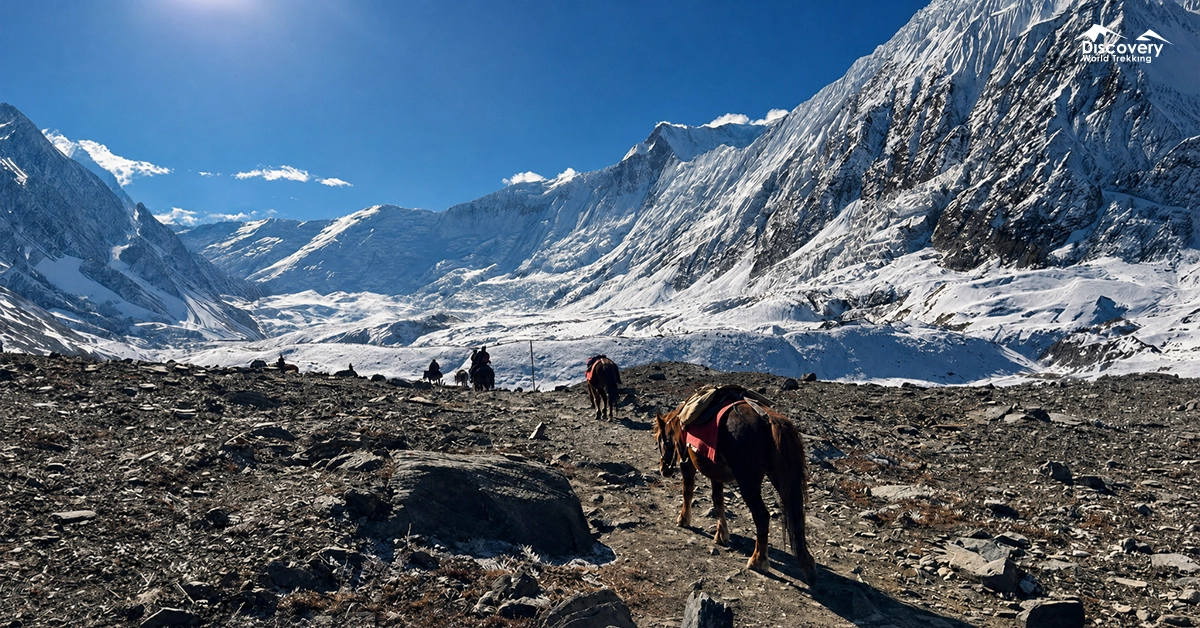
The Annapurna Circuit Trek in October offers clear mountain views, generally stable weather, comfortable daytime walking temperatures, and reliable access to Thorong La Pass. October falls in Nepal’s main autumn trekking season, after the monsoon has cleared dust and moisture from the atmosphere but before sustained winter conditions reach the high Himalayas.
Trekkers should expect warm valleys, crisp alpine air, cold nights above Manang, and freezing temperatures around Thorong High Camp. The month suits trekkers seeking the best overall combination of scenery, cultural encounters, teahouse availability, and manageable trail conditions.
Is October a Good Time for the Annapurna Circuit Trek?
Yes, October is one of the most suitable months for completing the Annapurna Circuit. Dry autumn weather, long periods of mountain visibility, and active teahouses make daily planning more dependable than in wetter or colder seasons.
October is also the busiest trekking month, so popular lodges in Manang, Yak Kharka, Thorong Phedi, and High Camp can fill early. Starting each day on time and reserving the next night’s room through a guide helps avoid unnecessary waiting.
| Factor | October Conditions |
| Weather | Mostly dry and stable, with sunny mornings, occasional afternoon cloud, and colder nights at higher elevations. |
| Mountain views | Frequently clear views of Annapurna II, Annapurna III, Annapurna IV, Gangapurna, Tilicho Peak, Dhaulagiri, and the Chulu range. |
| Trail conditions | Firm lower trails, dry alpine paths, and possible frost or short icy sections above 4,500 metres. |
| Crowds | High numbers of international and Nepali trekkers, especially during the middle of the month. |
| Accommodation | Most teahouses operate at full capacity; advance coordination is useful at smaller high-altitude stops. |
| Thorong La Pass | Normally accessible with an early departure, suitable acclimatization, warm equipment, and a favourable local forecast. |
| Difficulty | Moderate to strenuous due to distance, altitude, and the long pass-crossing day. |
| Best for | Trekkers prioritizing clear views, reliable services, cultural activity, and classic autumn conditions. |
Annapurna Circuit Weather in October
Annapurna Circuit weather in October is generally dry, sunny, and increasingly cold as the month progresses. Lower valleys can feel warm at midday, while temperatures near High Camp and Thorong La may remain below freezing during the pre-dawn hours.
The following tables provide realistic packing ranges rather than guaranteed temperatures. Wind exposure, cloud cover, valley orientation, and annual weather systems can make the trail feel considerably warmer or colder. Published October altitude bands generally place Manang around 10–16°C during sunny days, with freezing nights becoming common above 4,000 metres.
Early October Weather
Early October is usually the warmest part of the month and may retain limited post-monsoon moisture. Mornings are often clear, while isolated afternoon clouds can gather around lower forested valleys.
Trails normally dry quickly in sunlight. A lightweight rain shell remains useful because brief showers are still possible below 3,000 metres.
| Elevation level | Average daytime temperature | Average nighttime temperature |
| 800–1,500 m | 20–26°C | 11–16°C |
| 1,500–2,500 m | 16–22°C | 7–12°C |
| 2,500–3,500 m | 12–18°C | 3–8°C |
| 3,500–4,500 m | 7–13°C | -2 to 4°C |
| 4,500–5,416 m | -2 to 6°C | -10 to -4°C |
Mid-October Weather
Mid-October usually delivers the most balanced combination of clear skies, dry ground, and moderate daytime temperatures. Strong sunlight can make uphill walking feel warm, even when the shaded air remains cool.
Nighttime frost becomes normal around Yak Kharka, Ledar, Thorong Phedi, and High Camp. Water bottles should be kept inside the sleeping bag or wrapped in spare clothing overnight.
| Elevation level | Average daytime temperature | Average nighttime temperature |
| 800–1,500 m | 19–25°C | 9–14°C |
| 1,500–2,500 m | 15–21°C | 5–10°C |
| 2,500–3,500 m | 10–17°C | 1–6°C |
| 3,500–4,500 m | 5–12°C | -4 to 2°C |
| 4,500–5,416 m | -4 to 4°C | -12 to -6°C |
Late October Weather
Late October remains highly suitable for trekking but requires warmer equipment above Manang. Skies are frequently sharp and clear, while mornings begin colder and shaded sections hold frost for longer.
Thorong La departures commonly begin before sunrise, when temperatures are at their lowest. A proper down jacket, insulated gloves, warm socks, and wind-resistant outer layers make the crossing more comfortable.
| Elevation level | Average daytime temperature | Average nighttime temperature |
| 800–1,500 m | 17–23°C | 7–12°C |
| 1,500–2,500 m | 13–19°C | 3–8°C |
| 2,500–3,500 m | 8–15°C | -1 to 4°C |
| 3,500–4,500 m | 3–10°C | -6 to 0°C |
| 4,500–5,416 m | -6 to 2°C | -14 to -8°C |
Average Temperature in October
Trail Conditions Along the Annapurna Circuit in October
Trail conditions in October are generally firm, visible, and suitable for steady daily progress. The experience changes considerably between the humid lower valley, forested middle elevations, dry Manang plateau, and the exposed Thorong La corridor.
Bhulbhule to Dharapani
The Bhulbhule-to-Dharapani section is usually warm, green, and firm underfoot in October. Trekkers follow the Marsyangdi River through farmland, villages, waterfalls, suspension bridges, stone stairs, and narrow paths above the river.
Shaded stones can remain damp early in the month, so footwear with a reliable tread is useful. The approach to Tal and Dharapani includes rocky ledges, short climbs, and sections squeezed between the river and steep valley walls.
Dharapani to Chame
The trail from Dharapani to Chame is mostly forested, cool, and comfortable for climbing. Pine needles create softer walking surfaces, while roots and shaded rocks require attentive footing after overnight moisture.
The principal ascent passes Danaqyu and climbs toward Timang before descending through woodland toward Koto and Chame. Clear October conditions frequently reveal Lamjung Himal, Annapurna II, and Annapurna IV from the higher openings.
Chame to Manang
The Chame-to-Manang section becomes progressively drier, wider, and more exposed to sunlight. The trail passes Bhratang’s apple-growing area, the dramatic Paungda Danda rock face, Dhukur Pokhari, Upper Pisang, Ghyaru, and Ngawal.
The upper route through Ghyaru and Ngawal includes a sustained climb but provides broader views and better acclimatization than the lower valley option. Dry dust, strong ultraviolet exposure, and afternoon wind become more noticeable as the landscape opens.
Manang to Thorong High Camp
The trail above Manang is dry, rocky, and increasingly alpine. An acclimatization day in Manang should remain part of the schedule before continuing through Tenki, Ghunsang, Yak Kharka, Ledar, Thorong Phedi, and High Camp.
Yak and mule traffic is common, so trekkers should stand on the uphill side when animals pass. The final climb from Thorong Phedi to High Camp is short but steep, and a slow pace conserves energy for the pass.
Thorong La Pass to Muktinath
The Thorong La crossing is coldest before sunrise and becomes warmer during the descent toward Muktinath. Firm frost or compact snow may cover the upper trail, making trekking poles and lightweight traction devices valuable when local guides recommend them.
After reaching the 5,416-metre pass, the route descends for several hours over gravel, dust, mud, or snow according to recent conditions. Short steps and poles reduce pressure on the knees during the long descent.
Muktinath to Jomsom and Beyond
The trail and road corridor beyond Muktinath is dry, broad, and exposed to increasing afternoon wind. The landscape changes to ochre hills, riverbeds, old settlements, monasteries, apple-growing villages, and the wide Kali Gandaki Valley.
Walking or driving early provides calmer conditions around Kagbeni and Jomsom. A buff and glasses are useful for dust, particularly on vehicle-accessible sections of the valley.
Tilicho Lake in October
The trek to Tilicho Lake is normally accessible in October and can be added as a two- or three-day extension from the classic Annapurna Circuit Trek. The lake sits at approximately 4,919 metres, so the excursion adds meaningful altitude exposure and should not replace the scheduled acclimatization day.
Early starts provide firmer ground and calmer conditions on the exposed slope near Tilicho Base Camp. Frost and edge ice become more likely late in the month, while the lake’s colour changes with cloud, sun angle, and surface ice.
The standard trekking option returns toward Shree Kharka before reconnecting with the main circuit near Yak Kharka. Mesokanto La is a separate mountaineering-style crossing and should not be treated as a routine shortcut to Jomsom.
Popular Festival in October
Dashain is the major Nepali festival most likely to influence an October trek. The 15-day celebration honours Goddess Durga and brings family reunions, blessings from elders, temple rituals, village swings, festive meals, and increased domestic travel. Its dates change annually because Nepal’s main festivals follow the lunar calendar.
Trekkers may see homes decorated with fresh paint, barley shoots (jamara), red tika on people’s foreheads, and families travelling between villages. Transport and administrative offices can operate on adjusted schedules during the principal holidays, although trekking lodges along the circuit normally remain prepared for autumn guests.
Flora and Fauna Seen in October
October provides excellent wildlife observation conditions because visibility improves and animals are easier to notice on open alpine slopes. Blue sheep may appear above Manang and near the dry ridges approaching Thorong Phedi. Eagles can be seen riding thermals, while Himalayan monal, koklas, and blood pheasants inhabit forested sections of the conservation area.
The vegetation changes quickly with elevation. Lower sections contain terraced farms and broadleaf woodland, while the Dharapani–Chame corridor passes through pine, fir, oak, and maple forests. Juniper, alpine grass, low shrubs, and hardy cushion plants become more noticeable beyond Manang.
October is not the principal rhododendron flowering period, but the route remains botanically diverse. Research has documented 1,739 vascular plant species across the Annapurna Conservation Area, including 102 flowering plants endemic to Nepal.
Annapurna Circuit Packing List for October
Pack for warm valley walking, freezing alpine nights, strong sun, and a possible icy pass. Clothing should work as a layering system so that insulation can be added or removed without opening the main backpack.
Clothing
- Moisture-wicking base layers
- Lightweight trekking shirts and trousers
- Warm fleece or synthetic mid-layer
- Insulated down jacket
- Waterproof and windproof shell
- Thermal top and bottom
- Warm hat, sun hat, buff, and insulated gloves
- Four or five pairs of trekking socks
Footwear and Trail Equipment
- Broken-in waterproof trekking boots
- Trekking poles with adjustable length
- Gaiters for snow, dust, or loose gravel
- Lightweight microspikes for late-October frost or snow
- Headlamp with spare batteries
- 20–30-litre daypack or 40–55-litre main trekking pack
Sleeping and Personal Equipment
- Sleeping bag rated to at least -10°C comfort; late-October trekkers may prefer -15°C
- Refillable bottles or hydration bladder with two-litre capacity
- Water-treatment tablets or filter
- Sunglasses with strong ultraviolet protection
- SPF 50 sunscreen and lip balm
- Compact first-aid kit and personal medication
- Power bank, charging cables, and waterproof document pouch
Pack one complete warm set in a waterproof liner. That set should remain dry for High Camp and the Thorong La morning.
Safety Tips for Trekking in October
A gradual itinerary, reliable weather information, and disciplined altitude management provide the strongest safety margin in October. Stable autumn conditions support trekking, but altitude remains the main physical consideration.
- Keep the Manang acclimatization day. A short hike above the village followed by sleep at the same elevation helps the body adapt.
- Control sleeping-altitude gains. Above 3,000 metres, the Himalayan Rescue Association recommends limiting the daily increase in sleeping elevation to about 300–400 metres where the itinerary permits.
- Respond early to altitude symptoms. Headache with nausea, unusual fatigue, dizziness, or appetite loss means pausing the ascent. Symptoms that intensify call for descent and professional assistance.
- Confirm the Thorong La forecast locally. Guides, lodge owners, and checkpoint staff receive practical information about recent snow, wind, and trail movement.
- Start the pass before dawn. An early departure provides more daylight for the long descent and usually calmer morning conditions.
- Carry permits throughout the trek. The Annapurna Circuit currently requires an ACAP entry permit, a licensed guide, and an agency-issued TIMS card for international trekkers.
- Keep one flexible day. A spare day allows comfortable adjustment for acclimatization, festival transport, a Tilicho side trip, or a high-altitude weather change.
FAQs
Does it snow on Thorong La in October?
Snow is possible, especially during late October, but the pass often remains open. Fresh conditions may require microspikes, gaiters, trekking poles, or a delayed crossing based on local advice.
Can beginners complete the Annapurna Circuit in October?
Fit beginners can complete the trek with sufficient preparation, gradual acclimatization, and professional guidance. Training should include long uphill walks, consecutive hiking days, stair climbing, and controlled descents with a loaded daypack.
Is Tilicho Lake worth visiting in October?
Yes, Tilicho Lake is especially rewarding in October because clear air often reveals the surrounding rock walls and high peaks. Trekkers should add dedicated days rather than compressing the main acclimatization schedule.
Plan Smarter, Trek Better
Connect with our local expert for honest recommendations, personalised guidance, and insider tips to make every step of your adventure count.


Get our free Nepal travel guide filled with expert insights, local tips, and essential planning advice.