Discovery World Trekking Outreach Fund
Discovery World Trekking allocates a certain percentage of business profit to rural development and relief programs.
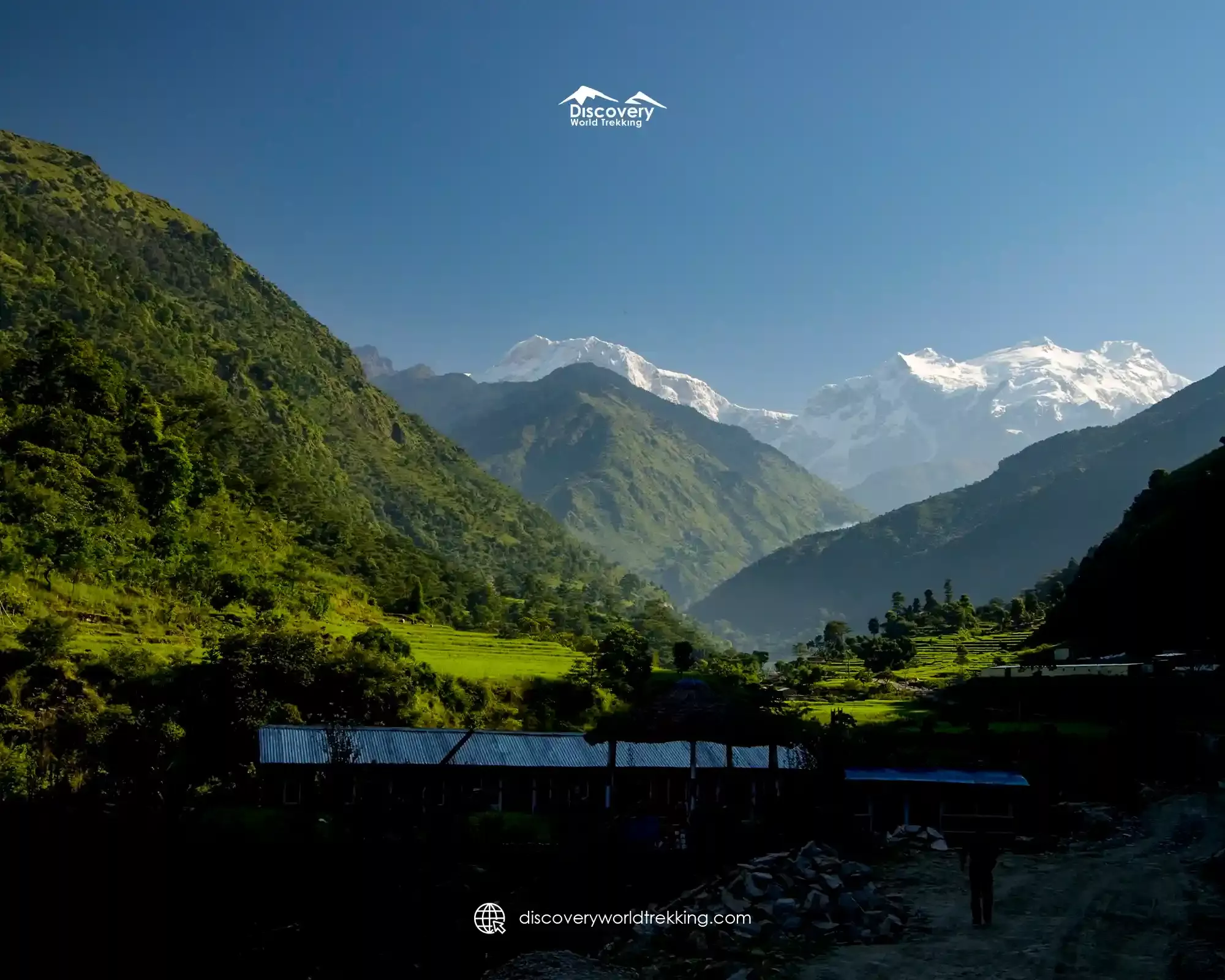
The Annapurna Circuit Trek is a beautiful blend of hike & adventure in the Annapurna region where you can view dramatic deep gorges, desolate high mountain passes, and the massive snow-capped mountain ranges as well as relaxing hot springs, Buddhist and Hindu temples, and delightful farming villages.
The Annapurna Circuit Short Trek is an exhilarating journey through the high-altitude terrain of central Nepal, offering breathtaking mountain vistas, diverse landscapes, and rich cultural encounters. The trek’s ultimate challenge is crossing Thorong La Pass (5,416m), a thrilling ascent that rewards you with panoramic views of the Himalayas and the contrasting terrains on either side of the pass.
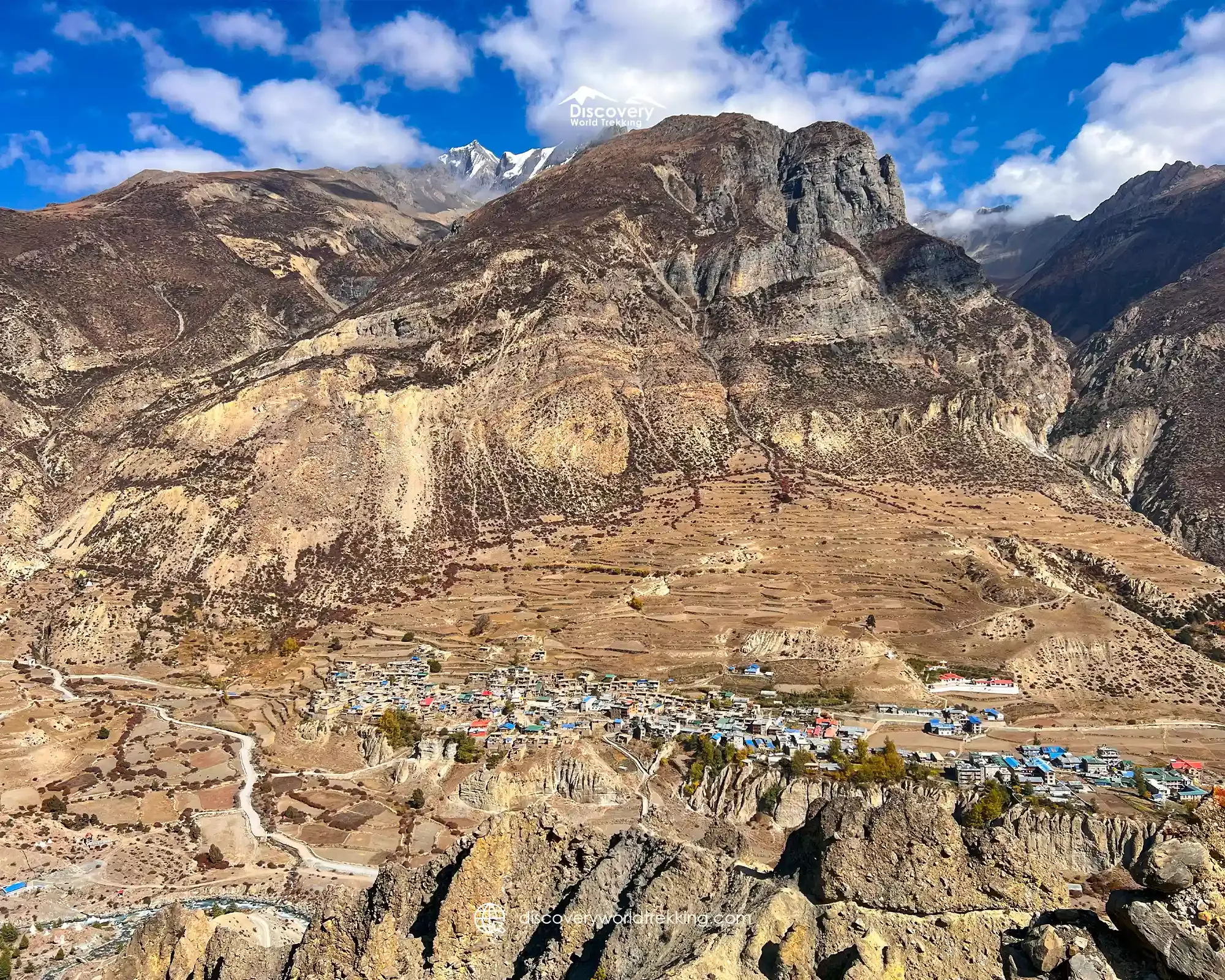
Starting from the lush green valleys of the eastern side, you get to witness dense forests, cascading rivers, and traditional villages. As the trail progresses, the transition to the arid landscapes of the west becomes dramatic, with barren slopes and Tibetan-influenced settlements reflecting a completely different climate and culture. A significant highlight is the visit to Muktinath, an important pilgrimage site revered by both Hindus and Buddhists, symbolizing spiritual devotion amidst Himalayan grandeur.
The adventure begins with a drive from Kathmandu to Besisahar, followed by another scenic drive to Chame, where you start the journey on foot. The trail leads through Upper Pisang, Manang, and Ledar, offering acclimatization opportunities before the demanding ascent to Thorong High Camp. The crossing of Thorong La Pass is a defining moment, surrounded by snow-covered peaks and vast Himalayan landscapes. After reaching the sacred grounds of Muktinath, you descend to Jomsom, concluding your trek with either a flight or a drive back to Pokhara.
This 10-day trek is perfect for those seeking an intense yet rewarding Annapurna region experience, featuring ever-changing landscapes, cultural richness, and one of Nepal’s most celebrated trekking challenges.
This package includes a local bus ride from Kathmandu to Besi Sahar or Bhulbhule. However, for an extra cost, you can book a private jeep. Similarly, we recommend you book a private jeep instead of a local bus while traveling from Besi Sahar to Chame for a smoother journey. Though it will cost you a little more, you will be comfortable as the road from Besi Sahar to Chame is very rough, and the drive is long.
In addition, while returning, you have the option for a self-funded (flight cost not covered in the package) flight from Pokhara to Kathmandu.
We also want our guests to arrive in Kathmandu one day before the trip departure day (before 3 p.m.) for last-minute preparations.
We’ll email with available times for an online briefing once you book your trip. This session will walk you through the gear list, daily plan, and trail details. We’ll host the briefing after receiving your key documents.
Drive from Kathmandu to Besisahar (760 m) west of the Kathmandu Valley. Drive time: Approx. 7 hrs.
Drive From Besisahar to Chame (2,710 m). Drive time: Approx. 8 hrs.
Trek from Chame to Upper Pisang (3,300 m). Trek time: Approx. 6 hrs.
Trek from Pisang to Manang (3,540 m). Trek time: Approx. 6 hrs.
Trek from Manang through Yak Kharka (4,050 m) to Ledar (4,250 m). Trek time: Approx. 4 hrs.
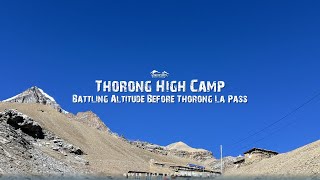
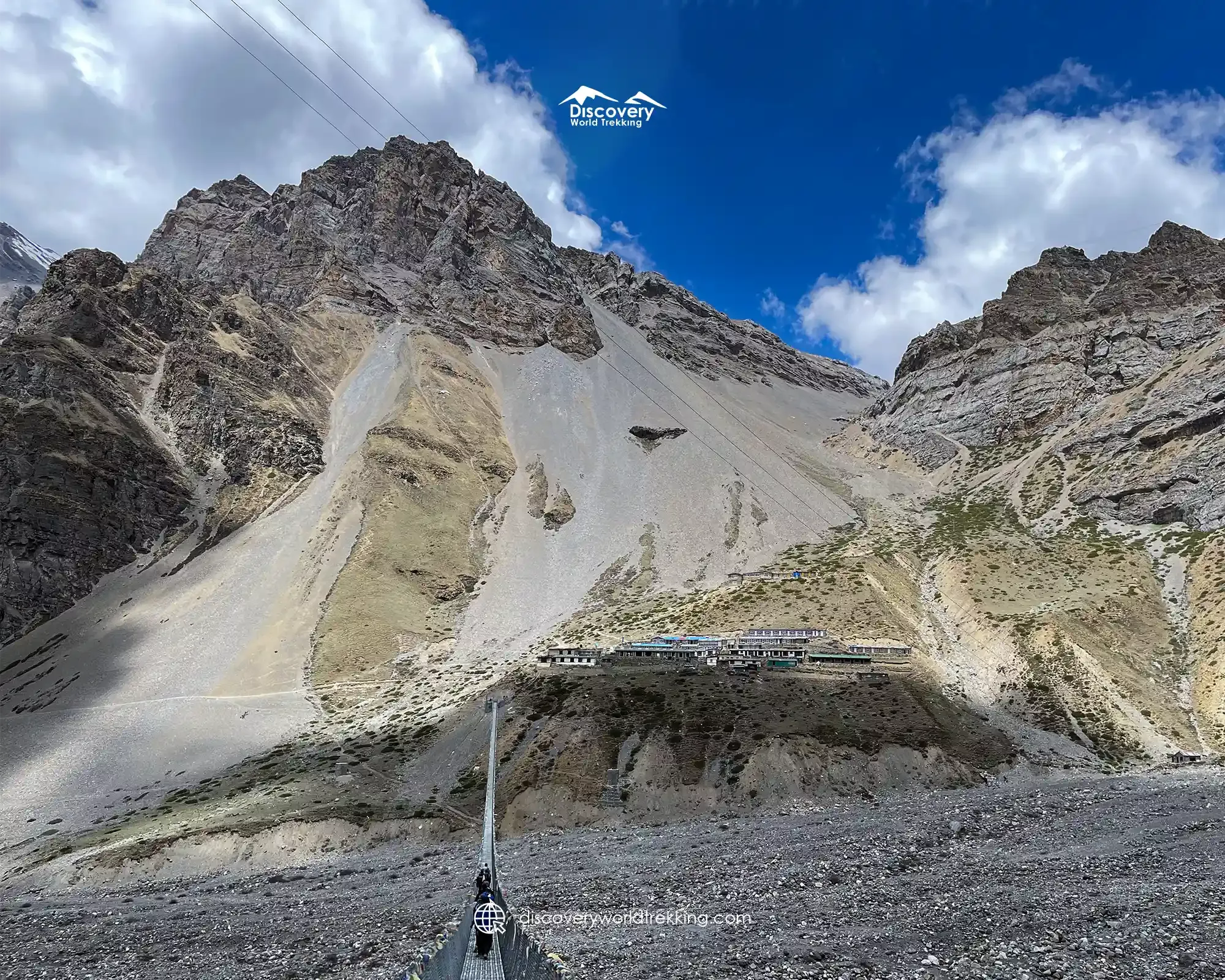
Trek from Ledar to Thorong High Camp (4,925 m). Trek time: Approx. 5 hrs.
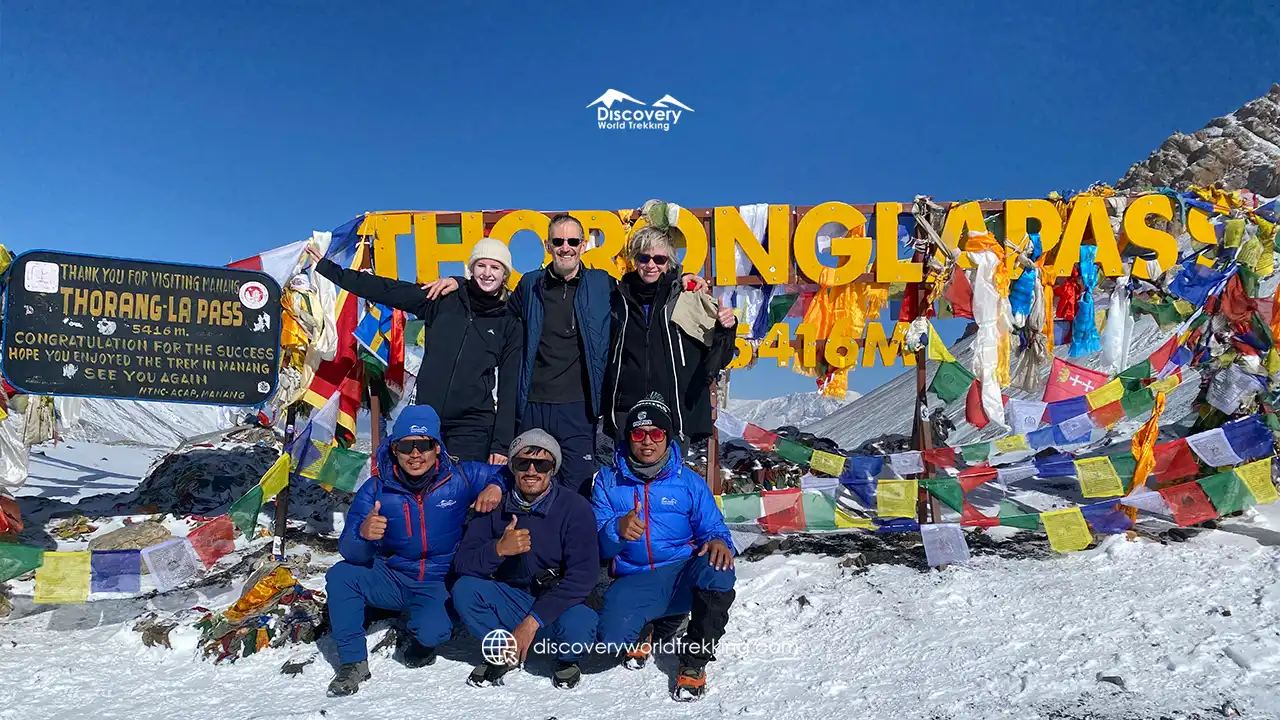
Trek from Thorong High Camp to Muktinath Temple (3,760 m) via Thorong La High Pass (5,416 m). Trek time: Approx. 9 hrs.
Drive from Muktinath to Jomsom (2,720 m), and to Tatopani (1,200 m). Drive time: Approx. 4 hrs.
Drive from Tatopani to Pokhara (850 m). Drive time: Approx. 7 hrs.
Drive from Pokhara to Kathmandu (1,350 m). Drive time: Approx. 7 hrs.
If the published schedule does not suit you, we can build the trek around your dates, your pace and what you want to see.
The calendar below displays the available trek schedules. Please select the exact trek start date. Ensure your arrival day is before the trek start date and your departure day is after the trek end date.
Early morning after breakfast, we take a local bus to Besishar, which takes about 6-7 hours (190 Km). The route passes out of the valley along the picturesque Trishuli river to Besisahar, situated along the Marsyangdi River. Throughout your ride, you will see amazing terraced farms, beautiful villages, and gorgeous Ganesh and Manaslu snow peaks.
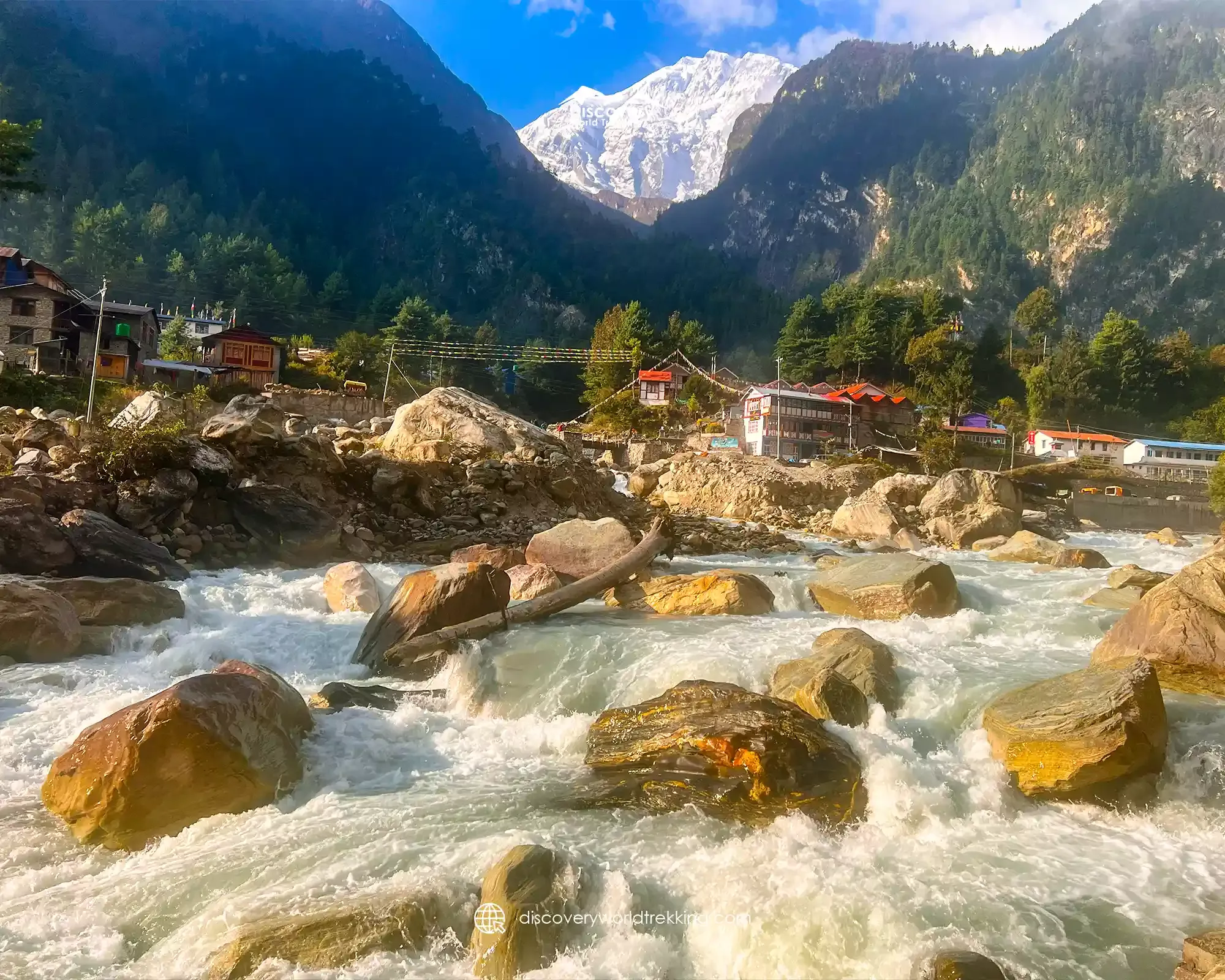
We take a local bus to Chame. The bus route passes through several jungles and terrace farms along the Marsyangdi River. We will be passing through the peaceful Jagat Bazaar and stopping briefly at Dharapani (1860m) to register our permit. Dharapani is the main entry point for Annapurna Trek. Then, we continue our bus ride until we reach Chame.
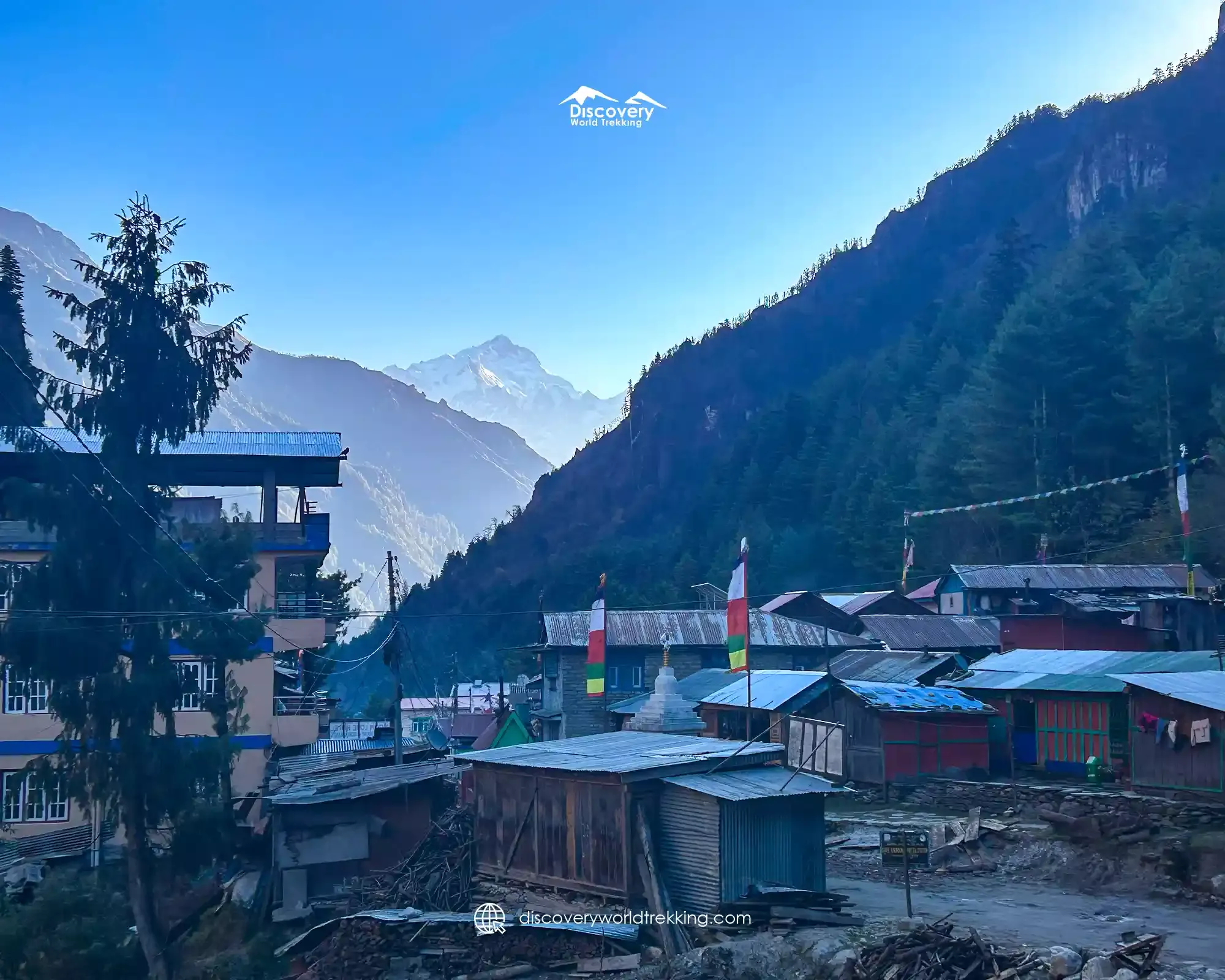
Chame has a busy bazaar and rejuvenating hot springs along the Marsyangdi river- where we can relax. From Chame, you can witness the fantastic views of Annapurna II (7,937m) and Lamjung Himal (6,932m) up the valley, and if you look back, you will be able to see the Manaslu (8,154m) and Peak 29 (7,833m)
Our actual steps on the trail start from Chame, first, we walk through a steep and narrow valley to catch the views of Paungda Danda Rock face, a curved rock face rising 1500m from the river. Along with Paungda Danda Rock, you will also get clear views of Annapurna II in the south and Pisang Peak in the northeast. Then we descend to the Manang Valley floor to reach Pisang - the destination for this day.
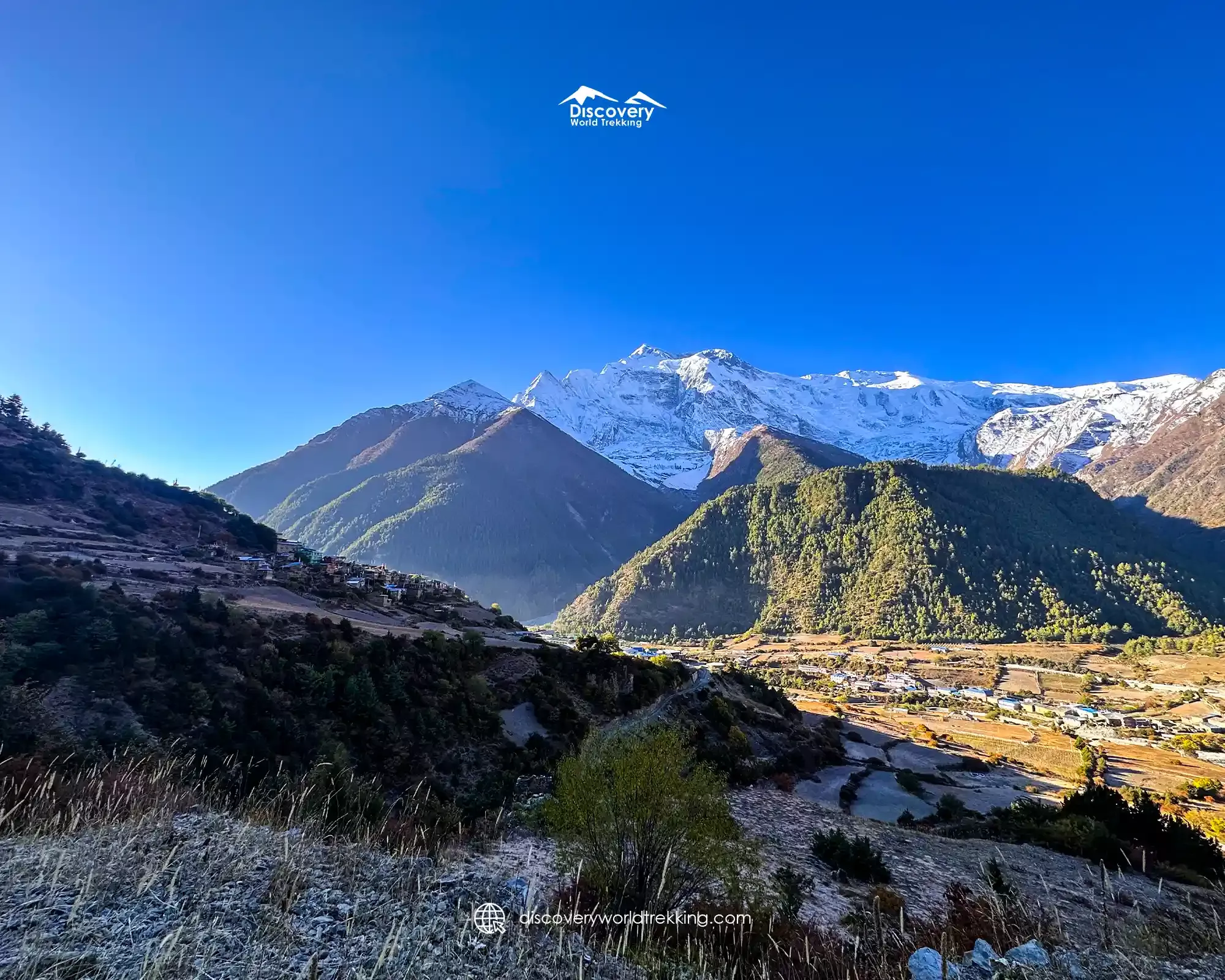
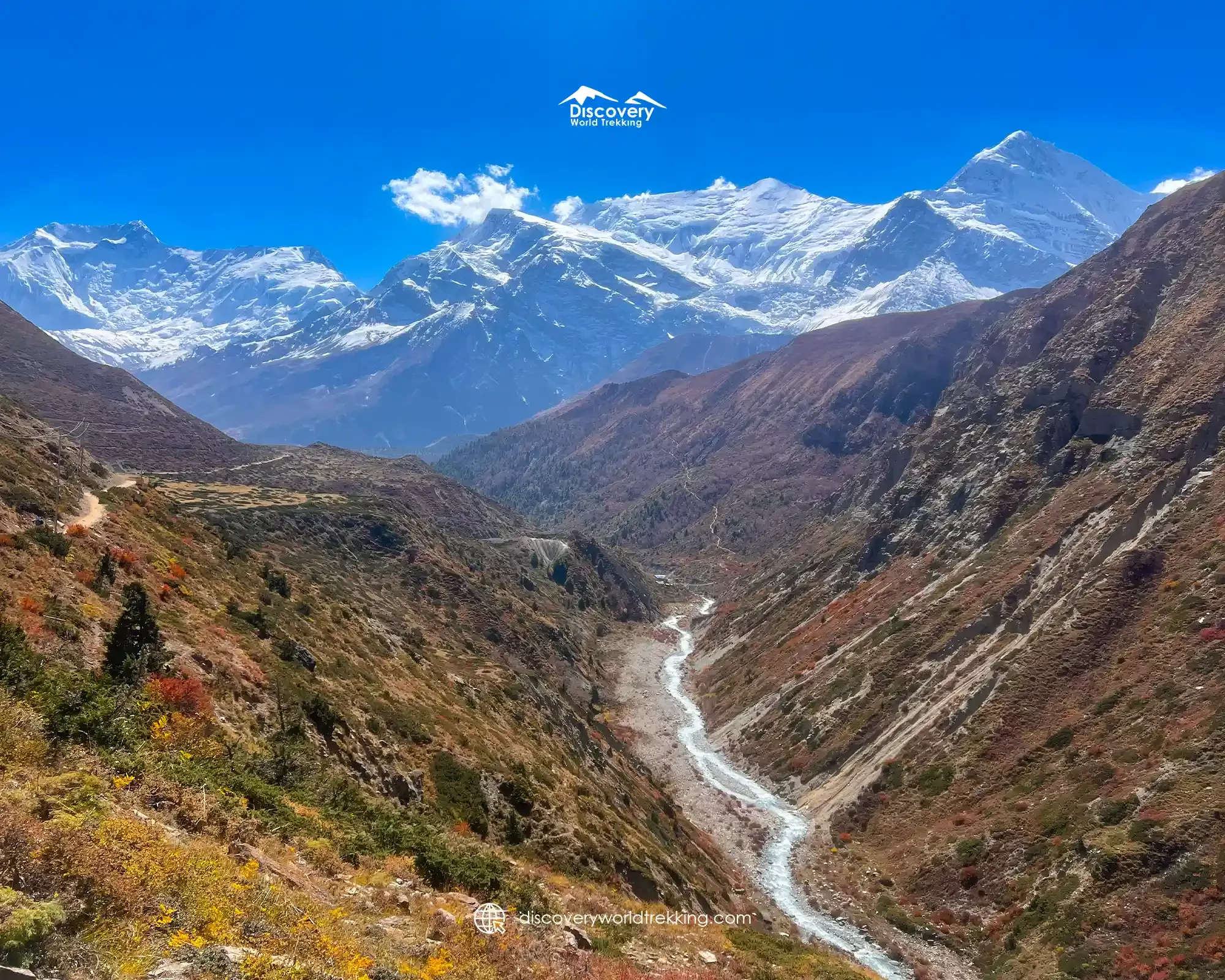
This day we continue our trek on the upper trails of Pisang via Geru. We choose this trail as it offers the outstanding northern face of Annapurna II, III, IV, Gangapurna, Tilicho, and Pisang Peak. As we ascend, you will feel the air turn cold, dry, and harsh. This trail will take you through several Tibetan-style settlements from where you get a chance to explore Buddhist culture before reaching Manang. In Manang, we will pay a short visit to Barge Monastery - the largest monastery in Manang.
The fifth day on our trail is challenging as we will be gaining an elevation of more than 500 meters. We first make our way to reach Tanki Manang (upper Manang Village). At Tanki Manang, you can see stone-built houses with flat roofs, and as you move ahead, you will realize that you are nowhere near any other settlements. The place is desolate. As you continue further, you will reach a tiny village - Gunsang, and shortly after, you will arrive at a peaceful meadow known as Yak Kharka. The path to Yak Kharka might have been challenging, but from Yak Kharka, the trail to Ledar is easy. We will spend our night at Ledar.
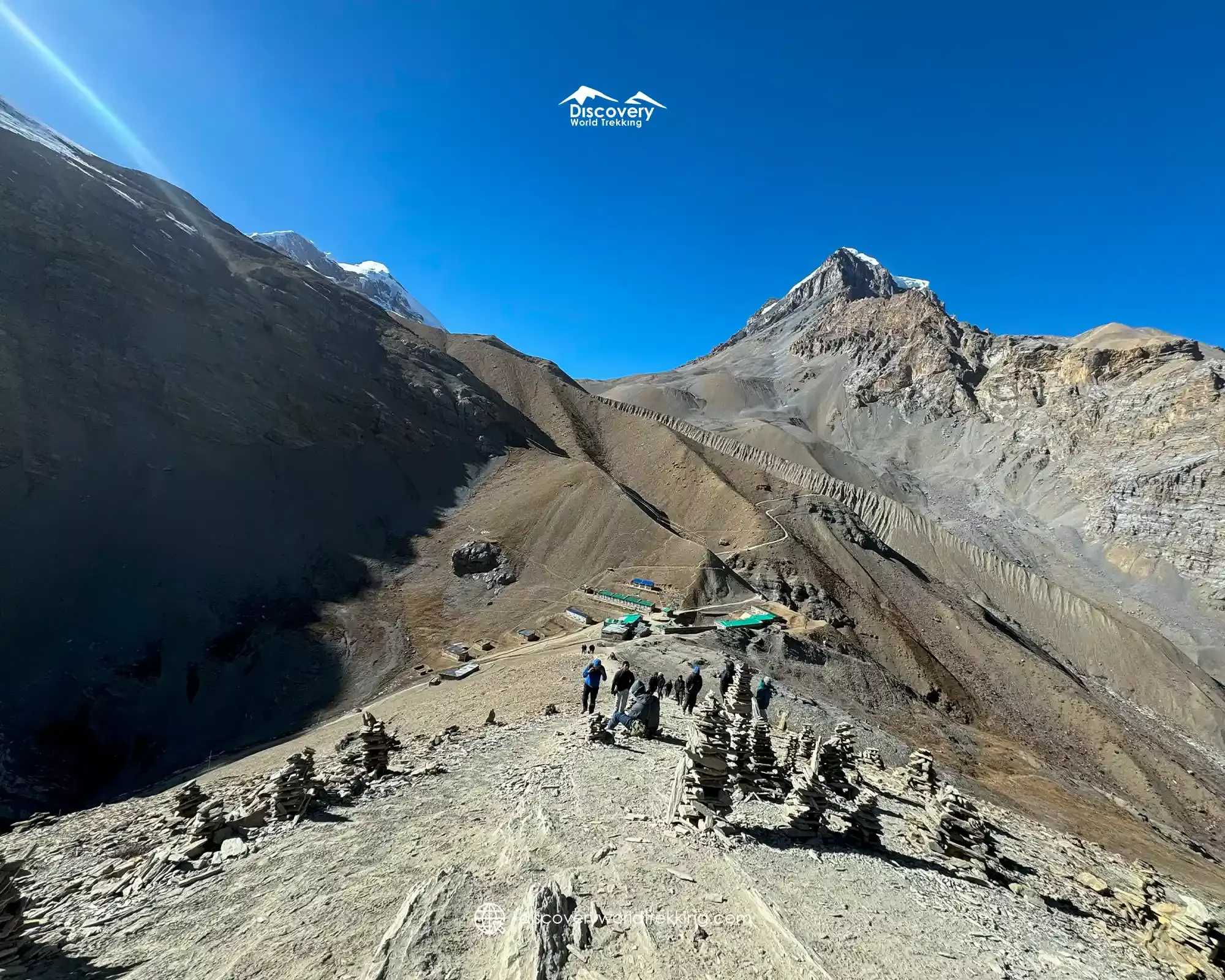
Today's trek will be a short one - 3 to 4 hours as it also helps the acclimatization process. We leave Ledar behind and continue our walk, which takes us across Jorsang River (4310m) and to Phedi (4,525m/14,525ft). Phedi is a Nepali word for the foot of the hill. We push ourselves forward to Thorung High Camp (4,925m/16,158 ft) for the night.
The most challenging part of the trip lies on our seventh day, as we will be crossing Thorong La Pass, one of the highest passes in the world, and the highest point of this trek. We wake up very early at 3 am to face this challenge and push ourselves against icy air and rough high-altitude trails, but the views from the pass are totally worth it.
From the Thorong La Pass, on your north, you will see a panorama of majestic Himalayan peaks extending to Tibet, and as you turn back, you can see the Annapurna massifs. After enjoying the views from the Thorong La Pass, We descend to Muktinath.
The descent is quite steep and will take between 3 to 4 hours. Muktinath is sacred for both Hindus and Buddhists - the Buddhists call it Chumig Gyatsa, which in Tibetan means Hundred Waters. Muktinath Temple has 108 water sprouts with icy-cold water flowing from Kali Gandaki. Moreover, you can also see the eternal flame that has been burning there for more than 2,000 years.
On our eighth day, we take public transport from Muktinath. The road heads down the valley to Jomsom. We will soon find ourselves at the bottom of Kali Gandaki river valley and to Jomsom, district headquarters of Mustang. Jomsom's bustling marketplace provides a great change from the scenic farms and rural villages we had previously visited. We will stop and rest for a while in Jomsom and catch a local bus to Tatopani.
Our journey passes along the deepest gorge in the world, and it will take us from the arid high elevation terrain to the lowlands with lush jungle and farmlands. Throughout your bus journey, you get to enjoy the great views of the Annapurna and Dhaulagiri Himalayan ranges until we finally reach Tatopani. At Tatopani, we can take a dip in the nearby hot springs before settling for the night. (Tatopani means hot water in Nepali.)
We wake up early in our hotel in Tatopani and take a local transport, and head to Pokhara. Your journey will take roughly seven hours, and before reaching Pokhara, you need to pass the beautiful Beni Bazaar town.
Pokhara is a tourist paradise with almost all the amenities you would ever require. We encourage you to explore Pokhara and arrange dinner for yourself. It must have been a long time since you missed your best food.
Finally, on the tenth day, early morning, you will return to Kathmandu on a tourist bus. The 200 km route first goes along the Marsyangdi River and then the Trishuli River while letting you enjoy the natural scenery and farmlands. The bus makes one last climb, and you will be back in Kathmandu. We hope that you had a memorable journey.
You have seen all 10 days.Next, choose the date you want to start.
See trip datesIf the published schedule does not suit you, we can build the trek around your dates, your pace and what you want to see.
Chat with our trek expert on WhatsApp.
Clothing, gear, and equipment for Annapurna Circuit Treks depend upon the season you are trekking, and you may have to make adjustments accordingly. Please bring only the essentials to the trek as per trekker luggage weight limit is 9 kg. Since you will be sharing a porter with another fellow trekker, we suggest you pair up with a fellow trekker and pack your things in a duffle bag. You can leave the excess luggage at the Discovery World Trekking office for free. Here is a packing list we compiled for your trek.
Connect with our local expert for honest recommendations, personalised guidance, and insider tips to make every step of your adventure count.
2 steps · Everything you need to know before you book: permits, meals, costs and what each day looks like. No rush, take your time.
We will pick you up from the airport and drop you at your hotel by private vehicle on your arrival and vice-versa on your departure for free. Our representative will be at the Tribhuvan International Airport holding a pamphlet with your name. They will either present you with a Khada or Marigold garland as a welcome gesture and then take you to your hotel. You must submit your flight details to take advantage of this free service. We provide this service so you do not feel alone in a new country.
You will arrive in Kathmandu at least one day earlier (before 3 pm) than the trek departure date. On the trek departure day, your trip guide will pick you up from the hotel and take you to the bus station to catch a bus to Besisahar. Local transport (from Kathmandu - Besisahar, Besisahar - Chame, Muktinath (via Jomsom) - Tatopani) is included in the package. You can book a private jeep for an extra cost.
The 10-day Annapurna Circuit Trek includes lodge-to-lodge stays in the trekking regions and one night in Pokhara at the best available hotel. We select the best available accommodations at all places.
You will stay five nights in twin sharing rooms with a private attached bathroom at Besisahar, Chame, Pisang, Muktinath, and Tatopani. Similarly, you will spend three nights in twin-sharing standard rooms at Manang, Ledar, and Thorong High Camp. You will stay one night at a hotel in Pokhara in a room with an attached bathroom, TV, 24-hour hot water, power, and laundry facility.
Two nights in Kathmandu before and after the trek may be required but is not included in the package. Kathmandu hosts a wide range of hotels to suit your tastes and budget.
This trek takes you to high elevations near the world’s highest peaks, so you need enough carbohydrates, protein, and other nutrients. We will provide you with nutritious food, but you might not have all the choices you enjoy in big cities.
We will provide 10 breakfasts, 9 lunches, and 8 dinners in the trek region. All meals are on a full-board basis. Menu item options include traditional, Asian, and Western cuisines. However, as we go up menu list will get shorter.
We highly recommend you take fresh vegetables and liquids such as green tea, lemon tea, hot lemon, ginger tea, and garlic soup (must) at high altitudes. Further, we advise you to try popular Nepali foods, such as dal (lentil), bhat (rice), tarkari (curry), momo (dumplings), and Chow mein (noodles).
Though plenty of non-veg items are available in trekking regions, we do not recommend them because the meat in such places may not be hygienic. We also encourage avoiding dairy items along with alcoholic drinks, caffeinated items, and hot chocolates.
All personal bills - alcoholic drinks, hot (tea, coffee, etc.), and cold drinks - in tea houses/lodges or cafes except standard meals (breakfast, lunch, dinner with seasonal fruits) are excluded from the package. Similarly, this package does not include lunch and dinner in Pokhara.
We assign one porter for every two trekkers, and the maximum combined load we allow a porter to carry is 18 kg. So, that calculates to a 9 kg luggage weight limit per trekker. We also expect you to carry a small backpack for your valuables. Please bring with you only the essentials. You can leave your excess luggage at your hotel or our office store. We provide free luggage storing service for our trekkers during their trek period.
Each day you will be trekking, climbing, enjoying the scenery, taking photos, and exploring the local villages. During the expedition/trek, our expert Sherpa guide will share information and historical facts about the places you will be trekking. The porters will carry most of your luggage. However, you may also need to carry a small backpack for your valuables.
The day starts with an early morning hot cup of tea/coffee. After breakfast, you will set off on the day's walk from 7 am to 8 am, depending on the duration and nature of the walk. After trekking for three to four hours, you will have lunch around midday on the route to the next destination. You will rest for an hour and continue the trek.
The afternoon walk is generally shorter - about two to three hours. Once you reach the overnight lodge/tea house/tent, you can snack on the extra dietary food and explore the place, where you will spend the night.
We serve dinner around 6.30 pm. Before heading to bed, you can spend quality time in friendly conversations. Your expedition leader/guide will brief you about the next day’s plan. After this briefing, you can enjoy onboard games like Monopoly, and cards, or watch mountaineering documentaries. Most of our guests also prefer to learn common Nepali words. If reading provides you pleasure, you can pack one or two books.
Throughout the lodges you will be staying during the Annapurna Circuit trek, electricity for the camera and mobile battery recharge is available for an extra cost. Similarly, you can buy packed mineral water from local lodges and en-route shops or fill your water bottle with boiled water. We also provide water purification pills if you need them. You should not drink water from the rivers, taps, and wells in the trek regions because they may not be drinkable.
While on the Annapurna Circuit Trek, you can use internet service at the lodges for an extra service charge. But once we reach high altitudes, we will communicate using phones. The Discovery World Trekking Office remains in contact with all trek teams at least once a day via the team guide. If you want, you can buy a local SIM in Kathmandu, but depending on the network the signals may not be strong enough.
Nepali culture accepts and honors tipping, and it is a way to show gratitude. Tipping is at the trekkers' discretion and should be based on service quality, trek cost, and trek length. We encourage you to tip at the end of the trek and as a group.
On the last day of your trek, you will leave Tatopani on local transport and head to Pokhara. On the way, you will leave Beni Bazaar town. Your trek ends in Pokhara. Later we will organize a farewell dinner in Kathmandu.
At the end of the trek, Discovery World Trekking hosts a farewell dinner in Kathmandu, and after dinner, we will also present you with a trek completion certificate (hard copy). It is also a perfect time to share your experience and provide us feedback.
The itinerary listed above may need modification for unforeseen events beyond our control. However, we do our best to stick to the itinerary. If such a modification is unavoidable, your trek leader will decide on the alternative route after consulting all trek members. Moreover, we advise you to add two extra days for the trek so that you will not miss your international flight back home in case of delays during the trek.
After trip completion, if you have extra days, you can go on a sightseeing tour in Kathmandu or nearby areas. You can also go on a jungle safari in Chitwan, paragliding, rafting, canyoning, or other treks.
On your departure to your home country, we will pick you up from your hotel and transfer you to Tribhuvan International Airport in a private vehicle. We hope you enjoyed your Annapurna Circuit Trek and will be back in Nepal for more exciting treks.
The weather is the most important factor when deciding to go on an Annapurna Circuit Trek Tour. Though Annapurna Circuit Trek is possible throughout the year, the trek is easier in some seasons. Trekking during spring and autumn when the skies are crystal clear makes trekking easier while allowing you to enjoy great landscape views.
During winter, trekking gets a bit challenging due to heavy snowfall and cold temperatures, but it also excites many adventurous trekkers. Similarly, during Monsoon, the trails may get slippery, and the clouds might cover the views. Discovery World Trekking conducts Annapurna Circuit Treks throughout the year. The temperature in the mountains changes according to the altitude and seasons. Here is an month by month overview of the weather in the high elevations of Annapurna Circuit Treks.
March-May (spring): During spring, mountain lovers and travel enthusiasts come to Annapurna Circuit trek in large numbers. In this season, the temperatures are mild, the rainfall is low, and the trekking conditions are perfect. The mean daily temperatures in the high elevations are between 5 to 0°C. Lower regions along the trek are warmer, making it pleasant for everyone to trek during this season.
The trekking season begins after March. By April, the trek route throughout the Himalayas will be aligned with red, pink, and white rhododendron flowers up to 3,000 meters. The temperature starts rising from mid-March up to mid-May. The weather is cool, the skies are bright, and you can enjoy the clearest views of the mountains.
June to August (summer): The summer in Nepal lasts from June to August. The temperatures are high, but the Monsoon season coincides with summer making the trek paths wet and slippery. Monsoon generally begins at the end of June and continues till the second week of August.
At high elevations, the temperature during the days usually ranges from 10°C to 23°C and gets relatively colder at night (5°C to 10°C). Mornings are mainly clear, with clouds building up during the afternoon, but they disappear at night. Various plants bloom during this season, the valleys look green, and you can enjoy completely different views compared to other seasons.
September to November (autumn): The autumn season (September, October, November) is a popular season for the Annapurna Circuit treks. Moderate temperatures, mild wind, and low precipitation make autumn a perfect season for Annapurna trekking. The sun shines brightly, the skies are clear, the temperature for trekking is just right, and you can get a superb view of the mountains.
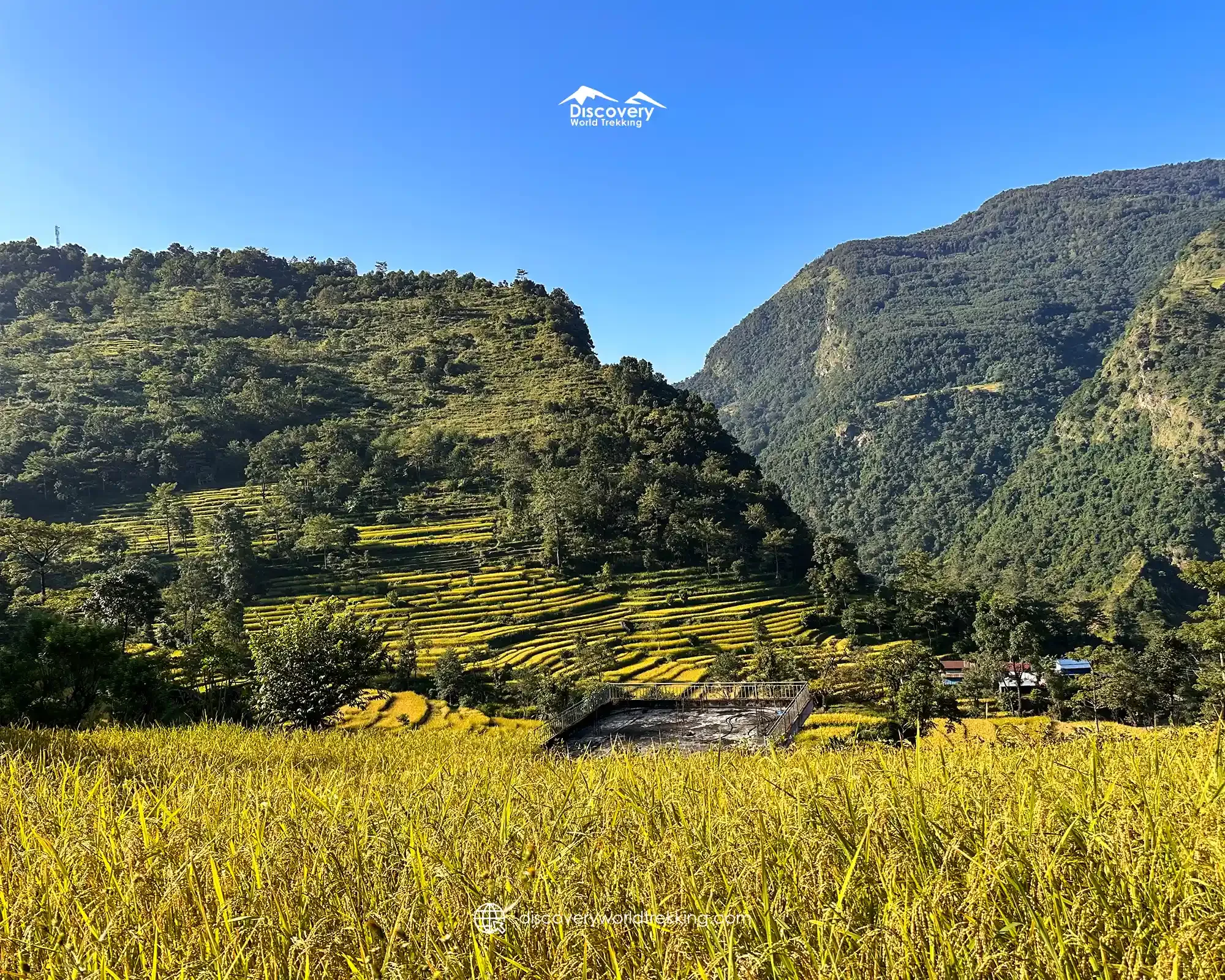
You can enjoy spectacular starry skies at night. The Monsoon will be over by early September. Daytime temperatures at high altitudes can reach 20°C. Nights are relatively colder at around 5°C. The greens that grew during the Monsoon fade to golden/amber providing a spectacular contrast against the crystal blue skies. You will see the terraced farms full of ripening grains. The environment is clean, and the lowlands are lush. The biggest festivals of Nepal - Dashain & Tihar - also fall during this season. This adds a sense of joy to all trekkers.
December to February (winter): Winter treks in the Annapurna circuit are also popular. The places along the Annapurna circuit trek can get cold, but it excites many trekkers. The temperature at high elevations of the Annapurna Circuit Trek can be as low as -10°C. But the daytime is pleasant and relatively warm with enough sunlight.
The coldest time is from late-December through early February. After late February, the climate gradually gets warmer. Despite being cold, the skies are usually clear, and the mountains are at their best. It snows at high altitudes, and the trails are the least busy. Though it might not be the best trekking season for beginners, experienced trekkers will have no problem.
Talk to Paul. Free advice, no pressure.

Discovery World Trekking allocates a certain percentage of business profit to rural development and relief programs.
Discover Nepal’s breathtaking trails at your own pace with our exclusive private treks. No strangers, no rushed schedules—just you, your adventure, and complete flexibility.

This site uses cookies to optimize your user experience. By using this site, you are consenting to our use of these cookies. Check out our Privacy policy.
Annapurna Circuit Short Trek Reviews
Explorations that last a lifetime.
I could not say enough good things about our experience with discovery world trekking. Paul gave us a great experience from start to finish. We got super lucky with the guide and Porter we were given, Simbir and Ganesh.
My husband and I did the 10-day Annapurna Circuit Short Trek. I accepted the challenge and we succeeded. A big part of it is the support we received from Discovery World Trekking.
When we arrive in Kathmandu, we were...
My experience with the Annapurna Circuit Short Trek was mostly positive. I first made contact with Paul of Discovery World Trekking. He explained everything and made arrangements for my trip. I started my trip with a group and ...
I did the Annapurna Circuit Short Trek with Discovery World Trekking. I must say that was an absolutely breathtaking experience! The stunning landscapes, quaint villages, and majestic mountains made every step worth it. The tre...
Amazing company and completely made our trip! Paul was great and ensured our itinerary was set out, clear and amazing as well as ensuring our trips to and from the airport were covered and a farewell dinner was put on for...
Discovery World Trekking Company is an amazing company to trek and schedule with! Paul is very helpful, professional, friendly, and quick to respond! His guides are nothing short either! Simbir and Ganesh were absolutely amazin...