

Jagat in Manaslu Region
Table of Contents
Jagat is the gateway to the Manaslu Conservation Area. It serves as the official permit-checking point for the Manaslu Restricted Area, where guides present documentation before trekkers continue into the remote upper valley.
Where is Jagat Located?
Jagat lies in the Gorkha District of Gandaki Province, Nepal, within the Manaslu Conservation Area. The village sits at 1,400 m (4,593 ft) on the banks of the Budhi Gandaki River, approximately 22–28 km from the road head at Soti Khola or Machhakhola.
To the north, the valley rises steeply toward Deng 1,860 m and Namrung 2,660 m. To the south, the trail descends through forests and terraced fields back toward Machhakhola 890 m and the road network connecting to Kathmandu.
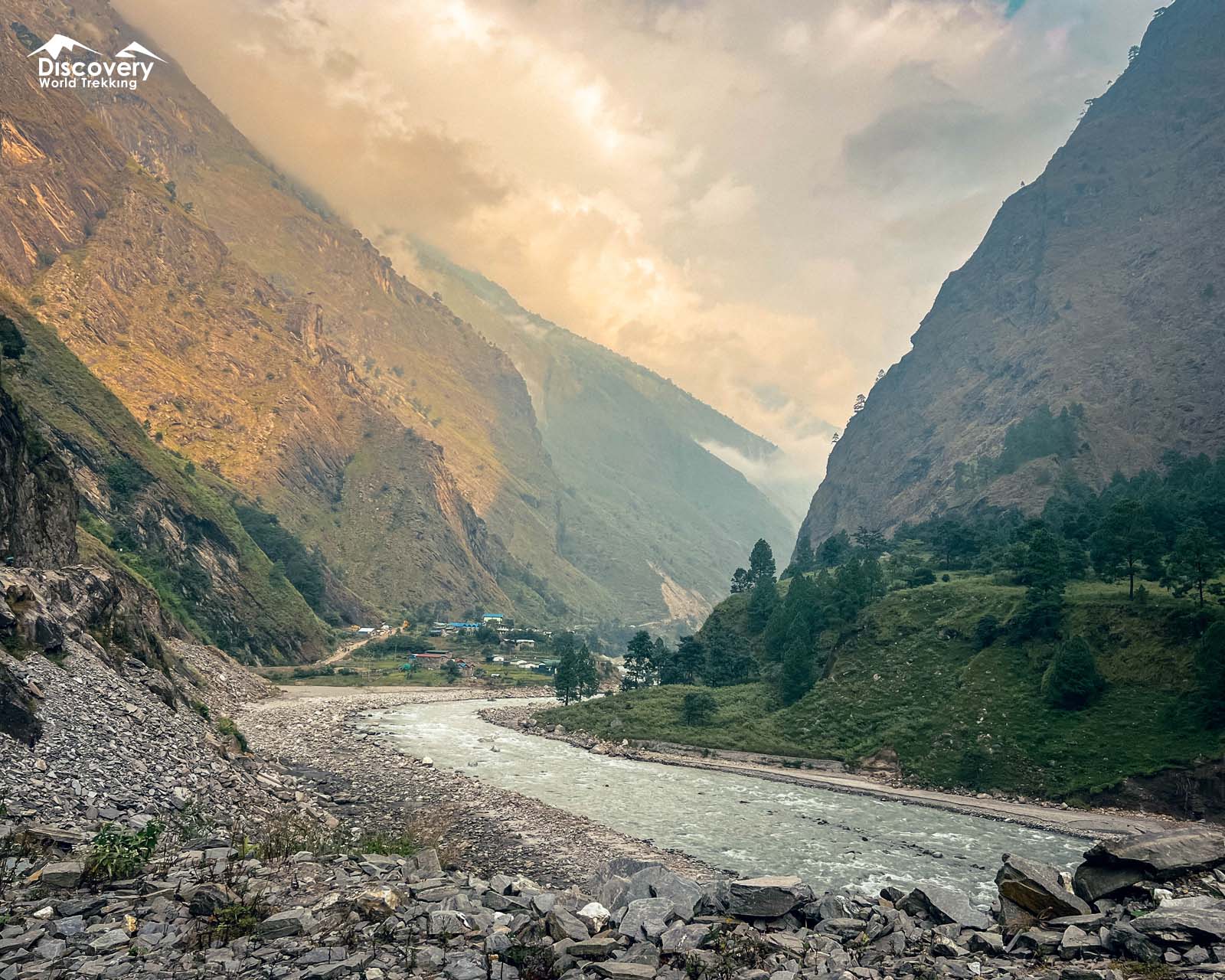
The village occupies a narrow shelf carved into the gorge wall, with stone houses stacked along steep, cobbled alleys. The Budhi Gandaki River roars below, fed by meltwater from glaciers far upstream. Dense subtropical forests of bamboo, pine, and rhododendron cover the surrounding slopes.
| Country | Nepal |
| Province | Gandaki Province |
| District | Gorkha |
| Municipality | Chumnubri Rural Municipality |
| Region | Manaslu Region |
| River | Budhi Gandaki River |
| Elevation | 1,400 meter (4,593 ft) |
| Trek route | Manaslu Circuit |
| Conservation area | Manaslu Conservation Area |
What is Jagat Famous For?
Jagat holds a unique position on the Manaslu Circuit as both a cultural hub and an administrative gateway.
The village combines historical significance, distinctive architecture, and a strategic location that makes it one of the trek's memorable early stops.
1. Official Gateway to the Manaslu Restricted Area
Jagat is the main entry point to the Manaslu Conservation Area and the first major permit checkpoint on the Manaslu Circuit. Here, guides present the Manaslu Restricted Area Permit (RAP) and Manaslu Conservation Area Permit (MCAP) for registration before the trek continues north.
Permit checks are repeated at several points farther along the route, including Namrung, Samagaun, and Samdo. ACAP is checked later when trekkers leave the Manaslu section and enter the Annapurna region after crossing Larkya La.
2. Historic Trade and Cultural Hub
For centuries, Jagat functioned as a key customs post on the Trans-Himalayan trade route. Tibetan traders brought salt, wool, and precious stones from the north, while grain, rice, and textiles moved south from Kathmandu and the Terai. Officials in Jagat inspected and taxed these commodities, making the village a busy marketplace where Tibetan, Newari, and local traders converged.
3. Distinctive Architecture and Setting
Jagat's stone houses with wood-windowed flat roofs reflect generations of building adapted to this specific climate and terrain. The village's narrow cobbled alleys, chortens, and mani walls create a compact, cosy appearance that differs from the more spread-out settlements at higher altitude. The stone-paved streets and traditional construction give Jagat a timeless quality that trekkers notice immediately.
4. Transition Zone: From Subtropical to High Himalaya
Jagat marks the ecological boundary between the warm, green lower hills and the colder, barer terrain of the upper Manaslu valley. Below Jagat, forests are dense with bamboo, pine, and rhododendron; above Jagat, vegetation thins progressively as altitude increases. This transition makes Jagat an ideal acclimatisation stop where trekkers adjust to the trail rhythm before ascending higher.
5. Scenic Riverside Location
The village sits directly beside the Budhi Gandaki River, with the constant sound of water creating a peaceful atmosphere. Suspension bridges, waterfalls, and canyon scenery surround Jagat, providing dramatic photography opportunities and a sense of the powerful forces that shaped this landscape.
How to Reach Jagat?
The journey to Jagat starts with a drive from Kathmandu to Machha Khola, followed by a trek along the Budhi Gandaki Valley. Jagat is reached on foot as part of the Manaslu Circuit route.
- By Road
Route: Kathmandu → Dhading Besi → Mugling/Trishuli → Arughat → Soti Khola → Machhakhola
The drive from Kathmandu covers approximately 160 km and typically takes 8–9 hours by jeep, depending on road and weather conditions. The route follows the Trishuli River through Dhading Besi and Mugling, then turns north at Arughat toward Soti Khola and Machhakhola.
- On Foot from Machhakhola
Route: Machhakhola → Khorla Besi → Tatopani → Doban → Lauri → Thado Bharyang → Jagat
Distance: approximately 13.5–14 km
Walking time: 6–7 hours
The trail from Machhakhola to Jagat follows the Budhi Gandaki River through forests, terraced fields, and small settlements.
The path crosses several suspension bridges and climbs steadily through subtropical vegetation. Key waypoints include Khorla Besi (small settlement), Tatopani (hot springs), Doban (confluence of two rivers), Lauri, and Thado Bharyang before reaching Jagat at 1,400m.
Places to See and Things to Do in Jagat
Jagat is small, but its surroundings provide several simple ways to spend time here. You do not need a separate sightseeing programme; most of the highlights sit along the trail or within a short walk of the village.
1. Budhi Gandaki River and Gorge Views
The Budhi Gandaki River runs through the landscape around Jagat, cutting a deep gorge through the Himalayan foothills. The river flows below the village, carrying water from the glaciers and higher valleys upstream.
You can see the gorge from the village edges, suspension bridges, and short walks along the riverside trail.
2. Langju Himal and Surrounding Peaks (Distant Views)
Langju Himal (6,265m) appears on the northeastern horizon from Jagat and the surrounding trails.
While the village sits too low for close-up mountain views, the distant peaks provide a dramatic backdrop and a preview of the high Himalayan terrain ahead. Clear mornings offer the best visibility.
3. Waterfalls, Suspension Bridges, and Canyon Scenery
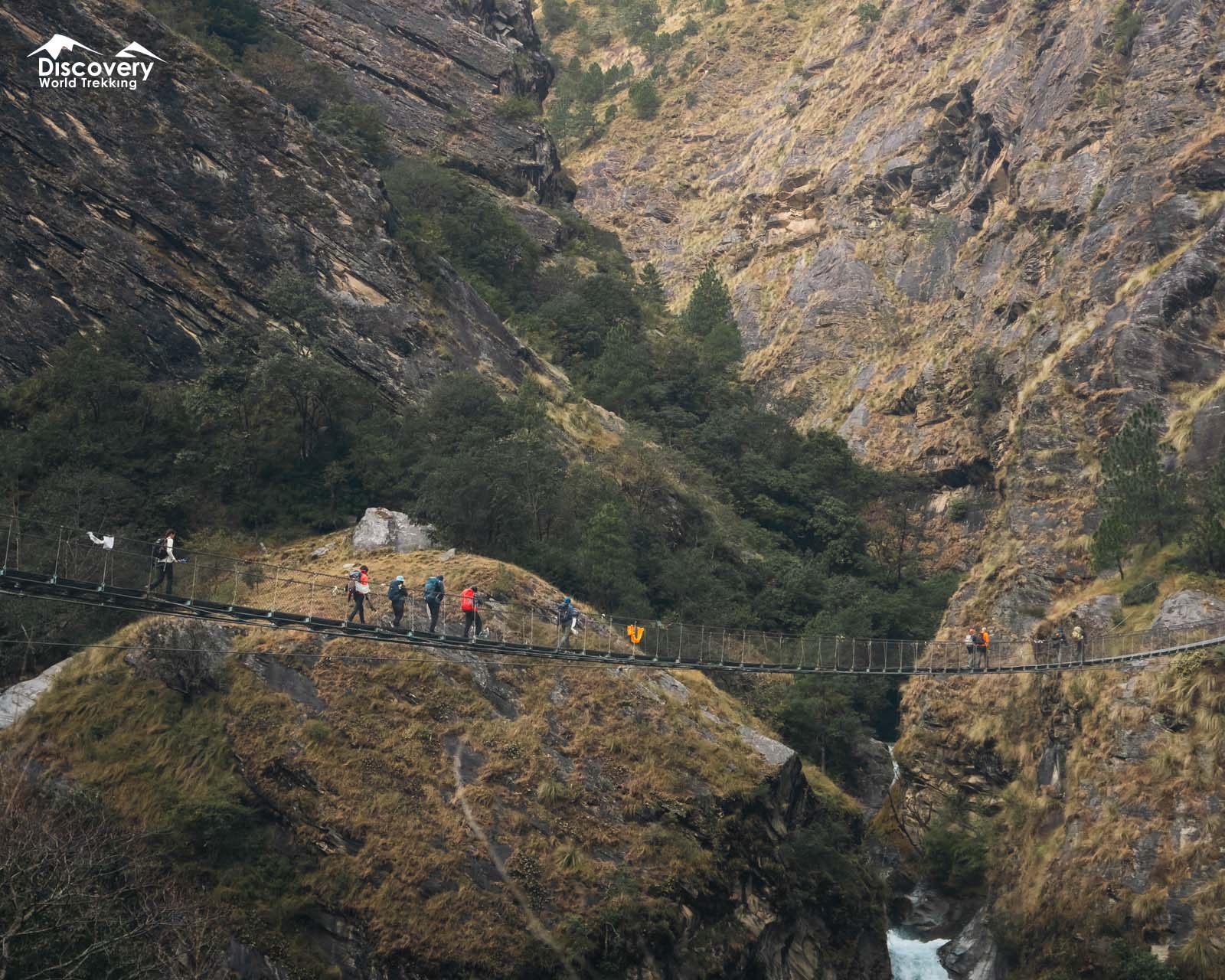
The trail to and from Jagat crosses several suspension bridges and passes multiple waterfalls, especially during and after the monsoon season.
The canyon scenery around Jagat features steep forested walls, rocky outcrops, and the constant sound of water.
These elements also create excellent photography opportunities.
4. Explore the Traditional Stone Village and Narrow Alleys
Jagat's stone houses and cobbled alleys reward exploration. The village is compact enough to walk through in 30–45 minutes, but the narrow lanes, traditional architecture, and Buddhist monuments create a cosy atmosphere that encourages lingering.
5. Visit Mani Walls, Chortens, and Prayer Flags
Mani walls, chortens (stupas), and prayer flags mark junctions and entrances throughout Jagat.
These monuments reflect the Tibetan Buddhist influence that strengthens as you move north toward the upper Manaslu valley.
Walking clockwise around mani walls and chortens shows respect for local customs and is recommended.
6. Walk Along the Budhi Gandaki Riverside
Short walks along the Budhi Gandaki riverside provide peaceful moments and opportunities to listen to the river's roar.
The trail follows the water's edge through forests and past terraced fields, with suspension bridges offering different perspectives of the gorge.
7. Short Nature Walks Around Jagat
Nature walks through the subtropical forests around Jagat reveal diverse flora, birdlife, and small wildlife. The trails climb gently through rhododendron and pine forests, with viewpoints overlooking the village and river.
These walks help trekkers adjust to the trail rhythm before ascending to higher altitudes.
8. Observe Gurung and Tamang Village Life
Jagat's residents belong primarily to the Gurung and Tamang ethnic communities, whose cultures and languages carry connections to Tibet.
Observing daily life, farming, animal herding, food preparation, and religious practices provides insight into how these communities have adapted to this mountainous environment.
9. Photography: Stone Houses, River, and Forest Landscapes
Jagat offers diverse photography subjects: traditional stone architecture, the Budhi Gandaki River, suspension bridges, waterfalls, terraced fields, and subtropical forests.
The village's compact layout and these scenic settings create opportunities for both wide landscape shots and intimate cultural portraits.
Short Hikes and Day Trips from Jagat
-
Tatopani Hot Springs
Located on the Machhakhola–Jagat trail, approximately 1–2 hours south of Jagat. The natural hot springs offer a relaxing soak after trekking, with mineral-rich water believed to have therapeutic properties.
-
Philim Village
A larger Gurung and Tamang settlement further up the trail, approximately 2–3 hours north of Jagat. Philim offers cultural immersion, traditional stone houses, and views of the surrounding valley.
-
Deng Village
The next major stop on the Manaslu Circuit, approximately 4–6 hours north of Jagat at 1,860m. Deng features traditional architecture, mani walls, and a peaceful riverside setting.
-
Nearby Viewpoints
Short climbs to viewpoints above Jagat provide panoramic views of the Budhi Gandaki River, terraced fields, and surrounding forests. These hikes gain 200–300m elevation over 1–2 hours and work well for acclimatisation.
From these viewpoints, you can see Mount Manaslu (8,163m), Himalchuli (7,893m), Ngadi Chuli (7,871m), Shringi Himal (7,187m), and Ganesh Himal on clear days. The trail toward Thulo Dunga (Big Rock) also offers some of the best vantage points.
Popular Treks Passing Through Jagat
- Manaslu Circuit Trek (14 days): The classic route around Mount Manaslu, using Jagat as the entry checkpoint into the Manaslu Conservation Area, where permits are registered at the local police post.
- Manaslu Circuit Trek (12 days): A faster-paced version of the same route for experienced trekkers with limited time, still stopping in Jagat for the same permit registration.
- Manaslu Tsum Valley Trek: Combines the full Manaslu Circuit with a side trip into Tsum Valley, registering both Manaslu and Tsum Valley permits at the Jagat checkpoint before continuing on.
- Tsum Valley Trek: The standalone route into Tsum Valley, which also registers permits at Jagat before branching off toward Lokpa rather than continuing on the main Manaslu Circuit.
Gurung and Tamang Culture in Jagat
Jagat lies in a culturally diverse part of Gorkha, where Gurung communities are prominent alongside Tamang, Ghale, Chumba/Nubri and other groups found across the wider Chumnubri area. Gurung culture is especially visible along the lower Manaslu trail, including communities such as Philim.
Buddhist traditions are part of everyday life, seen in mani stones, chortens, prayer flags and prayer wheels. As you continue towards the upper Manaslu villages, the cultural landscape becomes increasingly Tibetan-influenced.
As for Agriculture and livestock, it remains important alongside tourism. People grow crops on terraced fields and keep livestock, while teahouses, guiding, porter work, transport and small shops provide additional income for local families.
Jagat's stone houses, paved lanes and traditional building style reflect local materials and mountain conditions. Modern facilities have been added over time, but much of the older village character still remains.
As for the festivals, Jagat does not have a widely documented festival that is unique to the village, but several Gurung, Tamang and Buddhist festivals are observed in Jagat and the surrounding Manaslu communities.
Losar, the Tibetan New Year, is an important celebration, while Saga Dawa is observed by Buddhist communities with prayers and religious gatherings
History of Jagat
Until the mid-20th century, Jagat was a small agricultural and trading settlement whose economy depended primarily on farming, livestock, and its role as a customs post on the Trans-Himalayan trade route.
Tibetan traders brought salt, wool, and precious stones from the north, while grain, rice, and textiles moved south from Kathmandu and the Terai. Officials in Jagat inspected and taxed these commodities, making the village a busy marketplace where Tibetan, Newari, and local traders converged.
The transformation of Jagat started in the 1990s when the Manaslu Circuit Trek gained popularity among international trekkers. As more visitors arrived, many locals shifted from agriculture and trading to the hospitality business and started managing lodges and teahouses, guiding trekkers, and serving as porters.
In 1998, the Manaslu Conservation Area was established, covering 1,663 square kilometres of the upper Budhi Gandaki watershed. Jagat became the official gateway and permit-checking point for the restricted area, further cementing its role as a key stop on the trek.
As of today, Jagat is one of the most important cultural and administrative checkpoints on the Manaslu Circuit. The village retains its traditional stone architecture and Buddhist monuments while serving thousands of trekkers each year.
Best Time to Visit Jagat
You can visit Jagat year-round as part of the Manaslu Circuit Trek, but spring and autumn offer the most reliable weather and trail conditions.
Spring (March to May)
Spring brings milder temperatures to the lower Manaslu valley. March mornings can still feel cool, but April and May warm up steadily, making daily walking more comfortable. Rhododendron and bamboo forests around Jagat come into bloom, adding colour to the trails.
Mornings tend to offer the clearest mountain views, with cloud building up later in the day as the season moves toward May.
Also, spring is one of the two most popular seasons for the Manaslu Circuit, alongside autumn. It also coincides with Tibetan Buddhist festivals such as Saga Dawa (usually May or June, based on the lunar calendar), when monasteries in and around Jagat hold special prayers and rituals.
Autumn (September to November)
Autumn is widely considered the best season for visiting Jagat. The monsoon clears out by mid-September, leaving the valley greener and the air noticeably cleaner heading into October.
By October and November, days are typically dry and stable, with some of the sharpest, most consistent mountain views of the year.
Dashain and Tihar, Nepal's two biggest festivals, usually fall during this period, adding a cultural layer for anyone passing through villages during the celebrations.
Winter (December to February)
Winter is quiet in Jagat, with far fewer trekkers and a noticeably calmer pace at the teahouses.
Mornings and nights turn cool, with temperatures dropping to 0–10°C, but clear winter days can deliver some of the sharpest mountain visibility of the year.
The subtropical forests remain green, and the Budhi Gandaki River flows strongly. Some teahouses reduce services during the quietest weeks, but most remain open year-round.
Monsoon (June to August)
Monsoon brings the heaviest rainfall of the year to the Manaslu region. Days are warm and humid, with heavy rain and occasional clear weather.
The trail is much greener during these months. Lower valleys turn a deep, saturated green, and the forest sections along the route become lush. Waterfalls reach full flow, and the Budhi Gandaki River swells dramatically.
The trade-off for this season is mud, leeches on the lower trail, and a bit of a chance of landslides blocking sections of the road and path.
Despite the scenery, most trekkers avoid Jagat during monsoon due to these challenges.
Jagat Weather and Temperature
| Season | Month | Daytime Temperature | Night-time Temperature | Conditions |
| Spring | March–May | 15–25°C | 5–15°C | Mild days, cool nights, blooming forests |
| Summer/Monsoon | June–August | 20–30°C | 15–20°C | Warm, humid, frequent rain |
| Autumn | September–November | 15–25°C | 5–15°C | Dry, stable, clear skies |
| Winter | December–February | 10–20°C | 0–10°C | Cool days, cold nights, clear visibility |
Where to Stay in Jagat?
Jagat has several locally run teahouses and guesthouses for trekkers. Accommodation is basic but adequate for a rest and acclimatisation night before continuing higher.
Room types and facilities in Jagat
Most lodges offer:
- Twin or double rooms with wooden beds, foam mattresses, blankets, and pillows
- Shared bathrooms with squat or Western toilets
- Hot showers for an additional fee, usually gas- or solar-heated
- Dining rooms with a central wood-burning stove (bukhari) in the evenings
- Charging facilities for phones and cameras, often for a small fee
- Wi-Fi in some lodges, but the connection is slow and unreliable
Typical accommodation and food cost
For a standard twin room in a basic teahouse, you can expect to pay roughly NPR 800–1,500 per room per night. Rooms with better facilities or attached bathrooms can cost NPR 1,500–2,500 or more, depending on the lodge and season.
As for food, a simple breakfast (tea, eggs, bread or porridge) typically costs NPR 300–400, while lunch or dinner (dal bhat, noodles, momo, thukpa) is around NPR 350–650 per meal.
As for one person, a basic room plus three meals in a standard lodge usually comes to about NPR 2,000–3,00 per day, excluding drinks, hot showers, Wi-Fi, charging, snacks, and personal purchases.
Food and Local Cuisine in Jagat
Jagat's teahouses serve hearty, carb-heavy trekking menus built around Nepali staples, Tibetan snacks, and simple Western dishes, with hot drinks and safe water options at every lodge.
What to Eat in Jagat
- Dal bhat set: The most common lunch and dinner option, with rice, lentil soup, vegetable curry, pickle, and greens.
- Momos: Steamed or fried dumplings filled with vegetables, cheese, or minced meat.
- Noodle and rice dishes: Chow mein, fried rice, thukpa, and simple pasta are widely available.
- Breakfast staples: Common choices include porridge, Tibetan bread, chapati, pancakes, toast, and eggs prepared in different styles.
- Comfort foods: Garlic soup, vegetable curry, Nepali-style pizza, and apple pie are also available at many lodges.
Vegetarian options are abundant, and most menus can accommodate basic vegan requests (e.g., dal bhat without ghee, egg-free pancakes).
Drinks and Hydration
- Hot drinks: Black tea, milk tea (chiya), ginger tea, lemon tea, coffee, and hot chocolate are common at lodges.
- Soft drinks: Bottled Coca-Cola, Sprite, and Fanta are available at most lodges in Jagat. Prices are usually higher than in lower villages.
- Alcohol: Local beers such as Everest, Gorkha, and Tuborg are available at some lodges. You can also find raksi made from rhododendron flowers, simply known as rhododendron wine.
Food choices remain broader in Jagat than in the higher villages because the village sits lower on the route and receives supplies more easily. As you continue towards Samdo and Dharmasala, menus become narrower.
What Permits Are Required for Jagat?
For Jagat itself, you need a Manaslu Conservation Area Permit (MCAP), which costs NPR 3,000 per person.
If you continue from Jagat into the Manaslu Restricted Area, you also need a Restricted Area Permit (RAP).
The current fee is USD 100 for the first seven days from September to November, and USD 75 for the first seven days from December to August. Additional days cost USD 15 and USD 10 per day, respectively.
In short: Visiting Jagat requires MCAP (NPR 3,000). Continuing into the restricted Manaslu region requires MCAP + RAP.
Flora and Wildlife Around Jagat
Jagat sits in the subtropical zone of the Manaslu Conservation Area, where dense forests, terraced fields, and the Budhi Gandaki River support diverse plant and animal life.
Flora in Jagat
- Bamboo forests: Thick stands of bamboo cover the lower slopes around Jagat, providing material for construction, baskets, and food
- Pine and rhododendron: Mixed pine and rhododendron forests climb the hillsides around Jagat. The wider Manaslu Conservation Area supports around 23 recorded rhododendron species, although not all grow at Jagat’s lower elevation. In spring, the species found along the lower and middle sections of the trail bloom in shades of red, pink, and white, adding colour to the forested slopes.
- Medicinal plants: Local communities harvest various medicinal herbs from the surrounding forests
Fauna in Jagat
- Birdlife: Over 100 bird species inhabit the forests around Jagat, including laughingthrushes, warblers, and birds of prey
- Small mammals: Langur monkeys, Himalayan pikas, and various rodent species live in the forests
- Reptiles and amphibians: Snakes, lizards, and frogs inhabit the warm, humid environment
Is Jagat Worth Visiting?
Yes. Jagat gives you a useful introduction to the Manaslu region before the trail moves deeper into the mountains.
You can walk its stone-paved lanes, see the Budhi Gandaki cutting through the valley, observe local village life, and experience the first major permit checkpoint of the Manaslu route. The surrounding forests and terraced fields also show how different the lower Manaslu landscape is from the high valleys ahead.
Plan Smarter, Trek Better
Connect with our local expert for honest recommendations, personalised guidance, and insider tips to make every step of your adventure count.


Get our free Nepal travel guide filled with expert insights, local tips, and essential planning advice.