

Kyanjin Gompa
Table of Contents
Kyanjin Gompa sits high in Nepal’s Langtang region at 3,865m / 12,675ft. This place is highly regarded as the “jewel” of the Langtang Valley Trek.
It is named after the famous Kyanjin Gompa Monastery located at its center. It is also a base for iconic viewpoints like Tserko Ri (5,450m / 17,880ft) and Kyanjin Ri (4,773m / 15,655ft).
Where is Kyanjin Gompa Located?
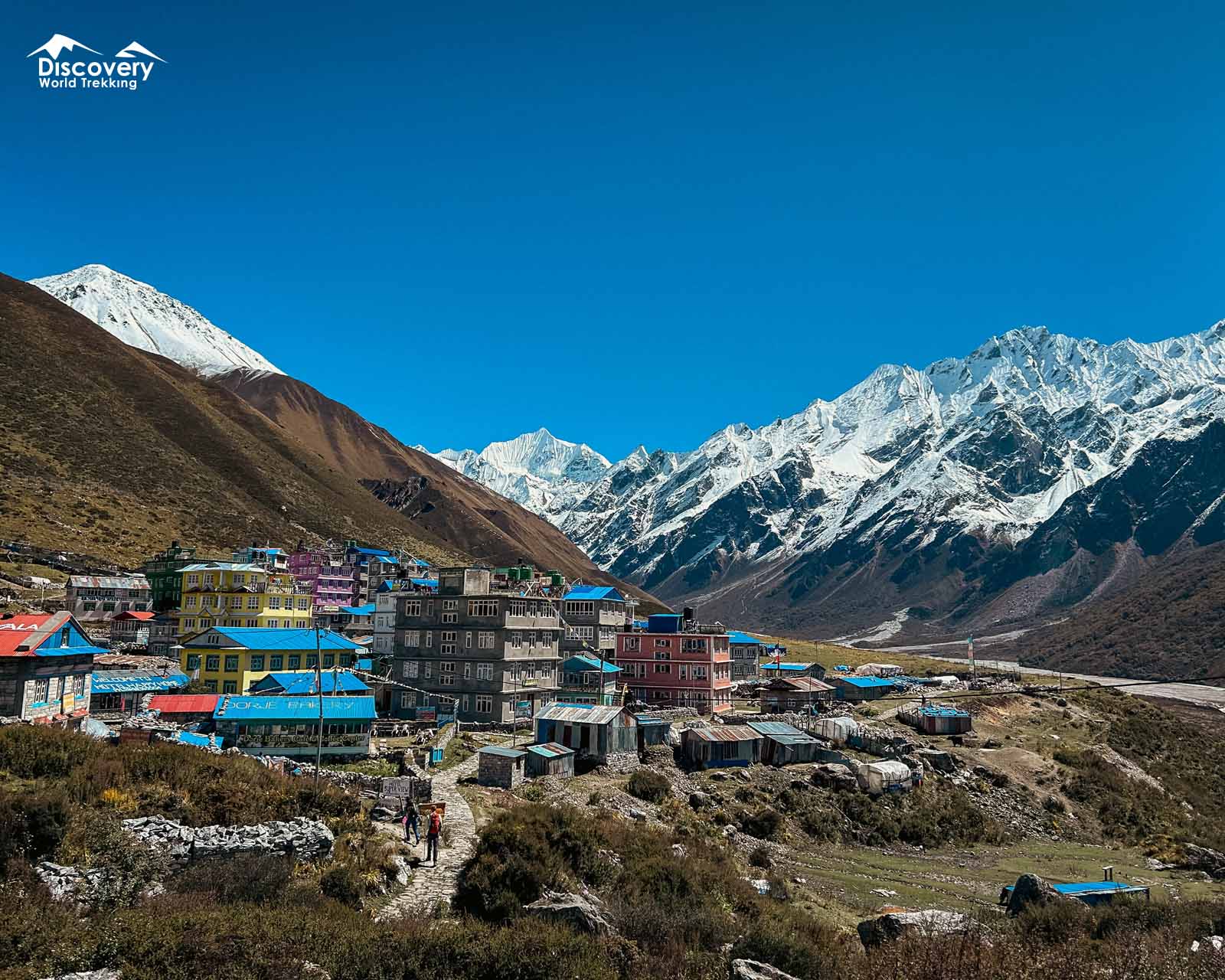
Kyanjin Gompa lies in the upper Langtang Valley, inside Langtang National Park, Rasuwa District, Bagmati Province. The village sits beneath Langtang Lirung and close to Nepal’s border with Tibet.
It is approximately 6.8 km from Langtang Village and 21 km from Lama Hotel by trail. Langtang Village lies to the southwest, while the Langtang Glacier and high viewpoints such as Tserko Ri lie to the north and east.
| Country | Nepal |
| Province | Bagmati Province |
| District | Rasuwa District |
| Municipality | Gosaikunda Rural Municipality |
| Region | Langtang region |
| Protected area | Langtang National Park |
| Latitude | Approximately 28.217° N |
| Longitude | Approximately 85.570° E |
| Elevation | 3,865 metres (12,675 feet) |
| Distance from Langtang Village | 6.8 km by trail |
| Distance from Lama Hotel | 21 km by trail |
How to Reach Kyanjin Gompa?
Trekkers first travel by road from Kathmandu to Syabrubesi and then trek through Lama Hotel, Ghoda Tabela, and Langtang Village.
-
By Road to Syabrubesi
Route: Kathmandu → Trishuli Bazaar → Dhunche → Syabrubesi
The road journey from Kathmandu to Syabrubesi covers approximately 122 km and usually takes 7–9 hours. The route follows the Trishuli River corridor to Dhunche before descending towards Syabrubesi, the last motorable settlement on the Langtang Valley route.
-
On Foot from Syabrubesi
Route: Syabrubesi → Lama Hotel → Ghoda Tabela → Langtang Village → Kyanjin Gompa
The complete walk from Syabrubesi to Kyanjin Gompa takes three trekking days on most itineraries. The first stage reaches Lama Hotel after approximately 11.3 km and around six hours of walking.
The second stage covers about 14.8 km from Lama Hotel to Langtang Village and normally takes around six hours. The third stage is shorter but higher, covering approximately 6.8 km from Langtang Village to Kyanjin Gompa in about three hours.
The trail follows the Langtang Khola through forest before opening at Ghoda Tabela. From there, it passes Chyamki, mani walls, prayer wheels, and open meadows before reaching Langtang Village and then Kyanjin Gompa.
The landscape changes from dense woodland to wide alpine pastures as the elevation increases.
What to See and Do in Kyanjin Gompa
Kyanjin Gompa is more than a final overnight stop. Its monastery, cheese factory, yak pastures, and nearby viewpoints give trekkers several ways to explore while acclimatising.
1. Explore Kyanjin Gompa Village and Yak Pastures
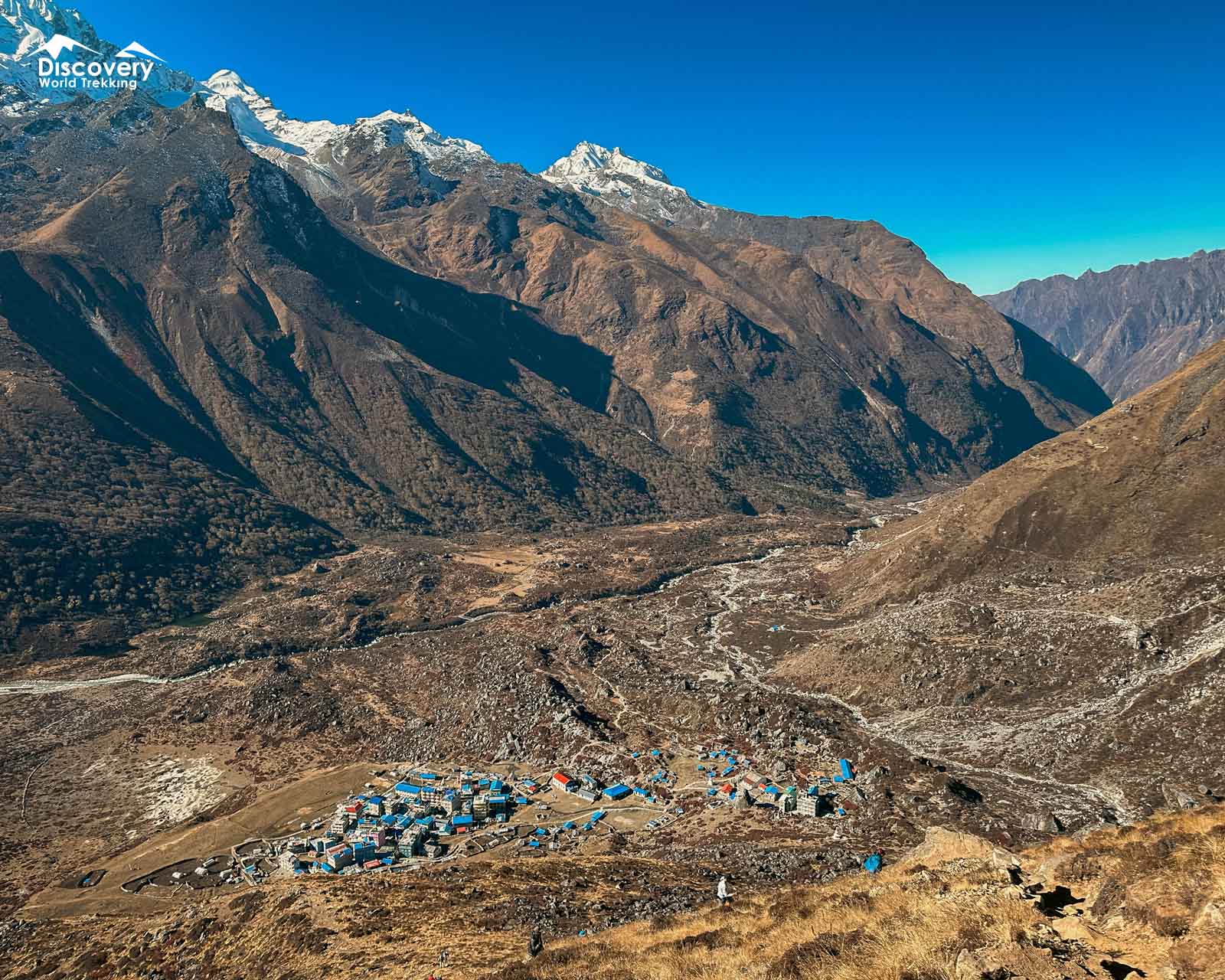
The village sits in a broad, open valley surrounded by peaks and glaciers. A short walk through the area reveals stone houses, teahouses, prayer flags, mani walls, and grazing yaks.
The pastures around the village show how local families use the high ground for livestock. In spring and summer, the meadows turn green, while winter covers them with snow and frost.
2. Visit the Ancient Kyanjin Gompa Monastery
The monastery gives the village its name and remains an active place of worship. Inside, you can see traditional Buddhist art, statues, and offerings used by local residents and visiting trekkers.
Visit respectfully, keep noise low, and ask before entering prayer rooms or photographing ceremonies. The area around the monastery, with its prayer wheels and flags, forms the spiritual centre of the settlement.
3. Tour the Yak Cheese Factory and Learn About Local Production
The cheese factory near Kyanjin Gompa was established with Swiss support in the 1950s and remains one of the region’s best-known local industries. It produces yak and cow milk cheese using traditional methods adapted to high altitude.
Visitors can see the production area, learn about the process, and taste fresh cheese. The factory supports the local economy and reflects the valley’s pastoral traditions.
4. Take Short Acclimatisation Walks Around the Settlement
Short walks around Kyanjin Gompa help your body adjust to 3,865 metres without gaining too much height too quickly. You can follow paths through the pastures, visit nearby mani walls, or walk towards the lower slopes above the village.
Make sure to keep these walks gentle, usually one to two hours, especially on the day you arrive. Use them to test your energy, hydration, and breathing before attempting longer hikes.
5. Day Hike to Kyanjin Ri (Lower and Upper)
Kyanjin Ri offers two main viewpoints above the village. The lower viewpoint sits around 4,360 metres, while the upper Kyanjin Ri reaches approximately 4,773 metres.
The hike usually takes four to six hours round trip, depending on the chosen summit and walking pace. The trail rises steadily above the pastures and provides wide views of Langtang Lirung, Langtang II, glaciers, and the upper valley.
6. Full-Day Hike to Tserko Ri
Tserko Ri stands at approximately 4,984 metres and represents the highest point on many Langtang Valley itineraries. The round trip from Kyanjin Gompa usually covers 10–15 km and takes around seven to nine hours.
The trek is steep and demanding at high altitude. Start early, carry warm layers, water, and snacks, and follow a guide familiar with the route. The viewpoint offers panoramic views of Langtang Lirung, Yala Peak, Dorje Lakpa, glaciers, and the surrounding ridges.
7. Photograph Monastery, Yaks, Glaciers, and Mountain Scenery
Kyanjin brings together several subjects within a relatively small area:
- The monastery, prayer flags, and mani walls.
- Yak herds moving through the pastures.
- Stone houses and teahouses against the mountain backdrop.
- Glaciers and moraines on the valley sides.
- Morning and evening light on Langtang Lirung and nearby peaks.
Also, make sure to ask permission before photographing residents, children, or religious ceremonies. The clearest mountain views usually appear in the morning.
Popular Treks Passing Through Kyanjin Gompa
- Langtang Trek – 8 Days: The route passes through Syabrubesi → Lama Hotel → Langtang Village → Kyanjin Gompa. Kyanjin is the main high-altitude destination, with an exploration day for the monastery, cheese factory and surrounding viewpoints.
- Tamang Heritage Trail – 12 Days: After travelling through Tamang villages such as Gatlang, Tatopani, Thuman, and Briddim, the route joins the Langtang Valley and reaches Kyanjin Gompa before descending.
- Langtang Gosainkunda Trek – 13 Days: The route passes through Kyanjin Gompa while ascending towards the upper valley. After exploring the area, trekkers return through Langtang Village, Lama Hotel, Thulo Syabru, and Gosainkunda.
Local Culture and Life in Kyanjin Gompa
Life at Kyanjin Gompa reflects the Tamang and Tibetan Buddhist culture of the upper Langtang Valley, but its high elevation has also shaped how people traditionally make a living.
Tibetan Buddhism remains one of the clearest parts of Kyanjin's identity. The monastery sits at the centre of its religious character, while prayer flags, mani stones and chortens connect Kyanjin with the Buddhist landscape found throughout the upper valley.
Livestock has long played an important role here. The open pastures around Kyanjin support yaks and yak-cattle hybrids, with milk traditionally used for butter and cheese. The establishment of organised cheese production in the 1950s created another market for this high-altitude dairy economy.
The short growing season and cold climate limit agriculture compared with lower parts of Rasuwa. Livestock, dairy production and trade were therefore particularly valuable, while trekking tourism now provides income through lodges, guiding, portering and food services.
Food reflects the same mountain environment. Dal bhat remains common, while noodle soups, momo, potatoes, Tibetan-style bread and dairy products suit the colder conditions of the upper valley.
History of Kyanjin Gompa
Kyanjin Gompa developed as a high-altitude pastoral and religious community in the upper Langtang Valley. The Buddhist monastery became an important part of its identity, while families traditionally depended heavily on livestock and seasonal grazing in the surrounding mountain pastures.
A major change came with the development of organised cheese production in the 1950s. Swiss cheesemaker Werner Schulthess began producing alpine-style hard cheese in Langtang in 1953. FAO records the formal Langtang cheese factory as being established in 1954 with Swiss financial assistance and FAO technical support.
As trekking in Langtang grew, Kyanjin also developed into the main visitor base of the upper valley. Local families expanded accommodation and food services, while Kyanjin Ri, Tserko Ri, the monastery and cheese production became central parts of the trekking experience.
Today, Kyanjin combines these older pastoral and religious traditions with its role as the main exploration point of the standard Langtang Trek.
Best Time to Visit Kyanjin Gompa
At 3,865 m, seasonal changes are more noticeable in Kyanjin than in the lower Langtang Valley.
Spring and autumn generally offer the best conditions for Kyanjin Gompa. These seasons provide clearer mountain views, more stable trails, and better conditions for the walk from Langtang Village and the onward hikes to Kyanjin Ri and Tserko Ri.
Spring (March to May)
Spring gradually brings warmer and longer days to the upper valley, although Kyanjin remains cold in the mornings and evenings.
March can still carry winter snow on surrounding slopes and higher hiking routes. April generally brings more comfortable walking conditions, while May becomes milder but can see increasing afternoon cloud.
Rhododendron flowers are more noticeable in the forests lower down the route. Around Kyanjin itself, the attraction is the changing high-altitude vegetation, open pastures and clearer access to the surrounding viewpoints.
Kyanjin Ri and Tserko Ri may still hold snow depending on the winter and recent weather, so trail conditions should be checked locally.
Autumn (September to November)
Autumn is one of the most reliable periods for exploring Kyanjin Gompa.
Conditions generally become drier as the monsoon withdraws, bringing better mountain visibility. October is particularly popular, while November offers increasingly crisp conditions and colder mornings and nights.
The clearer weather is especially valuable in Kyanjin because much of the experience depends on mountain views and side hikes. Stable mornings provide better opportunities for trekking Kyanjin Ri or making the longer journey towards Tserko Ri.
Lodges can become busy during the main trekking weeks, so accommodation is less quiet than during winter.
Winter (December to February)
Winter changes Kyanjin into a much colder high-altitude destination. Snow can cover the village, surrounding pastures and higher viewpoint trails, while nights regularly fall below freezing.
Clear winter days can still provide excellent visibility, but Kyanjin Ri and particularly Tserko Ri become more dependent on snow, ice and recent weather.
Some trekking services may also operate at a reduced level during quieter periods. Visitors need warmer sleeping equipment, insulated layers and footwear suitable for cold or snowy trails.
Monsoon (June to August)
Kyanjin sits high in the valley, but reaching it still requires travelling through the wetter lower Langtang region.
Rain can make the lower forest trails muddy and slippery, while cloud often hides the mountains. At Kyanjin itself, conditions can alternate between clearer periods, cloud, rain and cold wind.
The landscape becomes greener during this period, and grazing areas are active, but mountain visibility is less reliable than in autumn or spring. Flexible plans and proper waterproof clothing become particularly useful.
Kyanjin Gompa Weather and Temperature
| Season | Daytime Temperature | Night-time Temperature | General Conditions |
| Spring (March–May) | Around 5°C to 12°C | Around -8°C to -2°C | Days gradually become warmer, while mornings and nights remain cold |
| Summer/Monsoon (June–August) | Around 8°C to 14°C or higher | Around -4°C to 5°C | Mildest period, with more cloud, rain and changing visibility |
| Autumn (September–November) | Around 5°C to 12°C | Around -8°C to 0°C | Generally clear and dry, becoming noticeably colder towards November |
| Winter (December–February) | Around -2°C to 3°C | Below -15°C at times | Very cold nights, with snow and freezing conditions possible |
Where to Stay in Kyanjin Gompa?
Kyanjin Gompa has several teahouses and trekking lodges, with enough options for trekkers staying an extra night to explore the upper valley. Most are locally run and provide rooms, meals, and basic services under one roof.
Teahouses and Trekking Lodges
Teahouses are the main accommodation option in Kyanjin Gompa. Hotel Super View and Namaste Guest House are among the places available in the village, along with several other local lodges.
Most have a shared dining room where guests can have breakfast and dinner, relax after a day's walk and spend the colder evenings indoors. Since Kyanjin is the base for hikes to Kyanjin Ri and Tserko Ri, staying for two nights is common.
Room Types and Facilities
Twin-sharing rooms are widely available, usually with two separate beds, mattresses, pillows and blankets. Some lodges also offer rooms with attached bathrooms, while others have shared toilets and washing areas.
Hot showers, Wi-Fi and charging are available at some properties, often for an additional fee. These services can vary between lodges and may be less reliable during poor weather or busy trekking periods.
Facilities and Services in Kyanjin Gompa
Despite its high-altitude location, Kyanjin Gompa has the basic services needed for a stay of several days. You can find lodges, dining rooms, small shops, drinking water, charging facilities and limited internet and mobile connectivity.
The village also has a cheese factory, where the area's long tradition of high-altitude dairy production continues.
Electricity and internet can be less reliable than in the lower valley, so carrying a power bank is useful, especially if you plan to spend an extra day hiking around Kyanjin.
There is no dependable ATM in Kyanjin Gompa, so carry enough Nepali cash for meals, drinks, showers, charging and other personal expenses.
Medical services are also limited. Since Kyanjin sits at 3,865 m, trekkers are recommended to pay attention to altitude symptoms before heading higher towards Kyanjin Ri or Tserko Ri.
Permits Required for Kyanjin Gompa and Langtang Treks
To reach Kyanjin Gompa, trekkers must enter Langtang National Park and follow the regulated trekking route. The following documents are required:
- Langtang National Park Entry Permit: The current fee is NPR 3,000 per person. Officials mainly check it at the park entrance near Dhunche and at trail checkpoints.
Also make sure to keep your passport details, photographs, insurance information, and permits accessible during the trek.
Flora and Fauna in Kyanjin Gompa
Kyanjin Gompa sits above the tree line, where forest gives way to open alpine meadows, yak pastures, and high mountain terrain. The area lies inside Langtang National Park, Nepal’s first Himalayan national park, established in 1976.
Flora in Kyanjin Gompa
- Short grasses and alpine meadows dominate the open slopes around the village.
- Juniper shrubs and dwarf rhododendron grow on rocky ground and grazing areas.
- Birch and scattered trees appear closer to the settlement and along the river.
- Spring and early summer bring colour to the meadows, although flowers appear later than in the lower forests.
Fauna in Kyanjin Gompa
- The wider national park supports red pandas, snow leopards, Himalayan tahr, musk deer, blue sheep, and langurs.
- Red pandas are more common in dense bamboo forests at lower elevations, while snow leopards live in remote high-altitude terrain.
- Neither animal is easy to see near the village.
- Birds are more likely to appear, including Himalayan monals, eagles, vultures, and smaller alpine species.
Note: Make sure to walk quietly and never feed wildlife or leave food waste near lodges.
What Should You Pack for Kyanjin Gompa and the Langtang Trek?
Packing for Kyanjin requires more attention to cold, wind and high-altitude day hikes than packing only for the lower Langtang Valley.
Bring a warm down or insulated jacket, thermal base layers, fleece, waterproof and windproof outer shell, warm hat and gloves. Lodge bedrooms are generally unheated, so a suitable sleeping bag remains useful even when blankets are provided.
Wear well-broken-in trekking boots with good grip. If you plan to hike Kyanjin Ri or Tserko Ri, trekking poles can help on steep descents, while microspikes may be useful when snow or ice remains on the trail.
Strong sunlight and reflected light at altitude make UV-protective sunglasses, sunscreen and a sun hat particularly important.
Carry a reusable water bottle and purification method, headlamp, personal medication, basic first-aid supplies and a power bank. A small daypack is useful for carrying water, warm layers, snacks and other essentials on the viewpoint hikes.
Most importantly, pack enough warm clothing to remain comfortable above 4,000 m, not only at your lodge in Kyanjin.
Is Kyanjin Gompa Worth Visiting?
Kyanjin Gompa is worth visiting because it combines the practical value of a trekking stop with a strong sense of place. The village gives trekkers a clear change from the forested lower valley to open alpine terrain, while Langtang Lirung and the surrounding peaks create a dramatic setting.
It also offers more than mountain scenery. You can visit an active monastery, tour a high-altitude cheese factory, walk through yak pastures, and continue easily towards Kyanjin Ri and Tserko Ri.
The village does require preparation. At 3,865 metres, cold nights, limited services, and altitude deserve respect. For trekkers who walk steadily and allow their bodies time to adjust, Kyanjin Gompa is one of the most memorable stops on the Langtang Valley route.
FAQs
What is the altitude of Kyanjin Gompa?
Kyanjin Gompa stands at 3,865 metres (12,675 feet) above sea level.
How far is Kyanjin Gompa from Syabrubesi?
Kyanjin Gompa is approximately 32.9 km from Syabrubesi by trail, divided between the Syabrubesi–Lama Hotel, Lama Hotel–Langtang Village, and Langtang Village–Kyanjin Gompa stages.
How far is Kyanjin Gompa from Langtang Village?
Kyanjin Gompa is approximately 6.8 km from Langtang Village. The walk usually takes around three hours.
How long does it take to reach Kyanjin Gompa from Langtang Village?
The trek from Langtang Village to Kyanjin Gompa covers approximately 6.8 km and normally takes around three hours.
Is Kyanjin Gompa accessible by road?
No. Kyanjin Gompa has no road access. Trekkers must travel by road to Syabrubesi and then walk through Lama Hotel, Ghoda Tabela, and Langtang Village.
What is Kyanjin Gompa known for?
Kyanjin Gompa is known for its ancient monastery, yak cheese factory, high-altitude setting, access to Kyanjin Ri and Tserko Ri, and its role as the main acclimatisation base on the Langtang Valley Trek.
Plan Smarter, Trek Better
Connect with our local expert for honest recommendations, personalised guidance, and insider tips to make every step of your adventure count.


Get our free Nepal travel guide filled with expert insights, local tips, and essential planning advice.