

Annapurna Circuit Trek in September
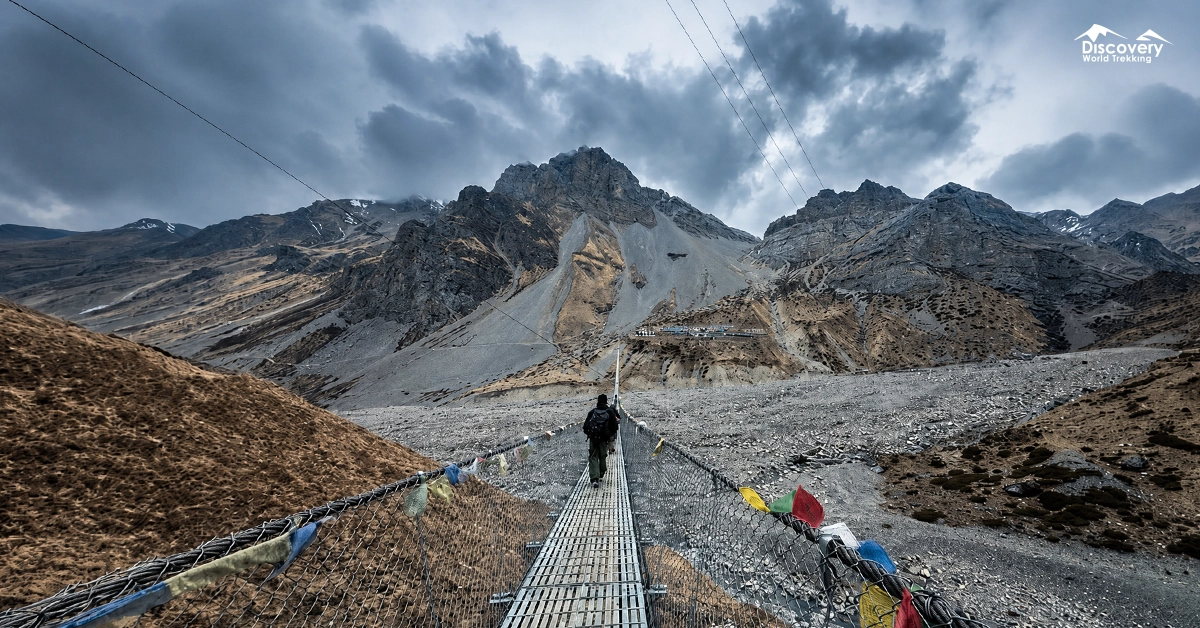
The Annapurna Circuit Trek in September combines freshly washed landscapes, comfortable daytime temperatures, active mountain villages, and improving Himalayan visibility.
September in Nepal transitions from the summer monsoon toward the clear autumn trekking season. Early departures may experience occasional showers at lower elevations, while mid- and late September usually bring longer clear periods.
Is September a Good Time for the Annapurna Circuit Trek?
Yes, September is one of the best period for trekking in the Annapurna Circuit.
It offers a balanced combination of green landscapes, moderate trekking temperatures, operational teahouses, and increasingly clear mountain views.
| Factor | September Conditions |
| Weather | Warm at lower elevations, cool around Manang, and cold above 4,000 metres. Short showers remain possible, especially early in the month. |
| Mountain views | Morning visibility is often best. Views generally become clearer and last longer toward late September. |
| Trail conditions | Lower trails can be damp, while the drier Manang and Mustang sides are generally firmer. |
| Crowds | Quiet in early September and moderately busy as the autumn season begins. |
| Accommodation | Most teahouses, lodges, cafés, bakeries, and trail services are operating. Advance booking becomes useful near Manang and High Camp later in the month. |
| Thorong La Pass | Usually crossable with proper acclimatisation, an early start, suitable clothing, and confirmation of current conditions. |
| Difficulty | Moderately challenging because of long walking days, changing surfaces, and the 5,416-metre pass. |
| Best for | Trekkers seeking green valleys, improving visibility, comfortable temperatures, active villages, and fewer people than October. |
Annapurna Circuit Weather in September
September weather changes noticeably by date, altitude, and which side of the Annapurna range you are trekking. The lower Marsyangdi Valley remains warmer and more humid, while Manang receives less direct monsoon influence because it lies within the Himalayan rain-shadow zone.
The following temperatures are practical planning ranges rather than daily forecasts. Local weather can shift quickly, and exposed locations may feel colder because of wind.
Early September Weather
Early September is warm, green, and changeable, with the greatest chance of short showers. Lower valleys can feel humid during climbs, while mornings around Pisang and Manang remain pleasantly cool.
Cloud commonly develops after the clearer morning period. Starting soon after breakfast provides more time for views and allows trekkers to reach the next lodge before afternoon weather changes.
| Elevation level | Average daytime temperature | Average nighttime temperature |
| 800–1,900 m | 20°C to 25°C | 14°C to 18°C |
| 2,600–3,300 m | 14°C to 19°C | 7°C to 11°C |
| 3,500–4,200 m | 10°C to 15°C | 2°C to 7°C |
| 4,900–5,416 m | 0°C to 6°C | -6°C to -1°C |
Mid-September Weather
Mid-September usually brings a more balanced mixture of clear mornings, occasional rainfall, and cooler nights. As the monsoon weakens, mountain views often remain visible for longer periods.
Daytime walking temperatures are comfortable around Dharapani, Chame, Pisang, and Manang. Above Yak Kharka, trekkers begin using warmer insulation during rest stops and after sunset.
| Elevation level | Average daytime temperature | Average nighttime temperature |
| 800–1,900 m | 19°C to 24°C | 12°C to 16°C |
| 2,600–3,300 m | 13°C to 18°C | 5°C to 9°C |
| 3,500–4,200 m | 9°C to 14°C | 0°C to 5°C |
| 4,900–5,416 m | -1°C to 5°C | -8°C to -2°C |
Late September Weather
Late September generally offers the clearest and most stable trekking conditions of the month. Humidity decreases, nights become sharper, and freshly washed peaks are more frequently visible against clear autumn skies.
Temperatures remain comfortable in the lower valleys, but High Camp and Thorong La can feel distinctly wintry before sunrise. Frost or a light covering of snow is possible at the highest elevations.
| Elevation level | Average daytime temperature | Average nighttime temperature |
| 800–1,900 m | 18°C to 23°C | 10°C to 14°C |
| 2,600–3,300 m | 11°C to 17°C | 3°C to 7°C |
| 3,500–4,200 m | 7°C to 12°C | -2°C to 3°C |
| 4,900–5,416 m | -3°C to 3°C | -10°C to -4°C |
Average Temperature in September
Trail Conditions Along the Annapurna Circuit in September
September trail conditions improve steadily as the route rises and the month progresses. Each section has a different surface, moisture level, and walking rhythm based on altitude and distance.
Bhulbhule to Dharapani
The Bhulbhule-to-Dharapani section is green, warm, and occasionally damp. The trail follows the Marsyangdi River through cultivated terraces, waterfalls, suspension bridges, stone paths, rocky ledges, and villages such as Bahundanda, Jagat, Chyamche, and Tal.
Early September moisture can make stone steps and bridge approaches smoother underfoot. Trekking poles and shoes with dependable tread provide valuable stability.
Dharapani to Chame
The Dharapani-to-Chame trail is mostly forested and steadily ascending. Pine, fir, oak, and maple forests provide shade, while tree roots, fallen needles, and occasional damp patches require attentive footing.
The climb toward Timang is rewarded with views of Lamjung Himal, Annapurna II, and Annapurna IV when clouds lift. The final approach to Chame is comparatively gentle.
Chame to Manang
The Chame-to-Manang section becomes progressively drier, wider, and more alpine. The trail passes Bhratang, Dhukur Pokhari, Upper Pisang, Ghyaru, Ngawal, and Braga before reaching Manang.
Open slopes around Ghyaru and Ngawal dry relatively quickly after showers. However, strong sunlight and exposed climbs make a sun hat, sunglasses, and regular hydration important.
Manang to Thorong High Camp
The trail above Manang is dry, narrow, and increasingly rugged. Vegetation becomes sparse after Yak Kharka and Ledar, while the surface changes to compact earth, loose stones, and alpine scree.
The ascent from Thorong Phedi to High Camp is short but steep. A measured pace is more effective than trying to maintain lower-altitude walking speed.
Thorong La Pass to Muktinath
The Thorong La crossing requires an early departure and warm, layered clothing. The approach may include frozen ground, snow patches, loose gravel, and cold wind.
After reaching the 5,416-metre pass, the route descends for several hours toward Muktinath. Trekking poles reduce pressure on the knees and improve control on the long zigzag descent.
Muktinath to Jomsom and Beyond
The Muktinath-to-Jomsom section is drier, broader, and more exposed to valley wind. The landscape around Kagbeni and Jomsom features eroded cliffs, riverbeds, apple orchards, ancient settlements, and open Mustang scenery.
Trekkers continuing toward Tatopani and Ghorepani return to greener valleys, warmer conditions, forests, farmland, and long stone staircases. The contrast completes the circuit’s transition through several ecological zones.
Tilicho Lake in September
September is a rewarding time to visit Tilicho Lake during the Annapurna Circuit Trek.
At an altitude of about 4,919 metres, Tilicho Lake remains cold throughout September. Morning visits generally provide the best conditions, with calmer weather, better visibility, and fewer clouds around the surrounding peaks.
The turquoise-blue lake, surrounded by barren cliffs and snow-covered Himalayan mountains, creates a striking contrast against the post-monsoon landscape.
The temperature near Tilicho Lake can drop below freezing, especially during early mornings and overnight stays at Tilicho Base Camp.
Trekkers should carry warm layers, a good sleeping bag, rain protection, and sufficient water supplies because facilities become limited compared with lower villages.
Popular Festival in September
September offers opportunities to experience Teej, Indra Jatra, and Dashain.
Haritalika Teej is one of Nepal’s most recognisable women’s festivals. Participants commonly wear red clothing, gather at Shiva temples, sing, dance, feast, and observe traditional rituals. Trekkers staying in Kathmandu before departure may see celebrations around temples, neighbourhood courtyards, and public spaces.
Indra Jatra is centred in Kathmandu and features chariot processions, masked dances, ceremonial music, and Newar cultural traditions.
The biggest festival of Nepal, Dashain, often falls in September. The festival runs for 15 days, and trekkers can feel the presence throughout the Annapurna Circuit trekking route.
Flora and Fauna Seen in September
September is one of the best months for seeing the Annapurna region at its greenest.
Monsoon rainfall refreshes the lower forests, hillsides, waterfalls, cultivated terraces, and river valleys before autumn dryness gradually changes the landscape.
Between Bhulbhule and Chame, trekkers pass broadleaf woodland, bamboo, ferns, moss-covered rocks, oak, maple, pine, fir, and mixed riverine vegetation.
Around Chame and Upper Pisang, pine and juniper become more prominent.
Above Manang, the environment changes to alpine grass, dwarf shrubs, hardy herbs, and sparse vegetation adapted to cold, dry conditions.
Rhododendrons are not normally in their spring flowering season, but their dense foliage remains visible in suitable forest zones. Orchids, small seasonal flowers, mushrooms, and moisture-loving plants may still appear along shaded lower trails.
Annapurna Circuit Packing List for September
A September packing list should prepare for warm valleys, rain showers, cold alpine mornings, and a potentially freezing pass crossing.
Clothing
- Moisture-wicking base layers
- Quick-drying trekking shirts and trousers
- Lightweight fleece
- Insulated down or synthetic jacket
- Waterproof shell jacket and over-trousers
- Warm hat, sun hat, and neck gaiter
- Thin liner gloves and insulated outer gloves
- Several pairs of trekking socks
- Comfortable clothing for teahouses
Footwear and Trail Equipment
- Broken-in waterproof trekking boots
- Trekking poles
- Lightweight gaiters
- Backpack with rain cover
- Headlamp with spare batteries
- Sunglasses with strong ultraviolet protection
- Refillable water bottles or hydration bladder
Sleeping, Health, and Personal Items
- Sleeping bag suitable for approximately -10°C
- Water purification system
- Personal first-aid supplies
- Sunscreen and lip balm
- Blister care and foot powder
- Toiletries and quick-drying towel
- Dry bags for electronics and clothing
- Power bank and charging cables
- Copies of passport, insurance, and trekking documents
Pack clothing in separate waterproof bags rather than relying only on the backpack cover. This keeps essential layers dry when the pack is opened during a shower.
Safety Tips for Trekking in September
Use these practical measures:
- Start early to benefit from calmer mornings and sufficient daylight.
- Check forecasts and trail updates with guides, lodge owners, and official weather services.
- Maintain a steady pace rather than walking quickly between rest stops.
- Eat regularly and drink enough water throughout the day.
- Keep rainwear, gloves, insulation, and a headlamp accessible.
- Allow extra time for transport between Kathmandu, Besisahar, Bhulbhule, Pokhara, and Kathmandu.
- Cross Thorong La only after confirming pass conditions.
- Do not ascend with a persistent altitude-related headache, nausea, unusual fatigue, dizziness, or balance problems.
- Descend and seek assistance when symptoms become stronger.
FAQs
Does it rain throughout the day in September?
Rain does not normally continue throughout every trekking day. Showers are often concentrated later in the day or overnight, while mornings may provide clear walking conditions. Annual monsoon withdrawal timing varies, so each September develops differently.
Is Thorong La Pass covered with snow in September?
Thorong La may have dry ground, frost, old snow, or fresh snow in September. Conditions can change within hours at 5,416 metres, making local confirmation essential before departure from High Camp.
How cold is Thorong La in September?
Pre-dawn temperatures near Thorong La can fall below freezing. A realistic planning range is approximately -1°C to -10°C, depending on the date, wind, cloud cover, and recent snowfall.
Are mountain views clear in September?
Mountain views are often clearest in the morning and improve toward late September. Trekkers may see Annapurna II, Annapurna III, Annapurna IV, Gangapurna, Tilicho Peak, Pisang Peak, Dhaulagiri, and the Chulu peaks along different sections of the circuit.
Plan Smarter, Trek Better
Connect with our local expert for honest recommendations, personalised guidance, and insider tips to make every step of your adventure count.

Get our free Nepal travel guide filled with expert insights, local tips, and essential planning advice.